Define osteoporosis?
reduced bone density ( more than 2.5 density below peak mass achieved by healthy adults of the age and gender ( T score
outline the aetiology of osteoporosis?
low peak bone mass or loss of bone mass with ageing
imbalance in bone remodellig process ( osteoclasts)- bone resorption greater than bone formation
what are the primary causes of osteoporosis?
idiopathic ( if less han 50 years old)
post- menopausal
what are the secondary causes of osteoporosis?
ME DR G
maligancy- myeloma, metastatic, carcinoma
Endocrine - cushings disease, thyrotoxicosis, primary hyperparathyroidism, hypogonadism
Drugs- corticosteroid, heparin
Rheumatology- rheumatoid arthritis, ankylosing spondylitis
Gastrointestinal
- malabsorption ( coeliac disease, partial gastrectomy)
- liver disease ( primary biliary cirrhosis)
- anorexia
what are the risk factors for osteoporosis?
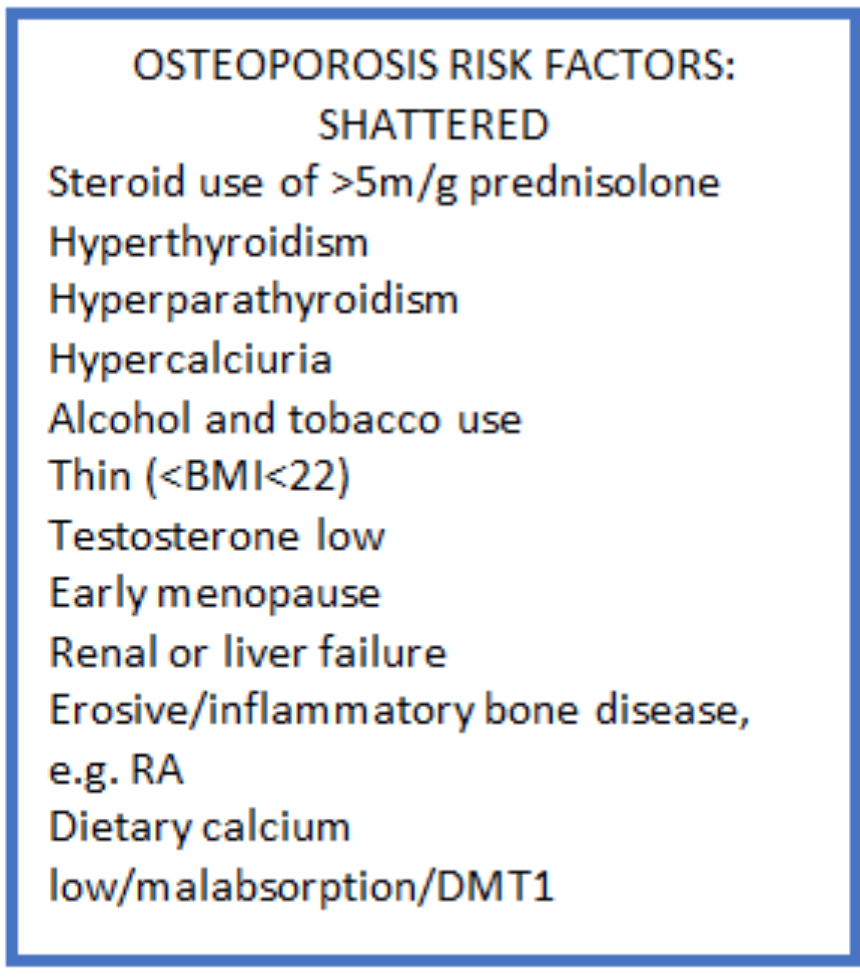
summarise the epidemiology of osteoporosis?
White, postmenopausal women
Fracture risk increases with age
what are the presenting symptoms of osteoporosis?
asymptomatic until fractures occur
characteristic fractures
- *- Neck of femur ( after minimal trauma)
- vertebral fractures** ( leading to loss of height, stooped posture and acute back pain)
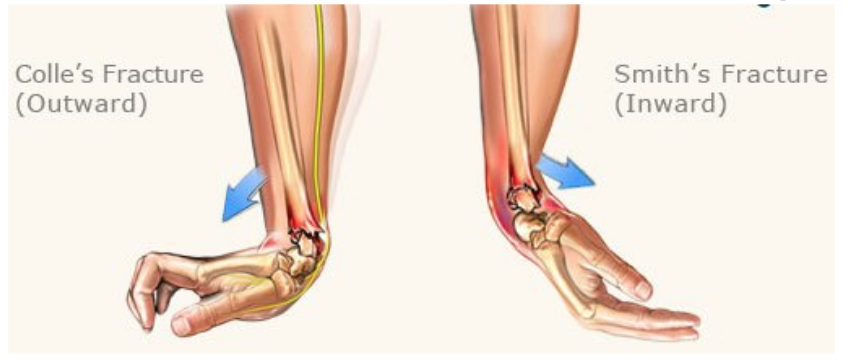
- colle’s fracture ( distal radius after falling on an outstretched hand)
what are the signs of osteoporosis on physical examination?
Often NO SIGNS until complications develop:
Tenderness on percussion (over vertebral fractures)
Thoracic kyphosis (due to multiple vertebral fractures)
Severe pain when hip flexed and externally rotated (suggests NOF fracture)
what are the appropriate investigations for osteoporosis
Bloods- calcium, phosphate , ALP=>allnormal
X-Ray
- Used to diagnose fractures
- Often normal because it takes > 30% loss of bone density before showing any changes in radiolucency or cortical thinning
- May show biconcave vertebrae and crush fractures
Isotope Bone Scans
- Highlights areas of stress and microfractures
DEXA (Dual-Energy X-Ray Absorptiometry) Scan
T-score: the number of standards deviations the bone mineral density measurement is above or below the young normal mean bone mineral density
Z-score: the number of standard deviations the measurement is above or below the age-matched mean bone mineral density. Z-score may be helpful in identifying patients who may need a work-up for secondary causes of osteoporosis
described blood results for osteporosis?
Calcium
Phosphate
ALP
IMPORTANT: these are NORMAL in PRIMARY osteoporosis
what is the t score?
the number of standards deviations the bone mineral density measurement is above or below the young normal mean bone mineral density
what is the z score?
the number of standard deviations the measurement is above or below the age-matched mean bone mineral density. Z-score may be helpful in identifying patients who may need a work-up for secondary causes of osteoporosis

-
Acromegaly16
-
Adrenal insufficiency19
-
Cushing's syndrome18
-
Diabetic Ketoacidosis19
-
pheochromocytoma10
-
Carcinoid syndrome9
-
Hyerparathyroidism18
-
Diabetes Inspidus15
-
Hypothyroidism17
-
Thyroid nodules7
-
Thyroiditis13
-
SIADH15
-
hypogonadism25
-
Hypopituitarism12
-
Pituitary tumour ( non- functioning)6
-
PCOS7
-
Primary Hyperaldosteronism14
-
Paget's9
-
Prolactinoma14
-
Osteomalacia20
-
Osteoporosis12
-
Obesity5
-
MEN14
-
Graves11
-
Thyroid cancer10
-
Diabetes Mellitus50



