Passage plan
Considerations as Master
Owners Instructions - After quietly reflecting about the contemplated passage
I would first conduct a HoD meeting:
Chief Engineer: Fuel, Sludge off, PMS complete, Any defects or issues, machinery,= propulsion and auxillery systems in good order, ongoing work, spare parts?
Chief Stew: stowage requirements, ensuring department is ready to go to sea (spend most time inside) - also good time to send on leave
Chefs: sufficient provisions and fresh food onboard for intended voyage
Chief Officer: LSA/FFE checks conducted, weather and stowage requirements, drills, UTD charts + publications, my preferences for the actual passage
Considerations as Master: (Seaworthiness)
Obligation under Merchant Shipping Act / Insurance Act 1906 - Vessel is safe, well-found and able to deal the with ordinary perils of the sea
5 C’s
Compliance - With legislations of our flag state (M notices), conventions and codes
Certification - Certificates state we are compliant with the various codes, conventions at the time of survey
Condition - PMS is up to date, All work is completed, Main and Aux machinery, Steering Gear, Stability (MSF2004-FRE13 completed), Watertight integrity, LSA/FFE, Vessel is fuelled and provisoned, vessel has UTD publications and charts
Crew - MSMD, update crew and guest lists, Training, Adequately manned, Experience, Drills, Induction, Fit for Duty, Standing orders signed, Liase with Chief Engineer and Chief Officer regarding stowing and machinery
Conduct -MARPOL - Garbage ashore / reciept collected, Follow SMS, COSWP, SOPs, Health and Safety regulations and notices (SI 2962 & MGN636) adopt a Safety Culture, Issues in Safety Meeting solved, Crew conduct in professional and safe manner, perform stowaway seach and ISPS procedures and perform proper passage planning:
Requirement under Solas Ch V reg34 - master’s responsibility
MGN315
STCW CH 8 - Watchkeeping
Passage planning normally delegated to the 2nd Officer and should be a risk assessment of an intended voyage from berth to berth:
1. Takes into account any relevant ship’s routing systems
2. Ensures sufficient sea-room for the safe passage of a ship throughout the passage
3. Anticipates all known hazards and adverse weather conditions
4. Takes into account marine environmental protective measures
Final Pre-Departure checks (Steering, Propulsion, Watertight Integrity, ECDIS, RADAR and Nav Eq.) OLB filled in.
-Liase with agents/customs/immigration/port - pilotage
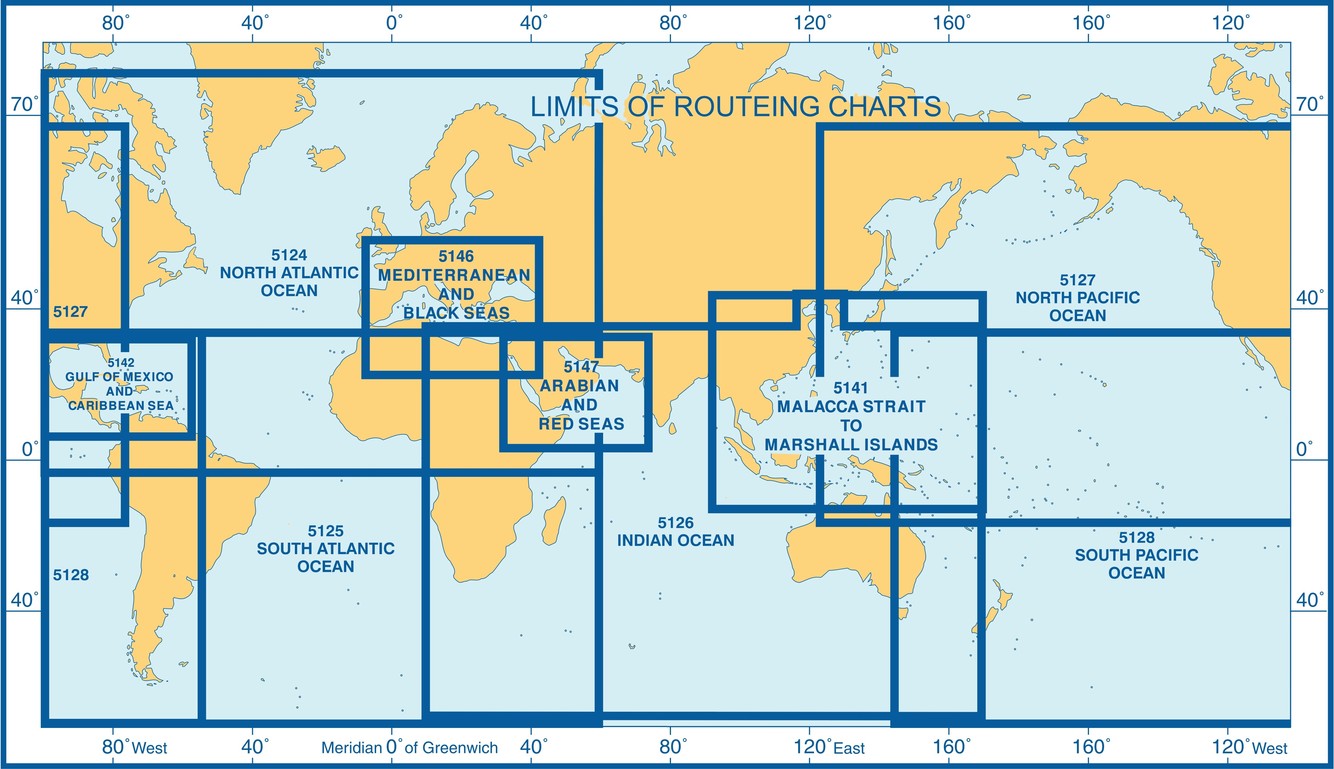
What is a routing chart and how many are there?
- Routing charts are essential for use in passage planning for ocean voyages. They include:
- route and distances between major ports,
- ocean currents (Thicker the line the stronger the current)
- ice limits
- load lines zones
- average barometric pressure
- mean air and sea temperatures
- wind roses with expected meteorological and oceanographic conditions for each month of the year
- TRS tracks
- Fog and poor visibility predictions (<1000m)
- 5 main routing charts: - North Atlantic - South Atlantic - North Pacific - South Pacific - Indian Ocean additionally there are charts for
- There are 12 charts for each area, one for every month of the year.
What is contained in the appraisal stage of passage planning?
All the information that is current, relevant and correct to the contemplated voyage or passage should be considered. The following items should be taken into account:
Ships Critical:
- Seaworthiness
- Fuel & Water
- Certification
- Manning
- Expected weather and vessel suitability
- Security
- Owners Instructions
- UTD Charts and Publications
- As master ensure bridge team has all my wishes
What is contained in the planning stage of a passage plan?
Planning the intended voyage
- Berth to Berth
- Plot waypoints and indicative routes - course line & direction
- Check depths / dangers (UKC - No go zones) - Abort points
- Wheel over point
- Transits to be used for compass checks
- PI’s & Distances off obstacles
- Contingency Plans
- Radar Conspicuous objects and RACONS which may be used in radar position fixing.
- T’s and P’s
- Magenta notes from Chart
- Ships Critical stuff i.e time to call Master, Reporting points, Pilot Station, Changing Fuel, Clearing the anchors, engines to standby etc
What is contained in the execution stage of a passage plan?
Executing the plan taking account of prevailing conditions
- Starts before you leave - Pre departure checks - Reassessment of weather
- Once you have an ETD you need to update the plan for time of departure. This will include ETA’s on the passage for various critical points so that you can be in at those points for a particular time
*Tide height - Nav Warnings
- Brief the crew of the passage
- Sign the passage plan off with the navigation officer and log the passage plan per the SMS Execution of the finalised voyage plan should be carried taking into account the factors listed in the guidelines.
- The Master should take into account any special circumstances which may arise, such as changes in the weather, which may require the plan to be reviewed or altered.
What is contained in the monitoring stage of a passage plan?
- Monitoring is the ability to accurately and frequently monitor the vessels progress along the pre-planned track and is a continuous process. The office of the watch, whenever in any doubt as to the position of the vessel or the manner in which the voyage is proceeding should immediately call the master and, if necessary, take the appropriate action for the safety of the vessel.
- Monitoring the vessels progress ensuring that you are sticking to passage plan and also monitoring all equipment to ensure it is working to optimum performance at all times.
- Plot position by different means
- Any deviations from the route need to be planned so you need to go through the process of A.P.E.M**!
Position fixing should be at regular pace intervals often enough that the vessel cannot come to harm between them fixes
MGN315 - keeping a safe navigational watch
What are the 18 mandatory bridge publications?
‘As stated by SOLAS CH.V - Safety of Navigation - Reg 19’
Can also be found in the Mariners Handbook and the Masters Guide to the British Flag’
In accord with Notice No. 18, of the annual summary of notices to Mariners the ship must carry the following publications:
- The Weekly Notices to Mariners
- Annual Summary of Notices to Mariners - NP247 Parts 1&2
- Chart outfit adequate charts for the voyage and of suitable scale. It will include NP5011, Chart Correction Log and Routing Charts
- List of Radio Signals
- List of Lights
- Sailing Directions
- NP100 Mariners Handbook
- Tide Tables
- Tidal Atlases
- Nautical Almanac
- Nautical Tables (Norries)
- IAMSAR Vol. III
- The International Code of Signals
- The Marine Guidance Notices (MGN’s), The Merchant Shipping Notices (MSN’s) and The Marine Information Notices (MINs)
(Its part of MGN 379 - See Principals) - Operating and maintenance manuals for all navigational aids.
- Offical Logbook
- COSWP - Code of Safe Working Practices
- Ship Captains Medical
How do you obtain a vessels aspect during daylight hours?
- X-Band Radar
- Less effect of target swap
- Sea Stabilised for collision avoidance
- Plot the vessel and get the OAW Triangle
- Only way you can tell is by radar plotting and getting the aspect of the other vessel. This is done by:
- See whether or not it is green or red aspect -
- Taking the vessels true course and run it down to the centre of the radar plotting sheet
- Take the reciprocal of his last bearing - ASPECT = Difference between the reciprocal of his last bear and the vessels true heading
What is the ocean passages of the world book?
- NP 136
- Supports planning of deep-sea voyages on most major routes, with details of weather, currents, ice hazards and distance between major ports. The Ocean areas with which this book is concerned lie, mainly outside the areas covered in detail by the Admiralty Sailing Directions.
-Individual chapters on each ocean.
-Contains route diagrams and tabulated route data
-Coverage of the world busiest and emerging trade routes to help with route planning and calculation of arrival times. - Kept up to date by Notices to Mariners
Prior to departing
- I would make sure that all the passengers and crew onboard (lists up to date) Chief Officer to check draft marks and post them in the crew area
- I would contact the Chief Engineer and confirm he has done all his pre departure checks
- I would go through my pre departure checks (Bridge Procedures Guide is a MUST read)
- Verify the Gyro and Magnetic Compass
- Ensure the Radar has been set up and the Performance Monitor run
- AIS has been set up with the correct voyage data
- Echo sounder on and functioning
- Confirm the GPS working correctly and integrating with the Chart Plotter and Auto-Pilot
- Test Navigation lights
- Test Whistle and Signalling Lamp
- Portable radios
- Search light
- Make sure the Navtex was on and VHF radios working
- Test Main Engines and Thruster (Emergency shut down)
- Auto pilot and steering gear
- Anchor and mooring equipment (Anchor ready in case of emergency)
- I would enter the necessary information into the Official Log Book and running log
- Obtain confirmation from Engine Room that they are ready for us to depart
- Confirm with the Chief Officer that their on-deck checks are complete, and they are ready to depart
- Make sure all teams have been briefed, all pre departure checks are complete and everyone understands the plan and are aware of their duties (TOOLBOX TALK)
- Get permission from Port Authority, VTS to depart-Vessel safely manned
_If new Master:
-Familiarisation / LSA/FFE
-Muster List
-Consult all HoDs - C.E & C.O regarding ships stability and equipment
-Review and update standing orders as necessary
-Review PMS
-Review SMS
-Ensure required publications/charts/crew certs/MSMD
Brief 2nd Officer for passage planning?
Requirement under Solas Ch V reg34 - master’s responsibility
A passage plan is a risk assessment of an intended voyage from berth to berth:
1. Takes into account any relevant ship’s routing systems
2. Ensures sufficient sea-room for the safe passage of a ship throughout the passage
3. Anticipates all known hazards and adverse weather conditions
4. Takes into account marine environmental protective measures
IMO Resolution A893 - requires us to apply the principles of APEM, also found in BPG, SMS.
I would like him to appraise the intended passage and then we will go over before beginning the planning stage. I will provide him/her:
-Minimum distances off land
-ETAs, ETDs
-Speeds
-Rough route from berth to berth
-Any other specific requirements of the passage

-
Col Regs37
-
Exam Time - Real39
-
Master & Responsibilities8
-
Certificates & Logbooks31
-
Response to Emergencies10
-
Checklists13
-
MLC25
-
ISM - International Safety Management13
-
ISPS - International Ship & Port Security14
-
MARPOL14
-
Official Logbook - OLB4
-
Watchkeeping8
-
Port State Control8
-
General Bridge / Nav28
-
Radar and Bridge Equipment40
-
Passage Planning11
-
Pilotage5
-
Stability15
-
M Notices and Legislation30
-
Bridge Publications8
-
Weather20
-
GMDSS & IAMSAR Vol. III21
-
Fire5
-
SOLAS4
-
LSA10
-
Q&A - The Seamanship Examiner18
-
Critical Equipment & Planned Maintenance5
-
Load Line & Safety Construction Surveys9
-
Drills and Training3
-
Surveys5
-
Celestial5
-
Buoyage5
-
Ice4
-
MAIB3
-
Helicopter Operations4
-
Medical4
-
Salvage4
-
Anchoring and Ship Handling9
-
LOLER & PUWER Regulations5



