At what level is the pharynx continuous with the oesophagus
At the level of C6

Where do the pharyngotympanic tubes open into
Lateral walls of the nasopharynx
How is the pharynx separated from the vertebral column
Thin retropharyngeal space containing loose connective tissue
What does the soft palate do
- swing up (elevate) to close the pharyngeal isthmus, and seal off the nasopharynx from the oropharynx, and
- swing down (depress) to close the oropharyngeal isthmus and seal off the oral cavity from the oropharynx

Pharyngeal raphe
- Welds the 2 sides of the pharyngeal wall together posteriorly in the midline by this vertically oriented cord-like ligament
- Descends from pharyngeal tubercle on the base of the skull to C6 (then blends with CT in posterior wall of the oesophagus)
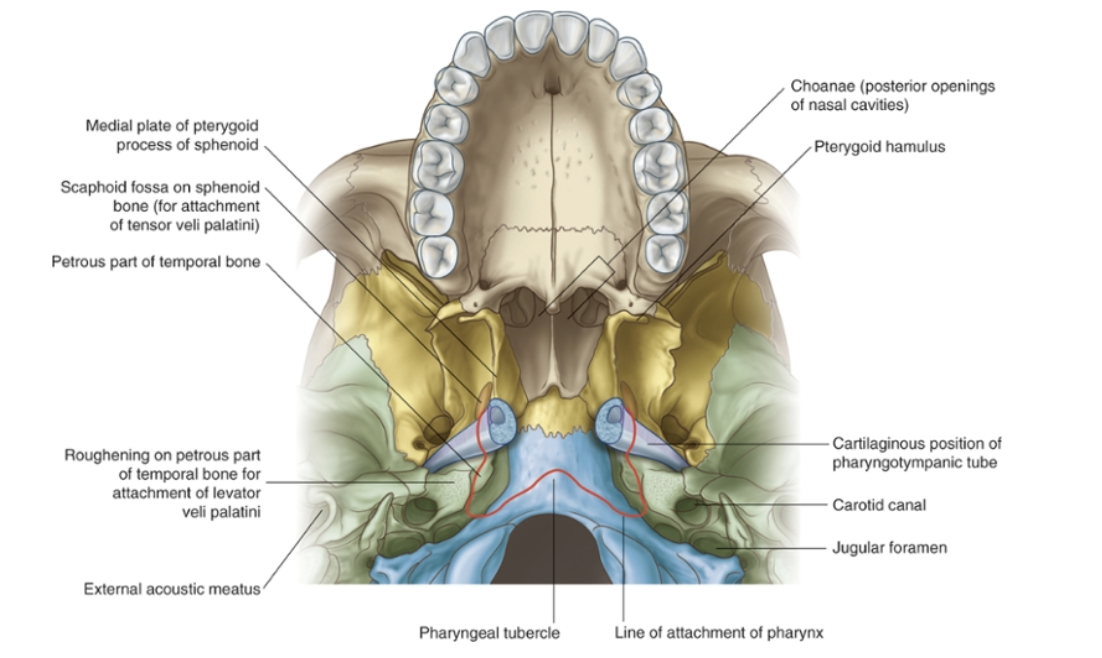
Anterior verticle line of attachment for the lateral pharyngeal walls
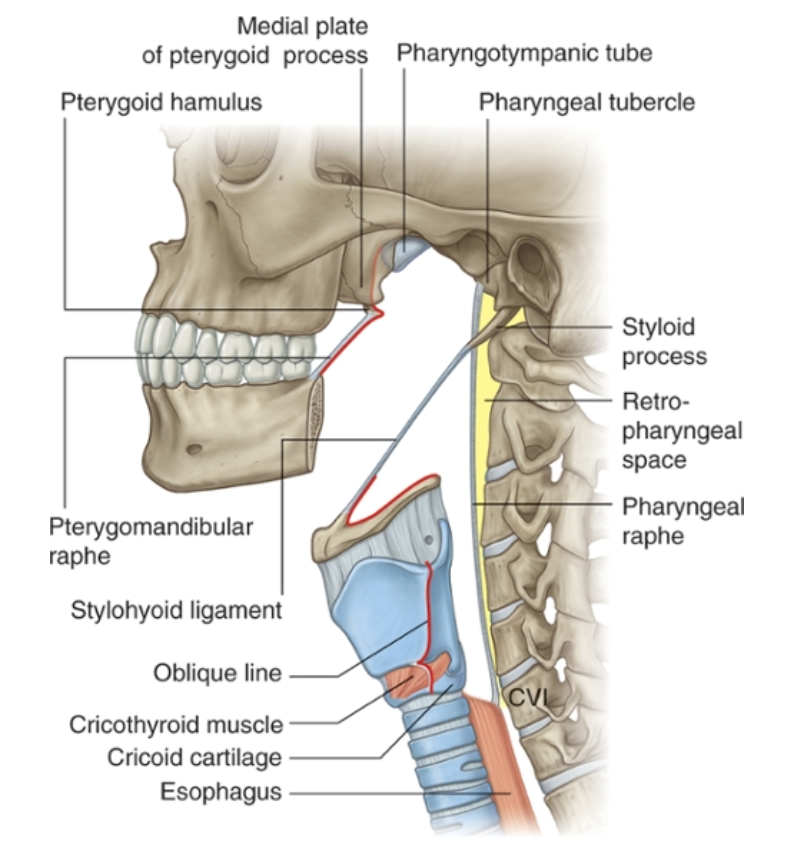
What is the pharyngeal fascia divided into
How are they differentiated
Function of fascia
- A thin layer (buccopharyngeal fascia) coats the outside of the muscular part of the wall and is a component of the pretracheal layer of cervical fascia
- A much thicker layer (pharyngobasilar fascia) lines the inner surface
Reinforces the pharyngeal wall where muscle is deficient
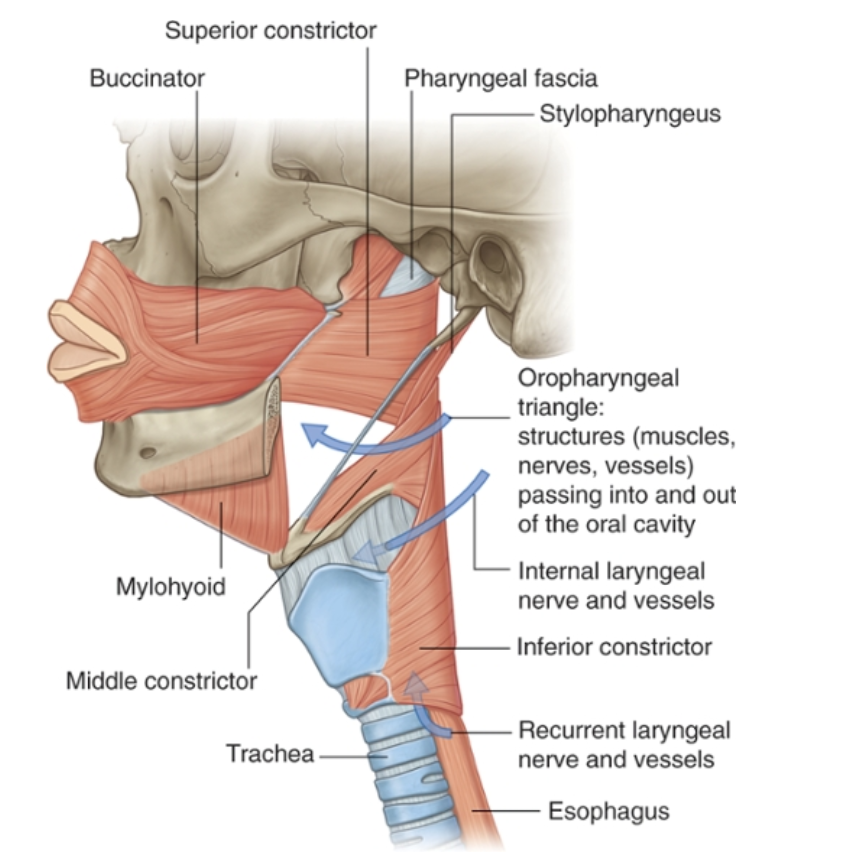
Gaps in the pharyngeal wall and structures passing through them
Nasopharynx structure
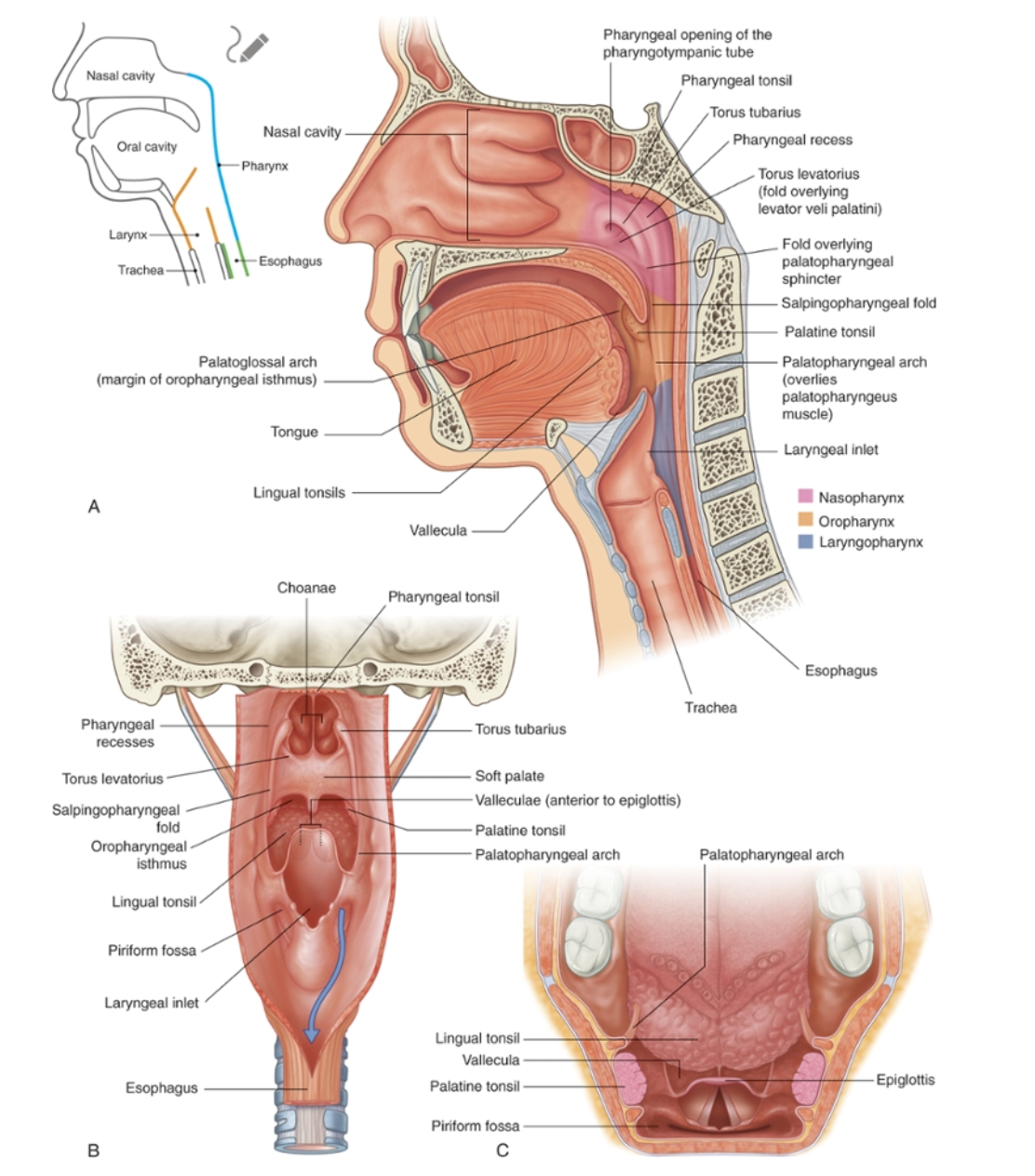
Where is there a large collection of lymphoid tissue in the nasopharynx
What does enlargement result in
The pharyngeal tonsil is in the mucosa covering the roof of the nasopharynx
Enlargement of this tonsil (adenoids) can occlude the nasopharynx so that breathing is only possible through the oral cavity
What are the most prominent features on each lateral wall of the nasopharynx
- Pharyngeal opening of the pharyngotympanic tube
- Mucosal elevations and folds covering the end of the pharyngotympanic tube and adjacent muscles
Where exactly is the opening of the pharyngotympanic tube
Posterior and slightly above the level of the hard palate
Lateral to the top of the soft palate
What is the torus tubarius
Tubal elevation in the pharyngeal wall
What structure is posterior to the torus tubarius
Pharyngeal recess
2 mucosal folds related to the pharyngotympanic tube
- Small vertical salpingopharyngeal fold
- Broad fold/elevation that emerges just under the opening of the PT
What are valleculae
Depressions formed between a midline mucosal fold and 2 lateral folds that connect the tongue to the epiglottis
Where does the laryngopharynx extend from
Superior margin of the epiglottis to the top of the oesophagus at the level of vertebra C6
Function of the piriform fossae
Form channels that direct solids and liquids from the oral cavity around the raised laryngeal inlet and into the oesophagus
Name the 3 tonsils
- Pharyngeal/adenoid (when enlarged) - MIDLINE
- Palatine - between the palatoglossal and palatopharyngeal arches posterior to the oropharyngeal isthmus
- Lingual - posterior 1/3rd of tongue
Blood supply to the pharynx
essentially EXTERNAL CAROTID (upper)
- Ascending pharyngeal
- Acending palatine and tonsilar branches of FACIAL
- Numerous branches of the maxillary and lingual arteries
essentially THYROCERVICAL TRUNK of SUBCLAVIAN (lower)
- Pharyngeal branches from inf thyroid
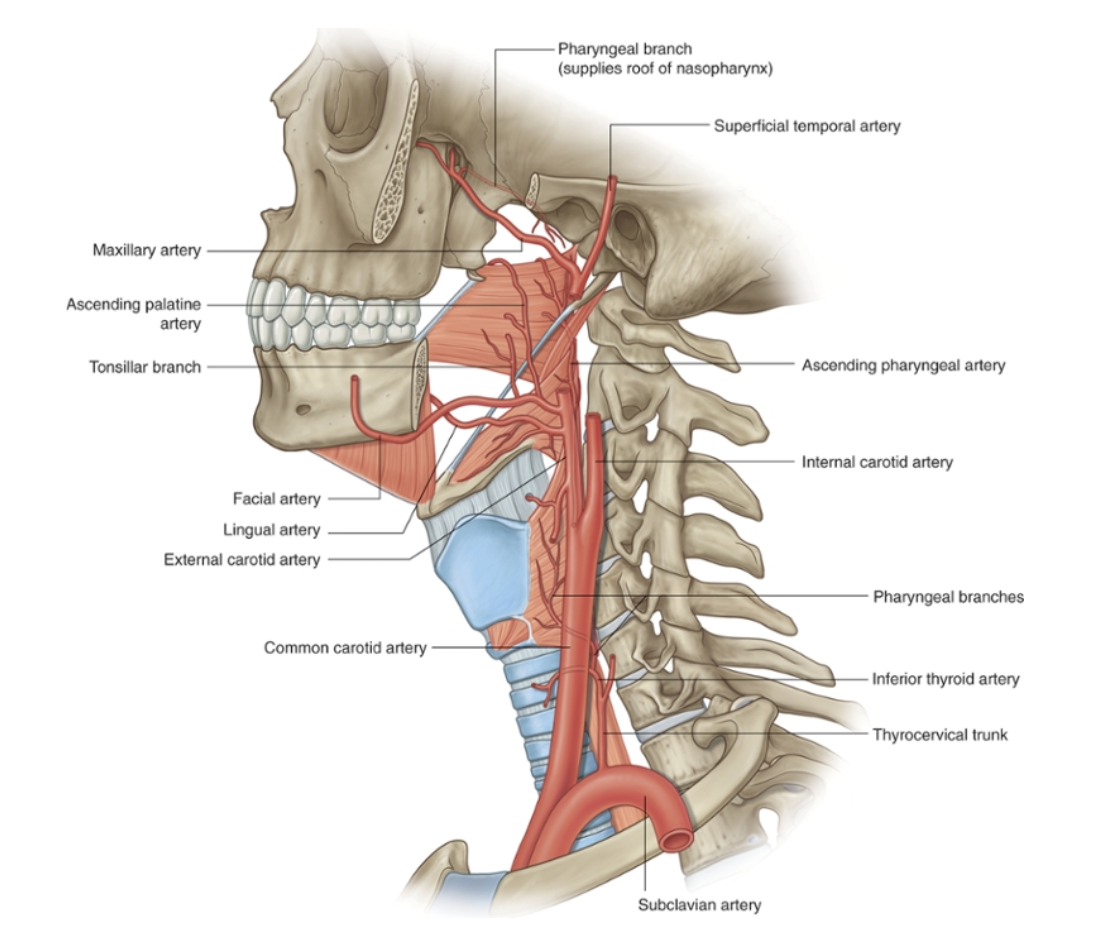
What is the major blood supply to the palatine tonsil
Tonsillar branch of the facial artery (which penetrates the superior constrictor muscle)
Venous drainage of the pharynx
Veins form a plexus, which drains superiorly into pterygoid plexus in infratemporal fossa and inferiorly into the facial and internal jugular veins

Lymphatic drainage of the pharynx
Drains into deep cervical nodes and include retropharyngeal (between nasopharynx and vertebral column), paratracheal and infrahyoid nodes
Where do the palatine tonsils drain
Through the pharyngeal wall into the jugulodigastric nodes in the region where the facial vein drains into the internal jugular vein (and inferior to the belly of the digastric muscle)





