What is the goal of positioning?
allow optimal surgical access while minimizing potential risk to the patient
What is the risk of positioning for surgery?
Risk: pt is unable to make necessary changes in positioning as needed
The preoperative interview should include specific questions that will determine the patient’s ability to _____________
tolerate the planned procedure
What is the components of patient’s interview?
- General level of awareness
- Age
- Weight and height
- Skin condition
- Nutritional status
- Current medications
- Normal range of motion and limitations on range of motion
- Physical abnormalities or limitations, such as back problems or deformities
- Preexisting medical conditions (e.g., vascular, respiratory, circulatory, or neurological problems, immune compromise)
- Previous surgeries and surgical complications
- Implants, such as total joint prostheses
Who determines the right position?
Positioning is a compromise between what an anesthetized patient can tolerate
- Structurally and physiologically vs. Surgical team access
Positioning-related complication often lead to ________
medicolegal scenarios
Why is position related to medicolegal?
Notations absent or uninformative
What is the documentation of patient positioning?
- Descriptive notation about position
- Note frequent checks as the body will shift during surgery, protective measures (eyes, pressure points, etc.), and complications in positioning
What is the cause of damage of neural tissue?
Hypoperfusion
What are the different types of neural tissue damage? (3)
stretch, compression, disruption
What can stretching of neural tissues cause?
peripheral & central neuropathies
When can tissue ischemia occur?
- > 5% than normal resting length = ISCHEMIA (reducing both arteriole & venule blood flow)
- Kinking of arterioles/venules associated w/ neural stretch = ISCHEMIA
What happens if ischemia is prolonged?
may result in permanent neural damage!
What can direcet compression of neural and soft tissue?
ischemia & tissue damage
What nerves are more susceptible to ischemia?
Peripheral nerves
Not always recognized ____________ after surgery and may manifest/be recognized weeks later
Immediately
What can happen to pressure points on soft tissue?
reduce local blood flow = ISCHEMIA
What is the prevention for damage to pressure points?
Padding (gels, foams, etc.)
What change in BP with change in height between the heart and body region?
MAP increases or decreases ~2mmHg/inch
When is MAP alterations a concern?
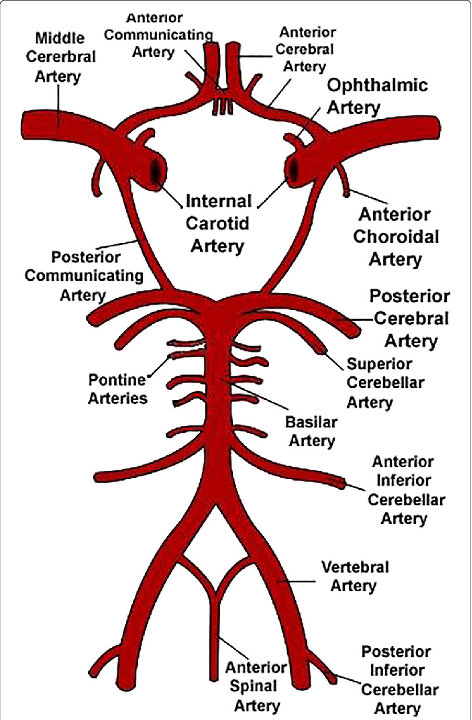
cerebral perfusion at the Circle of Willis
What positions are at risk for hypoperfusion and ischemia?
Head up, sitting and lithotomy
What happens to cardiac output in the full sitting position?
Cardiac output decreases 20% in full sitting position (90 degrees) secondary to venous pooling
Review the anatomy of the circle of willis.
What are the cardiovascular changes in the prone position?
- CVP increased
- BP and LV volume decreased
- Decreased venous return and increased intrathoracic pressure
- CI decreased or unchanged
- Increased venous pressure to the head






