Neuropraxia
Compression and ischemia. Comes back in hours to weeks, and no wallerian degeneration occurs.
Axonotmesis
Has disruption of the neuronal axon, but with maintenance of the myelin sheath. Wallerian degeneration occurs, but regeneration occurs over weeks to years.
Neurotmesis
Not only the axon, but the encapsulating connective tissue lose their continuity. Has wallerian degeneration, with permanent loss.
Charcot Leyden crystals
allergic fungal rhinosinusitis
Furstenburg test
encephalocele expands with compression of IJ
Potts puffy tumor
fonticulus nasofrontalis subperiostial abscess
Local anesthetic allergy - which are amides?
contain 2 “i”s
Local anesthetic allergy - which are esters?
contain 1 “i”
Rapid Sequence medications
100mg Succinylcholine, 20mg Etomidate
Sunderland’s Classification
Nerve Injury
First-degree (Class I)
Seddon’s neurapraxia and first-degree are the same.
Second-degree (Class II)
Seddon’s axonotmesis and second-degree are the same.
Third-degree (Class II)
Sunderland’s third-degree is a nerve fiber interruption. In third-degree injury, there is a lesion of the endoneurium, but the epineurium and perineurium remain intact. Recovery from a third-degree injury is possible, but surgical intervention may be required.
Fourth-degree (Class II)
In fourth-degree injury, only the epineurium remain intact. In this case, surgical repair is required.
Fifth-degree (Class III)
Fifth-degree lesion is a complete transection of the nerve. Recovery is not possible without an appropriate surgical treatment.
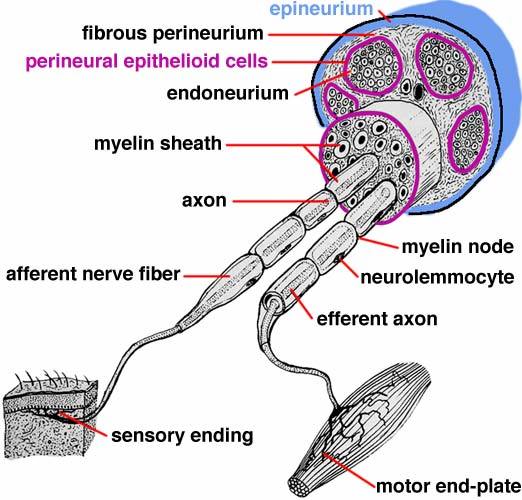
Nerve layers
Epineurium
Perineurium
Endoneurium
How much blood is in a human?
Obese Female: 60cc/kg
Adult Female: 65cc/kg
Obese Male: 70cc/kg
Adult Male: 75cc/kg
Infant: 80cc/kg
Term Neonate: 85cc/kg
Premature Neonate: 95cc/kg
List the cranial nerves
I - Olfactory nerve
II - Optic nerve
III - Oculomotor nerve
IV - Trochlear nerve
V - Trigeminal nerve/dentist nerve
VI - Abducens nerve
VII - Facial nerve
VIII - Vestibulocochlear nerve/Auditory nerve
IX - Glossopharyngeal nerve
X - Vagus nerve
XI - Accessory nerve/Spinal accessory nerve
XII - Hypoglossal nerve
What is Frey’s syndrome?
(Gustatory Sweating)
Pathophysiology
injury to the auriculotemporal nerve (sympathetic
fibers) results in aberrant innervation of cutaneous sweat glands (which share the same neurotransmitter) by postganglionic
parasympathetic fibers
- may occur up to 5 years postoperatively
- less incidence with the use of “thick” skin flaps
Symptoms
sweating and reddening of skin during meals
Treatment
- Medical Management: antiperspirant and anticholenergic preparations (scopolamine, glycopyrrolate, diphemanil methylsulfate)
- Surgical Management: tympanic neuronectomy (chorda tympani nerve section via tympanotomy approach), interpose a sheet of fascia lata or dermis between skin and parotid gland
- Radiation Therapy: reserved for failed management with severe symptoms
What is the only cranial nerve to both enter and exit the skull?
CN XI (spinal accessory)
This nerve derives from the brainstem, enters through the foramen magnum, then exits the skull via the jugular foramen
What are the Paradise Criteria for Tonsillectomy?
7/1 5/2 3/3
- 7 episodes in previous year
- 5 episodes in each of the previous 2 years
- 3 episodes in each of the previous 3 years
Clinical features
- Sore throat plus at least one of the following features qualifies as a counting episode:
- Temperature of greater than 100.9°F (38.3°C)
- Cervical adenopathy (tender lymph nodes or lymph node size greater than 2 cm)
- Tonsillar exudate
- Culture positive for group A β-hemolytic streptococcus
What are the criteria for placement of pressure-equalizing tubes?
>3 episodes in 6 months, > 4 episodes in 12 months (3/6, 4/12)
- Severe acute otitis media
- Hearing loss > 30 dB in patient with otitis media with effusion
- Poor response to antibiotic for otitis media
- Impending mastoiditis or intra-
- cranial complication due to otitis media
- Otitis media with effusion > 3 months
- Recurrent episodes of acute otitis media (more than 3 episodes in 6 months or more than 4 episodes in 12 months)
- Chronic retraction of tympanic membrane or pars flaccida
- Barotitis media control.
- Autophony due to patulous eustachian tube.
- Craniofacial anomalies that predispose to middle ear dysfunction (e.g., cleft palate)
- Middle ear dysfunction due to head and neck radiation and skull base surgery
How many cells are there in the human body?
10^14, or 100,000,000,000,000
How many bacteria are there in the human body?
10^15, or 10 times more than there are human cells
What hormones are secreted from the anterior pituitary?
FLATT-PMG
- Follicle-Stimulating hormone
- Luteinizing hormone
- Adrenocorticotropic hormone
- Thyroid-stimulating hormone
- Tropic hormone
- Prolactin
- Melanocyte-stimulating hormone
- Growth hormone
What hormones are secreted from the posterior pituitary?
- Oxytocin
- Vasopressin (ADH)
What is Klumpke Paralysis?
Palsy of the lower roots of the brachial plexus
Usually C8 and T1 involved
Caused by shoulder dystocia leading to a pulled arm
Leads to “claw hand”
“Klumpke the monkey hung from a tree”
Osteoclasts vs Osteoblasts
Osteoclasts
Removes bone tissue by breaking mineralized matrix down (bone resporption)
Osteoblasts
Responsible for bone formation
Specialized fibroblasts that produce a matrix of osteoid (type 1 collagen)
What are the 5 types of collagen?
- Collagen I: skin, tendon, vascular ligature, organs, bone (main component of the organic part of bone)
- Collagen II: cartilage (main component of cartilage)
- Collagen III: reticulate (main component of reticular fibers), commonly found alongside type I.
- Collagen IV: forms bases of cell basement membrane
- Collagen V: cell surfaces, hair and placenta






