Longitudinal temporal bone fracture
80% of fractures, 20-25% with FN paralysis, often with TM lacerations, CDHL, and bloody otorrhea
Transverse temporal bone fracture
20% of fractures, 50% with FN paralysis, often with hemotypanum and SNHL
Most common site of facial nerve injury in tbone fractures
perigeniculate region
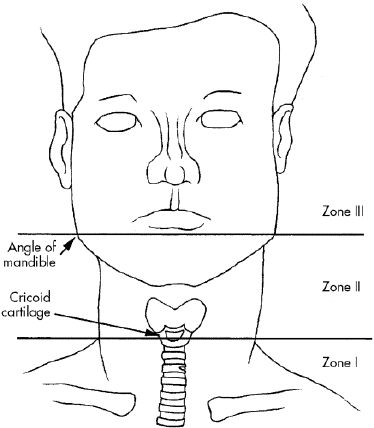
What are the zones of the neck?
Zone 1: thoracic outlet to cricoid cartilage
Zone 2: cricoid to angle of the mandible
Zone 3: angle of the mandible to skullbase
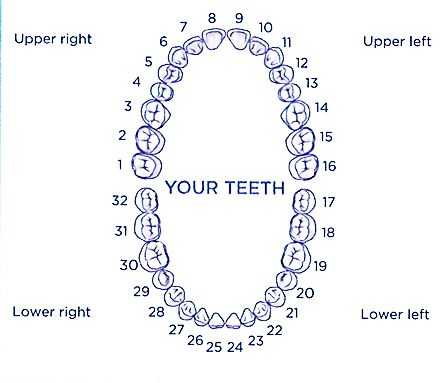
How are the teeth numbered in adults?
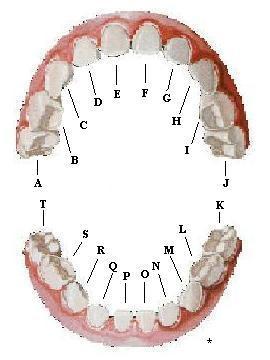
How are the teeth numbered in children?
Most common cause of death in penetrating neck trauma?
Exsanguination (large vessel injury)
Schaefer’s Laryngeal Trauma Classification
- Group I - No fracture, minor hematoma, edma, or laceration
- Group II - Nondisplaced fracture, edema or hematoma, minor mucosal disruption without exposed cartilage
- Group III - Displaced fractures, massive edema or mucosal disruption, exposed cartilage and/or cord immobility
- Group IV - Addition of 2 or more fracture lines, skeletal instability or significant AC trauma
- Group V - complete laryngotracheal seperation
Group 1 laryngeal trauma management
- 23 hour observation
- HOB elevated
- Voice rest
- Humidified air
- Antireflux meds
- Steroids
- Abx
- Flexible scope exam
- +/- CT scan
Group 2 laryngeal trauma management
- +/- Tracheostomy
- DL/bronch
- +/- CT
- Medical management
Group 3 laryngeal trauma management
- Tracheostomy
- Direct laryngoscopy
- Bronchoscopy
- Exploration and surgical repair
Group 4 laryngeal trauma management
- Tracheostomy
- Direct laryngoscopy
- Bronchoscopy
- Exploration and surgical repair
- Stent placement
Group 5 laryngeal trauma management
- Tracheostomy
- Complex laryngotracheal repair
What are the most common facial fractures?
- Nasal bones
- Mandible
- Orbit/ZMC
ZMC fracture has 4 components. List them
Not a true tripod, but rather a tetrapod
- ZF suture
- Zygomaticomaxillary buttress (lateral buttress, suture)
- Orbital floor
- Zygoma
Can get increased/decreased orbital volume leading to enopthalmos/exopthalmos, V2 numbness, diplopia, trismus if coronoid is hitting zygomatic arch.
Should be on soft diet to avoid pulling of zygoma by masseter musle. Avoid nose blowing due to maxillary sinus and orbit communication.
Vertical and Horizontal Buttresses
Vertical buttresses
- nasomaxillary
- zygomaticomaxillary
- pterygomaxillary
Horizontal buttresses
- frontal bar
- orbital rims
- zygomatic processes of temporal bone
- maxillary alveolus and palate
- serrated edges of the greater wing of the sphenoid
What is the foramina of breschet?
Important in frontal sinus fractures
Venous deep drainage is via transosseous venous channels through the posterior wall of the sinus
Connection of sinus to subdural space
Can be path of infectious spread
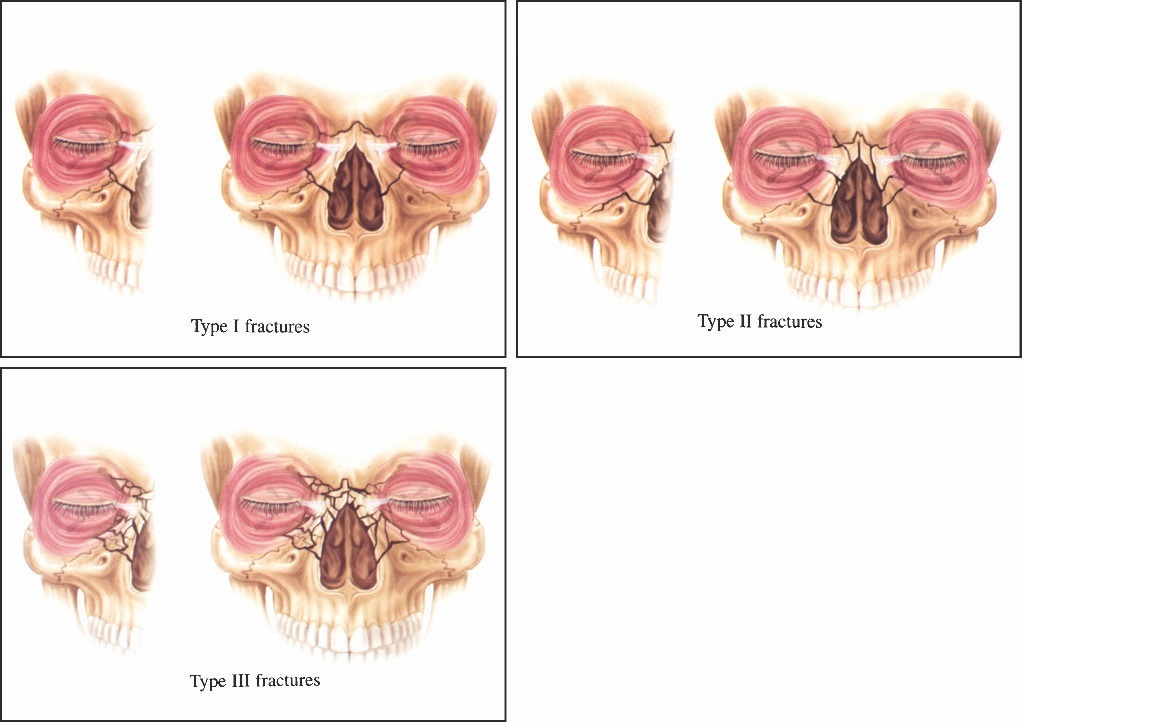
What are the classifications of NOE fractures?
Type I injuries
- the central fragment remains intact and maintains the insertion of the medial canthal ligament.
Type II injuries
- the central fragment is comminuted, but maintains the insertion of the medial canthal ligament.
Type III injuries
- the central fragment is comminuted, and does not maintain the insertion of the medial canthal ligament