L5/S1 spondylolytic spondylolisthesis with severe bilateral L5/S1 neuroforaminal stenosis and severe bilateral L5 nerve root impingement.
L5/S1 spondylolytic spondylolisthesis with severe bilateral L5/S1 neuroforaminal stenosis and severe bilateral L5 nerve root impingement.
- Choroidal fissue is in continuation with the ambient fissure
- It hugs the hippocampus
- It contains choroid plexus and anterior choroidal artery
- It connects to the temporal horn anteriorly and superiorly
- Choroidal fissue is in continuation with the ambient fissure
- It hugs the hippocampus
- It contains choroid plexus and anterior choroidal artery
- It connects to the temporal horn anteriorly and superiorly
Osseous excrecence
Osseous excrecence
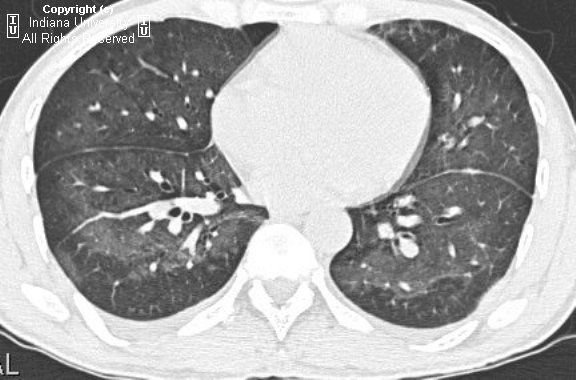
PCP pneumonia
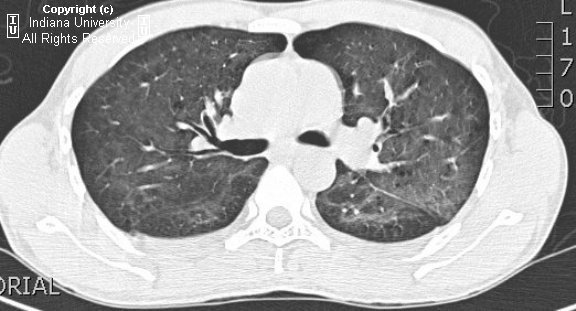
- CXR - usually normal; may see subtle groundglass opacities
- HRCT
- Diffuse, symmetric ground-glass opacities are the dominant finding. There may be sparing of the subpleural lung in ~40% of the cases.
- Thin walled cysts in the same distribution as the ground-glass opacities may be seen sometimes. These predispose the patient to pneumothorax.
- Adenopathy and pleural effusions are rare. Consider other diagnoses in this case.
Choroidal fissure and temporal horn of the lateral ventricle are VERY close by, but they don’t communicate.
Choroidal fissure and temporal horn of the lateral ventricle are VERY close by, but they don’t communicate.
Uncal shift
vs
Uncal herniation
- uncal shift - just shifted out
- uncal herniation - bad - on coronal images, the uncus is on the other side of the tentorium! - blown pupil due to compression on the cisternal portion of the CNIII
- death occurs when there is mass effect on the adjacent midbrain
Wernicke’s encephalopathy
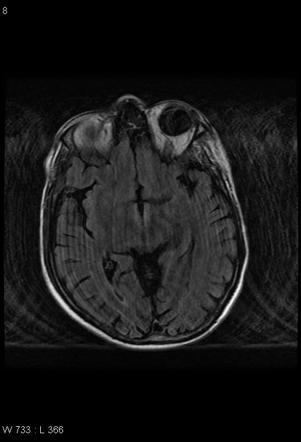
- Triad: confusion, ataxia, ophthalmoplegia
- MRI:
- T2 : symmetric increased T2 signal intensity in the
- mamillary bodies
- medial thalami
- tectal plate
- periaqueductal area
- T1 C+ (Gd) : contrast enhancement can also be seen in the same regions, most commonly of the mamillary bodies.
- T2 : symmetric increased T2 signal intensity in the
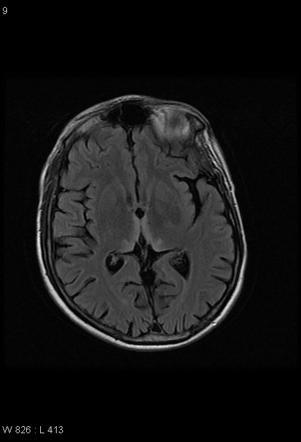
“Luxury perfusion”
- gyriform enhancement of the cortex following infarct
- usually a few days after the infarct
- due to breakdown of blood-brain barrier
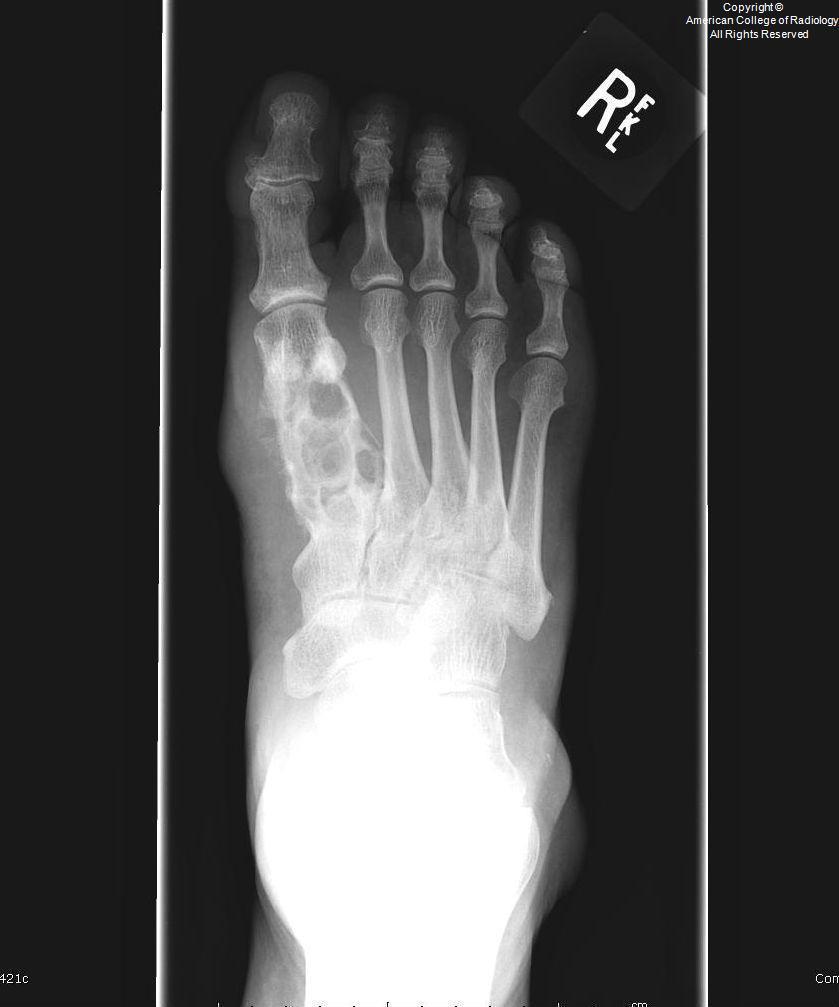
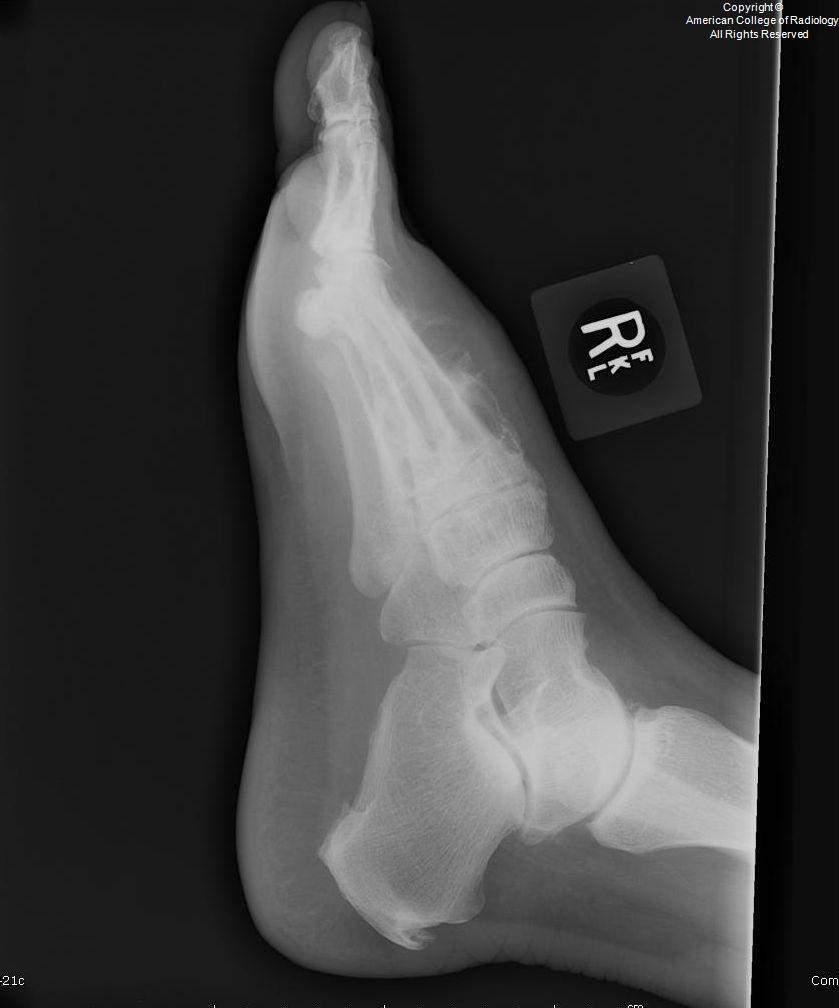
Medulla foot
- Medulla region in India
- also called mycetoma
- fungal (eumycetoma)
- bacterial (actinomycetoma)
- commonly seen in those who walk barefoot, such as agricultural workers
- patients typically present with painless swelling and a draining sinus tracts. The purulent discharge typically contains colored “grains” representing clumps of the causative organism
- Stage 0 – Soft-tissue swelling, which can become nodular and expansive.
Stage I – Extrinsic pressure on the bone causing bone displacement or scalloping. No bone involvement.
Stage II – Periosteal reaction or reactive sclerosis as a result of irritation of the bone surface by the causative organism.
Stage III – Bone erosion or cavitation as a result of penetration of the periosteum and cortex.
Stage IV – Joint involvement with longitudinal spread along a ray of metatarsal bone and phalanx.
Stage V – Horizontal spread limited to two rays of bone and confined to the hindfoot, midfoot, or forefoot.
Stage VI – Uncontrolled infection with multidirectional destruction
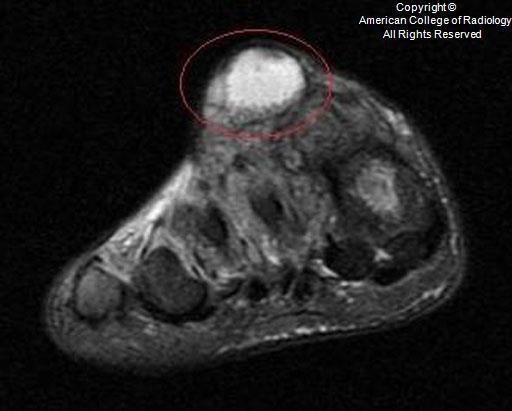
Dot-in-circle sign
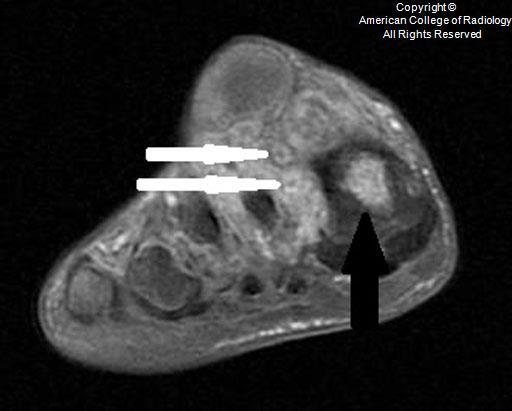
- This sign refers to the characteristic high intensity spherical lesions on both T1- and T2-weighted images with a tiny central focus of hypointensity, resulting in the “dot in circle.”
- The high intensity spherical lesions are classically surrounded by a network of low intensity material.
- High intensity spherical lesions represent granulomatous inflammation, and the low intensity tissue surrounding the round lesions relate to a fibrous matrix.
- The tiny central focus of hypointensity correlates to the fungus ball or grains.
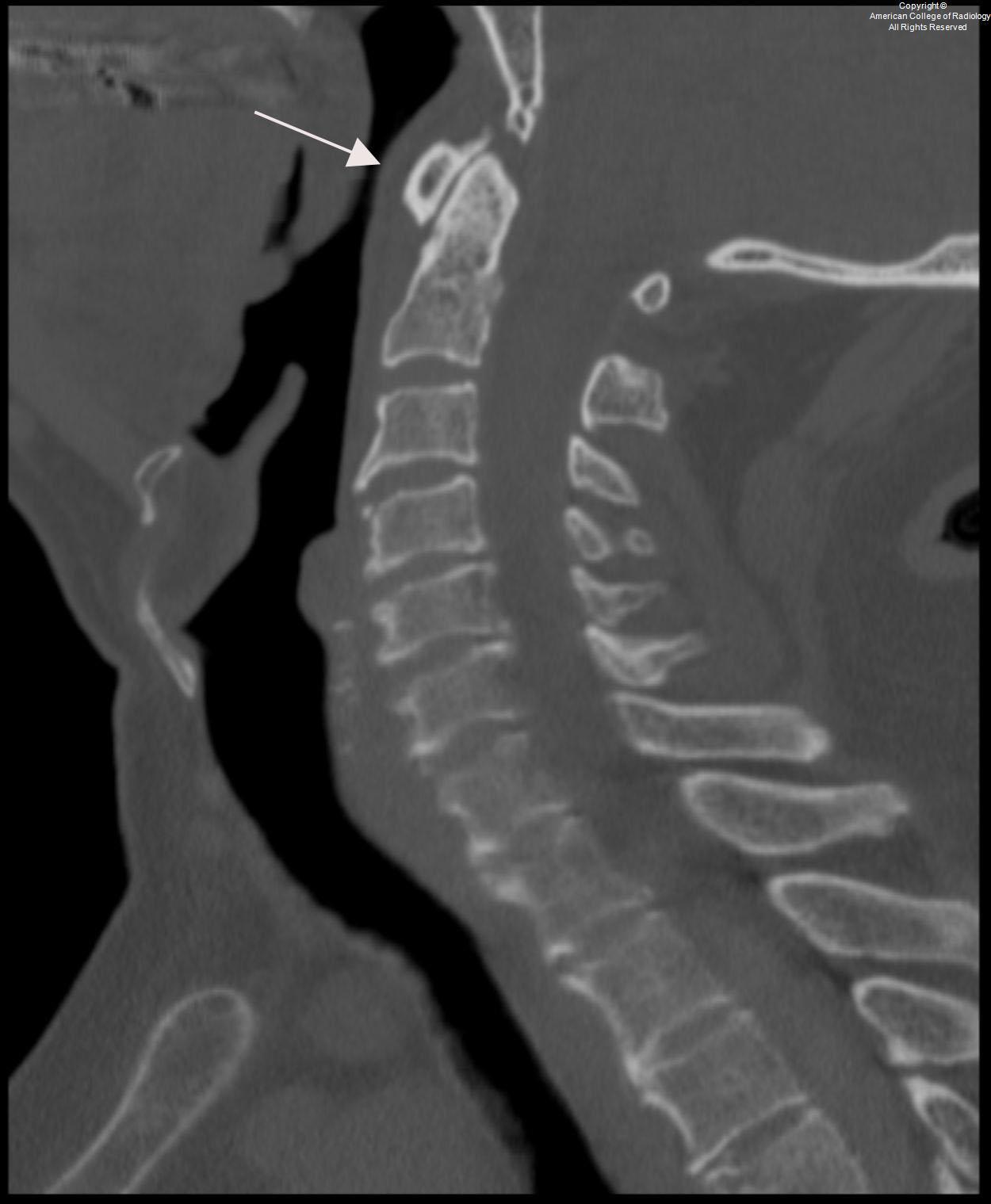
Cspine CT
Look for prevertebral soft tissue swelling SUPERIORLY!!!
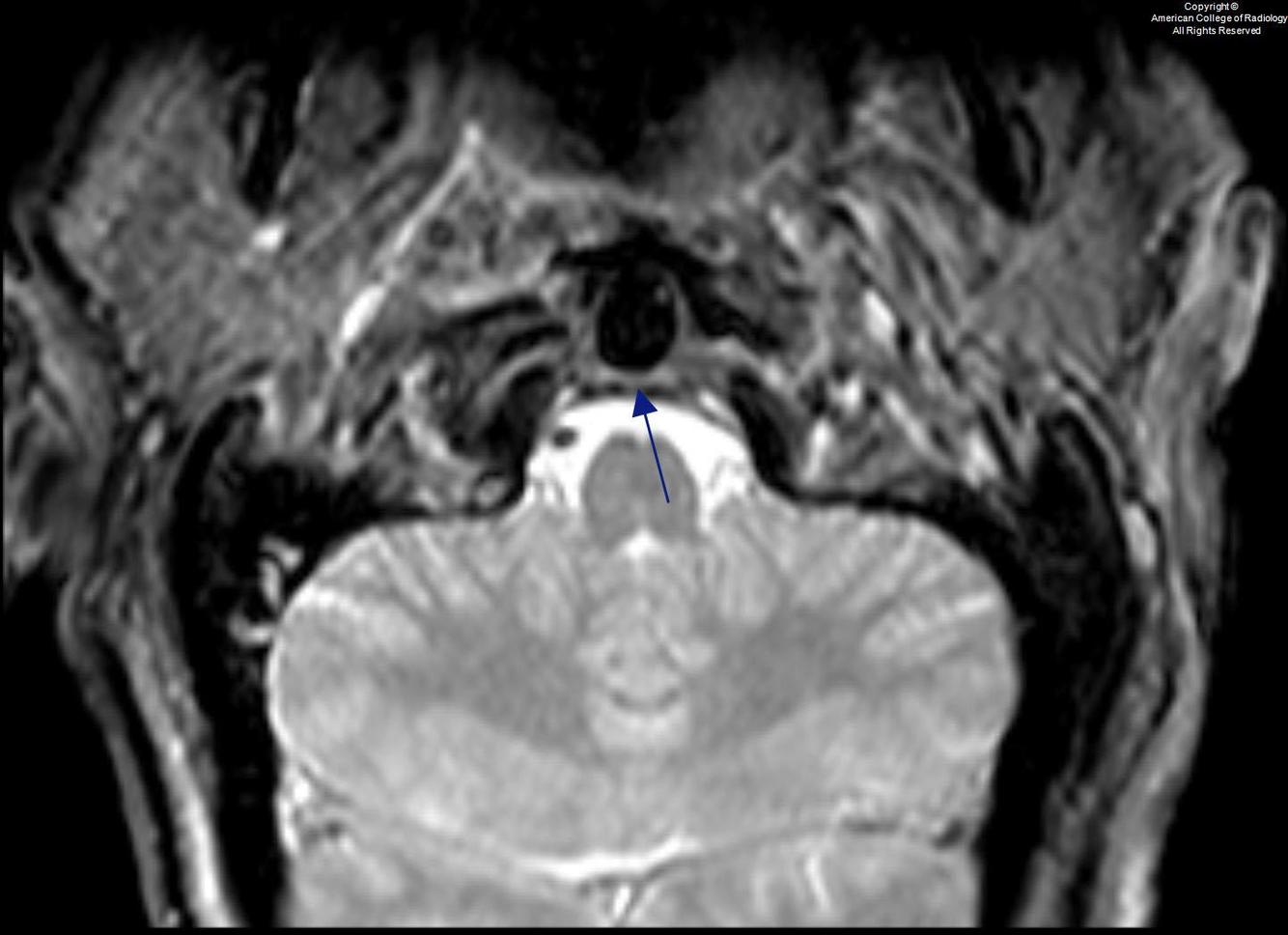
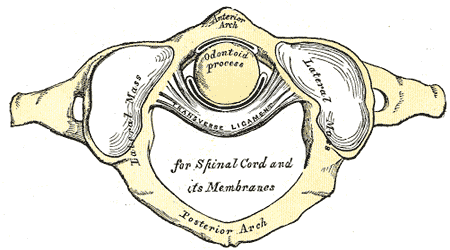
Intact Transverse Ligament C1/2
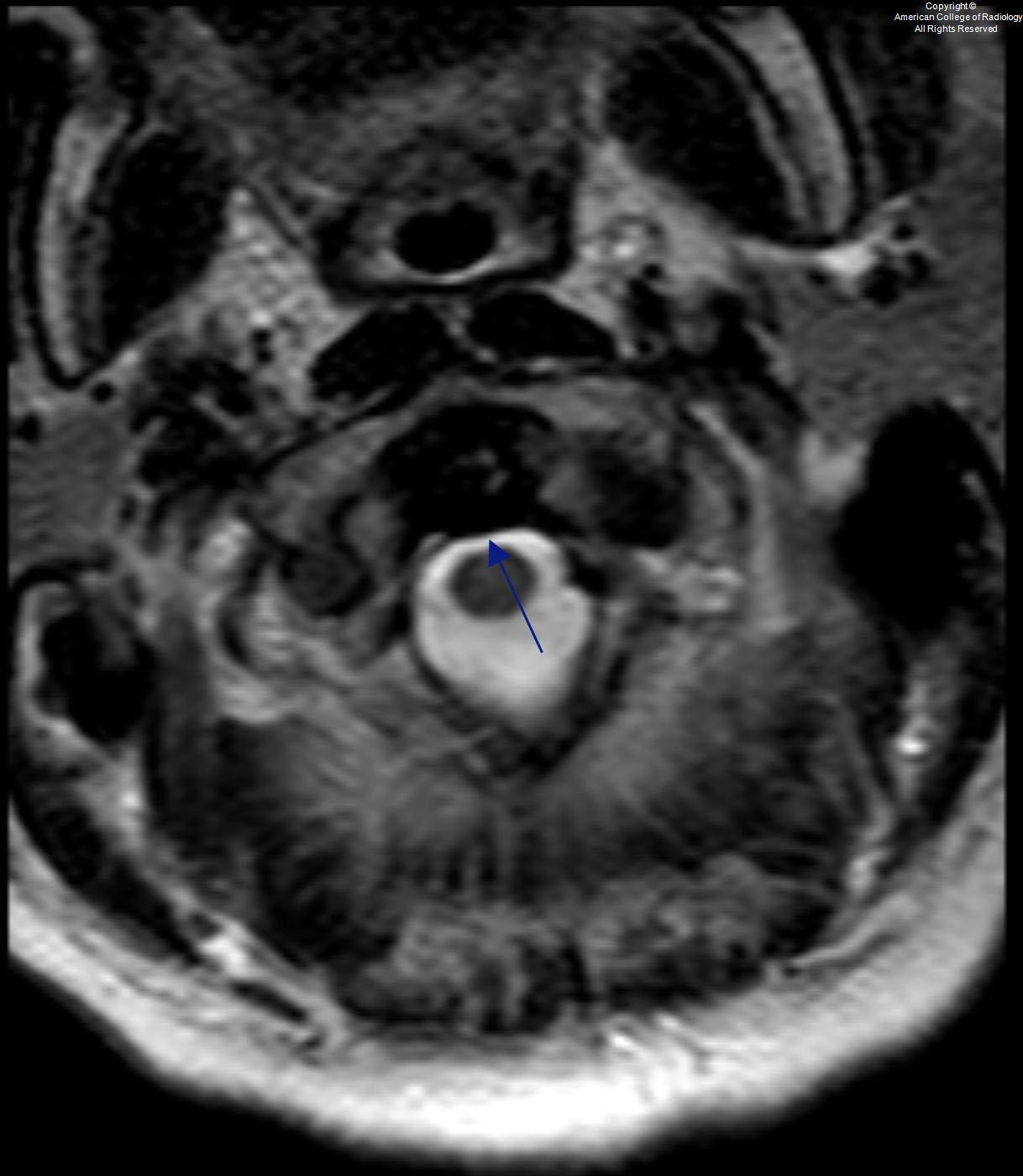
Torn Transverse Ligament C1/2
Transverse Ligament
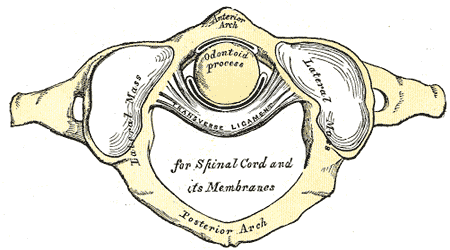
- The transverse ligament of the atlas is a thick, strong band, which arches across the ring of the atlas, and retains the odontoid process in contact with the anterior arch.
- In Jefferson’s fracture - C1 fracture
- if transverse ligament is intact - stable - conservative management
- if transverse ligament is disrupted - unstable fracture - surgical management
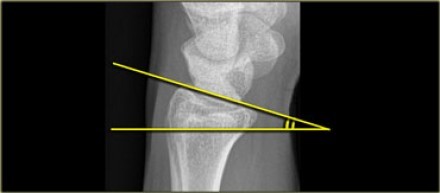
- Radial tilt is measured on a lateral radiograph.
- The radial tilt represents the angle between a line along the distal radial articular surface and the line perpendicular to the longitudinal axis of the radius at the joint margin.
- The normal volar tilt averages 11degrees (2 - 20 degrees)
FMD
Fibromuscular dysplasia
- Intimal FMD - 5%
- concentric ring-like stenosis
- long segment of tubular stenosis
- Meidal FMD - 90-95%
- medial fibroplasia - 70%
- “beaded”
- medial hyperplasia
- preimedial fibroplasia
- medial fibroplasia - 70%
- Adventitial FMD - <1%
Complications
- renal artery stenosis and hypertension
- renal artery aneurysm - may be complicated by aneurysmal rupture in pregnancy
- dissection and thrombosis
Extracapsular silicone implant rupture
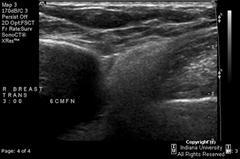
Silicone can be seen in breast tissue or lymph nodes after extracapsular rupture.
Classic ultrasound finding of extracapsular rupture is
- “snowstorm” appearance of echogenic scatter in the tissue adjacent to implant.
- “dirty shadow” posteriorly
Where is Zenker’s diverticulum typically located?
- posteriorly
- above the cricopharyngeus muscle
- at C5-C6 level
DDx for asymmetric breast density
- Inflammatory cancer
- Mastitis
- Trauma
- Invasive cancer (lobular)
CT dose
Rotation time doubled, mA one half
- rotation time S double
- mA half
- mAs same
Increase ptich
causes
Increased noise
Increase ptich
causes
Increased noise
Osteopetrosis
Sandwish vertebrae
Dermatomyositis
Sheet-like calcifications
Maissoneuve fracture
Note the spelling!!!
Maissoneuve fracture
Which surface (articular or bursal) is more commonly involved?
Which surface (articular or bursal) is more commonly involved?
articular surface!!!



-
Aunt Minne and ACR100
-
Random_1100
-
Random_2100
-
Random_3100
-
Random_4101
-
Random_5100
-
Random_6100
-
Random_7100
-
Random_8100
-
Random_9100
-
Random_10100
-
Random 11100
-
Random 12100
-
Random_13100
-
Random_14100
-
Random_15100
-
Random_16100
-
Random_17100
-
Random_18100
-
Random_19100
-
Random_20101
-
Random_2129



