Pancreas divisum
and
Santorinicele
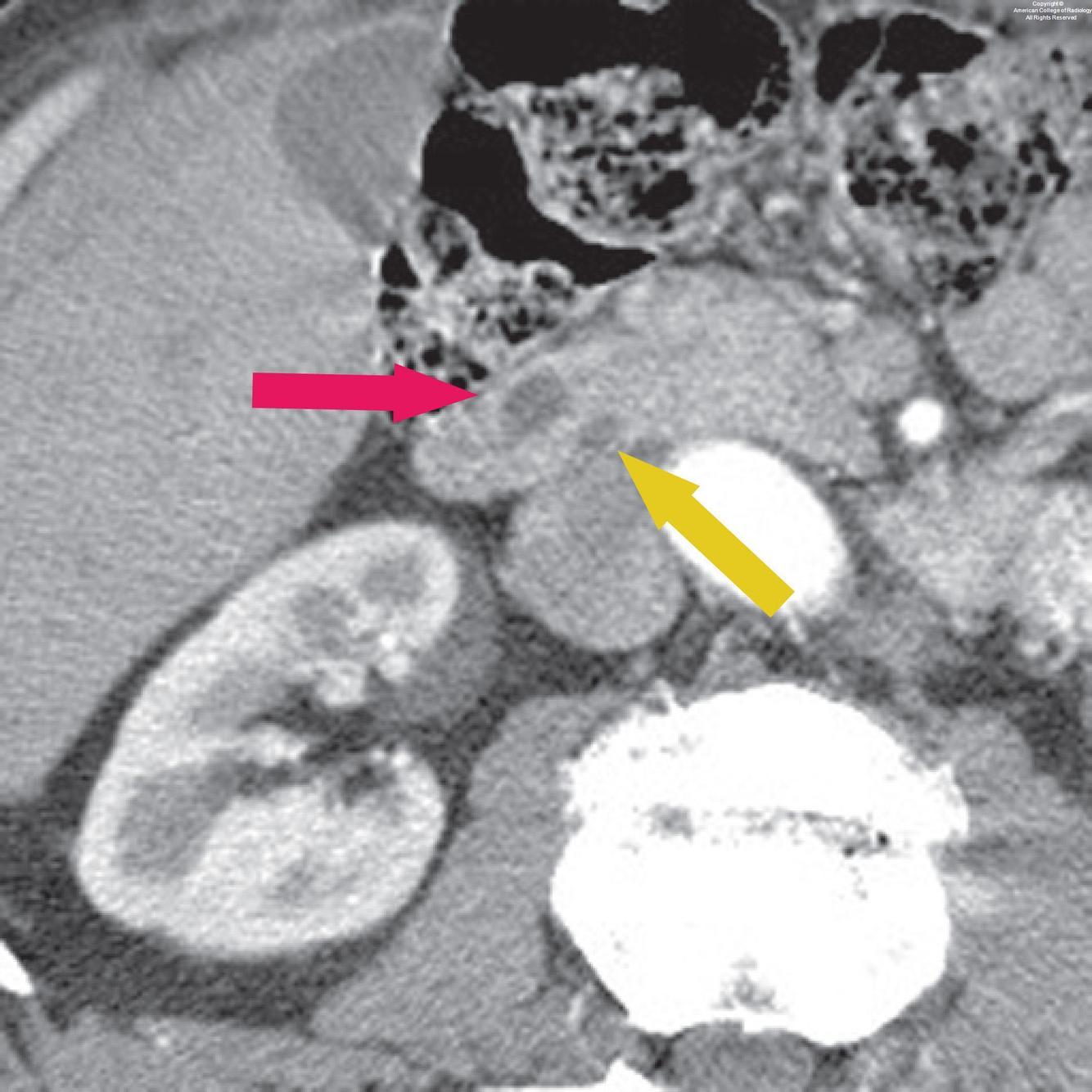
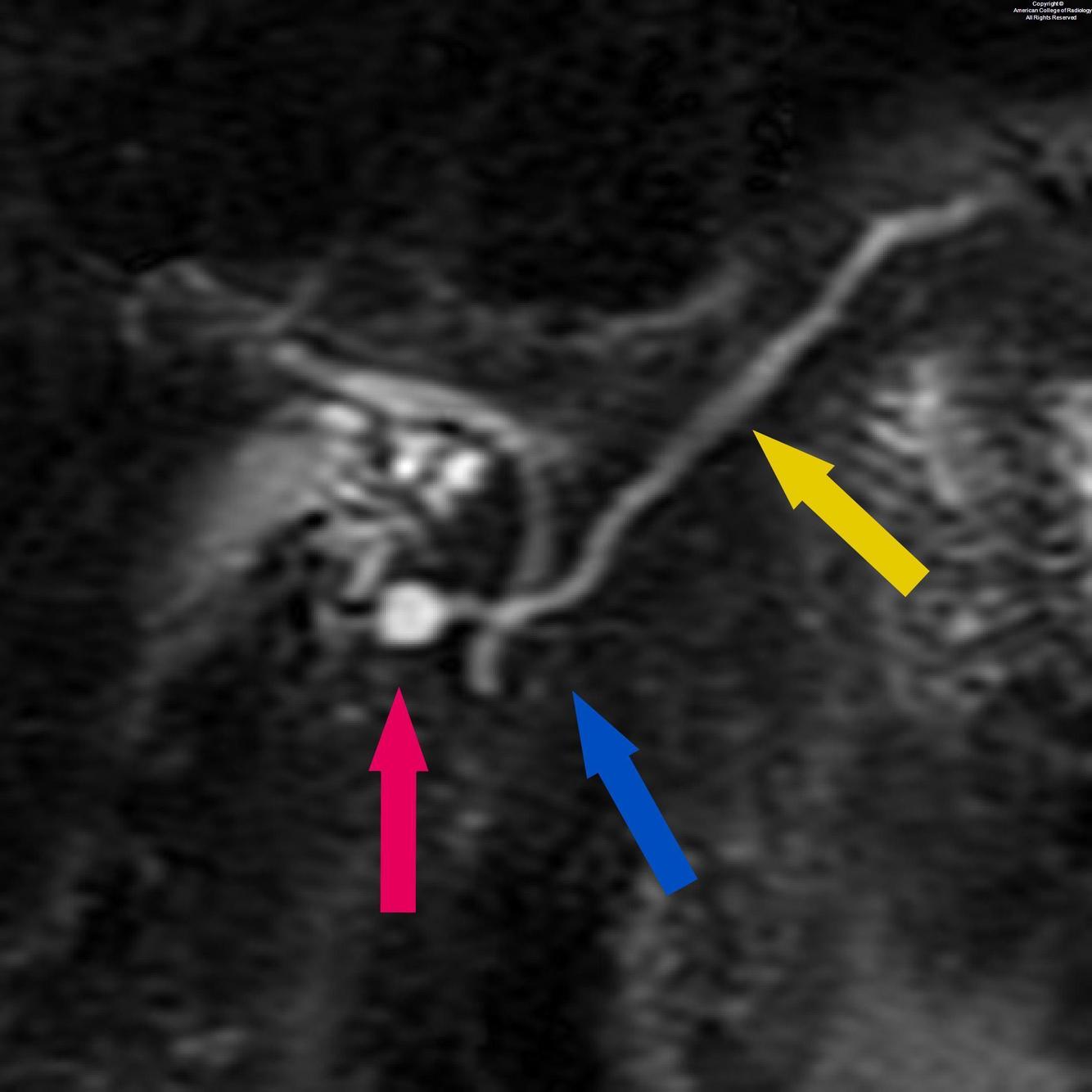
- pancreas divisum - most common congenital pancreatic anomaly
- 10% of the general population
- only 5% will become symptomatic
- Santorinicele - cystic dilation of the terminal portion of the dorsal pancreatic duct in patients with pancreas divisum
- due to distal obstruction or duct wall weakness
- associated with recurrent pancreatitis
- although santorinicele can occur in pediatric patients without prior pancreatitis or with normal pancreatic anatomy
- Dx - MRCP - T-shaped configuration, dorsal duct of Santorini cross over the CBD to drain into the minor papilla
- Rx - endoscopic drainage procedure, such as minor papilla sphincterotomy
“Crenated” cyst
“Crenated cyst”
having a margin with rounded scallops.
On MR, which sequence to you use to examine
whether the kidneys have preserved corticomedullary differentiation?
T1
How do you differentiate
chronic inflammation (fibrosis)
from
active/acute inflammation
of Crohn’s disease?
- both chronic inflammation (fibrosis) and acute inflammation can have enhancement post gad administration
- but only acute inflammation will demonstrate edema signal on T2 WI
What is the best sequence to examine the pancreas
- Use unenhanced T1 to examine the bulk and signal intensity of the pancreas - normal pancreatic parenchyma should be T1 hyperintense
- Anything abnormal will be T1 hypointense on MR
If a tumor is very dark on T2 - very hypointense T2 signal intensity corresponds to post treatment changes
Very bad, active mets shoudl be T2 “gray”
If a tumor is very dark on T2 - very hypointense T2 signal intensity corresponds to post treatment changes
Very bad, active mets shoudl be T2 “gray”
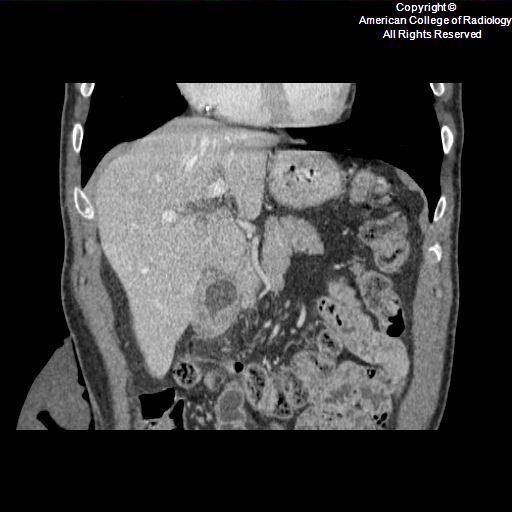
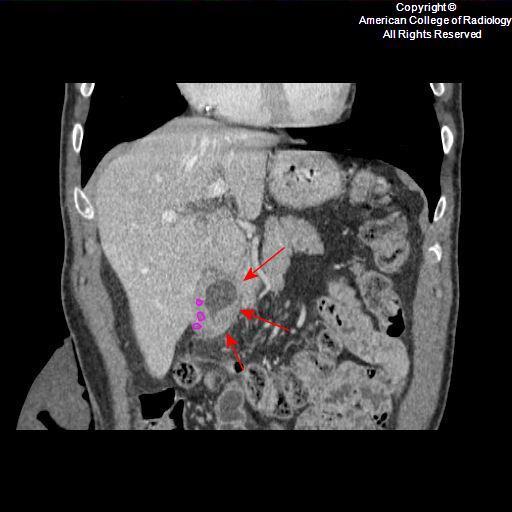
Xanthogranulomatous cholecystitis (XGC)
- uncommon
- chronic inflammatory condition characterized by infiltration of the gallbladder by destructive lipid-laiden macrophages
- imaigng features
- diffuse gallbladder wall thickening
- hypodense intramural nodules - containing lipid-laiden macrophages
- continuous enhancing gallbladder mucosa (as opposed to gallbladder carcinoma where mucosa is disrupted)
- women > men
- often associated w/ cholelithiasis
- Rx: cholesystostomy and then cholecystectomy
- DDx:
- acute / chronic cholecystitis
- gallbladder carcinoma
Demographics of gallbladder carcinoma?
Female:Male = 3:1
There is also diffuse intrahepatic biliary dilatation commensurate with the degree of the CBD dilatation.
There is also diffuse intrahepatic biliary dilatation commensurate with the degree of the CBD dilatation.
What to say about CBD dilatation without a cause identified?
No intraluminal filling defect, mural thickening, or extrinsic mass lesion.
This appearance is presumably on the basis of an underlying benign ampullary stricture, which remains the diagnosis of exclusion.
Biliary manifestations of CF?
- cholelithiasis
- stricturing
- narrowing and dilatation of biliary tree
Innocuous
Innocuous
not harmful, safe, non-offensive, innocent
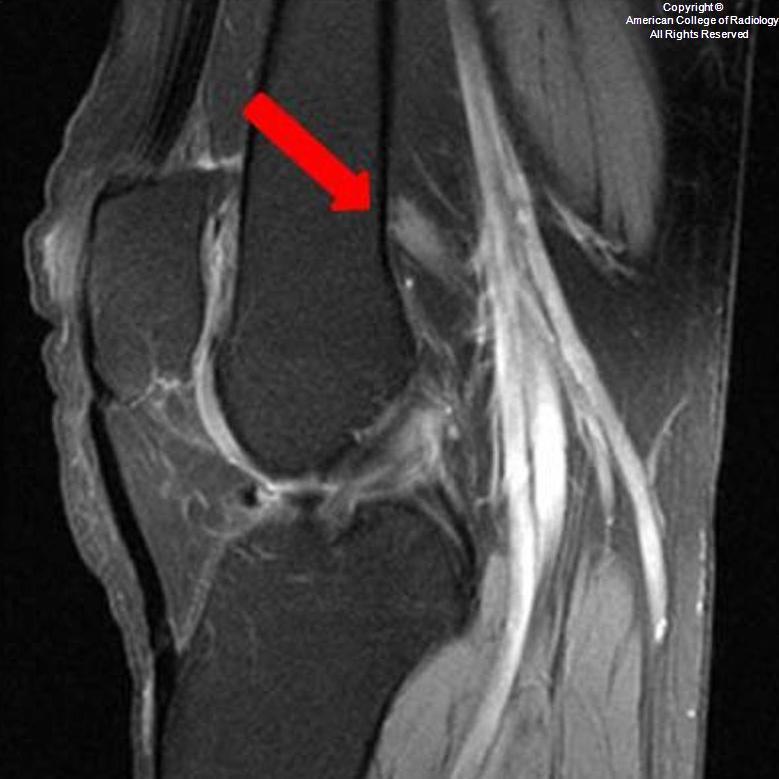
3 head of gastrocnemius muscle
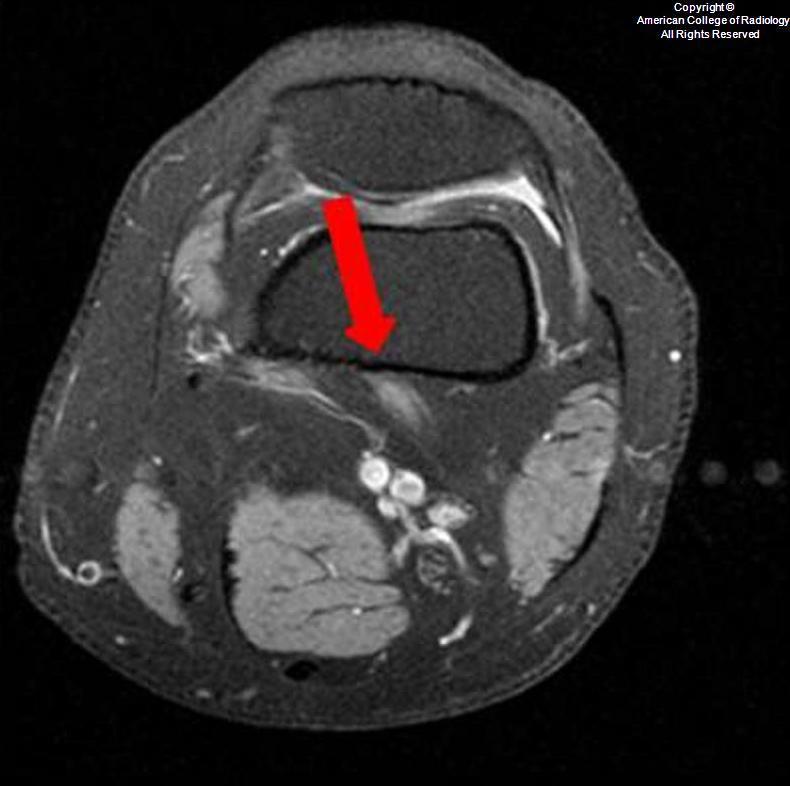
- most often innocuous
- but can cause popliteal vascular entrapment syndrome
Typical findings of fat or silicone
embolism syndrome
- Peripheral consolidations and ground glass opacities
- Silicone deposits in small arterioles and can increase pulmonary artery pressures sufficiently to precipitate cor pulmonale
*
DDx for arterial enhancing focal liver lesions
- FNH
- adenoma
- vascular shunt
- HCC
- hypervascular mets
- MRCT
- carcinoid
- neuroendocrine tumors
wording
…, in combination of …, most strongly favor the diagnosis of …
…, in combination of …, most strongly favor the diagnosis of …
A Richter hernia is an abdominal hernia in which comprise 10% of strangulated hernias. These hernias progress more rapidly to gangrene than other strangulated hernias, and obstruction is less frequent.
Pathology
Only the antimesenteric wall of the bowel has herniated without compromising the entire lumen. This herniation is usually through a small defect in the abdominal wall. The most often entrapped part of bowel is the terminal ileum, however any part of the bowel can be involved.
A Richter hernia is an abdominal hernia in which comprise 10% of strangulated hernias. These hernias progress more rapidly to gangrene than other strangulated hernias, and obstruction is less frequent.
Pathology
Only the antimesenteric wall of the bowel has herniated without compromising the entire lumen. This herniation is usually through a small defect in the abdominal wall. The most often entrapped part of bowel is the terminal ileum, however any part of the bowel can be involved.
What to think about when presented with
CT AP ? appendicitis
but appendix is normal
but thickened small bowel loops
with fluid in the colon???
Infectious enteritis
affecting the small bowel
and dirarrhea!!!
If you can’t make out the liver parenchyma against the vessels – fatty liver!!!
Don’t just compare with the spleen!!!
If you can’t make out the liver parenchyma against the vessels – fatty liver!!!
Don’t just compare with the spleen!!!
Adrenal lesion 6 months of no growth
– adrenal adenoma!!!
Adrenal lesion 6 months of no growth
– adrenal adenoma!!!
Renal collecting system duplication
Renal duplication
- upper obstructs
- lower refluxes
Renal collecting system duplication
Renal duplication
- upper obstructs
- lower refluxes
Ischemic bowel – look for non-enhancement and pneumatosis!!
Ischemic bowel – look for non-enhancement and pneumatosis!!
Fibrofatty proliferation
vs
Submucosal fat deposition
Fibrofatty proliferation - lots of mesenteric fat proliferation; separate the diseased small bowel (often the TI) from other bowel loops
Submucosal fat deposition
“2.9 x 2.3 x 1.9 cm soft tissue density mass adherent to the posterior urinary bladder dome, and the diagnosis of exclusion is a primary bladder neoplasm. Urology consult is recommended. If this soft tissue mass is ultimately proven to be a bladder neoplasm, no evidence of intra-abdominal metastatic disease is demonstrated within the limitations of this unenhanced CT.”
“2.9 x 2.3 x 1.9 cm soft tissue density mass adherent to the posterior urinary bladder dome, and the diagnosis of exclusion is a primary bladder neoplasm. Urology consult is recommended. If this soft tissue mass is ultimately proven to be a bladder neoplasm, no evidence of intra-abdominal metastatic disease is demonstrated within the limitations of this unenhanced CT.”



-
Aunt Minne and ACR100
-
Random_1100
-
Random_2100
-
Random_3100
-
Random_4101
-
Random_5100
-
Random_6100
-
Random_7100
-
Random_8100
-
Random_9100
-
Random_10100
-
Random 11100
-
Random 12100
-
Random_13100
-
Random_14100
-
Random_15100
-
Random_16100
-
Random_17100
-
Random_18100
-
Random_19100
-
Random_20101
-
Random_2129



