Renin-Angiotensin System
- The renin-angiotensin system is the primary regulator of aldosterone secretion in the adrenal cortex.
- Aldosterone in turn acts in the kidney to stimulate active Na+ transport by the distal convoluted tubules and collecting tubules.
*The net result of aldosterone action is Na+ retention for the maintenance of blood pressure. *
- Mineralocorticoids also promote the secretion of K+ , H+ , and NH4 + by the kidney in exchange for Na+ and affect ion transport in other epithelial tissues including sweat glands, intestinal mucosa, and salivary glands.
- As a result of shifts in electrolyte distribution, there are accompanying changes in the volume of fluid compartments within the body.
-Increases in both extracellular fluid and circulating blood volume occur after large doses of mineralocorticoids.
•Removal of adrenal glands quickly reverses these effects on water and salt metabolism.
- The loss of water and sodium can result in acute dehydration and death.
- Therefore, aldosterone administration maintains the life of an adrenalectomized animal.
Mineralocorticoid Receptors and the players that bind to them.
- Although aldosterone and 11-deoxycorticosterone (DOC) bind almost equally well to the mineralocorticoid receptor, aldosterone is 25 times more potent as a mineralocorticoid than is DOC.
- Additionally, mineralocorticoid effectiveness depends on the availability of the free hormone and a much greater fraction of the total aldosterone is free in the circulation.
-In contrast, the vast majority (~96%) of the circulating DOC is bound to corticosteroid-binding globulin (CBG).
•The mineralocorticoid receptor binds cortisol with a high affinity and the rate of production of cortisol is much higher than the rate of formation of aldosterone.
- Therefore, cortisol potentially could have a significant effect on Na+ retention and K+ excretion by the kidney.
- However, this response to cortisol is not realized because most of the cortisol is degraded locally in the kidney by the action of 11beta-hydroxy dehydrogenase. In contrast, aldosterone is not a substrate for this enzyme and its effectiveness is maintained.
•Since the amount of DOC normally produced by the adrenal cortex is very small, it is much less important in this regard.
Aldosterone Action After Binding to the Receptor
•The biochemical features of aldosterone action are similar to those of other steroid hormones with target cells containing specific intracellular receptors that bind aldosterone.
- The hormonereceptor complex forms a homodimer before binding to DNA.
- Binding of the homodimer increases the rate of transcription of specific genes (analogous to glucocorticoid action).
- Therefore, protein and RNA synthesis are required for aldosterone action.
- Select proteins are involved in mediating the effects of aldosterone on the transport of ions.
Effects of Aldosterone
- Sodium, from the luminal fluid bathing the apical surface of the renal cell, enters passively down its concentration gradient through epithelial Na+ channels (ENaC).
- Sodium is then transported into the interstitial fluid through the basolateral side of the cell by the Na+ /K+ pump with ATP providing the energy for this active process.
- There are several ways in which aldosterone acts to elicit its response.
- The initial effect of aldosterone is to regulate the ENaC Na+ channel in the apical membrane.
- Serum glucocorticoidkinase (SGK) mediates this effect by opening pre-existing channels.
- One later effect (6-24 hours) of aldosterone is increasing the activity of several mitochondrial enzymes that results in the generation of the ATP required to drive the basolateral membrane Na+ /K+ pump.
- Additionally, aldosterone induces protein components of the Na+ /K+ pump to increase its activity to move Na+ into the extracellular fluid and K+ into the cytoplasm.
What stimulates the renin-angiotensin system?
•Decreased blood flow to the kidney stimulates the renin-angiotensin system. The reninangiotensin system includes the regulation of blood pressure and electrolyte metabolism.
Renin
- Renin, a proteolytic enzyme, is produced in the juxtaglomerular cells of the renal afferent arteriole.
- Renin is processed from preprorenin via steps that include the endoplasmic reticulum and the Golgi similar to that described for other peptide hormones. In the Golgi, prorenin undergoes glycosylation and is processed to renin in secretory granules as they move to the cell surface.
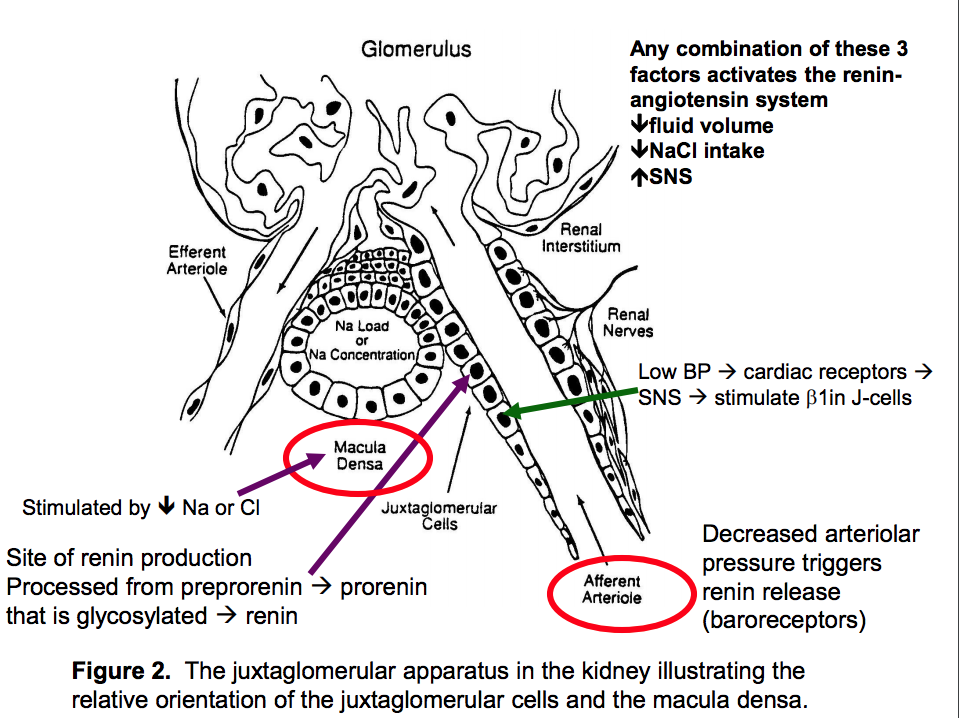
Control of Renin Release
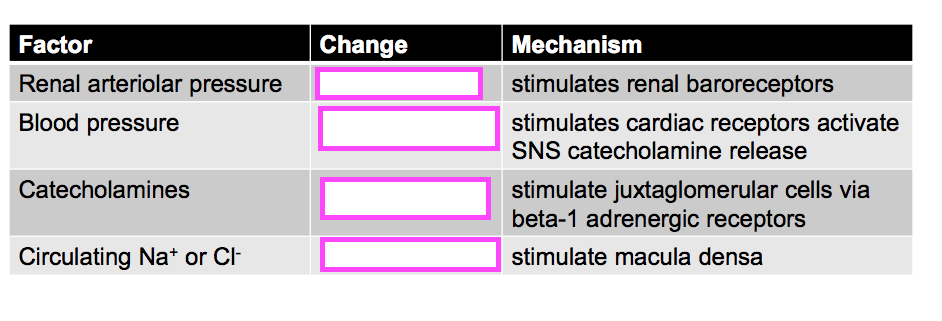
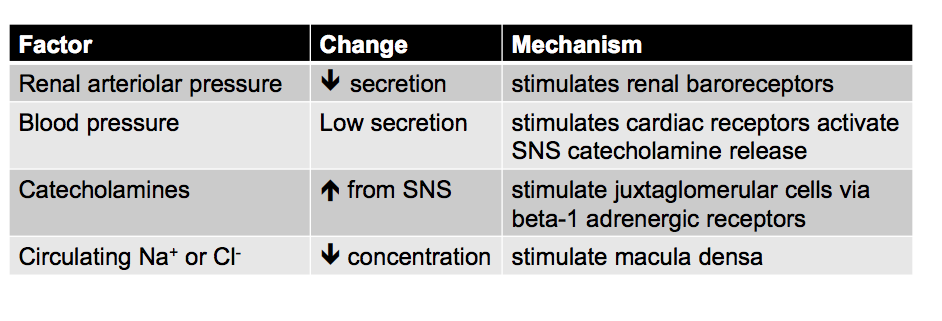
•Any combinations of factors that decrease fluid volume (dehydration, decreased blood pressure, and fluid or blood loss), decrease NaCl concentration (i.e., low Na+ intake) or activate the sympathetic nervous system also stimulate renin release. Even a change from supine to the upright position increases renin secretion and leads to sodium and water retention via aldosterone.
Once renin is released…
•…the renin acts on the angiotensinogen, the renin substrate, which is already in circulation and serves as a prohormone reservoir for angiotensin.
- Angiotensinogen, a alpha2-globulin, is produced and secreted by the liver.
- The synthesis of angiotensinogen is induced by glucocorticoids and estrogens.
- Hypertension associated with these hormones (e.g., side effect of estrogen-containing contraceptive pills) may be due, in part, to increased plasma amounts of angiotensinogen.
- Since this protein circulates at about the Km for renin, small changes in the concentration of angiotensinogen can markedly affect the production of angiotensin.
- The product of renin proteolytic action on angiotensinogen is angiotensin I, a decapeptide (10 amino acids).
- Angiotensin-converting enzyme (ACE), a glycoprotein found primarily in lung in the endothelial cells of blood vessels, removes two carboxy-terminal amino acids from angiotensin I to form angiotensin II.
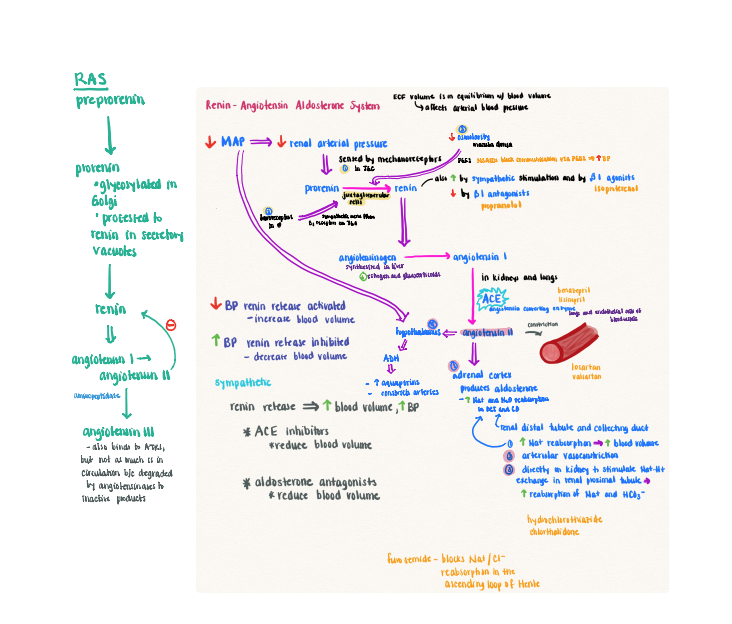
Angiotensin II Fate
- Two receptors (AT1 and AT2) can bind angiotensin II (and angiotensin III).
- Binding of angiotensin II to AT1 receptors (AT1R) elicits cardiovascular, renal and adrenal (zona glomerulosa) effects acts via a Gq-coupled mechanism.
- Angiotensin II binding to AT1Rs increases blood pressure, in part, by elevating total peripheral resistance through vasoconstriction of the arterioles.
- Angiotensin II via AT1Rs promotes Na+ retention to allow blood volume to be conserved by stimulating production and release of aldosterone.
- In a short feedback loop to regulate its own production, angiotensin II inhibits renin release from the juxtaglomerular cells.
•Activation of AT2 receptors (AT2R) induces vasodilation and natriuresis (Na+ excretion).
- The AT2R signal is mediated by Gi thereby decreasing cAMP and protein kinase A activity.
- In this way, activation of AT2Rs opposes the effects mediated through AT1Rs.
•Angiotensin II is one of the most potent vasoactive substances known.
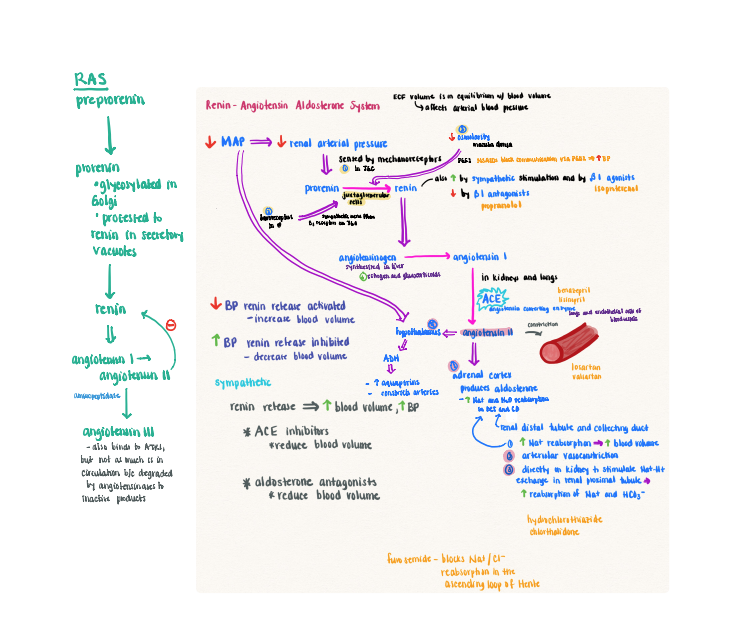
Pharmacological approaches for treating renin-dependent hypertension
- Two pharmacological approaches can be used for treating renin-dependent hypertension.
- Analogs of angiotensin II, such as saralasin or losartan (sartans), bind to AT1R to block the effects of angiotensin II mediated by AT1Rs.
- Other medications, such as captopril, mimic the transition state of the ACE-catalyzed reaction and serve as suicide inhibitors of this enzyme leading to diminished angiotensin II action via both receptor types.
- When hypertension is caused by hyperaldosteronism, spironolactone can be prescribed as an antagonist of the aldosterone receptor.
Angiotensin III
- Conversion of angiotensin II to angiotensin III is catalyzed by an aminopeptidase that removes the N-terminal aspartate of angiotensin II.
- Though angiotensin III can bind to the AT1R with a similar affinity, its concentration in the circulation is just 25% of angiotensin II.
- In humans, angiotensin II is the predominant active form.
- The concentration of angiotensin III is much lower because this form is degraded to inactive products by the action of angiotensinases.
ANP
- Atrial natriuretic peptide (ANP) (or atrial natriuretic factor; ANF) links the heart, kidneys, adrenals and blood vessels in a complex hormonal system involved in volume and pressure homeostasis.
- Homeostatic control of body sodium and water, and of blood pressure, involves a complex interaction of hormonal and neural mechanisms.
-The major determinants include central and autonomic nervous function, cardiac output, blood vessel tonicity, renal function, the renin-angiotensin-aldosterone system, catecholamines, and antidiuretic hormone.
- ANP is a polypeptide hormone produced by the atria. ANP interacts with several of the above determinants allowing for long- and short-term regulation of salt and water balance, and of blood pressure.
- Properties of ANP include potent diuretic, natriuretic, and hypotensive actions, as well as an inhibitory effect on renin and aldosterone secretion.
Processing and Secretion of ANP
- The ANP gene codes for a prepro-hormone, which is processed to the prohormone form that is stored in the perinuclear granules of the atrial myocytes. Although the peptide is stored as the high molecular weight prohormone, the primary form that is isolated from the plasma is a lowmolecular-weight carboxy-terminal fragment. Thus, a very selective enzymatic cleavage of the largely inactive peptide occurs during the release process. The key feature in the structure of ANP is a highly homologous (across species) core of 17 amino acids within a cystine disulfide bridge. ANP is released as an inactive dimer that is converted to the active monomer in the plasma. Increases in the plasma concentration of
- ANP can be elicited by atrial stretch caused by volume expansion, constrictor agents that elevate atrial pressure, immersion in water, atrial tachycardia, and high-salt diets.
- When studied in culture, atrial cells secrete ANP by activation of protein kinase C while ANP release is inhibited by protein kinase A. Hence catecholamine binding to the alpha1-adrenergic receptor (Gq, PKC activation of ANP) or to the beta1-adrenergic receptor (Gs, PKA inhibition of ANP), respectively, can elicit these opposing effects.
Actions of ANP
- Once in the circulation, ANP exerts several effects through specific cellular receptors leading to a multiplicity of actions in renal and cardiovascular functions.
- Four combined effects alter salt and water metabolism.
1) direct renal effects increase the glomerular filtration rate (GFR) and cause diuresis and natriuresis leading to increased urine volume (UV) and sodium excretion (UNa), respectively.
2) ANP inhibits aldosterone secretion by cells in the zona glomerulosa both through direct action (see below) and by reducing the availability of angiotensin II through a lowering of plasma renin activity.
3) ANP suppresses vasopressin release elevated by dehydration or hemorrhage.
4) ANP inhibits the angiotensin-induced drinking response.
- ANP also possesses potent (direct) vasodilating activity. This effect is most apparent when vascular tone is elevated. It is possible that in humans ANP prevents dietary salt from causing elevated blood pressure.
- Additionally, ANP may serve as both a central neuromodulator and a peripheral hormone in the regulation of cardiovascular and renal function.
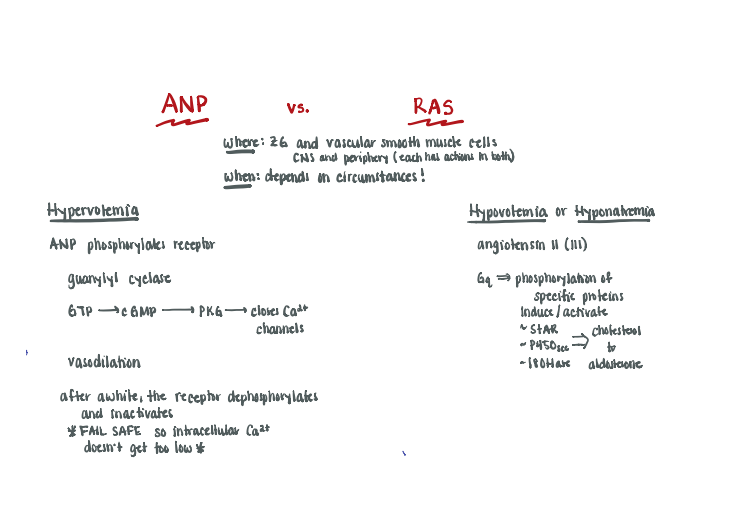
- Therefore, an antagonistic relationship exists between ANP and the renin-angiotensin system in the CNS, as well as in the periphery.
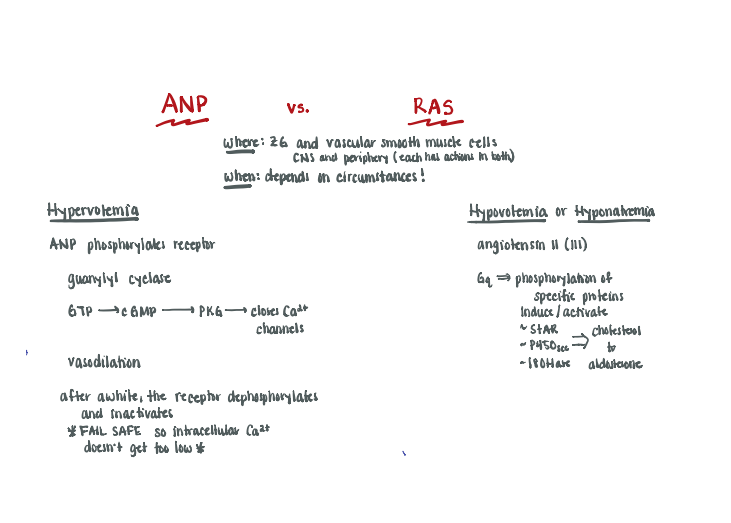
Actions of Angiotensin II (III) in the adrenal ZG
- Hypovolemia and/or hyponatremia, leads to production of angiotensin II (III).
- The activated receptor interacts with the Ca2+ -channel and Gq-protein leading to increased intracellular Ca2+. The predominant effect on Ca2+ concentration is produced by opening of an inward Ca2+ channel.
- Additionally, angiotensin II (III), via Gq-protein, activates phospholipase C to enhance cleavage of PIP2 into the IP3 and DAG second messengers.
- The mobilization of Ca2+ from the endoplasmic reticulum is promoted by IP3 thereby further increasing the intracellular concentration of Ca2+.
- Calcium binds to and activates CAM-dependent kinase and, together with DAG, stimulates protein kinase C.
- These kinases then phosphorylate specific proteins.
- In combination, these events induce/activate StAR, P450scc and 18-OHase to metabolize cholesterol to aldosterone, as well as promote cell proliferation (Figure 6).
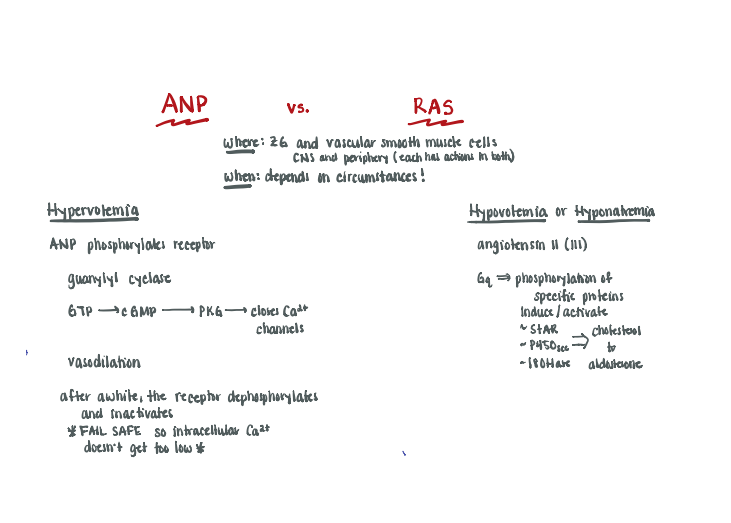
Actions of ANP in the adrenal ZG
- Hypervolemia causes the release of ANP. The •ANP receptor contains an intrinsic guanylyl cyclase activity on the cytoplasmic side of the receptor that produces cyclic GMP (cGMP) after binding of ANP.
- The cGMP second messenger is produced from GTP analogous to production of cAMP from ATP. Cyclic GMP functions by activating a novel serine/threonine kinase, protein kinase G, which phosphorylates and closes the inward Ca2+ channel leading to a lowering of intracellular calcium.
- This action biochemically opposes that of angiotensin II, which raises intracellular calcium.
- This same mechanism would apply to the opposing actions of angiotensin II and ANP on vascular smooth muscle cells, except that instead of modulation of aldosterone, the effects would be vasoconstriction and relaxation, respectively.
- Normally the ANP receptor is active only while it is phosphorylated with ANP bound. If ANP molecules bind for a long period time, the receptor dephosphorylates to inactivate the complex; a built-in control mechanism to prevent an excessive decline of intracellular Ca2+ .

-
Nucleotides, Folic Acid, Diseases and Meds37
-
Protein Metabolism and Disorders of Ammonia Processing24
-
Inherited Disorders of Amino Acid Metabolism24
-
Antioxidants21
-
Fuel Metabolism9
-
Collagen22
-
Anemia29
-
Satiety and Hunger Pepide and Hormone Signals11
-
Nutritional Disorders and Lab Values32
-
Introduction to Hormones39
-
G Protein Function and Adrenergic Receptors32
-
Vitamin A20
-
Posterior Pituitary and Hypothalamic Hormones16
-
Growth Hormone and Insulin-Like Growth Factor26
-
Calcioum and Phosphate Homeostasis/Vitamin D33
-
Calcium and Phosphate Disorders39
-
Thyroid Hormone Biochemistry and Physiology26
-
Adrenal Cortex Hormones18
-
RAS - ANP16
-
Sex Steroids30
-
Pharmacotherapy of Thyroid/Antithyroid Drugs27
-
Pharmacology of Glucocorticosteroids20
-
Intestinal Disorders and IBS7
-
Intestinal Polyps and Neoplasia3
-
Liver Tumors2
-
Lysosomal Storage Diseases20
-
Disorders of Lipid Digestion and Transport6



