What is an osteoblast?
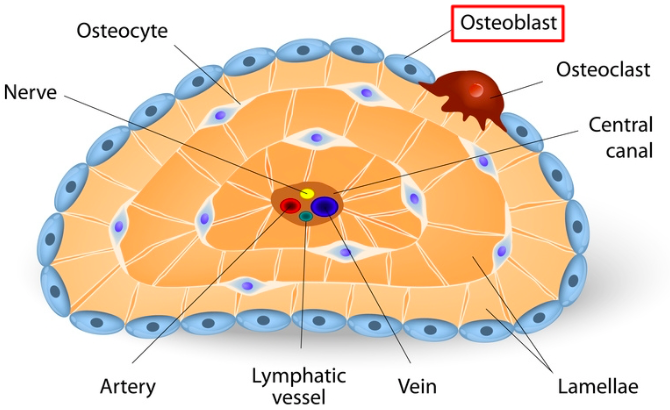
An osteoblast is a cell which secretes the substance of bone
What is endochondral ossification?
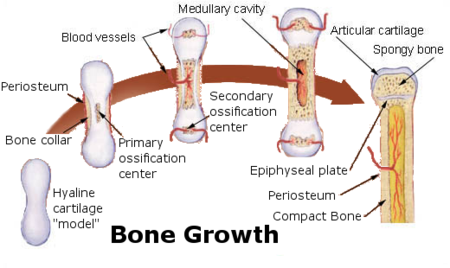
Endochondral ossification is the process in which most of the bones of the body develop involving the replacement of a pre-existing hyaline cartilage template by bone
Describe the 6 steps involved in long bone development by endochondral ossification
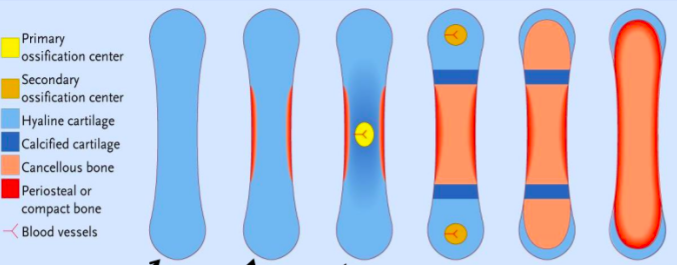
⇒ Initial cartilage model
⇒ Collar of periosteal bone appears in shaft
⇒ Central cartilage calcifies, nutrient artery penetrate, primary ossification centre forms
⇒ Medulla becomes cancellous bone, cartilage forms epiphyseal growth plates, epiphyses develop secondary ossification centres
⇒ Epiphyses ossify and growth plates move apart, lengthening bone
⇒ Epiphyseal growth plates replace by bone, hyaline cartilage persists
What is intramembranous ossification?
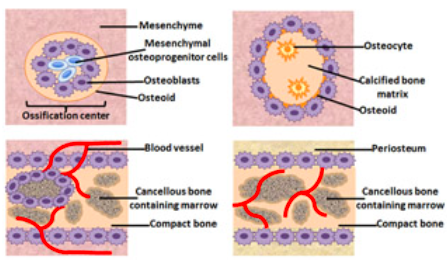
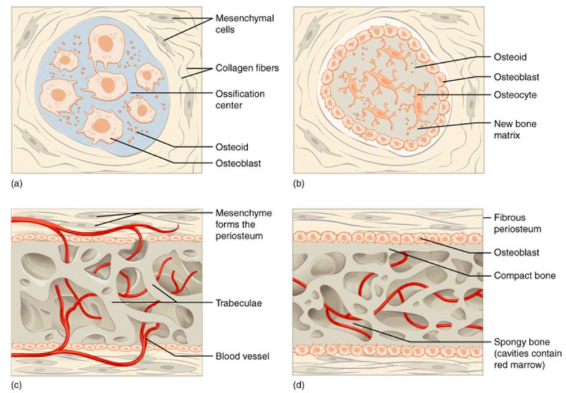
Intramembranous ossification is the embryonic development of flat bones from an embryonic tissue called the mesenchyme
Where does intramembranous ossification occur?
It takes place within condensations of mesenchymal tissue and not by replacement of a pre-existing hyaline cartilage template
Flat bones develop by intramembranous ossification.
Provide some examples
- Skull
- Clavicle
- Scapula
- Pelvic bones
Describe the 7 steps involved in flat bone development by intramembranous ossification
⇒ Small cluster of mesenchymal stem cells form a nidus
⇒ MSCs become osteoprogenitor cells
⇒ Osteoprogenitor cells become osteoblasts and lay down an extracellular matrix of Type I collagen (now, an osteoid)
⇒ Osteoid mineralises to form rudimentary bone tissue spicules
⇒ Spicules join to form trabeculae
⇒ Trabeculae merge to form woven bone
⇒ Woven bone is replaced by mature compact bone
What is an osteocyte?
An osteocyte is a bone cell formed when an osteoblast becomes embedded in the material it has secreted
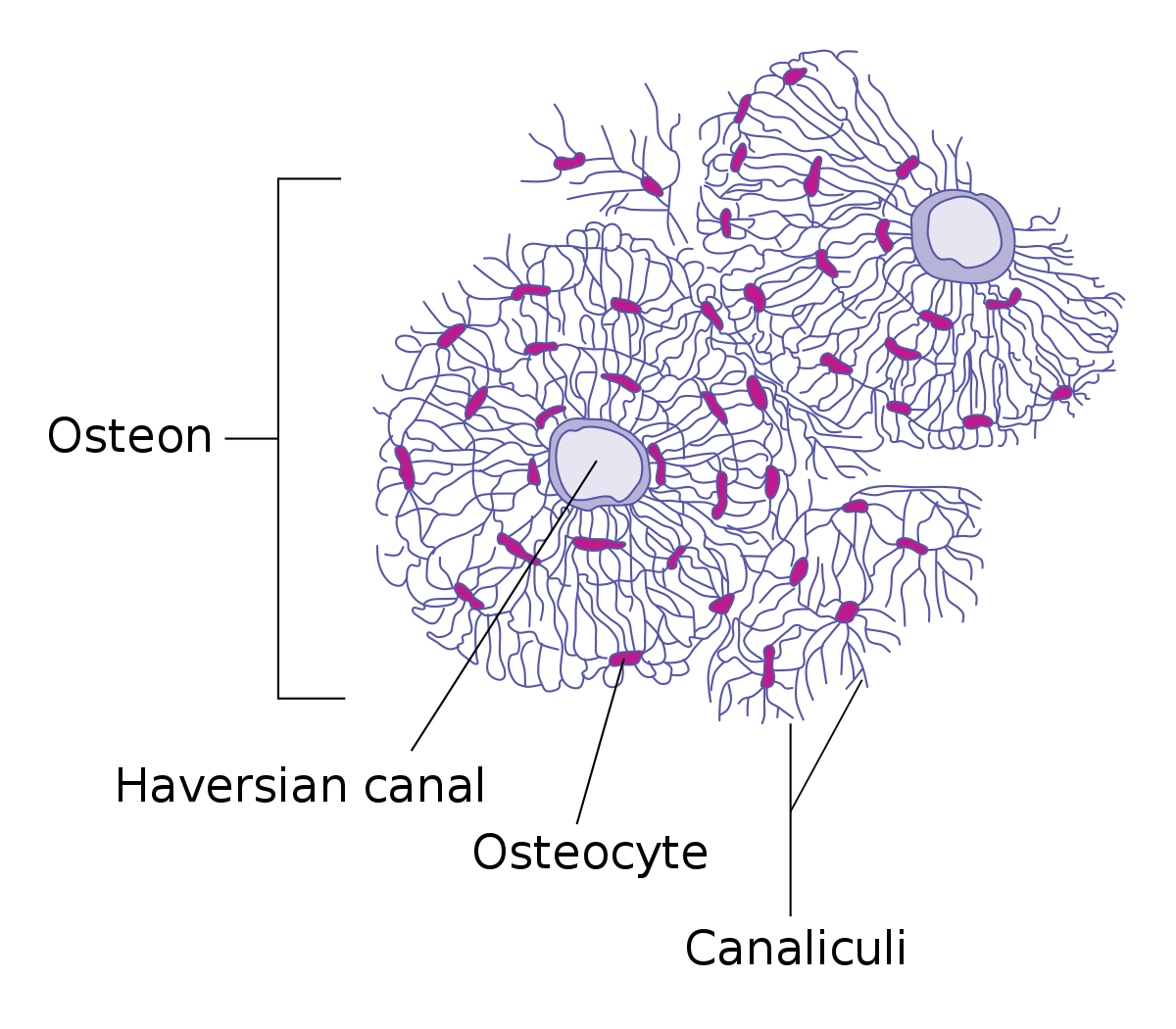
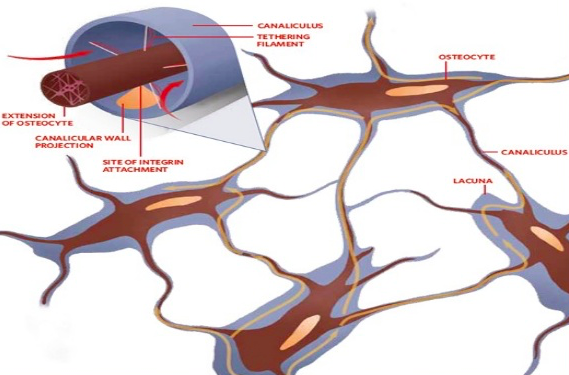
Describe the structure of osteocytes
- The osteocytes have very slender cytoplasmic processes, which reach out to adjacent osteocytes, via canaliculi
- These processes connect via gap junctions so nutrients can be passed between osteocytes
Which form of ossification increases the length of the bone?
Endochondral ossification (interstitial growth)
Which form of ossification increases the girth of the bone?
Intramembranous ossification (appositional growth)
What is a synovial joint?
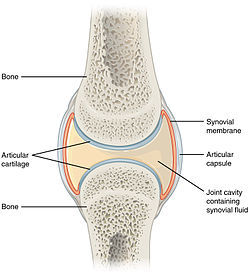
A synovial joint is a moveable joint containing an articular capsule with synovial fluid & membrane wherein juxtaposed ends are covered by hyaline/fibrocartilage
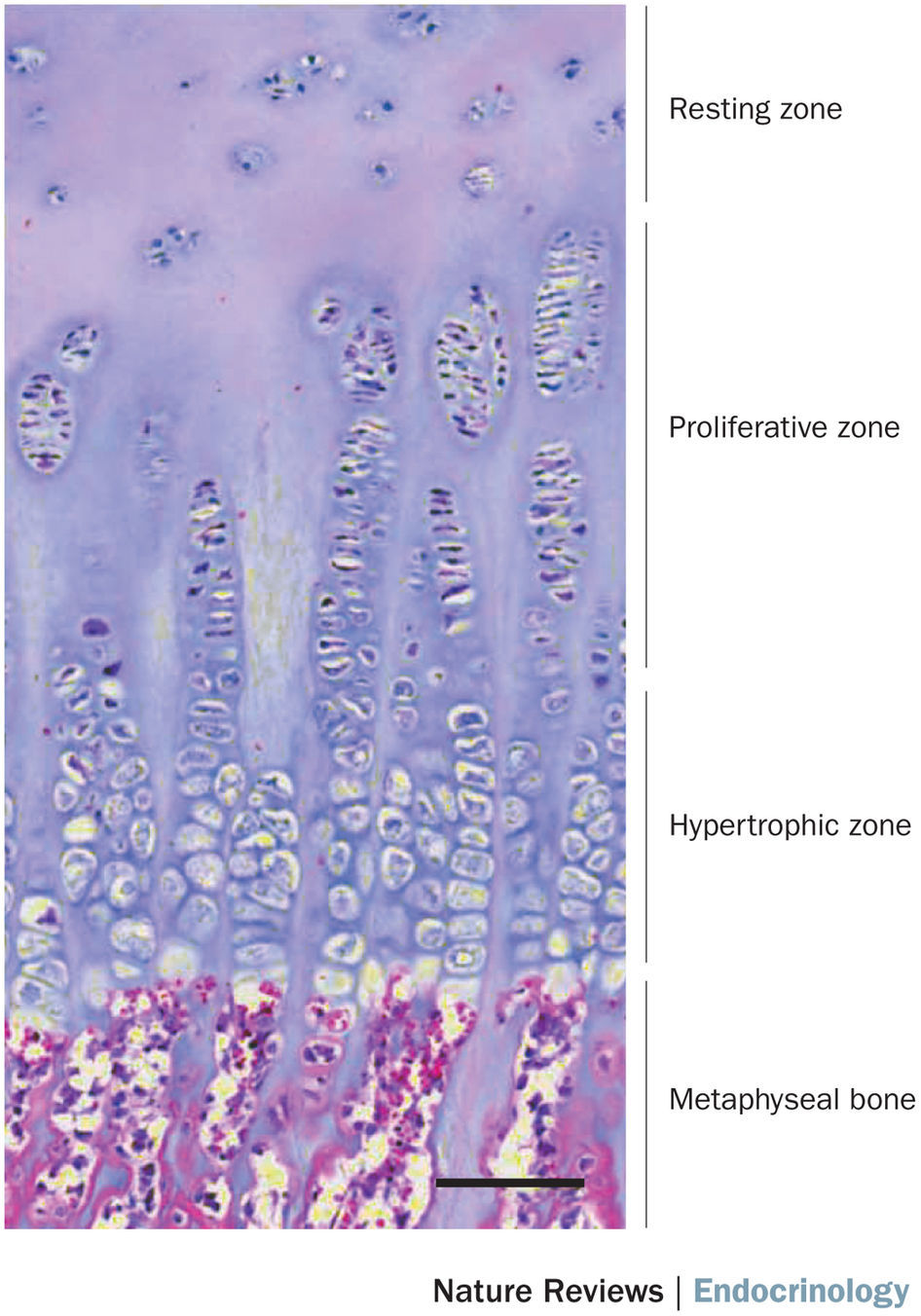
Identify the different zones seen in a LS through an epiphyseal growth plate?
- Zone of reserve cartilage
- Zone of proliferation
- Zone of hypertrophy
- Zone of calcified cartilage
- Zone of resorption
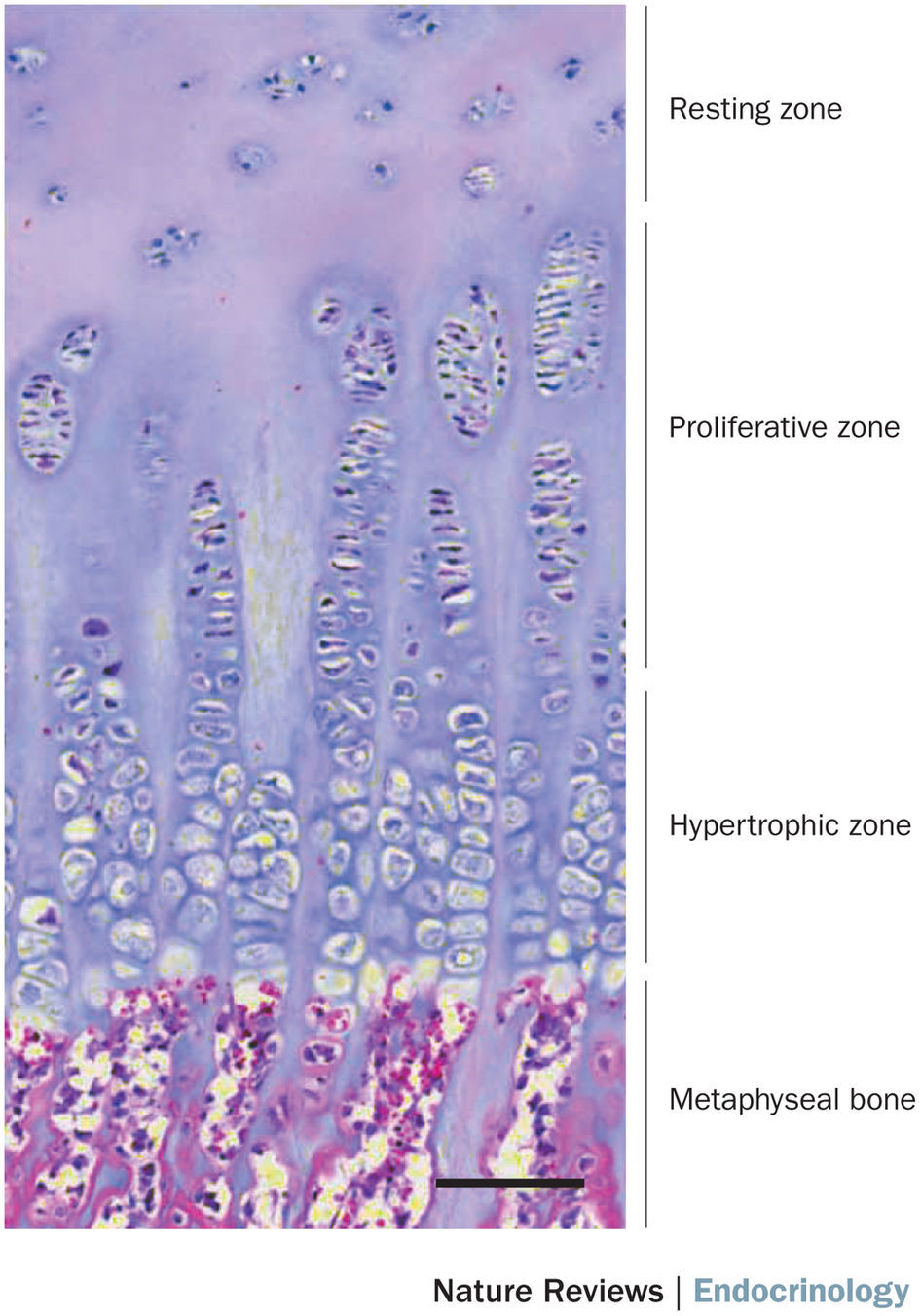
What happens in the zone of reserve cartilage?
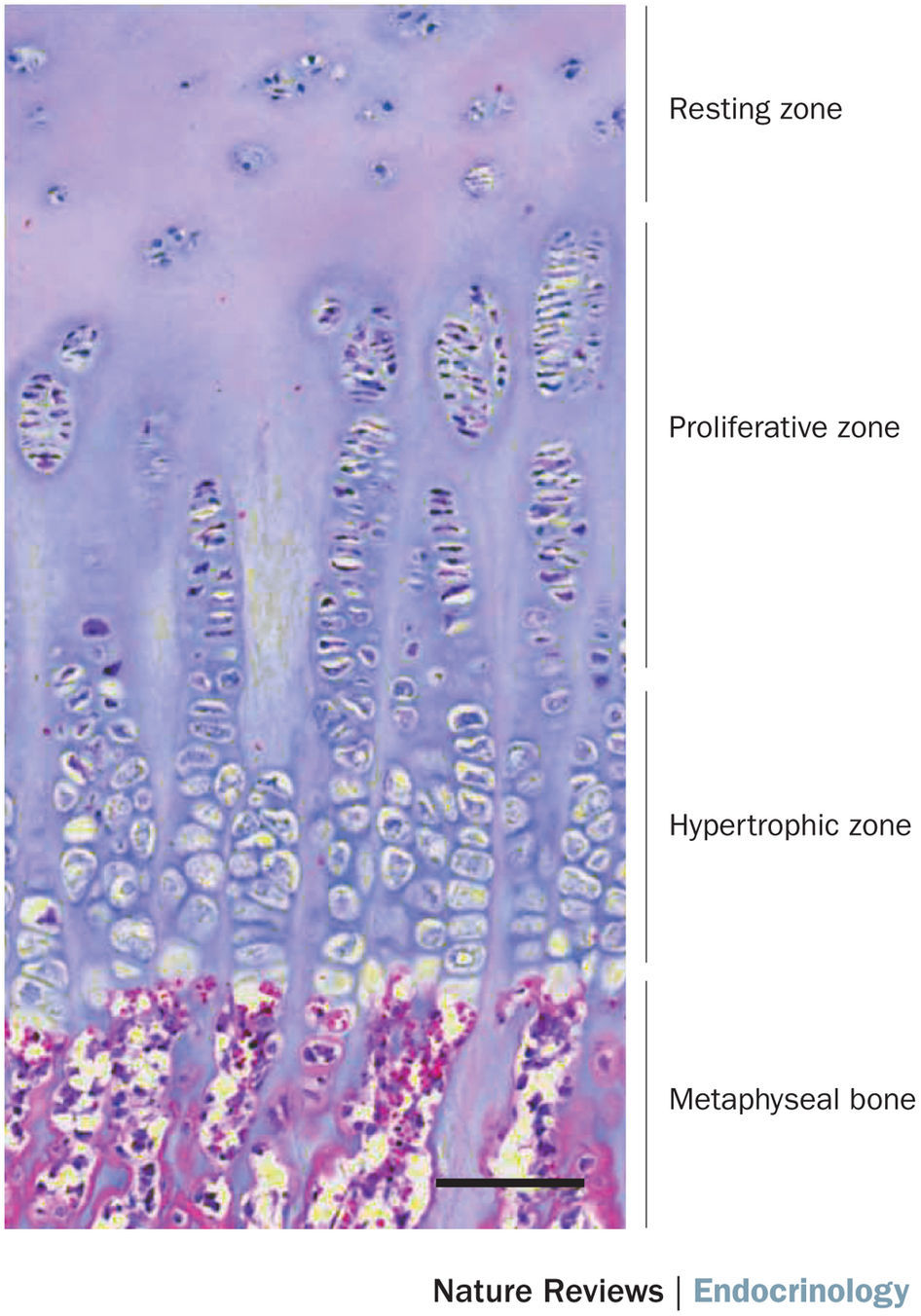
- No cellular proliferation
- No active matrix production
What happens the zone of proliferation?
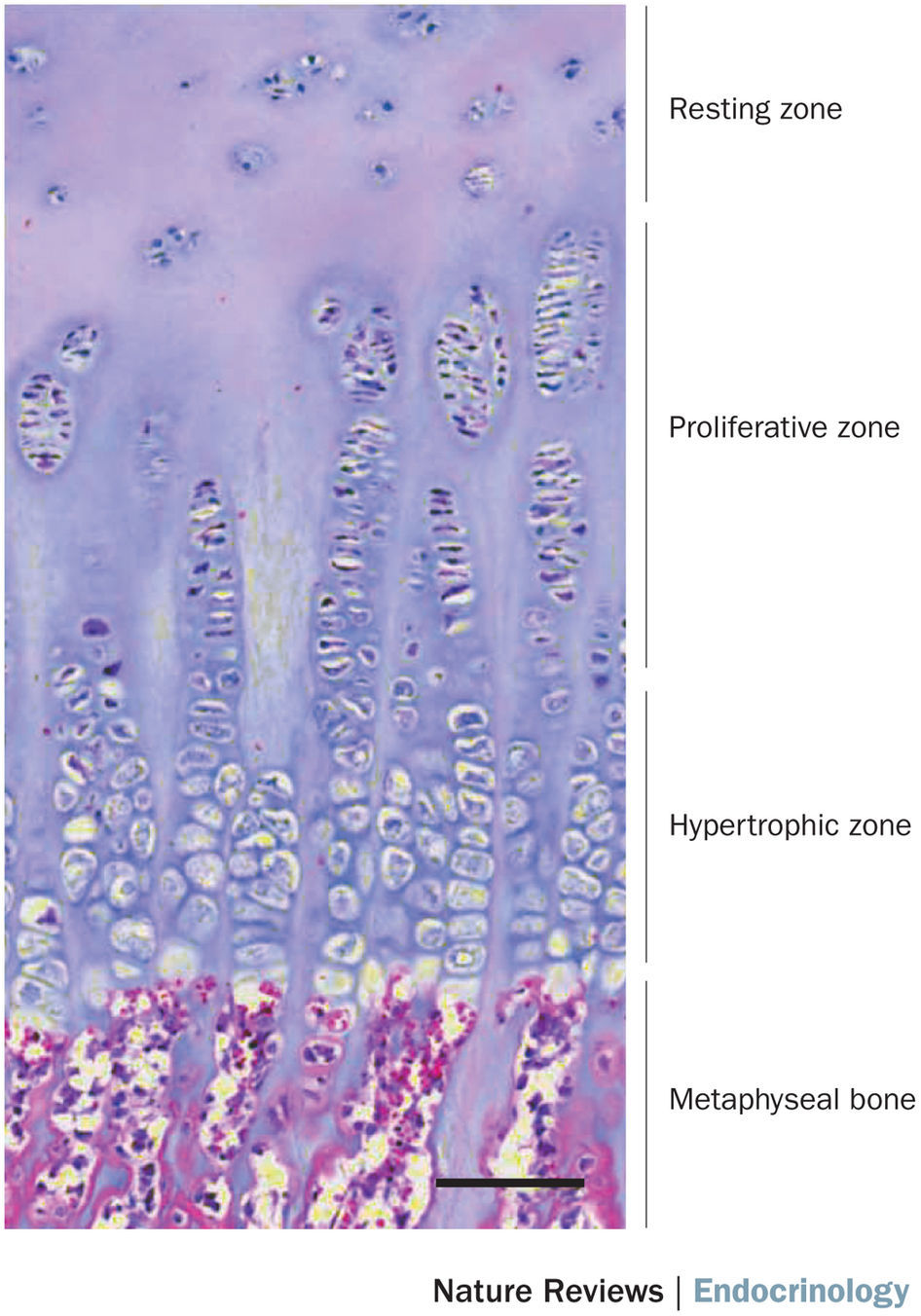
- Cells actively dividing to form columns
- Cells enlarge and secrete matrix
What happens in the zone of hypertrophy?
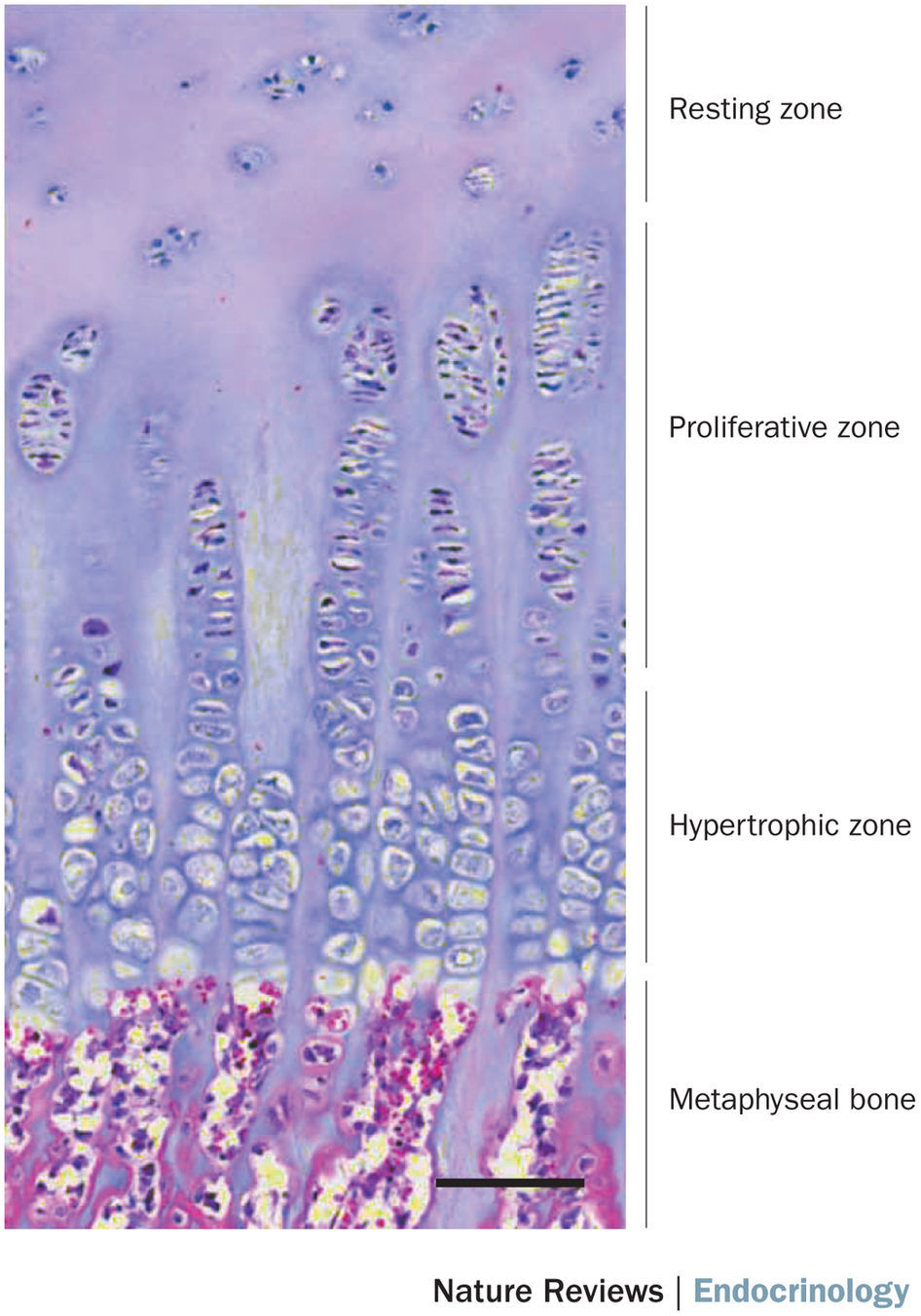
- Cells enlarge greatly
- Matrix compresses into linear bands between cell columns
What happens in the zone of calcified cartilage?
- Enlarged cells begin to degenerate
- Matrix calcifies
What happens in the zone of resorption?
- Calcified matrix is in direct contact with the marrow cavity
- Small blood vessels and connective tissue invade
- Calcified cartilage is left as spicules between them
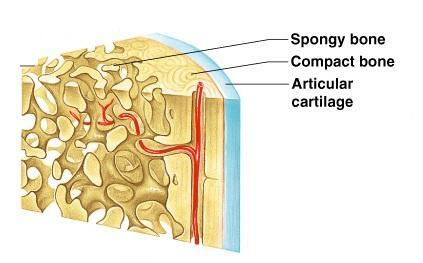
Describe the structure of cancellous bone
- The spaces are filled with bone marrow
- Osteocytes lie between lamellae
- No Haversian or Volkmann’s canals
Describe the functions of cancellous bone and compact bone
- Cancellous bone forms a network of fine bony columns/plates to combine strength with lightness
- Compact bone forms the external surfaces of bones and comprises approx. 80% of the body’s skeletal mass
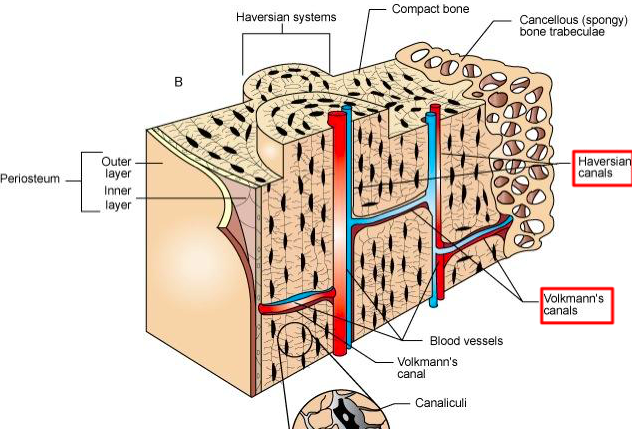
What do Haversian and Volkmann’s canals do?
Haversian and Volkmann’s canals carry blood vessels, lymph vessels and nerves
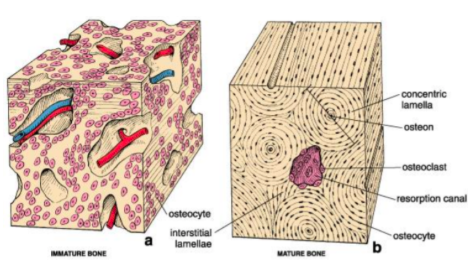
Distinguish between immature and mature bone
- Immature bone has osteocytes which are randomly arranged
- Mature bone has osteocytes arranged in the concentric lamellae of osteons
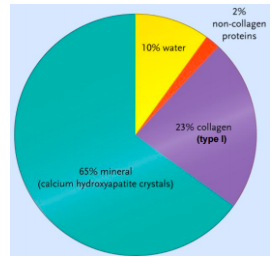
Describe the composition of bone
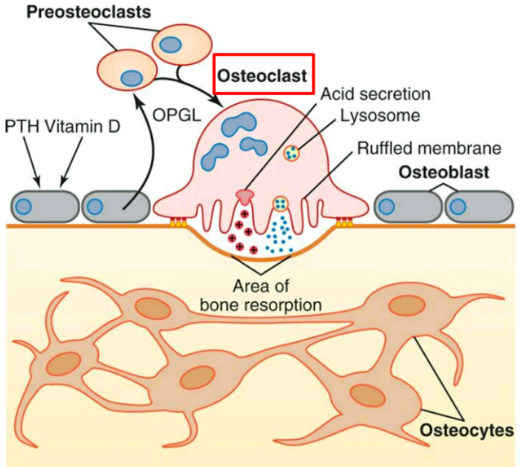
What is an osteoclast and what does it do?
An osteoclast is large multinucleate bone cell which remodels bone by releasing H+ and lysosomal enzymes


-
S1) Introduction to Body Systems25
-
S1) Investigative Techniques19
-
S2) Integrating Cells into Tissues21
-
S2) Connective and Adipose Tissues34
-
S3) Anatomical Terminology26
-
S4) Surface and Core Anatomy15
-
S5) Epithelial Tissues and Glands45
-
S6) Lymphatic System39
-
S7) The Nervous System21
-
S8) The Liver17
-
S8) The Digestive System43
-
S9) The Respiratory System48
-
S9-10) Embryology40
-
S11) The Endocrine System35
-
S12) Cartilage18
-
S12) Bone38
-
S13) Muscle44
-
S13) Cardiovascular System35
-
Clinical Conditions25



