How does the lymphatic system work in relation to the venous system?
The lymphatic system collects 3 litres per day of interstitial fluid and returns it to the venous system
State the names of the fluid and vessels of the lymphatic system
- Fluid – lymph
- Vessels – lymphatics
Identify the cells of the lymphatic system
- Lymphocytes: B cells, T cells and NK cells
- Supporting cells: follicular dendritic cells and macrophages
Identify the tissues of the lymphatic system
Mucosal associated lymphatic tissue (MALT):
- Gut-associated lymphatic tissue (GALT)
- Bronchus-associated lymphatic tissue (BALT)
Identify the organs of the lymphatic system
- Lymph nodes
- Thymus
- Spleen
Identify the lymphatic nodules of the lymphatic system
- Tonsils
- Peyer’s patches
- Vermiform appendix
What 3 factors help to propel lymph along?
- Skeletal muscle movement
- Pressure changes in the thorax during breathing
- Pulsations of adjacent arteries
Describe the arrangement of lymphatic vessels in the body
- Lymphatics tend to lie adjacent to arteries and veins
- Lymphatics are arranged into superficial and deep (deep to the deep fascia)
In which region of the body are there no lymphatics?
The Central Nervous System
What are the functions of lymph nodes?
- Serve as filters for lymph: traps antigen, processes antigen and presents processed antigen to T cells
- Contains macrophages, B cells and T cells which work to produce an inflammatory response (macrophages) then an immune response (B & T cells)
Approximately how many lymph nodes are there in the human body?
700
Describe the structure of each lymph node
- Afferent lymphatics that enter via the convex surface
- Efferent lymphatics that leave via the hilum
- Feeding artery that leaves via the hilum
- Draining vein that leaves via the hilum
How do lymphocytes enter lymph nodes?
- Enter via the feeding artery
- Leave via the efferent lymphatics
Account for possible causes of lymphadenopathy
- Infection as germinal centres in lymph nodes fill with lymphocytes
- Lymphoma as cancer metastasises to afferent lymphatics
Lymph nodes contain professional antigen presenting cells (APCs).
What is the role of such cells?
APCs are specially equipped with immunostimulatory receptors to acquire and present antigens which allows for enhanced activation of T cells
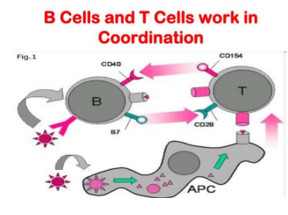
What is the structure, function and location of follicular dendritic cells?
- Structure: contain antigen-antibody complexes adhere to its dendritic processes
- Function: cause proliferation of B cells, in particular, memory B cells
- Location: found in germinal centres
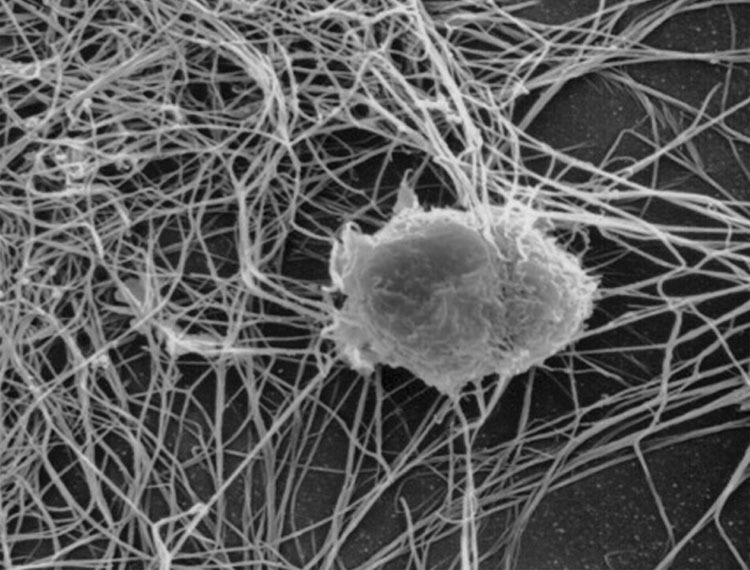
Outline the inflammatory response
- Initial reaction of the body to an antigen
- Mediated by neutrophils and/or macrophages
- Degradation of the antigen may lead to presentation of a portion of the antigen to elicit a specific immune response
Outline the humoral response
- Humoral immunity is B lymphocyte mediated
- It involves B lymphocytes which transform into plasma cells that synthesise and secrete a specific antibody
What is cell-mediated immunity?
Cell-mediated immunity is when T cells need antigen presenting cells (macrophages, B lymphocytes) to recognise antigens
What is the importance of cell-mediated immunity?
Important in defence against:
- Viral, fungal and mycobacterial infections
- Tumour cells
- Transplant rejection
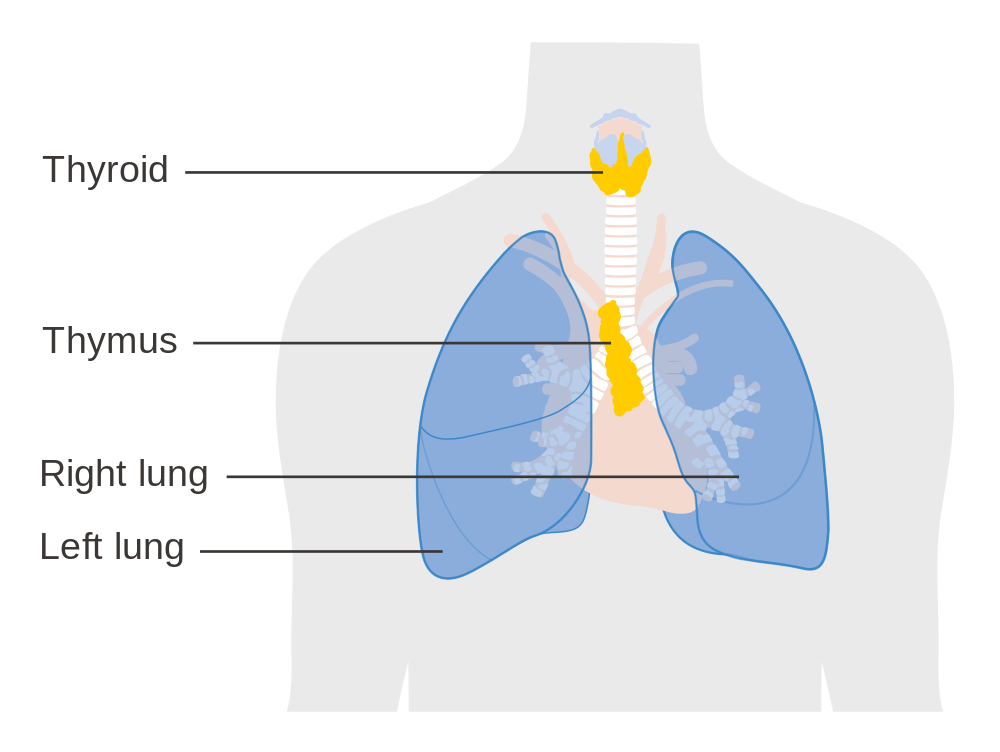
Outline the structure, function and location of the thymus gland
- Structure: fully formed and functional at birth, involutes after puberty and ends up being mostly fat
- Function: maturation of bone marrow derived stem cells into immunocompetent T cells (thymic cell education)
- Location: found in superior mediastinum
The spleen is the largest lymphatic organ and has a very rich blood supply.
Outline its immune functions
- Antigen presentation
- Activation and proliferation of B and T lymphocytes
- Production of antibodies
- Removal of macromolecular antigen from blood
The spleen is the largest lymphatic organ and has a very rich blood supply.
Outline its haemopoietic functions
- Removal and destruction of old, damaged and abnormal erythrocytes and platelets
- Retrieval of iron from erythrocyte haemoglobin
Discuss the implications of a splenectomy
- Splenectomy increases the risk of infection by encapsulated bacteria e.g. the meningococcus, malaria
- Splenectomy increases the risk of DVT and pulmonary embolism




-
S1) Introduction to Body Systems25
-
S1) Investigative Techniques19
-
S2) Integrating Cells into Tissues21
-
S2) Connective and Adipose Tissues34
-
S3) Anatomical Terminology26
-
S4) Surface and Core Anatomy15
-
S5) Epithelial Tissues and Glands45
-
S6) Lymphatic System39
-
S7) The Nervous System21
-
S8) The Liver17
-
S8) The Digestive System43
-
S9) The Respiratory System48
-
S9-10) Embryology40
-
S11) The Endocrine System35
-
S12) Cartilage18
-
S12) Bone38
-
S13) Muscle44
-
S13) Cardiovascular System35
-
Clinical Conditions25



