COPD is a _____ and _____ disease
COPD is a preventable and treatable disease
(has extrapulmonary effects as well)
The pulmonary component of COPD is _____ but rather is _____ and associated with _____
The pulmonary component of COPD is airflow limitation that is not fully reversible but rather is usually progressive and associated with an abnormal inflammatory response of lung to noxious particles or gases
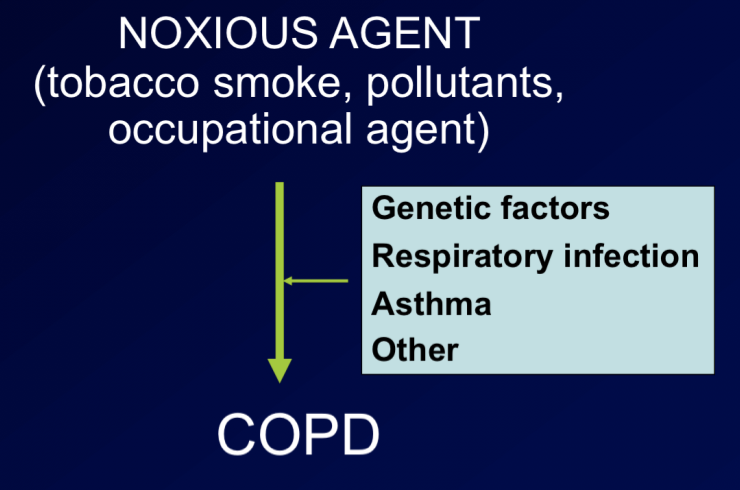
_____ is the major risk factor for COPD
Cumulative exposure to noxious particles is the major risk factor for COPD
(cigarette smoke, indoor air pollution, occupation dusts, outdoor air pollution)
_____ deficiency is associated with COPD
Alpha-1-antitrypsin deficiency is associated with COPD
- PiZZ (homozygous) or PiMZ (heterozygote) + smoking
- Cigarette smoking remains most important risk factor for COPD in PiZZ individuals
- PiMZ is at increased risk for COPD vs PiMM (homozygous normal) especially in context of smoking
The cells most heavily involved in COPD are _____, _____, and _____
The cells most heavily involved in COPD are alveolar macrophages, neutrophils, and CD8+ lymphocytes
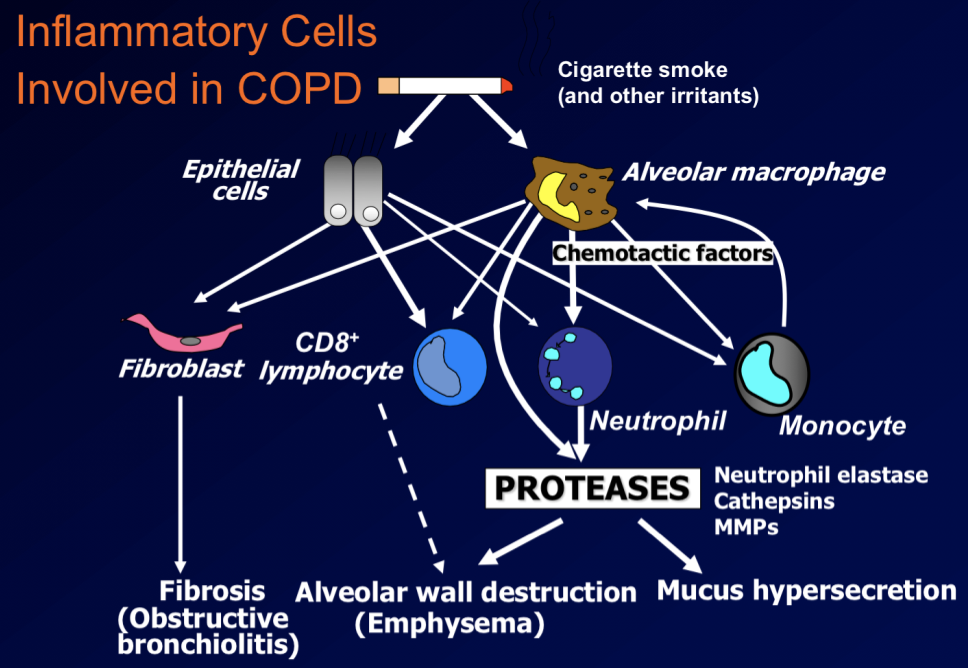
Describe the pathogenesis of COPD
- Cigarette smoke or other irritants
- Alveolar macrophages and epithelial cells activated
- Alveolar macrophages active neutrophils, monocytes, fibroblasts, CD8+ lymphocytes, and proteases; epithelial cells activate fibroblasts and CD8+ lymphocytes
- Neutrophils secrete proteases (neutrophil, elastase, cathepsins, MMPs), fibroblasts activated
- Fibrosis (obstructive bronchiolitis), alveolar wall destruction (emphysema), and mucus hypersecretion
The main pathological changes in COPD are _____, _____, and _____
The main pathological changes in COPD are fibrosis (obstructive bronchiolitis), alveolar wall destruction (emphysema), and mucus hypersecretion
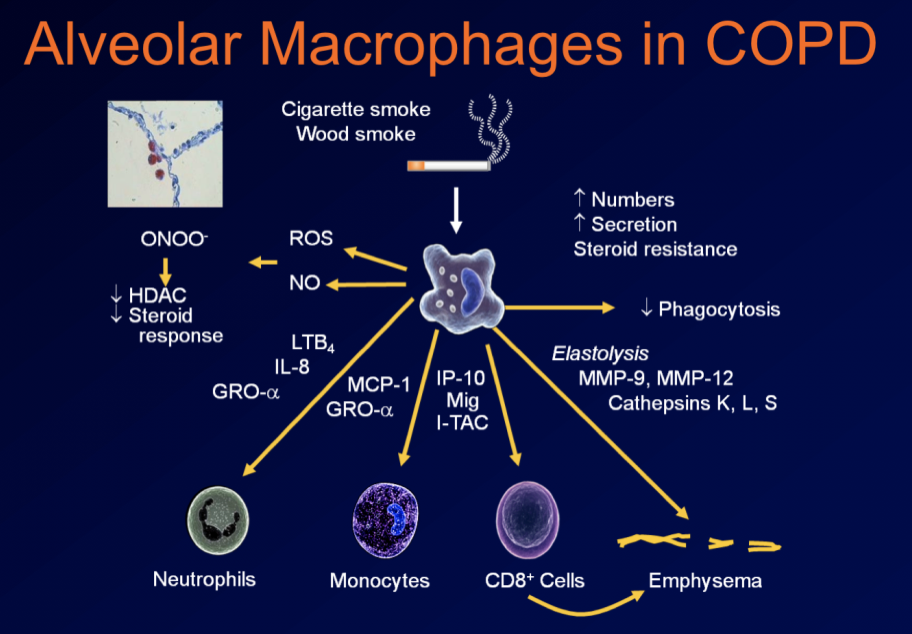
Describe the role of alveolar macrophages in COPD
Alveolar macrophages orchestrate much of inflammatory process underlying COPD and release elastolytic enzymes and ROS
(increased in COPD lungs)
Describe the role of neutrophils in COPD
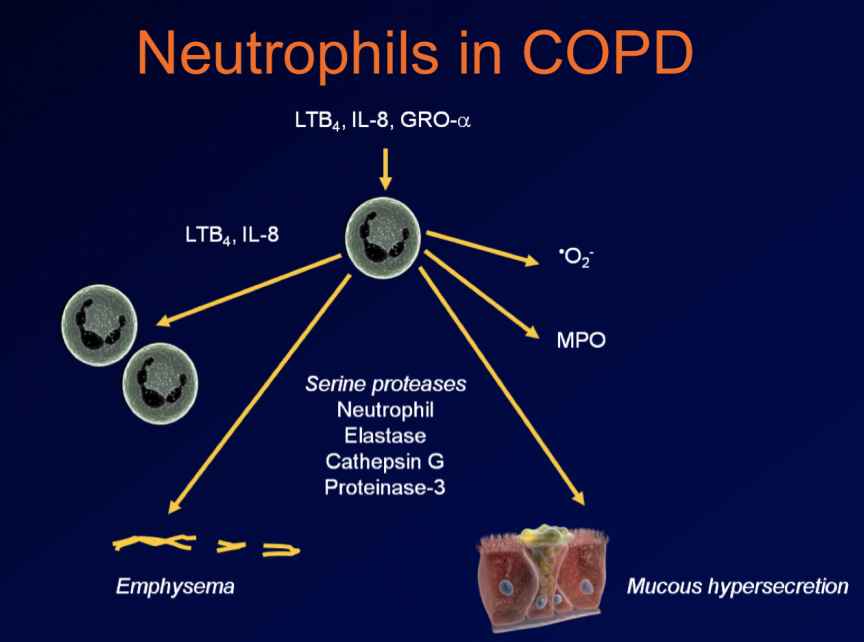
Neutrophils
- Critical effector cells: attracted by IL-8 and LTB4 from alveolar macrophages and PMNs, release ROS and MPO which contribute to ongoing inflammatory response
- Serine proteases like neutrophil elastase contribute to destruction of lung parenchyma
Describe the role of CD8+ lymphocytes in COPD
CD8+ lymphocytes perpetuate inflammatory response by releasing chemoattractants and are found in the airway walls, vessels, and lymph nodes of smokers with COPD
Describe the effects of inflammation in COPD
Inflammation leads to
- Small airway disease: airway inflammation, airway remodeling
- Parencymal destruction: loss of alveolar attachments, decrease of elastic recoil
Both lead to airflow limitation
Changes occur in the _____ in the chronic bronchitis portion of COPD
Changes occur in the large airways in the chronic bronchitis portion of COPD
_____ occurs in the small airways during COPD
Small airway remodeling occurs in the small airways during COPD
Changes occur in the _____ in the emphysema portion of COPD
Changes occur in the lung parenchyma in the emphysema portion of COPD
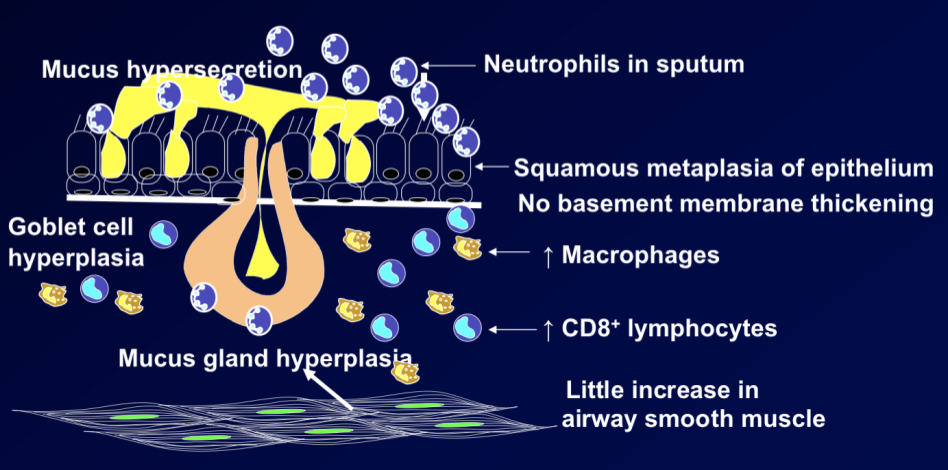
What changes occur in the large airways in the chronic bronchitis portion of COPD?
Large airways
- Mucus hypersecretion
- Goblet cell and mucus gland hyperplasia
- Squamous metaplasia of epithelium
- Increased macrophages and CD8+ lymphocytes
- Neutrophils in sputum
(note that there is no subepithelial basement membrane thickening or smooth muscle hypertrophy)
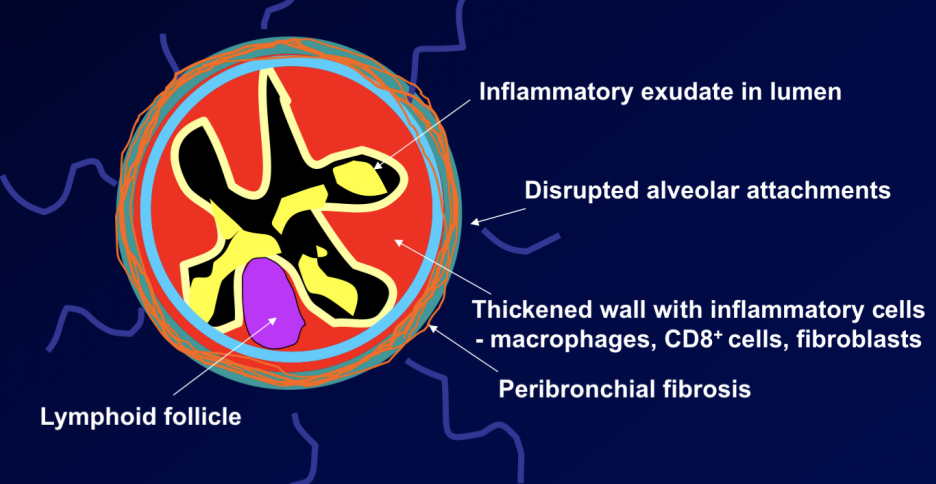
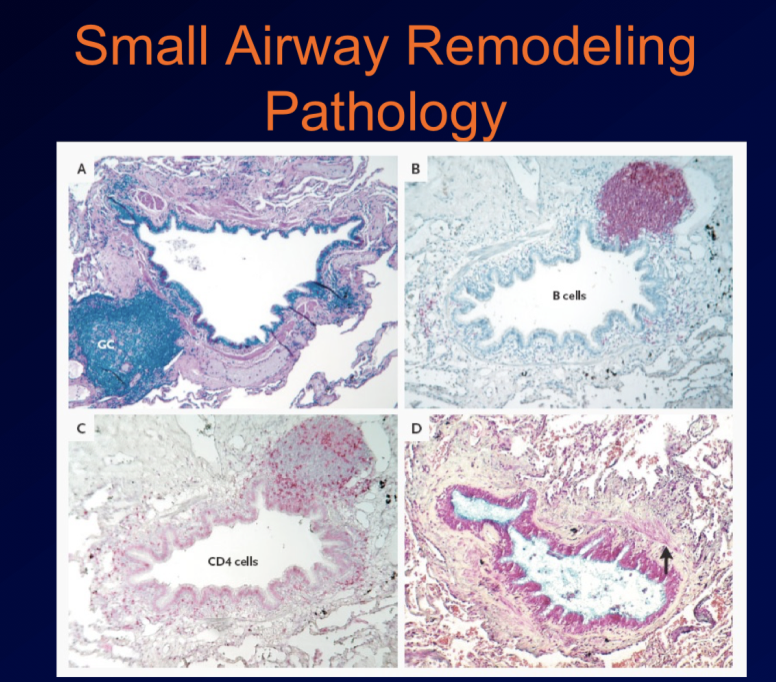
What changes occur in the small airways in COPD?
Small airway remodeling
- Inflammatory exudate in lumen
- Disrupted alveolar attachments
- Thickened wall with macrophages, CD8+ cells, fibroblasts
- Peribronchial fibrosis
- Lymphoid follicles
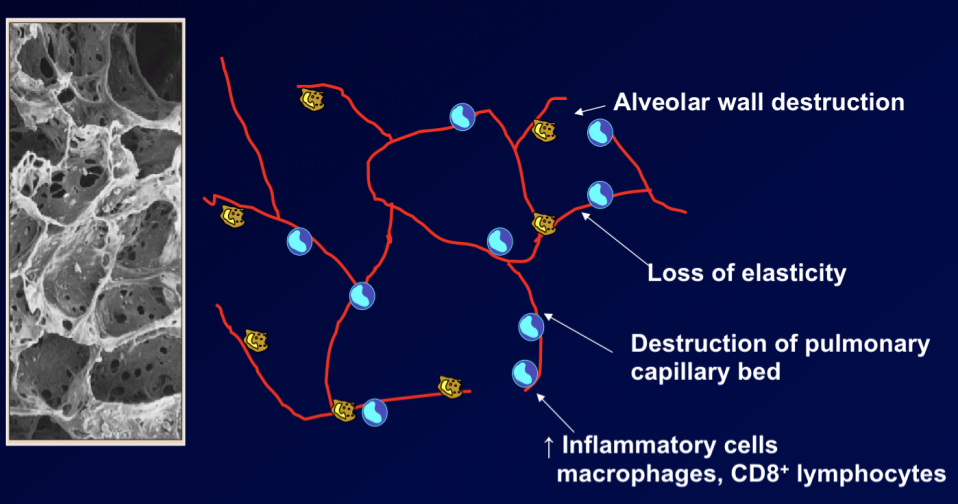
What changes occur in the lung parenchyma in the emphysema portion of COPD?
Lung parenchyma
- Alveolar wall destruction
- Loss of elasticity
- Destruction of pulmonary capillary bed
- Increased macrophages and CD8+ lymphocytes
This pathology represents the ______ portion of COPD
This pathology represents the chronic bronchitis portion of COPD
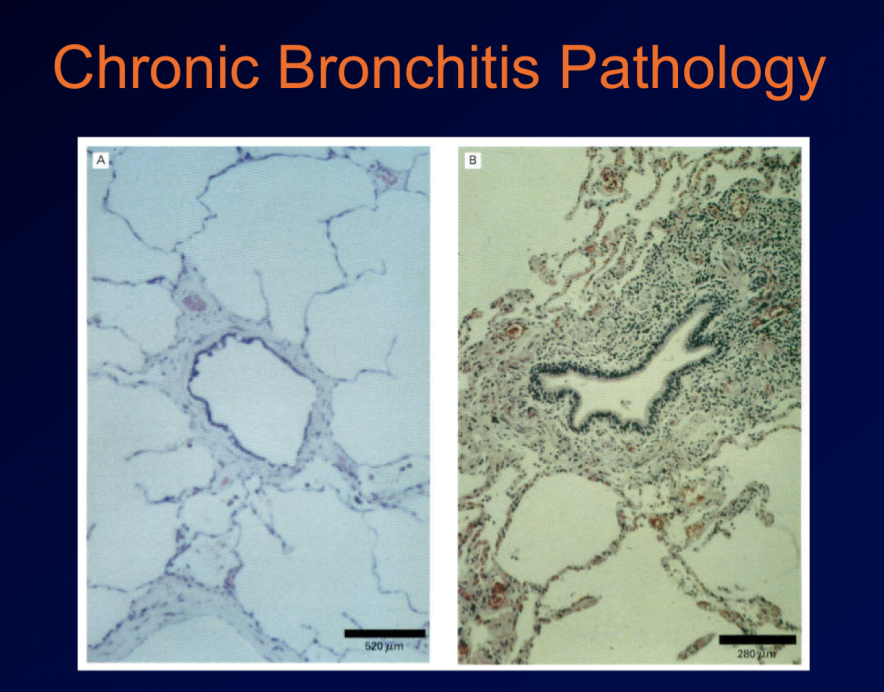
This pathology represents the ______ portion of COPD
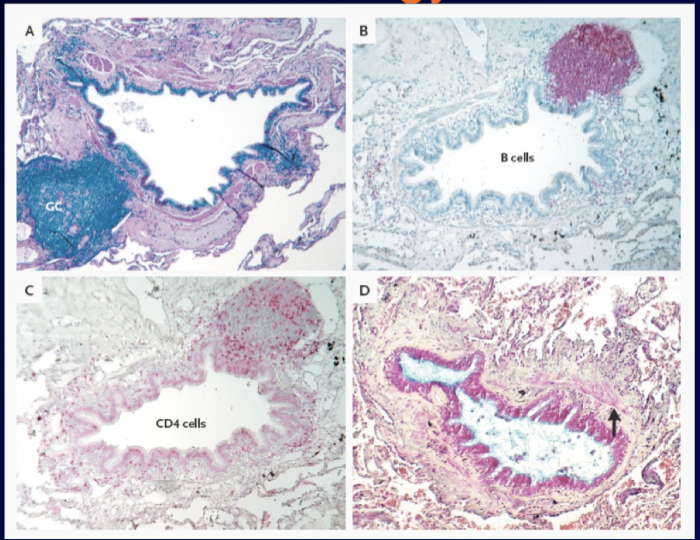
This pathology represents the small airway remodeling portion of COPD
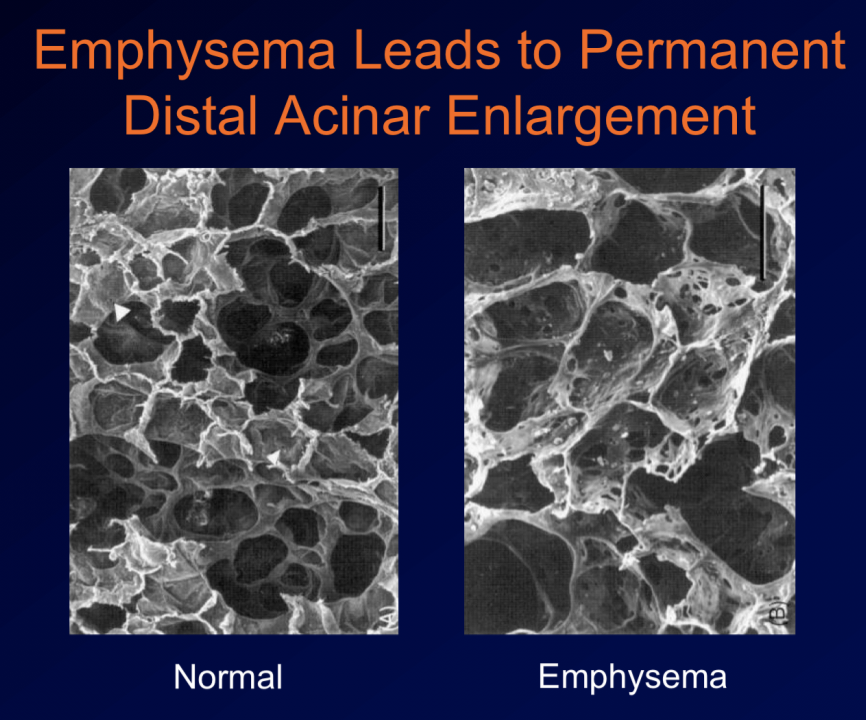
Emphysema leads to permanent ________
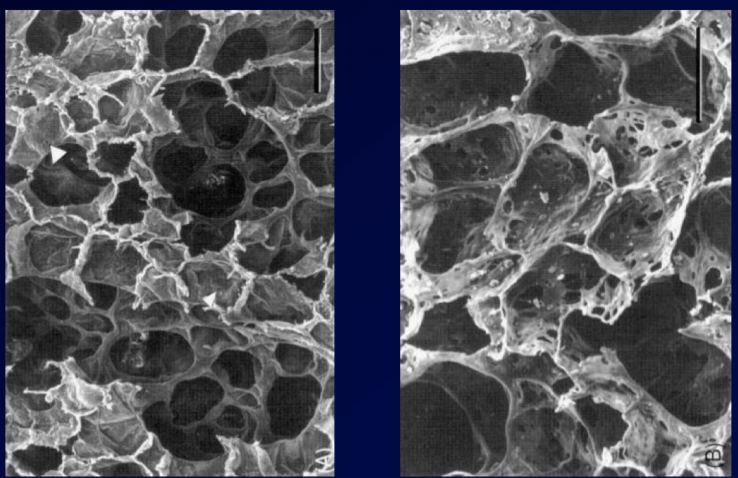
Emphysema leads to permanent distal acinar enlargement
This pathology represents the ______ portion of COPD
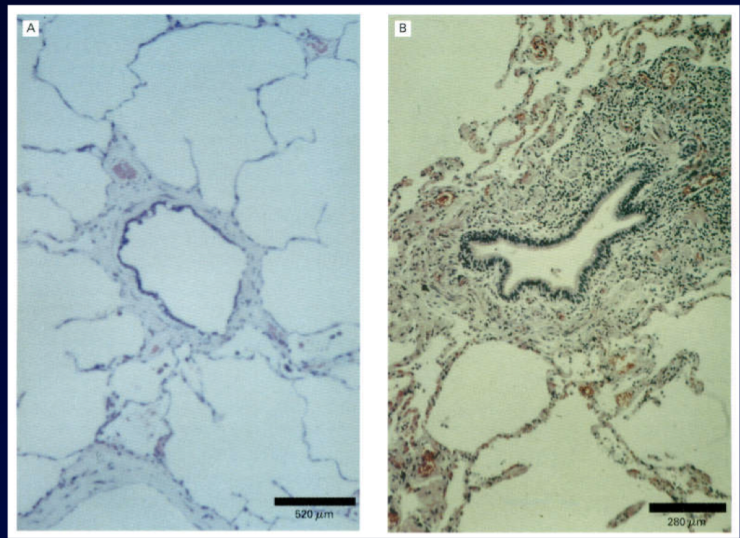
Which side is normal? Which is COPD?
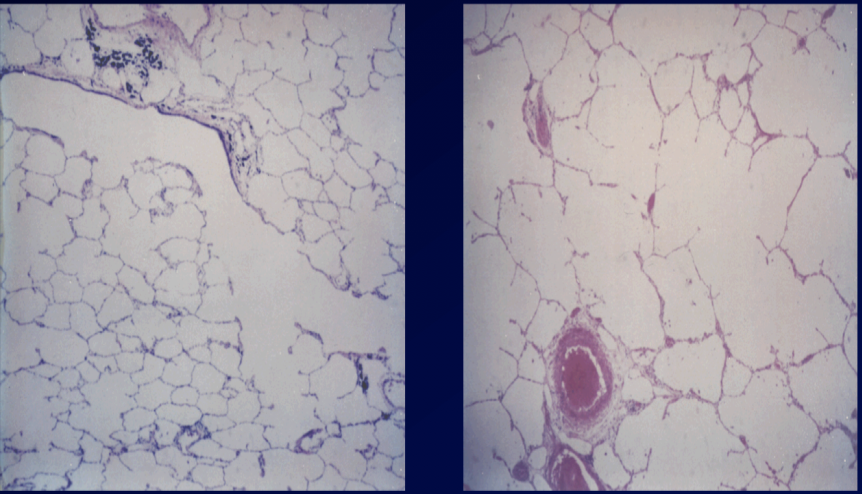
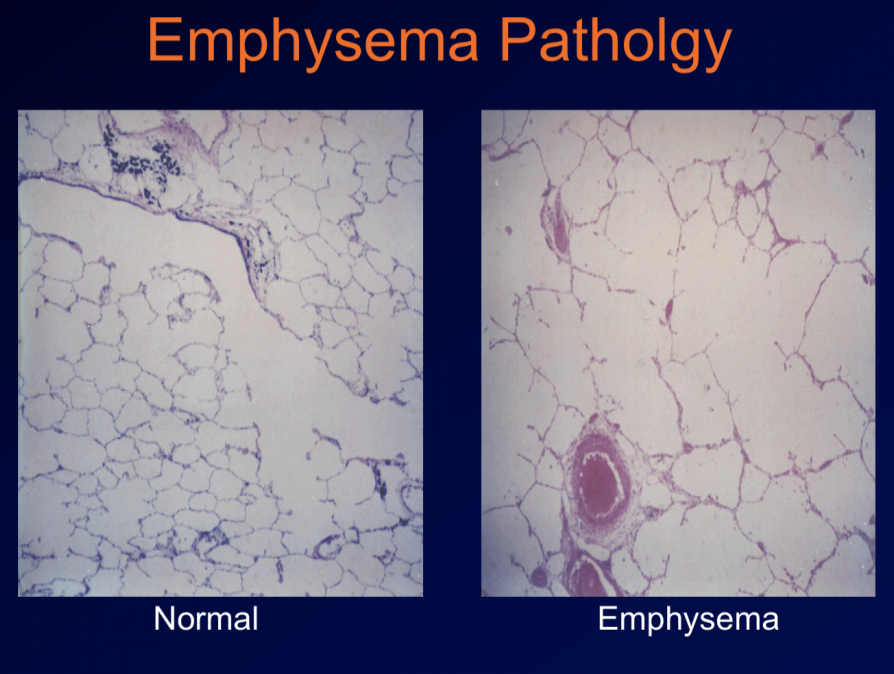
This pathology represents the emphysema portion of COPD
Left is normal, right is emphysema
Diagnosis of COPD is made by ______
Diagnosis of COPD made by spirometry after looking at symptoms and exposure to risk factors
(FEV1 / FVC < 0.70 and not reversible)
- Symptoms: cough, sputum, dyspnea
- Exposure to risk factors: tobacco, occupation, indoor / outdoor pollution
(misdiagnosed in women)
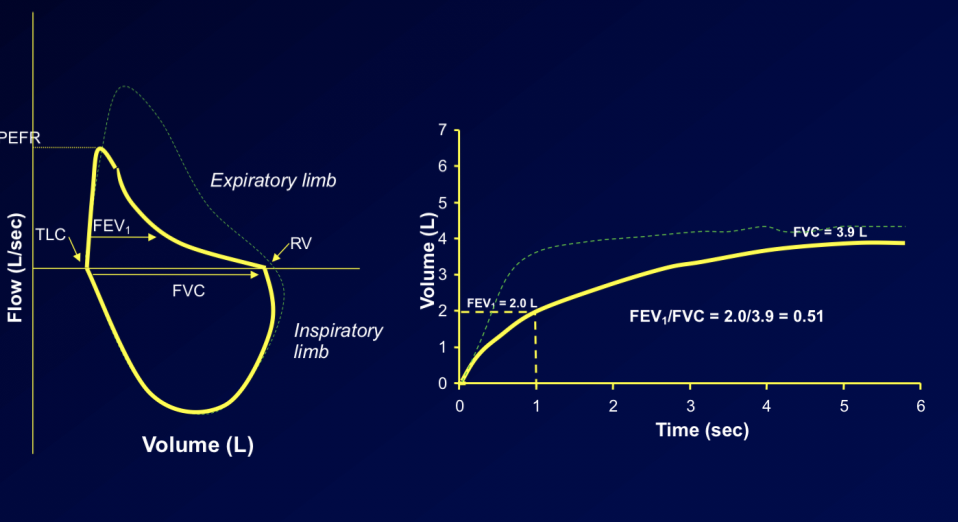
Describe the flow-volume and volume-time curves in COPD
- Flow-volume curve: scooped out / concave
- Volume-time curve: less steep than normal and takes much longer to achieve FVC
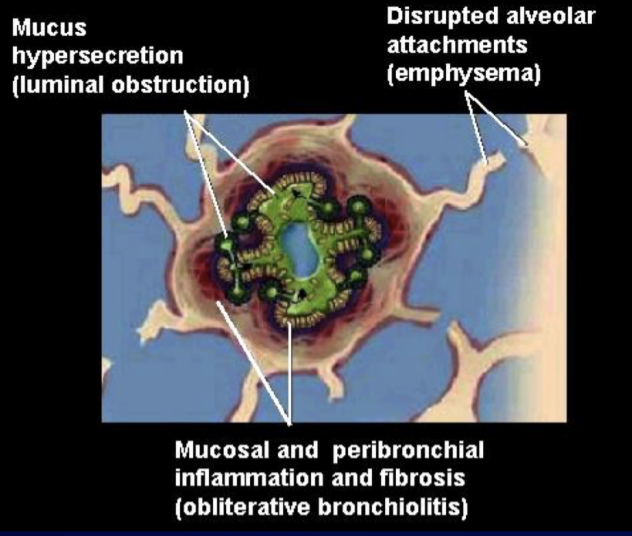
Mechanisms of airflow limitation in COPD are _____, _____, and _____
Mechanisms of airflow limitation in COPD are mucus hypersecretion (luminal obstruction), disrupted alveolar attachments (emphysema), and mucosal and peribronchial inflammation and fibrosis (obliterative bronchiolitis)



-
SM_150a: Mechanics I31
-
SM_151: Lung Anatomy, Histology, and Development72
-
SM_152a-154a: Mechanics II-IV71
-
SM_Pulmonary Terminology19
-
SM_155a: Ventilation32
-
SM_156a: Diffusion and Gas Transport40
-
SM_157a: Control of Breathing38
-
SM_158a: Hypoxemia46
-
SM_159a: Acid Base44
-
SM_160a-162a: Hypercapnia and Hypoxemia93
-
SM_163a: Introduction to DPLD36
-
SM_164a: Radiology63
-
SM_165a: Pulmonary Hypertension38
-
SM_166a: Congenital and Pediatric Disorders60
-
SM_167a: Lung Pathology & Restrictive Lung Disease86
-
SM_168a: IIPs32
-
SM_169a: Pulmonary Embolism31
-
SM_170a: Cystic Fibrosis32
-
SM_171: Occupational Disorders21
-
SM_172a: Pleural Disease34
-
SM_173a: Acid Base42
-
SM_174a-175a: Pulmonary Function44
-
SM_176a: Asthma21
-
SM_177a: COPD35
-
SM_178a: MTB, NTM, and Fungal Infections64
-
SM_179a: Viral Infections55
-
SM_180a: Pulmonary Pharmacology36
-
SM_181a: Bacterial Infections59
-
SM_182a: TB and Viral Infection Testing26
-
SM_183a: Lung Cancer35
-
SM_184a: Allergic Rhinitis37
-
SM_185a: Sleep Disorders16



