The Cardiovascular System is divided into how many Parts
how many and what are they?
- Circulatory system,consisting of the heart, blood vessels and blood
- Lymphatic system, consisting of lymph nodes, lymph vessels and lymph
The circulatory system
describe
The circulatory system is a closed system which transports essential food, oxygen and water to the cells and removes the waste they produce. It is closely linked with the respiratory and digestive system
Three Main Components
what are they?
The heart
Blood
Blood vessels
The Heart
describe the heart
- Hollow coned shaped muscular organ -approximately size of the owners fist
- It lies in the thoracic cavity, obliquely in the mediastinum, behind the sternum.
- 2/3 lies to the left of the midline,
- Base above, apex below, resting on the diaphragm.
Three layers of the walls of The Heart
describe
- Pericardium – fibrous outer sac –2 layers
- Myocardium – muscle layer, thickest in the left ventricle, has its own intrinsic stimulus, coronary arteries found here
- Endocardium – smooth inner lining continuous with blood vessels
Heart Chambers
Name them
Four chambers
•
•Left and right atria
•
•Left and right ventricles
•
•Left and Right sides are divided by muscular partition called the septum
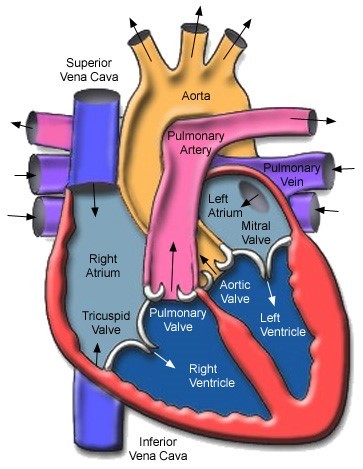
Heart Valves
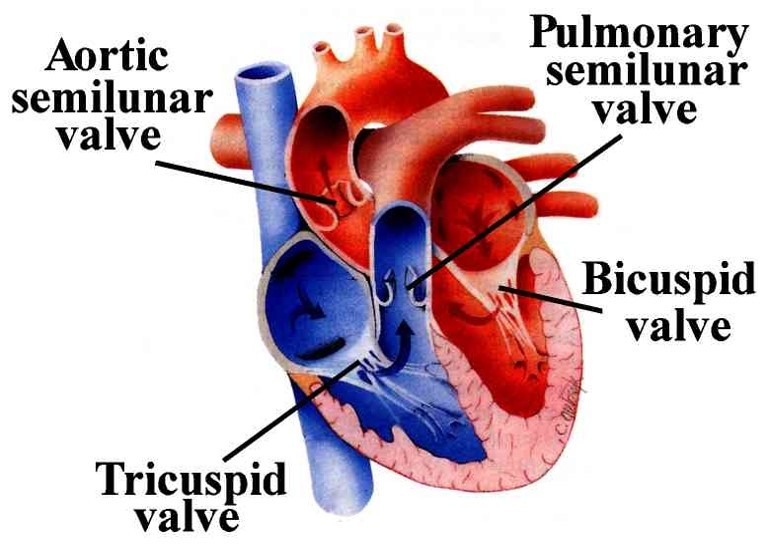
Four valves:
- Pulmonary valve
- Aortic valve
- Two atrioventricular valves
–Right or tricuspid valve
–Left or mitral valve
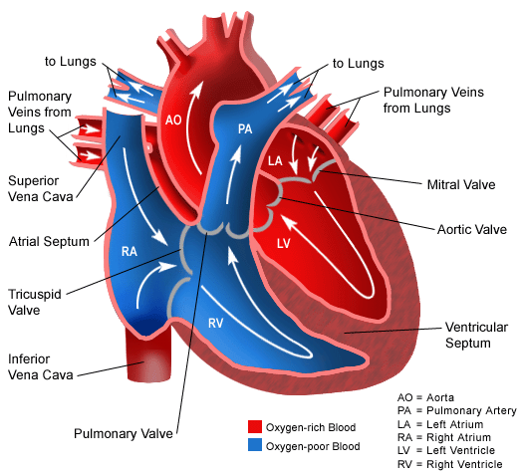
Blood Flow through the Heart
describe the flow through the heart
Pulmonary & Systemic Circulation
Describe
- Pulmonary – involves pumping deoxygenated blood to the lungs and returning re-oxygenated blood to the heart
- Systemic – involves circulating oxygenated blood throughout the body to the tissues and returning deoxygenated blood to the heart
Blood Vessels
The heart pumps blood into vessels that vary in structure, size, and function, and there are several types: name them
- arteries
- arterioles
- capillaries
- venules
- veins
Structure of Blood Vessels
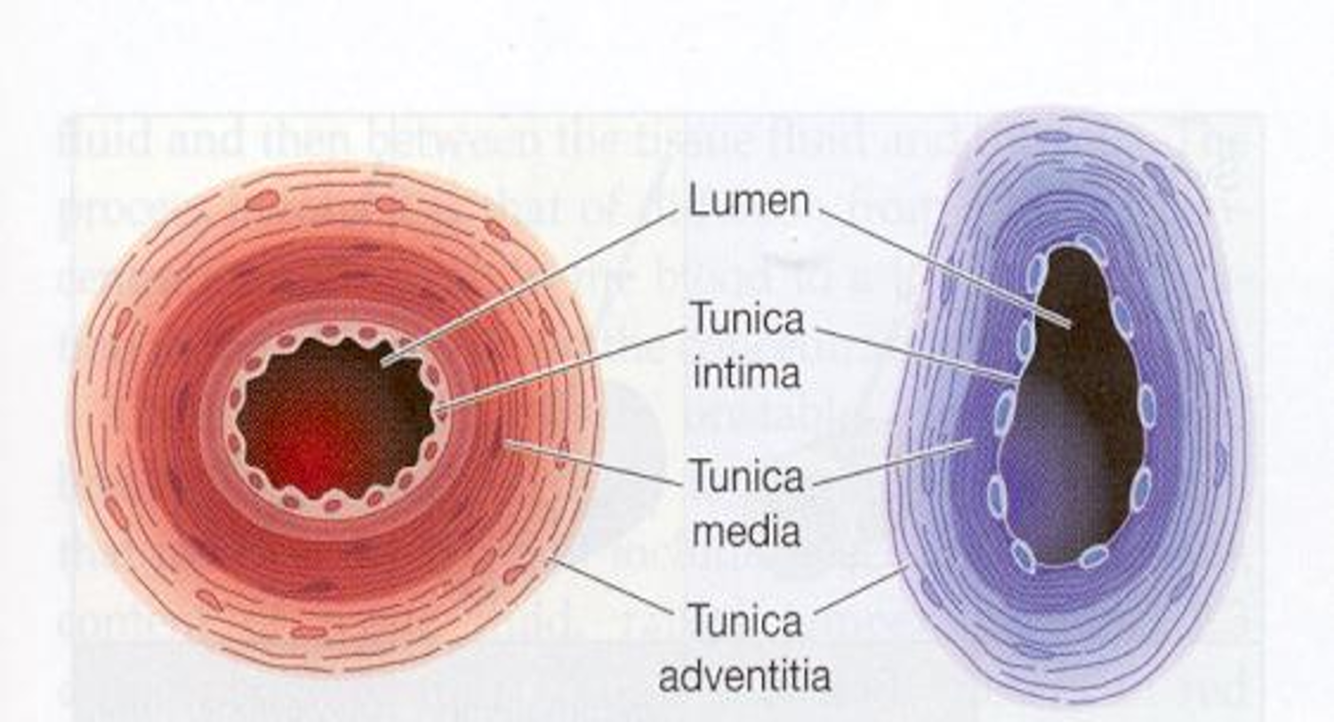
All vessels are structured in three layers:
- Tunica Adventicia (Outer fibrous sheath)
- Tunica Media (middle layer of muscle and elastic tissue)
•
•Tunica Intima (Inner layer of smooth endothelium)
Portal Circulation
describe
- A branch of the systemic circulation
- Carries blood to and from the liver
- Hepatic artery supplies oxygenated blood
- Hepatic portal vein carries blood rich in nutrients from the digestive tract to the liver
- Hepatic Veins carry deoxygenated blood from Liver to Inferior Venae Cava
Spleen
describe
•Lies in the left hypochondrial region of the abdominal cavity, between fundus of the stomach and the diaphragm
•
•Size varies but usually approx. 12cm long, 7cm wide and 2.5cm thick
•
•Weighs approx. 200g
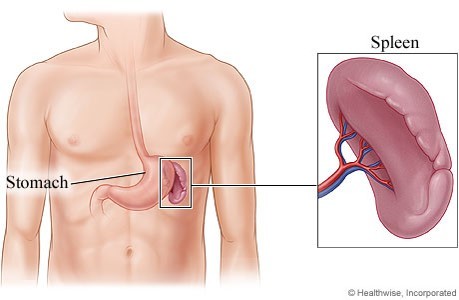
Functions of the Spleen
name them
- Produce new white blood cells
- Store red blood cells
- Destroy old red blood cells
The Lymphatic System
describe
- The fluid part of the blood which has exuded through the capillary wall becomes either extra-cellular or interstitial fluid
- Much of this fluid is collected into the lymphatic vessels
- Re-absorption directly into the blood stream is reduced by the higher osmotic and blood pressures contained within the blood vessels
- Once in the lymphatic system it is classed as lymph
•Lymph vessels (Begin in spaces between capillaries and cells)
–Similar to veins and capillaries but larger pores
•
•Lymph (Tissue fluid)
–Containing large molecules (Proteins and microbes and fragments of damaged tissue cells
•
•Lymph nodes
–Filter lymph and remove microbes and other material
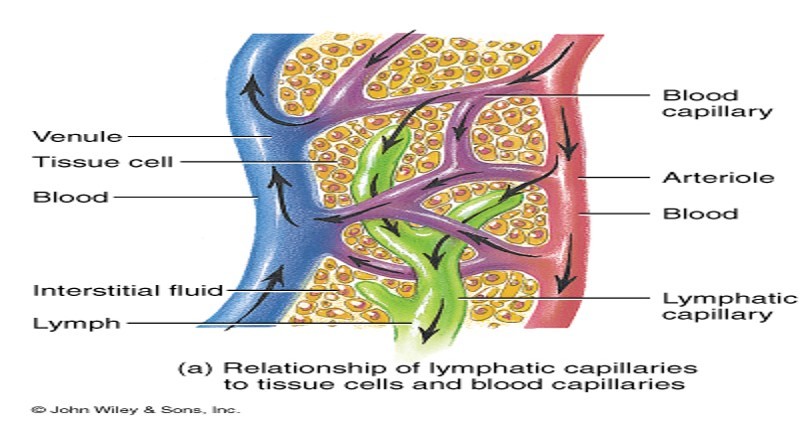
Lymph Vessels and Ducts
•Lymphatic capillaries are slightly larger than blood capillaries
–They only allow fluid to enter them – not leave
- Lymphatic vessels contain valves to prevent back-flow and drain lymph into the right and left lymphatic ducts
- Lymphatic Ducts return the lymph to the circulation at the subclavian veins
Lymphatic System Also provides the sites for the production and maturation of lymphocytes, which are the white blood cells concerned with immunity
Also provides the sites for the production and maturation of lymphocytes, which are the white blood cells concerned with immunity
Composition of Blood
describe
Blood is composed of 55% liquid, 45% solids and contains four main elements:
- Plasma (Liquid)
- Red cells (erythrocytes)
- White cells (leukocytes)
- Platelets (thrombocytes)
- Protect the body from infection
- Distribute heat
- Seal wounds by clotting
Principle Functions of Blood
- Carry oxygen and carbon dioxide
- Carry nutrients and water
- Carry waste products to excretory organs
- Distribute secretion of glands (Enzymes and hormones)
- Protect the body from infection
- Distribute heat
- Seal wounds by clotting
Blood Clotting Process
- Damaged platelets or tissue cells release thromboplastins (Enzymes)
- Thromboplastins + Prothrombin (Plasma protein)
+ Calcium salts combine to form Thrombin
- Thrombin is a proteolytic (protein-splitting)
enzyme that converts fibrinogen into fibrin
- Fibrin + blood cells (inc platelets) = Clot
Blood Groups
Three main groups of factors are present in human red cells that differentiate individuals:
•The Rhesus factors
•
•Minor blood groups
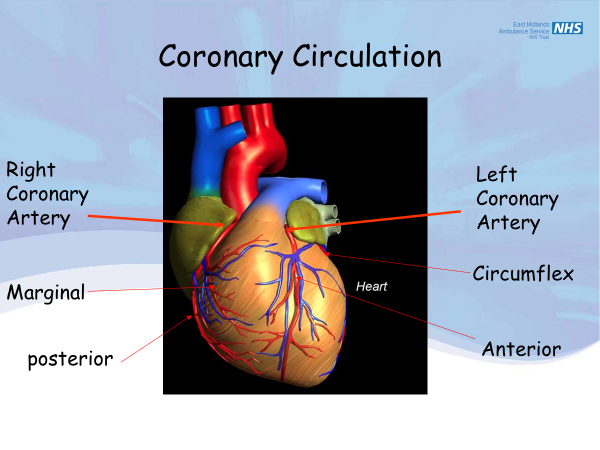
Coronary Circulation
Two Major Coronary Arteries-Right and Left
•
•Right splits into:
–Posterior inter-ventricular branch
–Marginal branch
–
•Left splits into
–Anterior inter-ventricular branch
–Circumflex branch
Coronary Circulation
name
Venous return from the heart muscle is mainly via the Coronary Sinus, which returns deoxgenated blood to the right atrium


-
Principles of good documentation12
-
Physiology Changes In Pregnancy14
-
Mnumonics16
-
Functions Of The Kidney2
-
Mental Capacity Act14
-
Response to 999 calls7
-
organisational structure15
-
AAP Manual Handling11
-
Legal, ethical and professional issues14
-
Patient centered care1
-
ABC Terminology3
-
roles within the ambulance service5
-
Eca Test18
-
Tech Drugs full14
-
intro to human body17
-
Anatomical Directional Terminology2
-
Respiration65
-
Tech Recognition and Management of cardiac conditions29
-
Tech Cardiovascular System42
-
Tech Nervous System37
-
Technician Drugs general questions24
-
poisoning substance20
-
drug administer4
-
Respiratory conditions asthma25
-
Respiratory conditions COPD11
-
Recognition and Management of cardiac conditions27
-
Recognition and management of diabetes31
-
Nervous Disorders36
-
Digestive system19
-
Liver24
-
skeleton/muscle21
-
unit25 management of a child27
-
child bronchiolitis and Asthma13
-
Chest injuries3
-
Anatomical, physiological & developmental differences1
-
Management of Obstetrics and Gynaecology37
-
childhood deseases Bronchiolitis7
-
childhood Asthma6
-
Croup childhood7
-
Feverish illness in childre5
-
Febrile Convulsions child2
-
Meningitis & Septicaemia6
-
extremes of heat13
-
Changes in Old Ag10
-
head injuies and maxillo facial13
-
Conditions of the Nervous System12
-
Major Incident Training8
-
Mental Health, Awareness, Wellbeing10
-
other types of injuries18
-
Management of Wounds,19
-
Head Injury17
-
What is trauma?14
-
Traumatic Cardiac Arrest (TCA)11
-
Shock34
-
Care of Older People21
-
Silver Trauma (+small bit of Frailty12
-
Digestive processes16
-
Poisoning & substance misuse8
-
Organisation Of The Body System31
-
Questions212
-
MOD F TECH 48 Maternity67
-
shock types6
-
pain relief1



