What is a virus?
A piece of bad news(Nucleic acid, DNA or RNA Genome) wrapped up in a protein
Why should we pay attention to viruses?
Because they can be zoonotic!
Defining Viruses
- Viruses are non‐living entities.
- Viruses contain nucleic acid genome (DNA or RNA) surrounded by a protein coat and, in some cases, other layers of material, such as a lipid envelope.
- Viruses do not possess standard cellular organelles such as mitochondria, chloroplasts, Golgi, and endoplasmic reticulum with associated ribosomes
- Viruses cannot make energy or proteins by themselves and have to rely on a host cell.
- All Viruses are obligate intracellular parasites. Outside the living cell, viruses are inert or dormant particles, whereas, inside the cell, the virus hijacks and utilizes the host cell machinery to produce its proteins and nucleic acid for the next generation of virus.
- Viruses do not have the genetic capability to multiply by division. The process of Virus reproduction resembles an assembly line in which various parts of the virus come together from different parts of the host cell to form new virus particles.
Can viruses grow on an agar plate?
No! They can’t grow on a non-living media
Do virusese have functional ribosomes?
No!
Virion
A complete virus particle that consists of an RNA or DNA core with a protein coat sometimes with external envelopes and that is the extracellular infective form of a virus.
CAN BE FOUND OUTSIDE OF THE HOST!
Virus
Virus is a broad general terminology used to describe any aspect of the infectious agent and includes: the infectious (Virion) or inactivated virus particle, or viral nucleic acid and protein in the infected cell.
Viroid
An infectious particle smaller than any of the known viruses, an agent of certain plant diseases. The particle consists only of an extremely small circular RNA (ribonucleic acid) molecule, lacking the protein coat of a virus.
CAUSES DISEASE IN PLANTS
Variolation
Inoculation was the method first used to immunize an individual against Small Pox (Variola) with material taken from a patient or a recently variolated individual in the hope that a mild but protective infection would result.
Louis Pasteur
injected dried, potassium hydroxide treated, infected rabbit brain material in two boys bitten by rabid dogs and both of them recovered.
Charles Chamberland
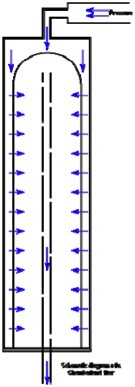
In 1884, the French microbiologist Charles Chamberland (1851–1931) invented a filter known today as the Chamberland filter. This filter had pores smaller than bacteria.
Martinus Beijerinck
called this filtered, infectious substance a “virus” and this discovery is considered to be the beginning of virology.
Oncogenic Viruses
viruses that cause cancer
Eradication of an infectious disease
involves complete elimination of the pathogen or
the disease‐causing agent from a defined geographic region.
Smallest Viruses
Porcine circovirus type 1 (17 nm diameter) Parvoviruses (18 nm diameter)
Largest Viruses:
Pandoravirus (400nm diameter)
Poxvirus (200 nm diameter & 300 nm in length)
What shape is this?
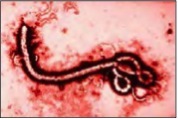
Filament-shaped
What shape is this?
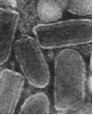
Bullet-shaped
What shape is this?
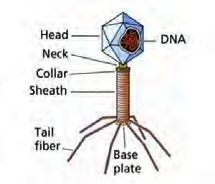
Tadpole-shaped
What shape is this?
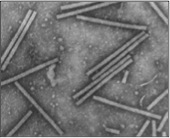
Rod-shaped
What shape is this?
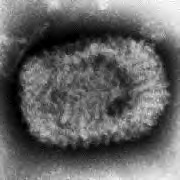
Brick-shaped
What shape is this?
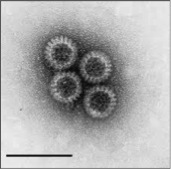
Spherical
Pleomorphism
the ability of some Virus to alter their shape or si
Most common shapes of virsues?
rod shaped or spherical



-
Test 1534
-
Test 2- Prevention and control of Viruses71
-
Test 2- Poxviradae126
-
Test 2- Circoviridae41
-
Test 2- Asfarviridae41
-
Test 2- Parvoviridae80
-
Test 2- Diagnosis of Viral Techniques9
-
Test 2- Papillomaviridae37
-
Test 2- Adenoviridae42
-
Test 3- Reoviridae37
-
Final- Retroviruses52
-
Final- Orthomyxoviridae19
-
Paramyxoviridae34
-
Toka questions41



