Major Leadership Theories. What is situational leadership
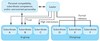
Always ask 3 questions before choosing how to act:
- 1.How much control do I have in this situation?
- 2.How able and willing are my followers to follow?
- 3.How urgent is the situation?
Then use the continum in the picture to know what to do
**this is also know as contingency leadership

Lessons from Home Depot (2)
Calculation of turnover costs. If you can decrease this, it can be a lot of savings
Don’t need to calculate, but understand the information that you need to do that:
- # of Employees (around 300,000)
- Replacement cost (1:1)
- average Salary (30K)
= (300,000*.14)*30,000 = $1.26 Billion
Customer satisfaction
They had less employees, which is why it was low
Solution: “more aprons on the floor” = more people there (who are well trained) to help out
Main causes of faulty reward systems (4)
&
How to Fix Faulty Reward Systems (Kerr Article)
Causes:
- Fascination with Objective Criterion = simple, quantifiable standards and metrics work in work with highly predictable outcomes, but this can be “faulty” when applied elsewhere
- Overemphasis on Visible Behaviors = whoever scores the goal gets the recognition, but the person who passed her the ball. Same in that team-building and creativity may be underemphasized because it isn’t “visible” to managers
- Hypocrisy (what behaviors are really desired?) = the rewarder may have been getting the desired outcome, in spite of claims that the behavior was not actually desired.
- Emphasis on Other Ends like morality or equity (instead of efficiency) = the 1994 Clinton health plan was a system that rewarded inefficiency, while arguing that this was for some “higher objective”
How to fix = Our reward systems need to align with the right outcomes. Example: we usually ask “did you visit”, but do we want to reward for just a visit? We need to change.
ESSAY: 5 Types (or Sources) of Power*
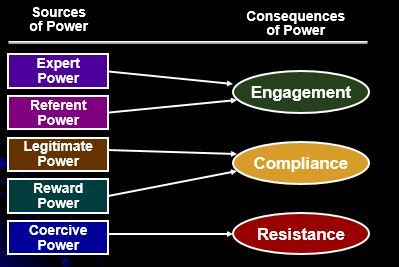
- Expert [PERSONAL] = Based upon an individual’s special knowledge and/or skills
- Referent [PERSONAL] = Based upon admired personal qualities and reputation
- Legitimate [ORGANIZATIONAL] = Based upon an individual’s position in the formal hierarchy
- Reward [ORGANIZATIONAL] = Based upon the capacity to control distribution of valued rewards
- Coercive [ORGANIZATIONAL] = Based upon fear, intimidation, and the capacity to control punishment
Essay: briefly explain any 3 or 4 of those 5 sources of power, and what could you do to increase in those things. Or what types of power do you think each person holds in this situation, and what would you do if you’re participant A in order to increase your power.
Major Leadership Theories. What is a behavioral leader?
- = do as I’m doing (e.g., in remember the Titans, Gary wanted team-focused behaviors, but Julius isn’t seeing that from Gary. Bottom line:be the EXAMPLE! The things you say matter, so you better embody those (be consistent) )
- These leaders are:
- People-oriented (Consideration) = look out for employee’s welfare
- Task-oriented = assign specific tasks and push employees to reach performance
- These leaders are:
ESSAY: Daniel Pink What Motivates us? Key Takeaways
Key motivators:
- Autonomy – one day of autonomy produces something that would’ve never emerged (get out of their way)
- Mastery – we care about mastery (this can be hard b/c we aren’t there long enough to be a master) - this can be done on or off the clock
- Purpose – organizations want to have a transcendent purpose (how does their role fit in with the purpose)
if it’s a more complex tasks, higher incentives leads to poorer performance. But incentives can increase performance in mechanical tasks
Pay just enough to take money off the table as an issue
Customer Outcomes – SRR (p. 134) = this is a measure that tells you if you got “what’s right” for the customer
S - satisfaction
R - repurchase
R- recommend
Manage by Exception (2 main things)
- BREAK THE GOLDEN RULE - everyone is different:
- Becca likes beating others. Adam likes beating himself
- Ask your people:
- Ask your employee about his/her goals
- How does she like recognition (was is most meaningful recognition)
- Ask about past mentors. How did they help?
Major Leadership Theories. What are 4 characteristics of a transformational leader?
Charisma + the 3 I’s:
- Charisma – higher than average
- Individual consideration = customize behaviors and message to individual followers, based on their needs
- Intellectual stimulation = Steve Jobs good = trying to cause others to think differently and push them beyond
- Inspirational motivation = hold people to a higher bar, but they express confidence that they can hit those marks
Define the Right Outcomes – Chapter 4
Rules of Thumb for When to Focus on Steps (not Autonomy for Employees) (3 points) and when to not (1 point)
- Activities involving Accuracy and Safety - don’t break the bank
- Following External Standards -
- The Steps don’t obscure the Outcomes - don’t let the creed overshadow the message - Airlines letting on-time numbers overrule customer satisfaction.
- Don’t try this with Customer Satisfaction
Major Leadership Theories. What is transformational leadership (4 things)
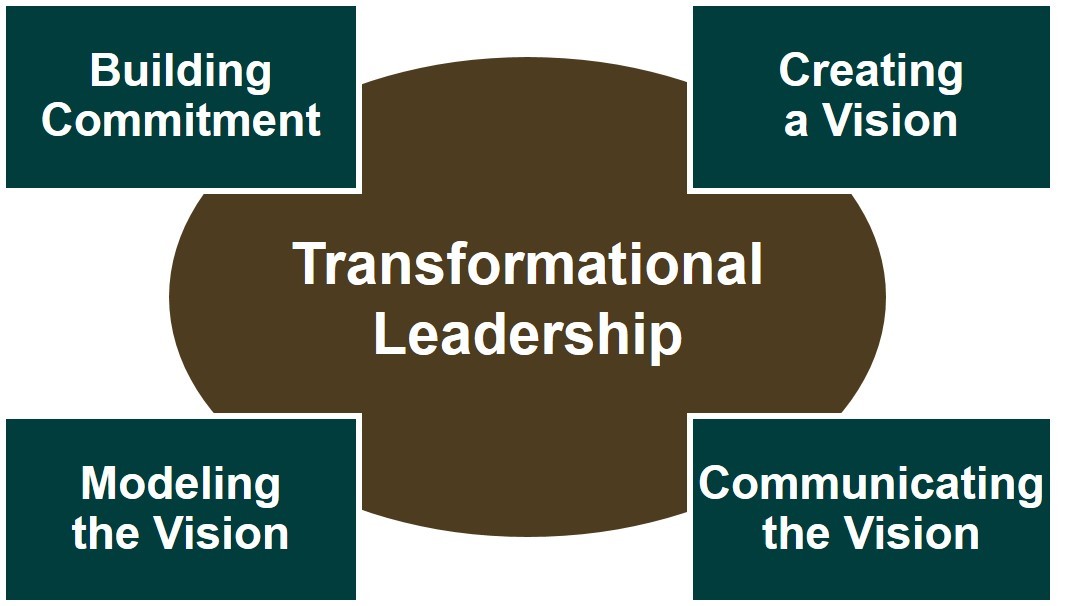
- 1.Create vision – going to the moon
- 2.Communicate vision – JFK communication to the nation tha he would put money into the space program, cause his vision was to get to the moon
- 3.Modeling the Vision – (Kotter doesn’t talk about this much) if you’re going to transform a team, you better live it. Be the model!
- 1.Julius and Gary
- 4.Building Commitment – because there is a compelling vision and we see a vision in the leader, it builds commitment. They’re energized by what they see happening.
**NOTE that #3 and #4 are what differentiates a transformational leader from others
Focus on Strengths (First Break All the Rules)
Main Ideas (2)
& Reasons Behind why we don’t focus on strengths(4)
- It’s tempting to try to fix people
- Each person is different and shouldn’t be changed
Reasons:
- Universal Potential? (We think we all have the same potential)
- Persistence Will Always Pay Off? (not everyone will be the best at calculus if they try hard enough)
- Relationships Preoccupied with Weaknesses? (stop trying tofocus on fixing your spouse)
- Who is to Blame for Failure?
Equity Theory
Motivation Theory
individuals are motivated by a sense of fairness in their interactions. Moreover, our sense of fairness is a result of the social comparisons we make. Specifically, we compare our inputs to outcomes with other people’s inputs to outcomes
If underrewarded, then you’re try to grow outcomes by talking to boss or stealing from company. Or shrink inputs by lowering intensity
If overrewareded, grow inputs through more high-quality work
2 Types of Dimensions of Organizational Justice and which one do people care more about?
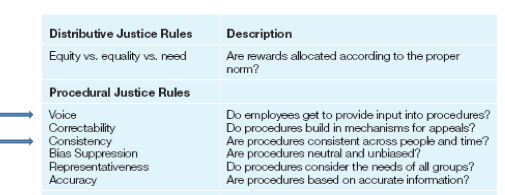
Distributive Justice – fairness of allocated outcomes (pay raises, promotions, layoffs, other rewards)
Procedural Justice – fairness of the processes that lead to the decisions about employment outcomes
People want a VOICE and CONSISTENCY
if we aren’t happy with the reward we got, then we care a lot more about procedural justice. If we’re happy, I don’t care if the process was fair
(OB) Chapter 6.5 Rewarding Employees: Individual Reward Types (5)
piece rate- employees are paid on the basis of individual output they produce.
bonuses- one-time rewards that follow specific accomplishments of employees.
merit pay- involves giving employees a permanent pay raise based on past performance
commissions- involves rewarding sales employees with a percentage of sales volume or profits generated.
Awards-methods that motivate employees through awards, plaques, or other symbolic methods of recognition by conveying sincere appreciation for employee contributions.
ESSAY: Decision-Making Approaches*
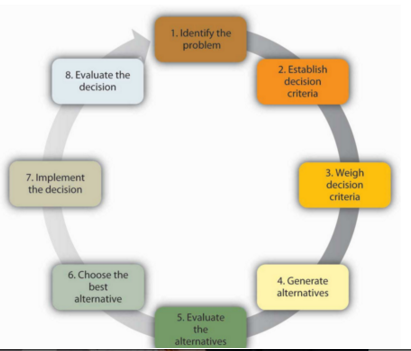
Rational (6 Steps)
(4th step is most challenging and leads to most failures)
&
Satisficing = how is it different than rational? Not first alternative. Imperfect information, but it’s the first alternative that meets the criteria that you have set in your mind (more of a “good-enough” decision
- = bounded rationality model
ESSAY Expectancy Theory*
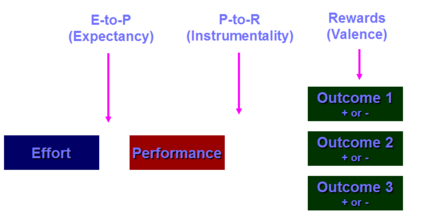
Will my effort lead to desired performance level?
Will my performance give me the valued outcome that I want?
E –> P –> VO
E = Do i believe that my effort will lead to the desired performance level?
P = if I perform at that level, is that what is rewarded in this organization
VO = do I care about the rewards
Spend the most time with your best people
Most managers think they are supposed to be CONTROLLING AND INSTRUCTING, but the core is actually the CATALYST role
Managers do 3 things:
- create “stretch” expectations
- Perfect unique style
- Remove obstacles
Investing in your BEST people is:
- Fair
- The best way to learn
- the only way to reach excellence
Motivation Definition (3 things)
Motivation is an individual’s …
- direction
- intensity
- and persistence of effort
Negotiation Principles (4 major ideas)
BATNA = Best Alternative to a Negotiated Agreement =
getting good bargains doesn’t mean you’re a good negotiator! It just means you’re a good researcher…however that is a prerequisite for being a good negotiator b/c it means you search out your BATNAs and you have concrete information about your alternatives—not merely guessing.
RP = your bottom line, never reveal your RP.
Anchoring = aggressive first offer - this determines where your offer will be
last slide in decision-making slide deck. THere are the ones we focused on the most:
- know what you are worth
- examine beyond base pay
4 tactics to remember:
- BATNA = best alternative to a negotiated agreement
- Define & commit to your reservation price (don’t reveal it)
- Aggressive 1st offers wherever possible (anchoring)
- Focus on goal during negotiation & RP after
Perception Attribution Theory:
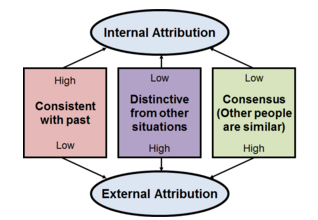
Attribution theory helps us answer the question: “Why is this person behaving that way?” We will make significantly different decisions based on whether we attribute others’ behaviors to internal factors (that is just how that person is) or to external factors (something in that employee’s environment is causing this behavior).
Consequences of Sources of Power
Note that Expert and referent are personal, so you can get a lot of power that way (i.e., engagement is best)
Manage around weaknesses (4 things)
- Divising a support system - Glasses for a person with bad eyes
- Find a Complementary Partner - Managers should always look at how one employee’s valleys can be offset by another person’s peaks
- How companies prevent partnerships - Strong I’s are the building blocks of great teams
- Find an alternative role - sometimes the only way to cure poor performance is to get that person out of that role
3 Questions to Define the Right Outcomes* (p.133-137)
- What’s right for customer = these are the 4 customer expectations above
- What’s right for company = make sure that the outcomes you define for your people are in line with your company’s current strategy.
- What’s right for the individual (employee) = identify a person’s strengths, then define outcomes that play to those strengths, and find a way to rate or rank those outcomes, then let the person go to work (e.g., dennis rodman example from book)