what would the electron geometry be of an atom with a steric number of 3
trigonal planar
why is H an exception to the octet rule
it can’t hold 8 electrons
what is the normal valence for B? when is it positive? negative?
- 3 bonding pairs, 0 lone pairs (octet rule violation)
- it doesn’t occur
- 4 bonding pairs and 0 lone pairs * same as aluminum
when woould an atom with a tetrahedral electron geometry (s# = 4) have a bent molecular geometry
when there are two sigma bonds and two lone pairs
in the electron geometry of a molecule is trigonal planar (s# = 3), what bond configuration would result in a bent molecular geometry
2 sigma bonds, one non bonding pair, one pi bond
steps for drawing lewis structures (5)
- determine the number of valence electrons in every atom of the molecule
- if the molecule is (-), add one electron, if its (+), subtract one
- connect all atoms of the molecule with one bonding pair
- distribute the remaining electrons as lone pairs, starting with the outermost atoms first
- if there are any atoms that don’t have a full octet, change one lone pair of a full atom that will form the lowest charge to a bonding pair
if an atom has a tetrahedral electron arrangement and bent molecular arrangement, what will the bond angles be
104.5
when would you find a negative halogen
inorganic free ions (fluoride, chloride, bromide)
normal valence
the number of bonds an atom has when it is neutral
- what type of functional group is this?
- what are the restrictions on R groups
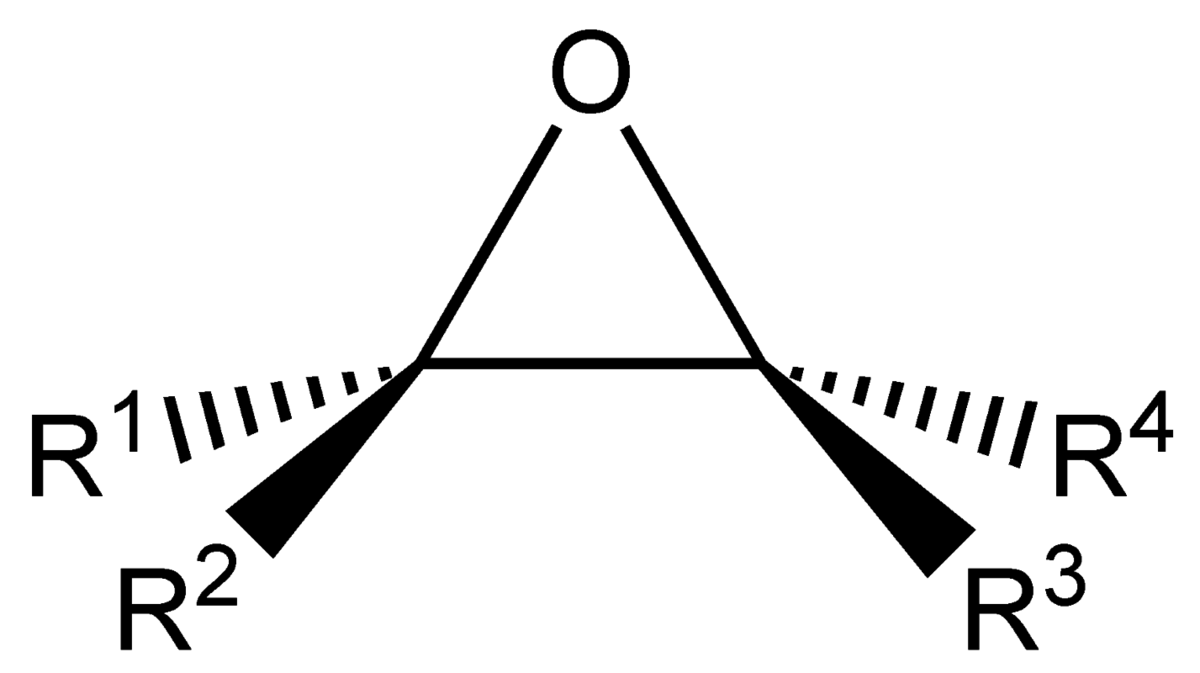
- epoxides
- none, R can be C or O
constructive interference
when the interaction of two waves meeting produces a larger wave
what is the normal valence for S (12e-) when is it positive? negative?
- 6 bonding pairs and 0 lone pairs
- doesn’t occur
- 5 bonding pairs and 1 lone pair
sigma bonds
single bonds formed by the direct overlap of orbitals
why are S and P exceptions to the octet rule
Sulfur and phosphorus both can have 10 e- and still be neutral
when woould an atom with a tetrahedral electron geometry (s# = 4) have a tetrahedral molecular geometry
when there are 4 sigma bonds
pauli principle
each orbital can only hold two electrons
how many valence electrons do oxygen and sulfur have
6
what are two possible orientations of alkynes
terminal
internal
what do parentheses do in condensed structures
- they can be used with subscripts to indicate a repeating molecule (CH3CH2CH2CH3 becomes CH3(CH2)2CH3)
- they can used to indicate branching atoms
what is the difference between primary, secondary, teritary alkyl halides
primary: 2R’s = H, 1R = C
secondary: 2R = C
tertiary: 3R = C
when forming positive ions in a charged molecule, which elements should be made into ions first
Sulfur, nitrogen, oxygen, carbon
T/F the charge on a molecule must always be determined
False, the charge of molecule is always neutral unless otherwise stated
what does the psi value indicate
the phase of the electron in the cloud, + on one side of the atom, - on the other
what is the difference between primary, secondary, and tertiary alcohols
primary: 2R’s = H, 1R = C
secondary: 2R’s = C
tertiary: 3R’s = C






