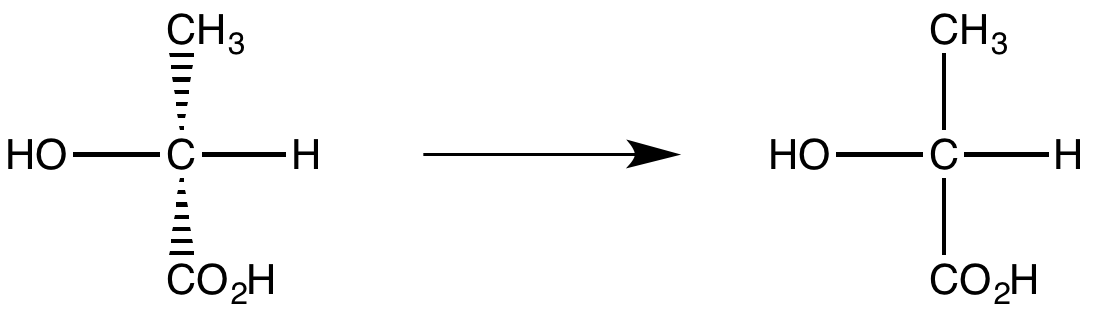
isomers
compounds which have the same molecular formula with different structures
two types of isomers
- consitutional isomers
- stereoisomers
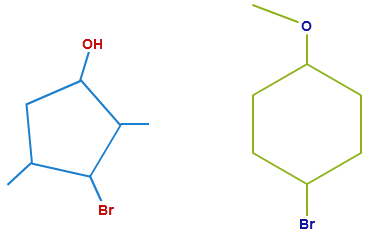
constitutional isomers
chemical compounds with the same molecular formula but with a different arrangement of constituents
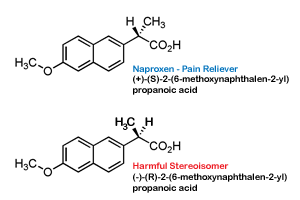
stereoisomers
two chemical compounds with the same molecular formula and constituents, but with a different 3D arrangement
chirality
an object or molecule that is not identical to its mirror image
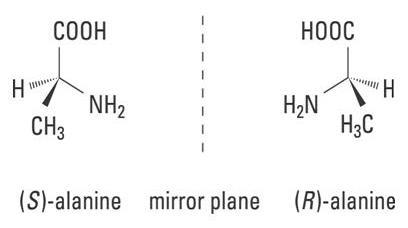
what is meant by the statement “chiral molecules have handedness”
if you superimpose the mirror image of a chiral molecule over the original, they will not match
achiral molecule
a molecule that is identical to its mirror image
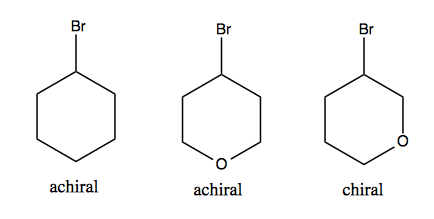
what is the main distinction between achiral and chiral molecules
achiral molecules posses a plane of symmetry
what does it mean to say that achiral molecules have a plane of symmetry
these molecules have a line that can be drawn somewhere on the molecule or in the plane of the board which will produce two equal parts
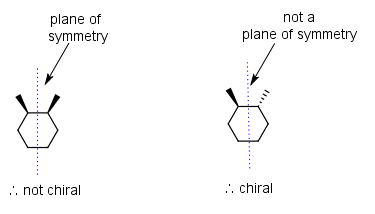
T/F chiral and achiral molecules have a plane of symmetry
false
what is a chirality center and what usually forms it
an atom such as carbon with four unique substiuents
a carbon with four different atoms bonded to it
T/F any compound with one chirality center is chiral
true
T/F a molecule with 2 chiraliry centers will always be achiral
false, if the two chirality centers are equal then there can be a plane of symmetry drawn between them
two types of stereoisomers
- diastereomers
- enantiomers
diastereomers
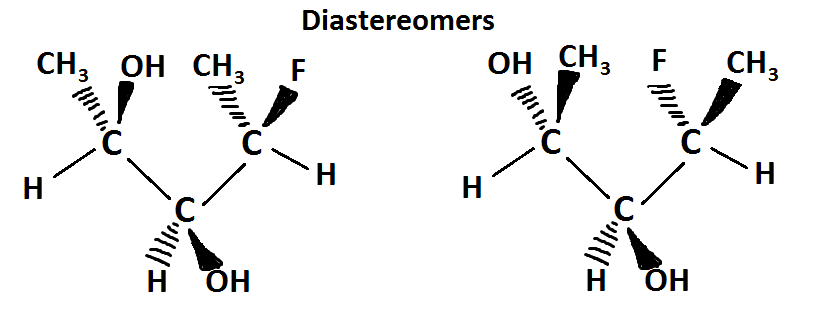
non-identical compoiunds that have the same molecular formula, all the same atom connectivity, but they are not image and mirror image
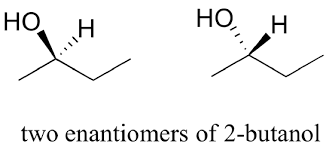
enantiomers
two non-identical chiral compounds that are image and mirror image of each other
steps to determine if a compound is a diastereomer, enantiomer, unrelated, or identical
- look for different molecules
- look for planes of symmetry
- look for chirality centers
- check for superimposition
- look at the configuration of the chirality centers
how to determine the configuration of a chirality center
- rank the substituents from highest to lowest atomic number
- if there is a tie, move to the next branch
- draw a circle from 1-2-3
- make sure the 4th ranked branch is going backwards
- if the 4th ranked group is not backwards, reverse the direction of the configuration
how does the number of chirality centers relate to the number of possible stereoisomers
stereoisomers = 2n, where n is the number of stereoisomers
how many possible enantiomers can a compound have
only one
what will the relationship be between two molecules that have an identical configuration at every chirality center
they will be identical
what will be the relationship between two molecules that are in a different configuration at every chirality center
they will be enantiomers
T/F confirmations change, configurations dont
true
fischer projection
a simplified way of drawing tetrahedral molecules and their arrangement