Requirements for drug likeness
-Contain atoms C H O S N P - Low molecular weight - devoid of reactive chemical groups - devoid of toxophores - Relatively water soluble
Block Buster drugs
- Make big money - Typically first in class; present a novel MOA
Causes of drug candidate failure
-Poor pharmacokinetics - Lack of efficacy - toxicity
Privileged structures
Certain structures which are often found in drug molecules even if acting at different targetts, benzorings, piperdizines and diphenyls
PSA
<140 = absorption <100 = BBB permeability
Changes in drug candidate from lead to oprtimization
Increase in MW Increase in Hydrophobicity Increasing potency
Lead like structures
• MW < 300, • H-bond donors is ≤3 • H-bond acceptors ≤ 3 and • Calculated logP ≤ 3
selection of a successful drug target?
- structure not function - selected with an educated guess; chemical tractability -strong rationale for a disease link -testable
Target identification via pathophysiology
- understand primary pathophysiology 2. identify biochemical pathways likely to respond to chemical intervention 3. select key molecules from said pathway as drug targets Drawbacks: slow
Target identification via Phenotypic drug effects
-Chemicals (often existing drugs) are screened to see if they possess intrinsic pharmacological activity - i.e. phenothiazine initially used as a sedative became known for antipsychotic action mediated by activity at the D2 receptor.
Genetic drug discovery
Disease state can be emulated by using knock out mice or similar animal studies
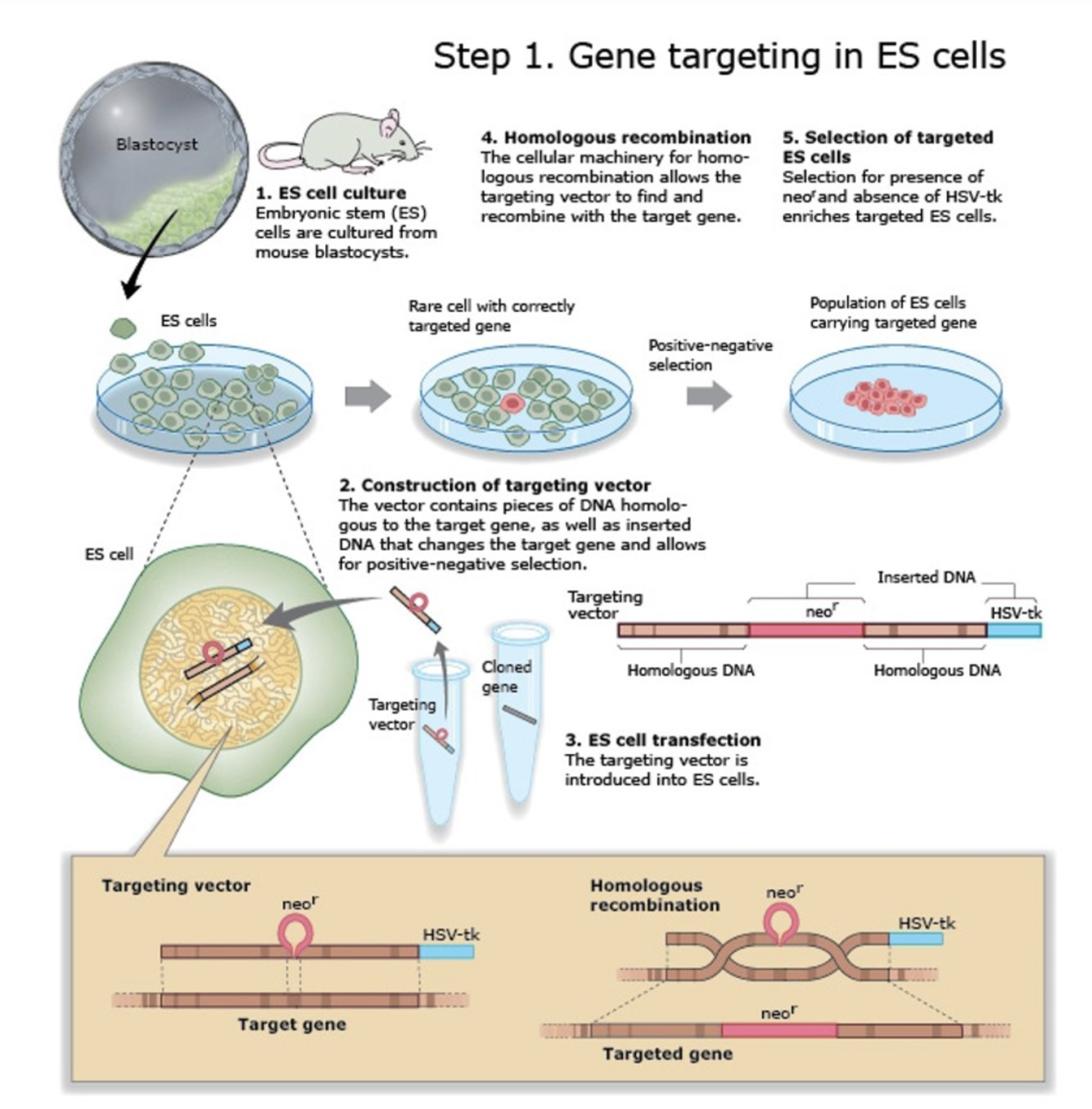
How to make a KO mice step 1
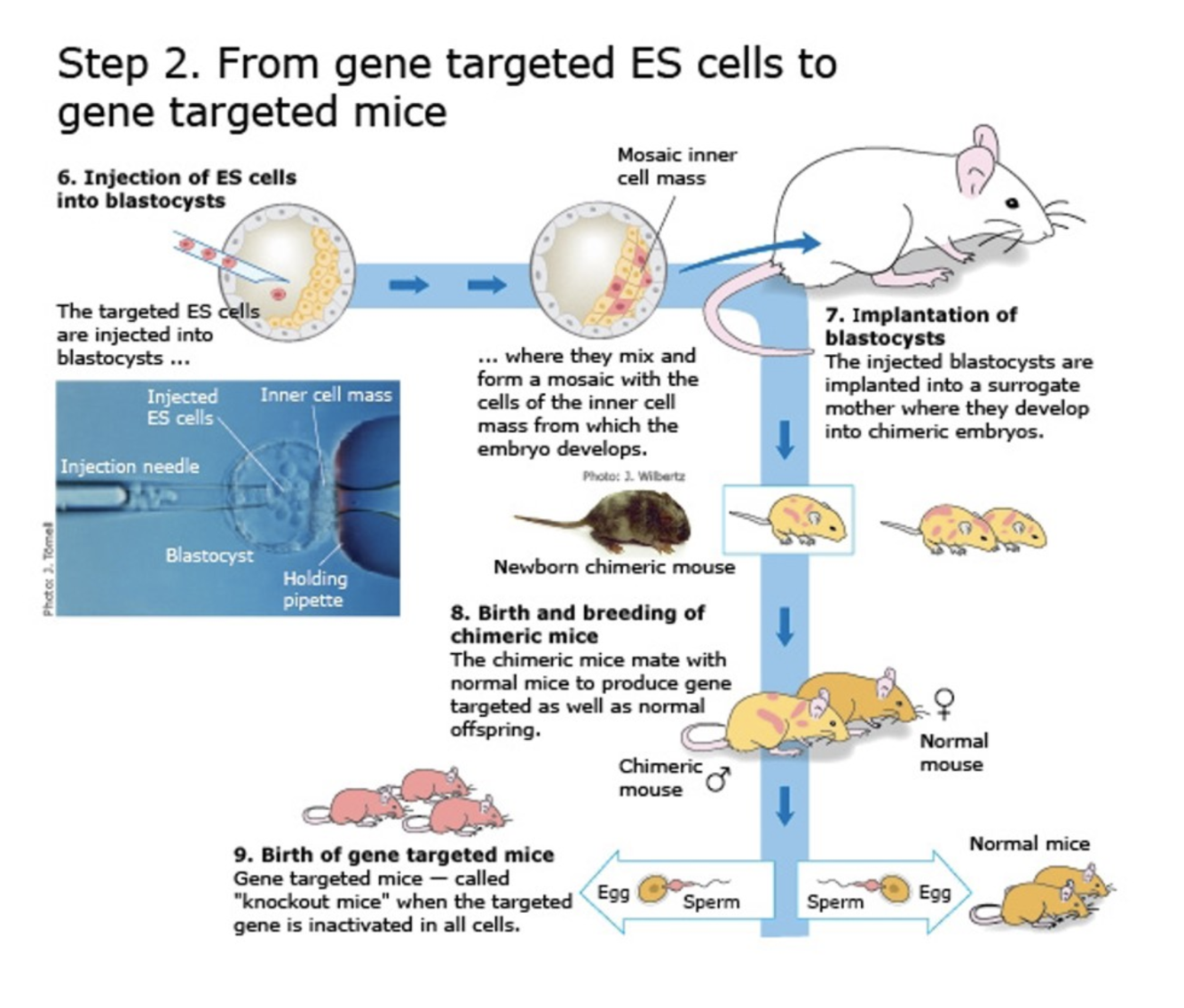
How to make KO mice step 2
Limitations to KO mice
- embryonic lethality
- how accurately does it miic the disease state
- compensation
Gene silencing
this can be done ‘pharmacologically’ within animal models or cell assays, but also through genetic means such as antisense oligonucleotides or RNA interference (RNAi).
RNAi inhibits translation by neutrilizing target Mrna molecules.
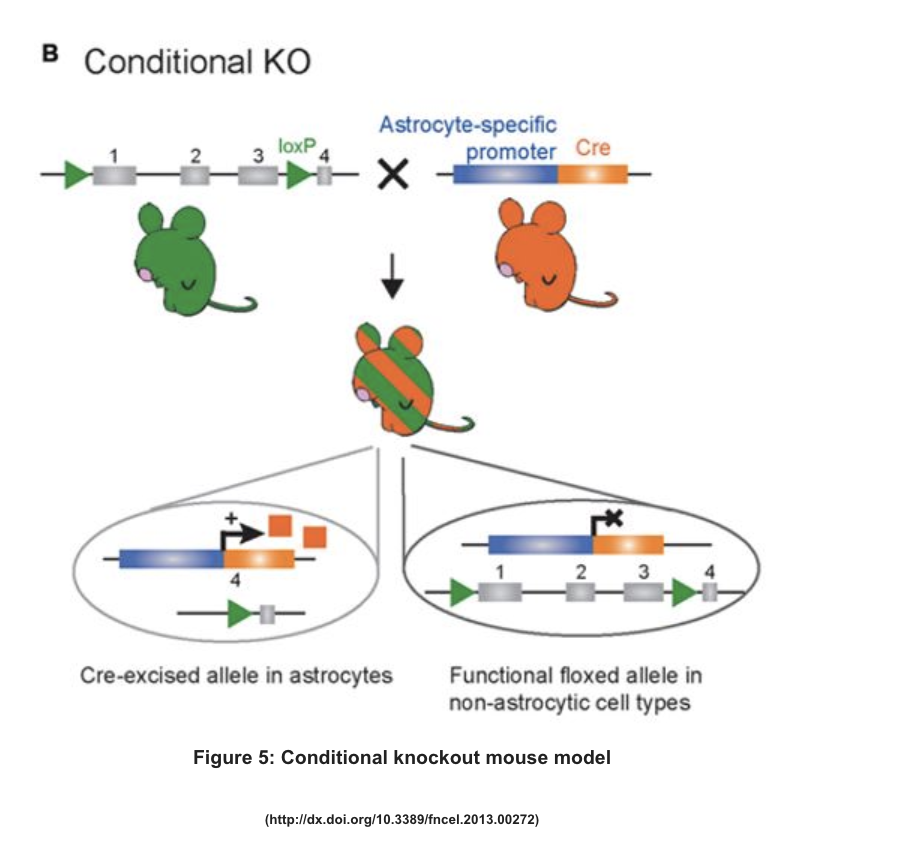
Partial knockout
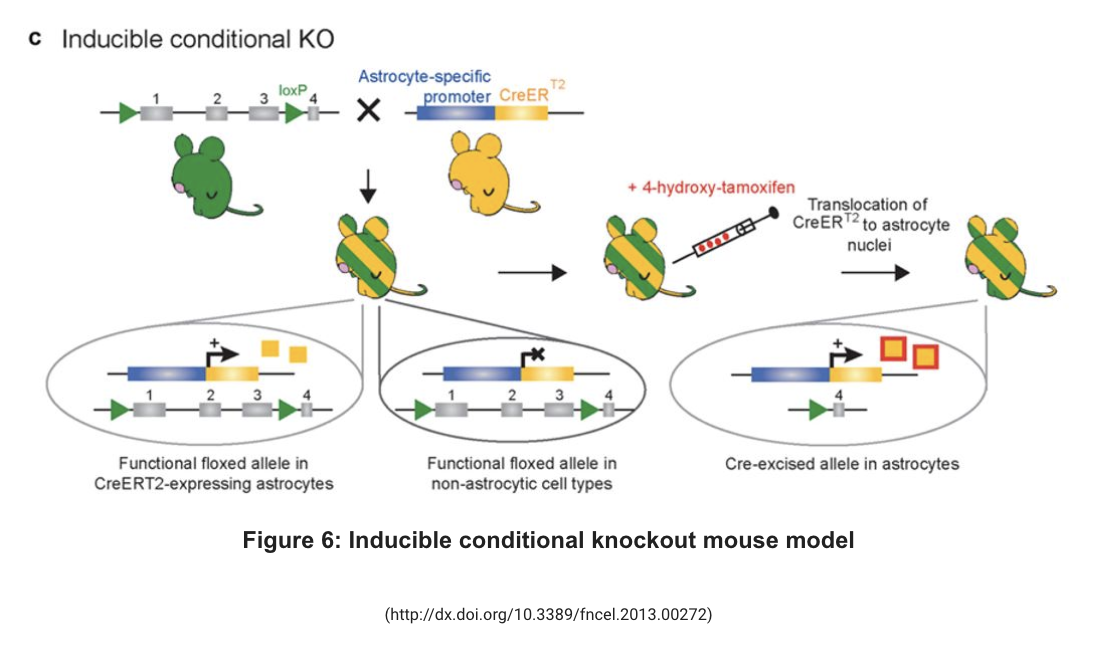
Inducible KO
TDD: Imatinib
- Mutation in a particular gene noticed to be causative on leukemia
- corresponding protein identified to be a kinase inhibitor
- HTS found a hit (antagonist which blocked the onco signalling pathway)
PDD: Fingiloid
A biased library of S1P like small drug molecules were screened for immunosuprresive activity
Pros and conds of TDD
Pros:
Rational MOA
Can use siRNA to probe mRNA and validate trget before undetaking chemistry
can aid design thorugh protein isolation and determination of structure
Cons:
- high failure rate
- Reliant on target druggability
- Resource intensive; time and capital
-
Pros and Cons of PDD
PROS:
Direct screening, direct validation
Target must be druggable
Can identify novel MOAs
Cons:
suitably diverse libraries are difficult to obtain
difficult to generate suitably robust assays
MOA unknown; difficult to predict disease relavance and human safety
Priorities in a TDD library
And PDD library
Drug likeness (oral bioavailibility) over potentness and selectivity which can be improved with optmization
PDD library places . high emphasis of potency and selectivity (needs to be ablet to induce a phenotypic outcome)
Lead like library
Recognises increasing MW and Log P is often required
Increasing log P and MW worsens pharmacokinetic profile (reduced solubility increased metabolism) so these are kept low
Offers Leads which will require furhter development
Fragment library
used in fragment based drug design (FBD), where very small molecules that bind to a biomolecular-target (may or may not have a biochemical effect) are used as start-point to generate higher affinity compounds with a biochemical effect
Parameters for evaluating hits
LE= log(Ki/N) > 0.3
LipE = - logKi -Log P > 0.45
LELP= Log P/LE 0-7.5
Where N = number of non hydrogens

-
weeks 1-426
-
Library bases synthesis8
-
Computational Modelling9
-
Classical and Quantum Mechanics13
-
Molecular Mechanics9
-
Molecules and potential energy9
-
Hit to Lead and Lead to Drug optimization28
-
Hit to Lead and Lead to drug part 29
-
Ligand based drug design5
-
Structure based drug design4
-
Biologics13
-
bioactivation case study4
-
metabolism and bioactivty6
-
Topic 1: Drug development and history7
-
Topic 2: Target identification and validation12
-
Topic 4: drug discovery and sources of novel bioactivities7



