What are main types of wounds (3)?
*just name
- incisional
- lacerations
- burns
What are incisional wounds caused by?
Shar objects e.g. knife (either traumatic or surgical)
What causes laceration?
What happens in laceration?
Laceration
Cause: an injury with blunt objects -> skin tear
What happens: Stretch of the skin -> tear of the dermis and underlying vessels
What’s degloving?
degloving -> It’s a type of laceration
Skin is removed from underlying fascia by a rotational force
Types of burns (3)
Burns:
- thermal
- electrical
- chemical
General approaches to the treatment of the burns:
A. superficial
B. deep
Superficial burns -> conservative management
Deep burns -> possibly specialist input
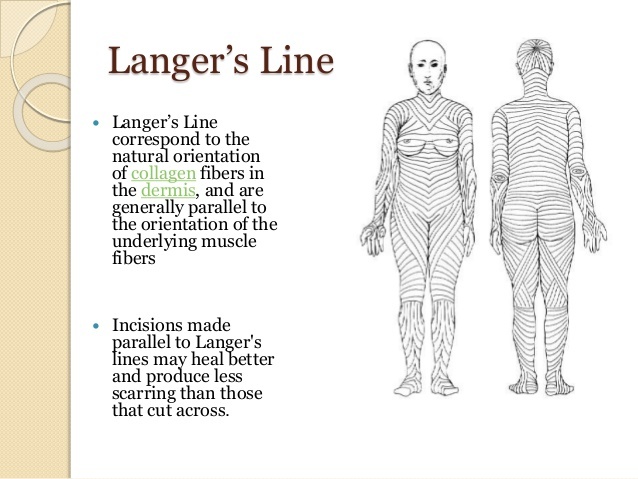
What are Langer’s lines?
Langer’s lines are the areas of tension of the normal skin
* surgical incisions should be made along these lines
What’s the deep wound?
What management do we need in case of deep wound?
Deep wound - cross dermis and pass into subdermis
Surgical closure is required in terms of deep wounds
Two physiological ways that a wound can heal
Healing of the wound (physiological)
A. Primary intention -> two edges of skin are brought together -> healing occurs rapidly
B. Secondary Intention -> two wound edges cannot be brought together *or are left open for the purpose; the wound is kept clean and granulation tissue forms in the gap -> this fills the space and secondary intention healing occurs
*sepsis, swelling
Factors that promote healthy wound healing (5)
- no infection
- no foreign body
- good blood supply
- appropriate skin apposition (alignment)
- no excess tension to the wound
General types of sutures (2) - just mention what types and describe (advantages, disadvantages)
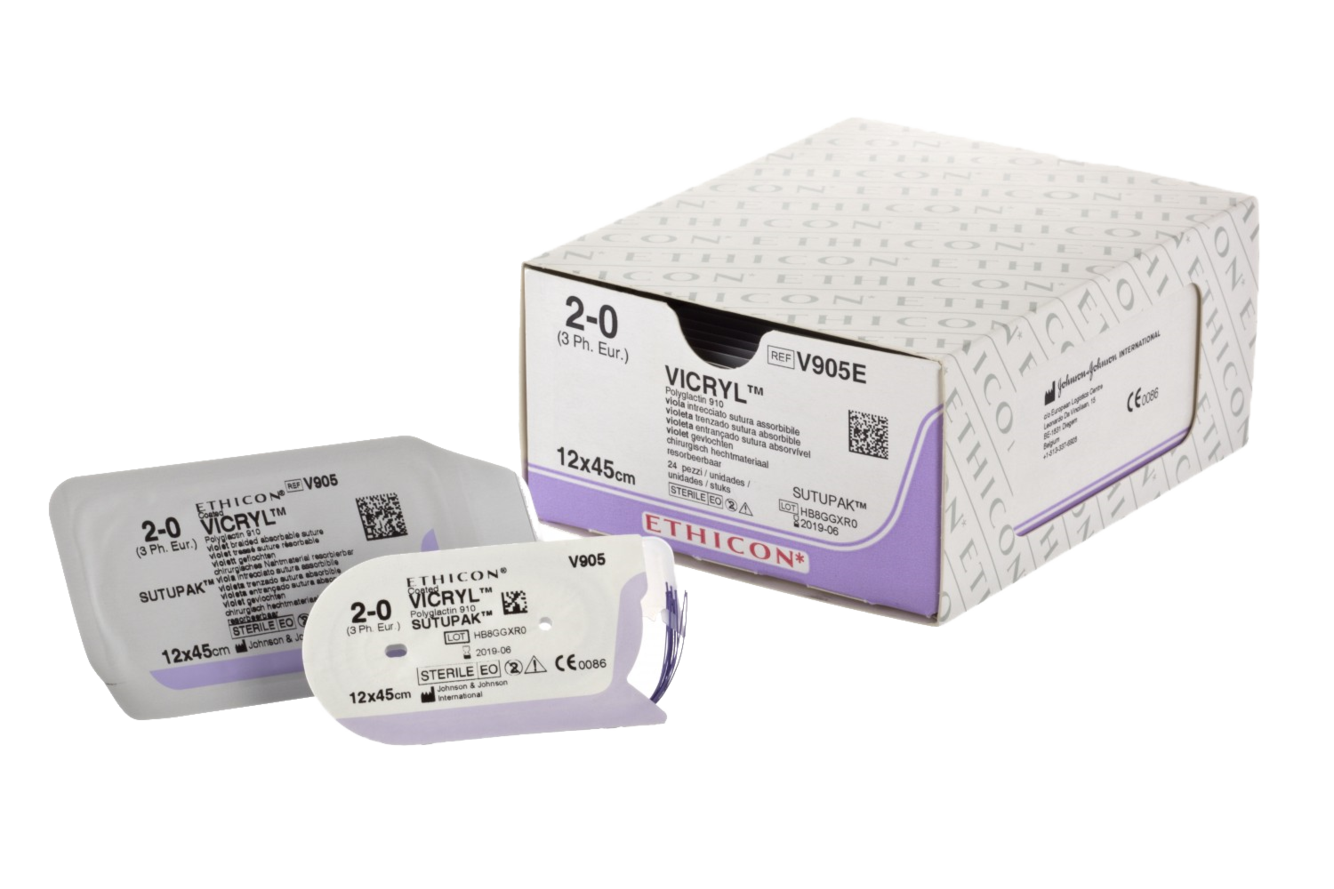
- absorbable -> biological; broken down by enzymes; they do not need to be removed although they provide support only for limited period of time
- non - absorbable -> are non-biological materials; they provide permanent wound support but need to be removed and there is also a potential for a foreign body reaction and infection
When to remove:
- superficial sutures
- facial sutures
- superficial sutures (if on the limbs) -> remove after 10 days
- if on the face -> remove after 5 days
Name an example (1) of absorbable sutures
Polyglactin
What to use Steri-strips for?
Steri- strips
Used in closure of small skin wounds e.g. superficial arm wound and non-gapping scalp injuries
What do we often use tissue glue for?
Superficial scalp wounds
Metal clips
- what are they used for?
- how long for?
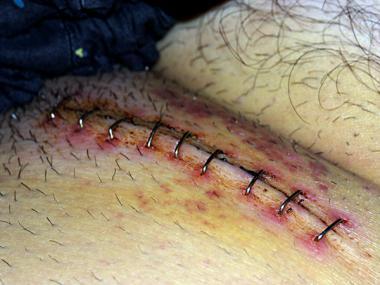
Metal clips - remain large metal staples
Use: large abdominal and thoracic surgery
- kept on for 10 days
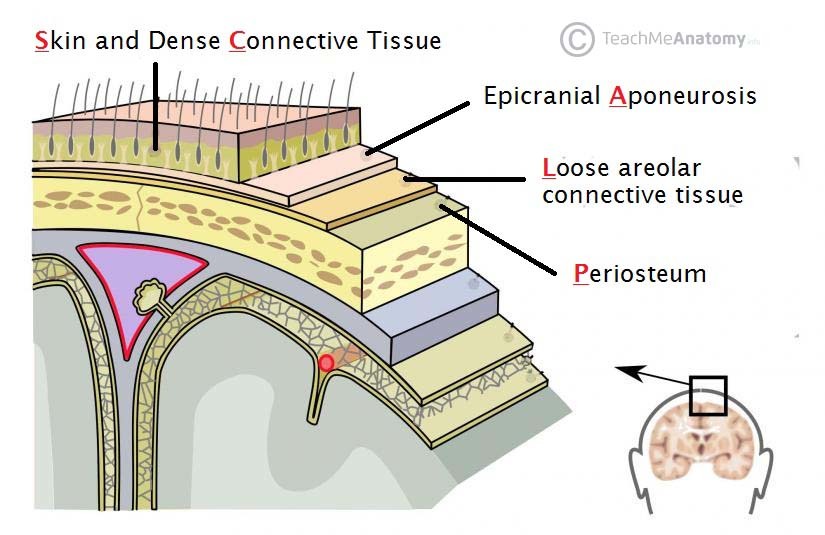
When the wound of the scalp can be managed with tissue glue and when with sutures?
If the wound will cross aponeurosis -> needs suture closure
*aponeurosis lies under the fat and fibrous layer
What can delay wound healing?
- infection
- foreign body
- steroids -> as collagen synthesis and cytokine function is inhibited
- tissue hypoxia, bad blood supply and respiratory failure
- systemic disease: jaundice, DM, cancer and malnutrition
- previous radiation to damage area
- sepsis
- poor surgical technique
-
Exogenous organisms causing wound infection (2)
- Staphylococcus aureus
- Staphylococcus epidermis
Examples of endogenous organisms causing wound infection after bowel surgery
endogenous wound infection -> usually gut organisms after bowel surgery
- E. coli*
- Klebsiella*
- Proteus*
- Pseudomonas*
- Bacteroides*
- Clostridia spp.*
- -* anaerobic streptococci
Examples of urinary pathogens causing wound infection after open urology (2)
- E. coli
- enterococci
Examples of vaginal pathogens causing wound infection after gynaecological operations (2)
- anaerobic or aerobic streptococci
- yeats
What is the management of infected surgical wounds?
Wounds should be:
- opened
- washed out with either surgical toilet or debridement
- dressings changed regularly
- antibiotics given in accordance to the wound swabs (culture and sensitivity)
Wound dehiscence:
- following what types of surgery
- what happens
- risk factors
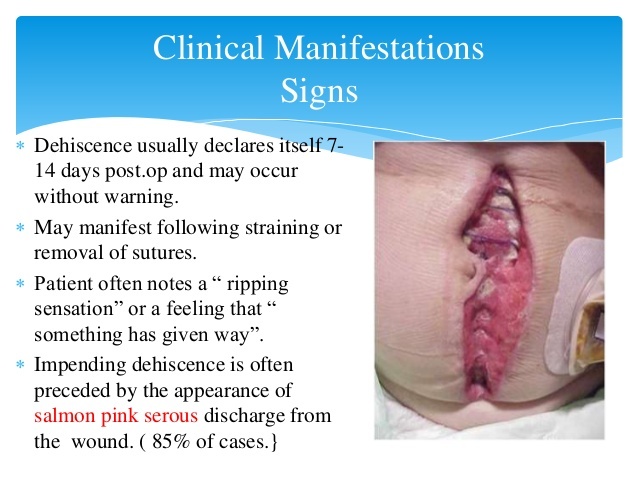
Wound dehiscence = rupture against the surgical incision
Types of surgery: 2- 10% abdominal wounds
What happens: wound breaks down completely
e.g. laparotomy wound dehiscence -> loop of bowel is exposed
Risk factors (when does it occur): wound infection, the suture may tear through the weak tissue (steroid use, elderly, malnutrition, malignancy)


-
Random facts 124
-
Fractures27
-
Random facts 232
-
Local anaesthetics28
-
Jaundice33
-
Vascular_142
-
Vascular_229
-
Pre-op45
-
Fluids48
-
Post-Op _134
-
Random facts 35
-
Wound30
-
Compartment and Cauda Equina syndromes22
-
Post_op 211
-
IV and inhalational anaesthetics31
-
Airway management and ventilation25
-
Trauma management29
-
Nutrition61



