The beginning of the explanation to this slide got cut off
he mentioned that collecting ducts also do some balancing as there are aquaporins (for water resorption) in there membranes (in the medulla) - even though they are mostly considered collecting vessels
actually i guess the previous stuff was referring to a question -
he talked about this for awhile then
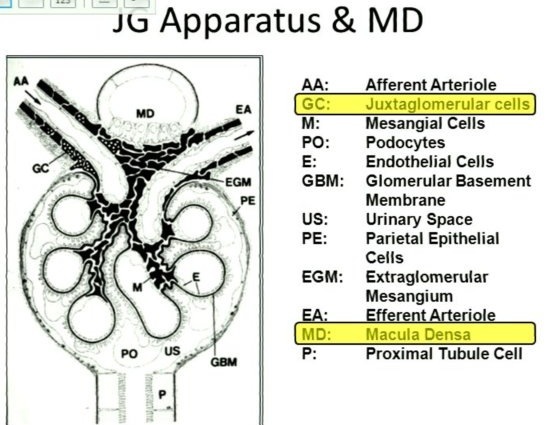
mesangial area can expand and extract (control blood flow by changing size of capillaries) and also phagocytizes things
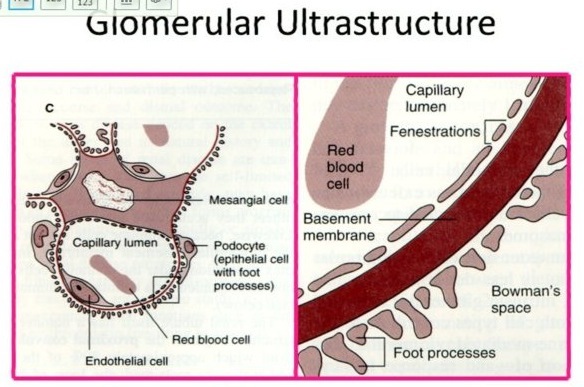
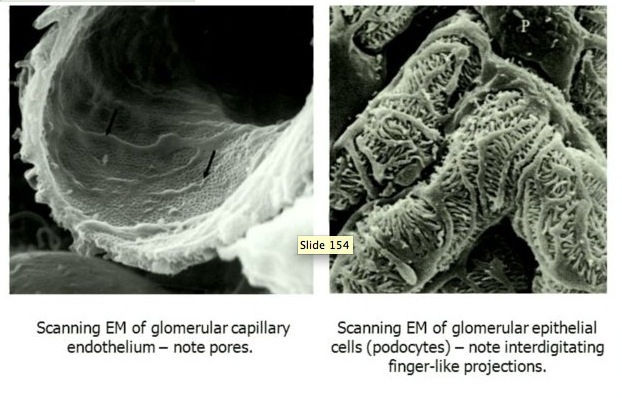
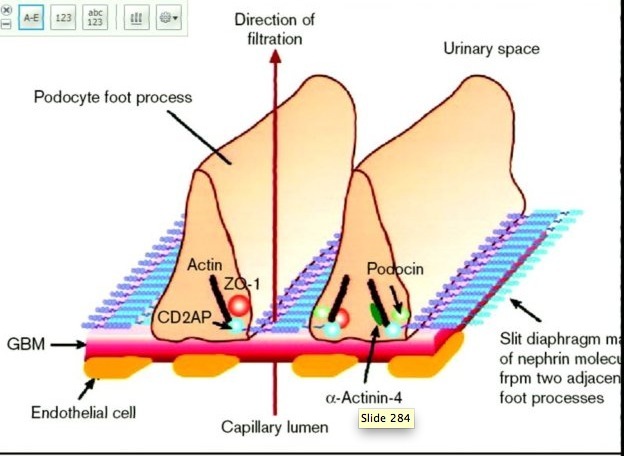
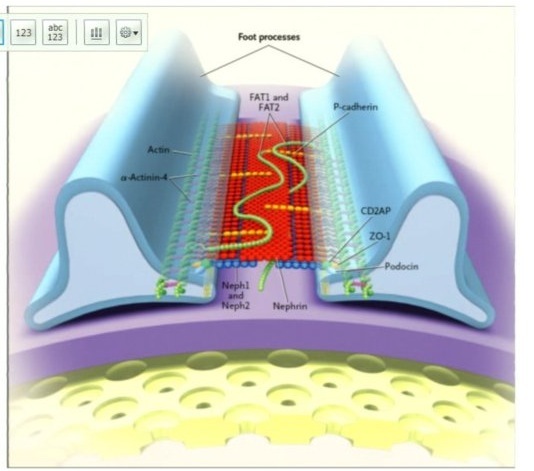
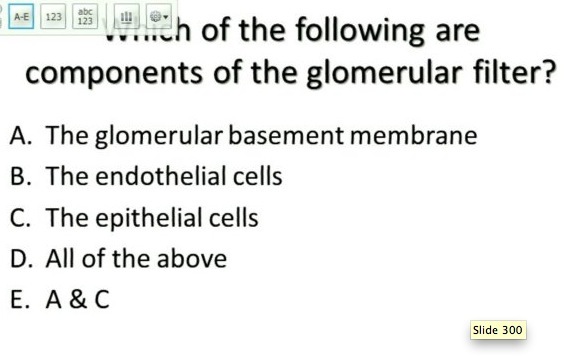
filter (basically) = endothelial cell, basement membrance, podocytes (fluid that comes out goes between foot processes)
(KEy Points)
- Glomerulus is what part of the renal corpuscle?
2-4. Glomerulus contains what three things?
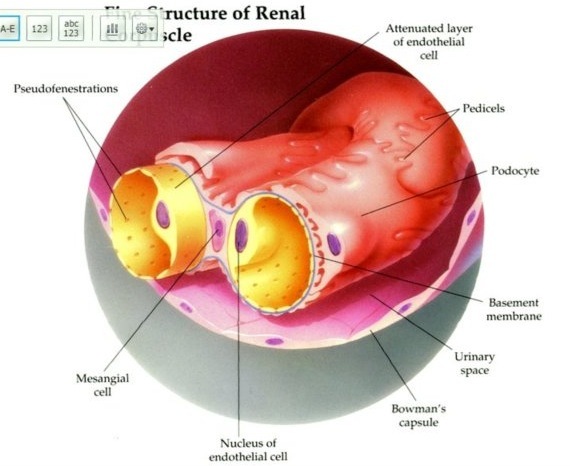
- the capillary tuft
- endothelium
- mesangial area with cells (muscular/phagocytic function)
- visceral epithelial cells (podocytes) with cell bodies and interdigitating foot processes
pressure in capillary to move fluid out
filter function based on charge and size
endothelial slime layer lines inside of endothelium - don’t relaly understand its role so well
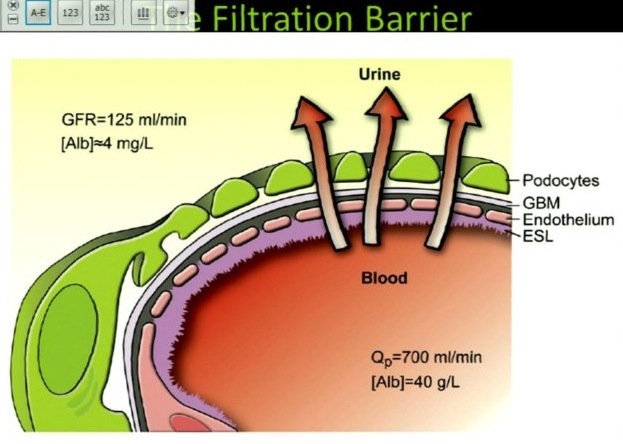
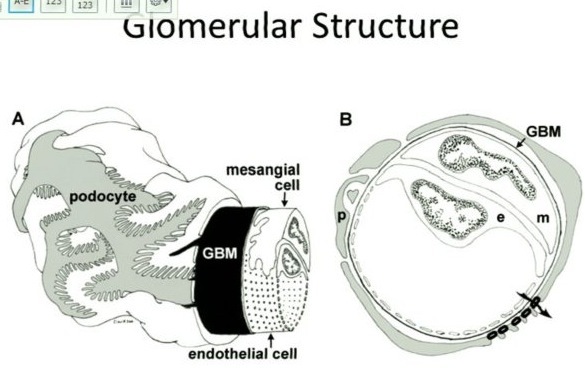
(cross section view)
foot processes connected to each other by a molecular layer calle the slit membrane (space between the two called the slit pore)
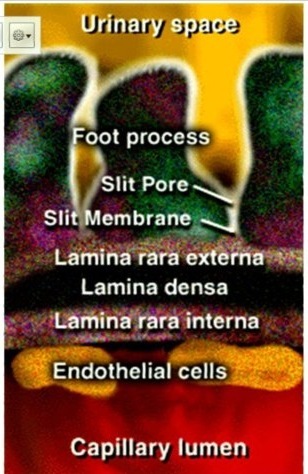
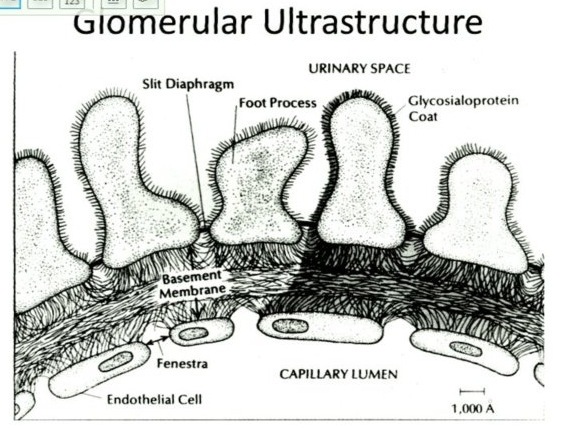
this shows pretty much the same thing as previous
note that the glycosialoprotein coat on the foot processes are negatively charged (repel negatively charged moleclules) - easier for positively charged stuff
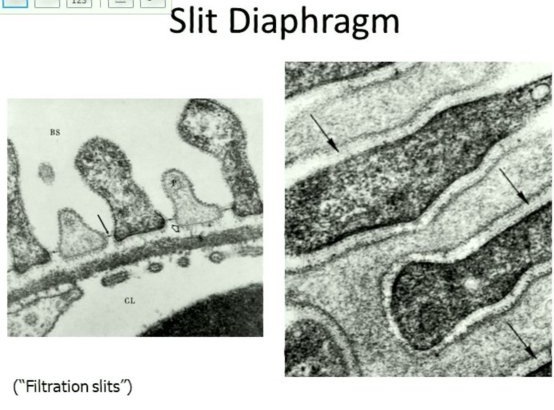
in some disease processes the filtration barrier gets messed up
D
(Key Points)
- All 3 layers of the glomerular capillary wall contribute to separation of blood/plasma from glomerular filtrate
2-3. What are the two principle sites of ultrafiltration?
- the GBM (glomerular basement membrane)
- slit processs of the podocytes
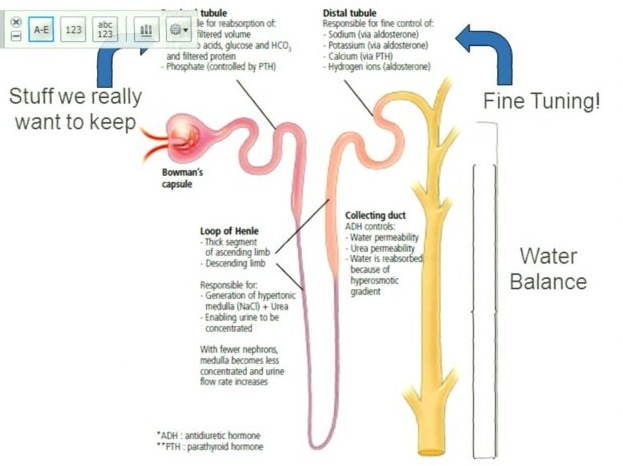
this gives big picture of what goes on in the kidney
he talked for a spell about where and where not water could come in
also talked about where solute moved out
it’s passive all the way down the descending limb - passive going up on ascending limb until it beomes thick where it starts to actively pump salt out of the tubule
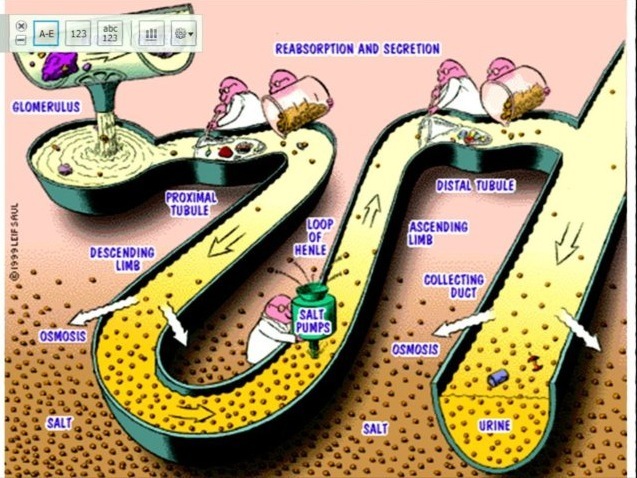
understand this
fine tuning is possible cause system isn’t overwhelmed by amount of fluid
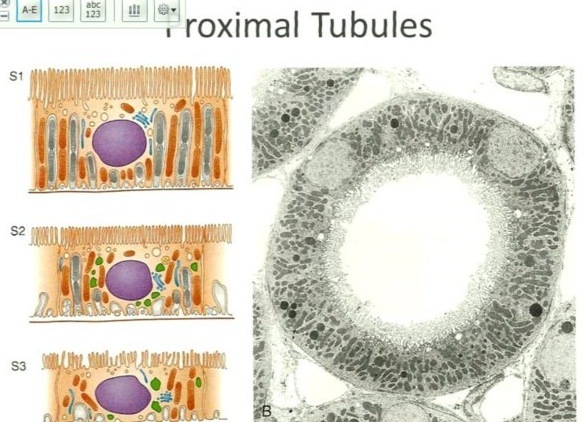
(Proximal Tubules)
(Proximal convoluted tubules)
1-4. What four features facilitate reabsorption?
- apical intercellular tight junctions (when you pump it out it says out)
- apical membrane brush border (microvilli) - increases surface area
- basolateral intercellular interdigitations
- prominent mitochondria associated with infoldings of basolateral membrane
(Na reabsorption is at the core of all of this)
S1 - first convoluted segment
S2 - second convoluted
S3 - straight portion
- which portion is most metabolicallary active?
- first convoluted segment
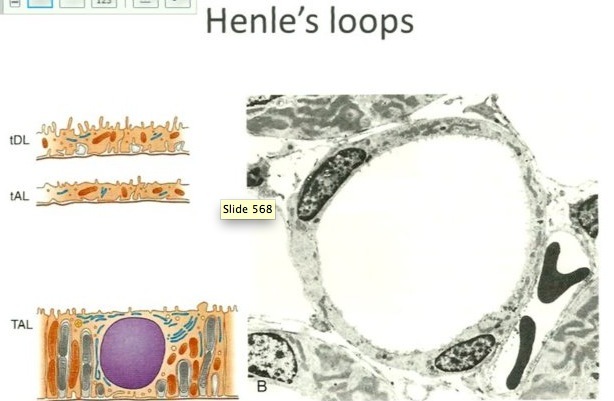
everything that goes on here is passive - don’t see alot of stuff
but once you get to TAL you see reemergance of mitochondria because it is actively pumping sodium out against its concentration gradient
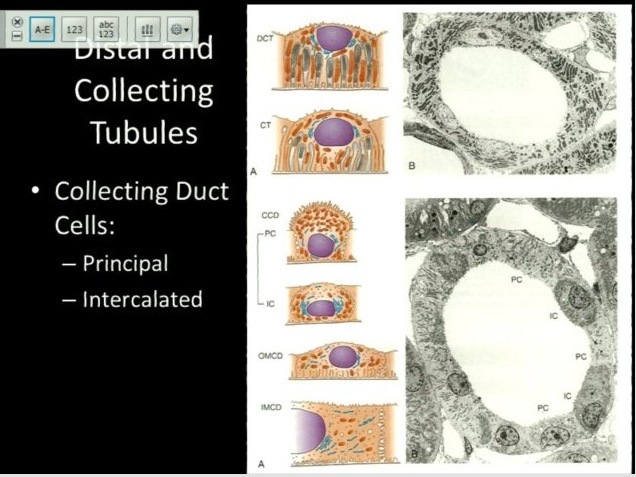
distal tubule and collecting tubule are relatively active metabolically (not compared to proximal though)
regulate acid/base and Na and K - not big volumes though
in collecting ducts - only thing that really goes on is insertion of aquaporin which allows reabsorption of water
(Key Points)
- The tubules modify the vast volume of glomerular filtrate - keeping what is needed - eliminating what is not needed
- Important substances are reabsorbed when and by what?
- What generate the medullary concentrating gradient?
- reabsorbed early in transit through metabolically active proximal tubules
- Henle’s loop and Vasa recta
(Key Points)
- absorption of what occurs in loops of Henle?
- What is reabsorbed in the ascending loops of Henle?
- Where does assessment of excretory function occur?
- water reabsorption
- salt (impermable to water) - passive thin loops and active thick loops
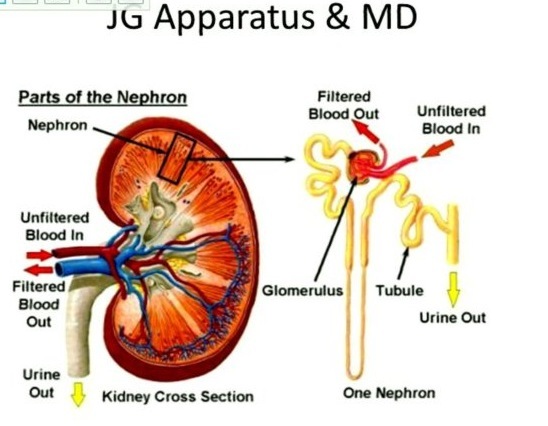
- where the TAL and glomerulus meet (macula densa and JG apparatus)
(Key Points)
- What occurs in the distal tubules?
- What occurs in the collecting ducts? under influence of what?
- Collecting tubules collect fluid from how many nephrons? Are they considered part of the kidney proper?
- fine tuning of electrolytes
- fine tuning of water; under influence of ADH (antiduretic hormone) - aquaporin
- several; maybe not
(Summary Medical Relevance)
- Diseases that develop in selected portions of the kindeys may be anatomically localed on the basis of the function derangmenes that are recognize
- protein-losing neuropathy - error where?
- renal glucosuria (sugar in urine)
- nephrogenic diabetes insipidus
- leaking through glomerulus
- proximal tubulue defect
- kidney can’t reabsord water properly - collecting tubule problem - get very dilute urine - not getting enough ADH (anti-diuretic hormone)
- What is the primary function of the kidneys?
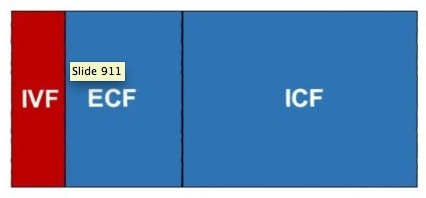
- it regulates the composition of the extracellular fluid
(part of ECF is the intravascular fluid)
(What is the primary function of the kidney?)
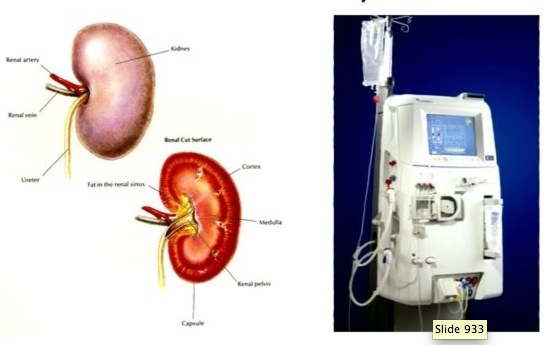
This is a dialysis machine (an artificial kidney) - modulates character of fluid - blood run against fluid with semi-oermeable membrane between - can regulate how much stuff moves across
kidney does more than just balance - also has hormonal components (for synth of RBC for example)
basically dialysis machine doesn’t cover everything the kidney does
1-6. The kidney regulates what 6 things?
- blood volume
- extracellular fluid volume
- systemic arterial blood pressure
- hematocrit
- acid-base balance
- plasma conc of (electrolytes, minerals, metabolic waste, water)
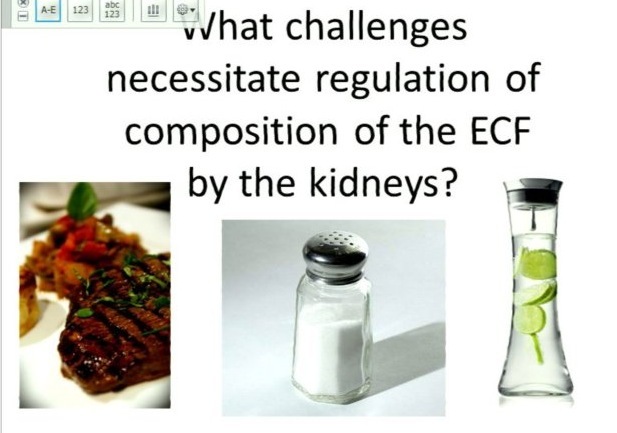
Have to be able to adjust to differing amounts of this stuff (food, water, salt)
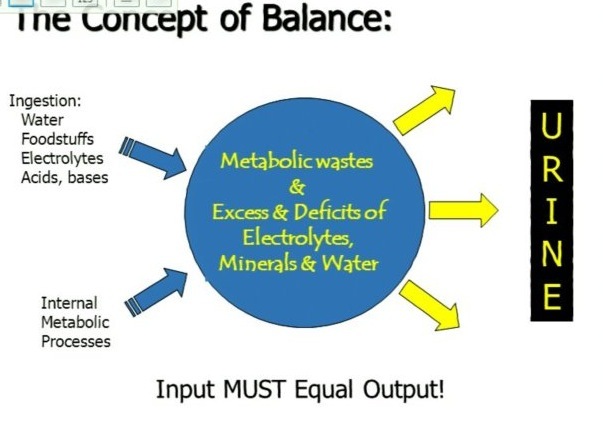
How Does keeping of balance work?
- give the sequence
- change in internal milieu –> sensors –> effectors (the kidneys)
(remember that input must equal output)
Answer this…
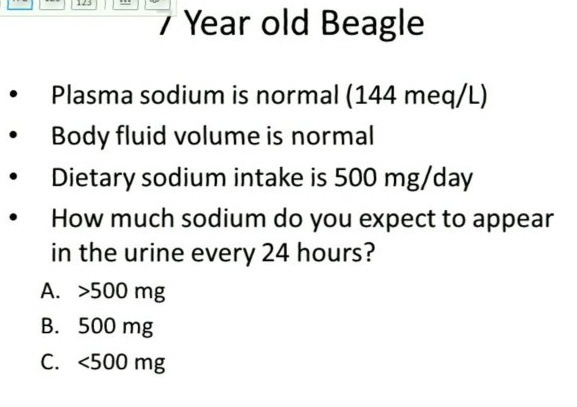
B



-
(01) - Anatomic Overview24
-
(02) - Renal Function28
-
(03) - Renal Blood Flow22
-
(04) - Glomerular Filtration9
-
(04-02) - Renal Blood flow10
-
(05) - Renal Blood Flow20
-
(06) - Glomerular Filtration20
-
(07) - Glomerular Filtration10
-
(07-02) - Clearance16
-
(08) - Clearance9
-
(09) - Clearance16
-
(10) - Epithelial Transport34
-
(11) - Epithelial Transport20
-
(12) - Tubular Reabsorption30
-
(13) - Tubular Reabsorption26
-
(13) - Urine Concentration and Dilution10
-
(14) - Avian Renal Physiology31
-
(15) - Bladder I22
-
(16) - Bladder II15



