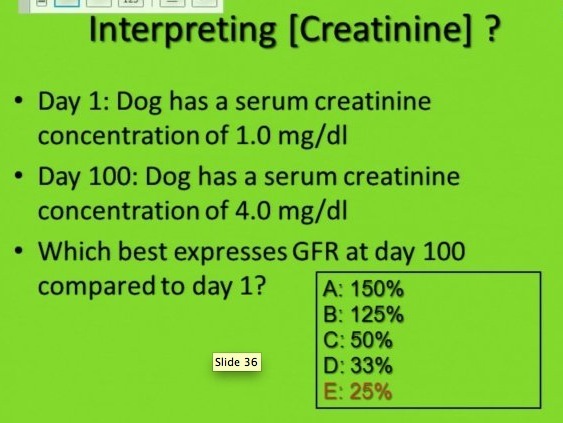
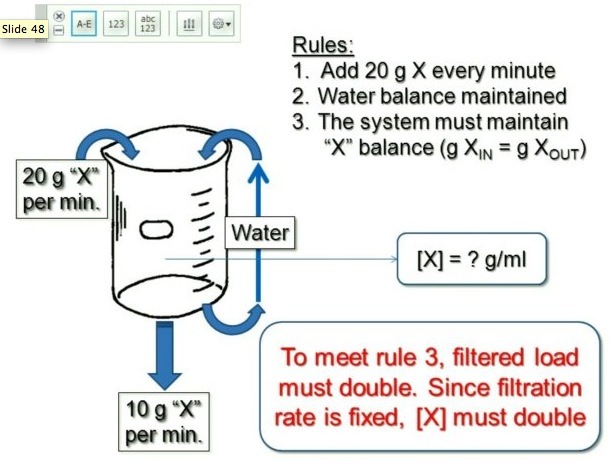
he talked about this for awhile
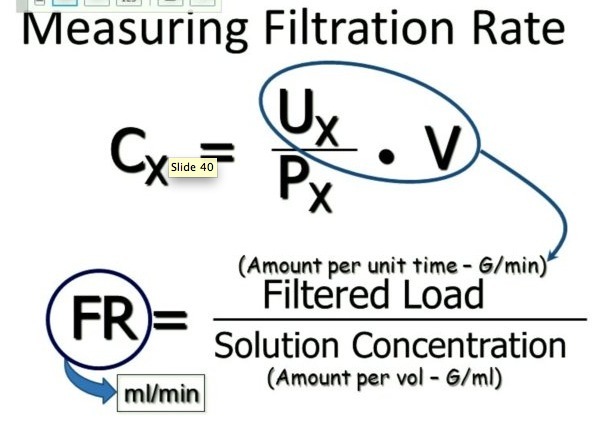
What is the filtered load? the amount that is produced per unit time will be the filtered load
so what’s the filtration rate? (look at the next slide for that calcuation)
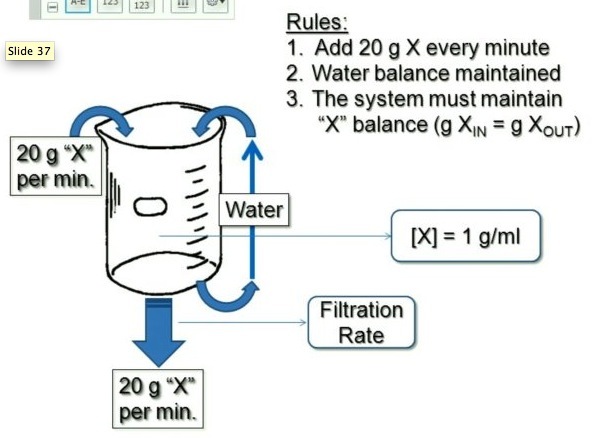
if you need any of this stuff to be clarified - watch the lecture
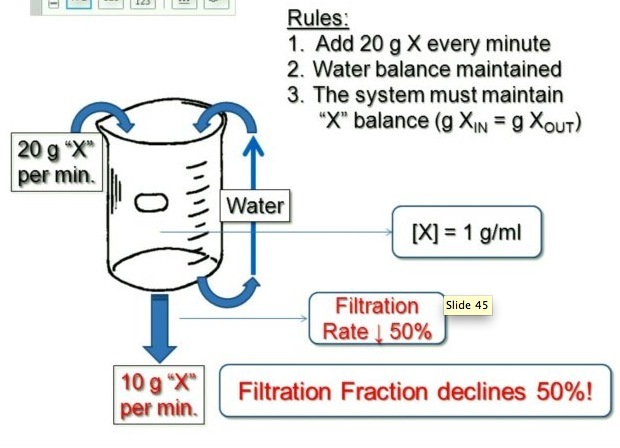
when the filtration rate goes down - the conc in the body or in the ebaker has got to go up in order to produce the same amount of excretion
(Measuring GFR with Urea or BUN)
- BUN (SUN) commonly used clincal estimate of what?
(the more protein you eat (steak) the more urea you will produce)
(creatinine is a much better test than urea)
(less accurate than serum creatine)
2-3. what two things makes this so?
- renal function
- urea production varies
- urea is actively and passively reabsorbed by the kidneys (remember… about 50% filtered is excreted)
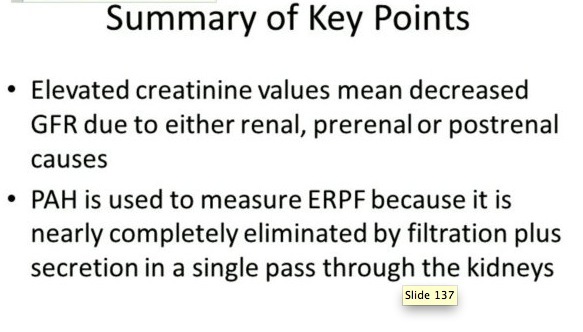
(Azotemia)
- increased levels of what in blood?
- May be increased by any process that does what?
give me three causes
- How can you tell the difference?
- nitrogenous wastes (ie BUN and serum creatinine)
- any process that lowers GFR
reduced perfusion of the kidneys (prerenal)
primary kidney disease (renal)
obstruction to the flow of urine (postrenal)
- I thin this will be addressed on the next card…
(Azotemia)
(prerenal azotemia)
- if kidney normal –> get what?
- rapid correction of azotemia when corrected
(Renal azotemia)
- inability to do what?
- can you correct medically?
(Postrenal Azotemia)
- unable to do what?
- Dilation of what?
- concentrated urine (>1.030)
- concentrate adequately
- no (ie fluid or drugs)
- void (or anuria - no urine)
- collection system upstream
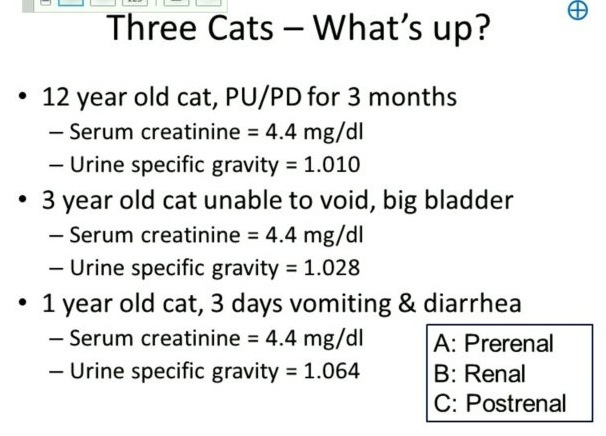
B
C
A (i think…)
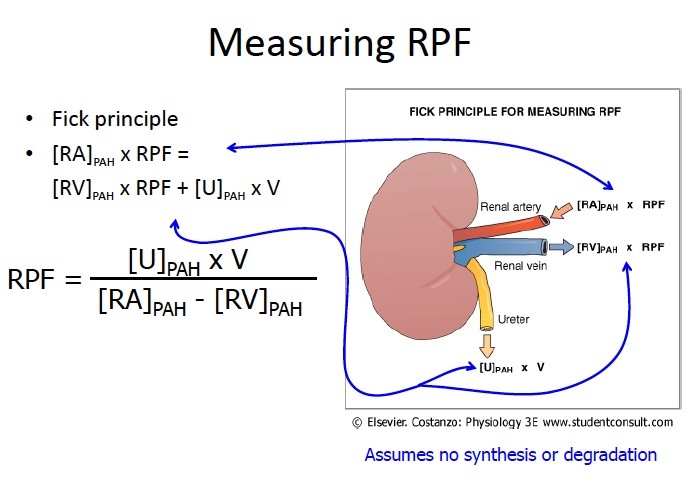
(How Would you measure RPF - renal plasma flow - don’t do this much in practice)
(What are the characteristics of a marker (X) that would allow RPF measurement?)
- clearance of X must equal what?
- how much extracted from plasma by filtration plus secretion?
- neither metabolized nor degraded by what?
- no organ other than the kidneys do what?
- can not alter what?
- RPF
- completely (or nearly so)
- the kidneys
- extract X
- RPF
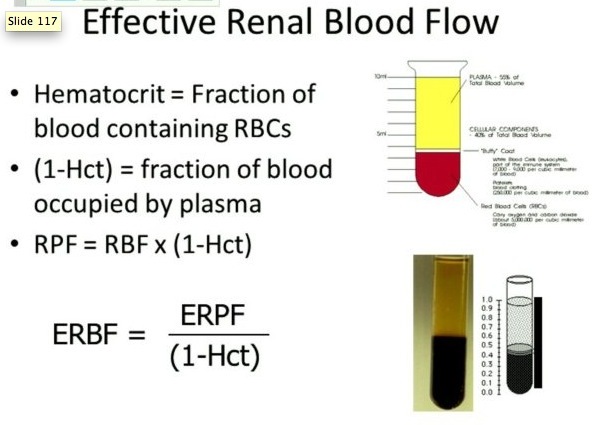
(Measuring RPF and RBF)
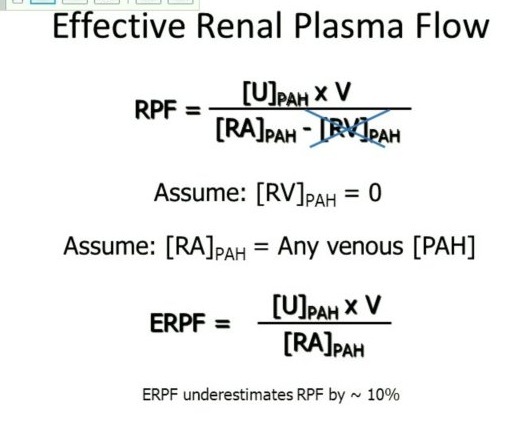
- ERPF measured as clearance of what?
- How much of PAH is extracted from plasma during passage through nephron?
in what ways?
- para-aminohippuric acid (PAH)
- completely extracted
filtered and secreted
(ERPF = “effective” renal plasma flow)
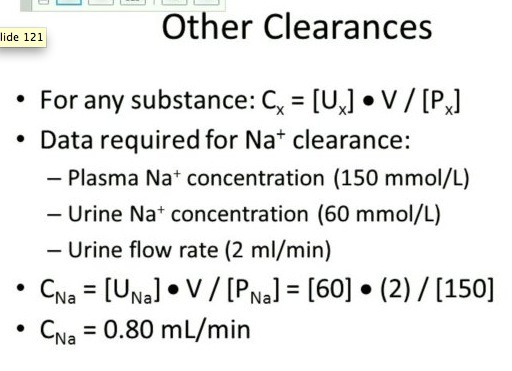
(Other Clearances)
1-3. What data is required for Na clearance?
- plasma Na concentration (150 mml/L)
- urine Na concentration (60 mmol/L)
- Urine flow rate (2 ml/min)
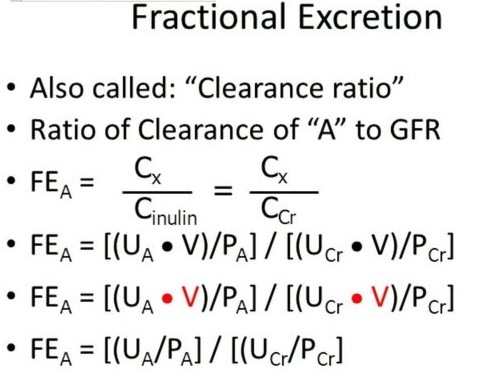
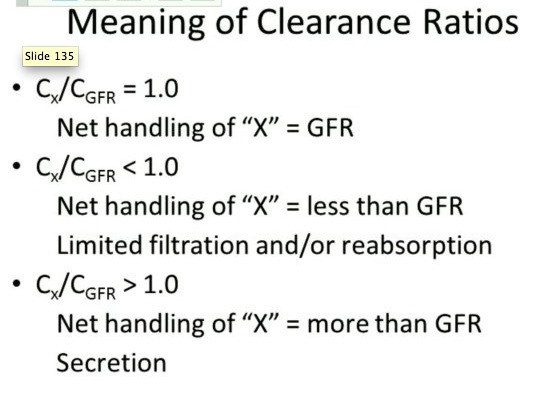
What does this ratio tell you about how the kidneys “handle” a substance?
it tells us something about how the kidney actually does secrete, reabsorb, filter and so forth
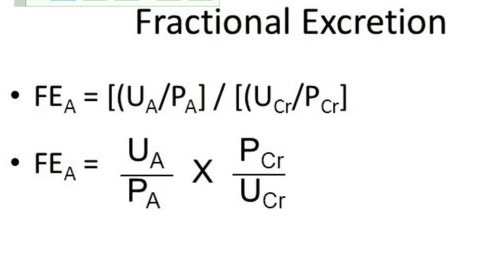
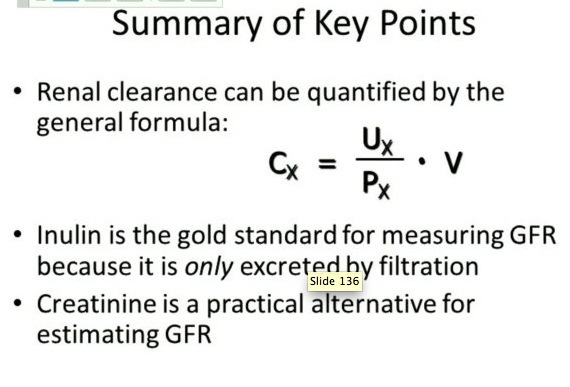
he expects us to remember this formula
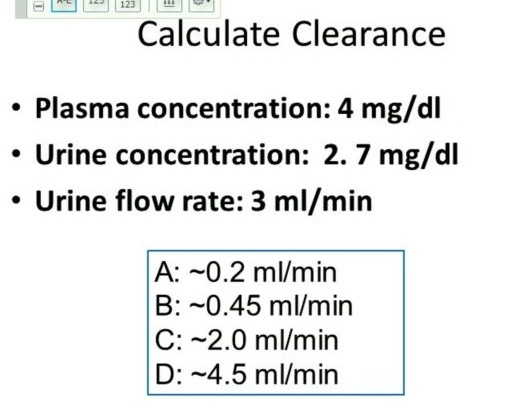
C

-
(01) - Anatomic Overview24
-
(02) - Renal Function28
-
(03) - Renal Blood Flow22
-
(04) - Glomerular Filtration9
-
(04-02) - Renal Blood flow10
-
(05) - Renal Blood Flow20
-
(06) - Glomerular Filtration20
-
(07) - Glomerular Filtration10
-
(07-02) - Clearance16
-
(08) - Clearance9
-
(09) - Clearance16
-
(10) - Epithelial Transport34
-
(11) - Epithelial Transport20
-
(12) - Tubular Reabsorption30
-
(13) - Tubular Reabsorption26
-
(13) - Urine Concentration and Dilution10
-
(14) - Avian Renal Physiology31
-
(15) - Bladder I22
-
(16) - Bladder II15



