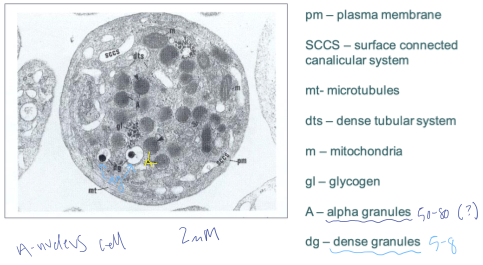
Intracellular components of the platelet
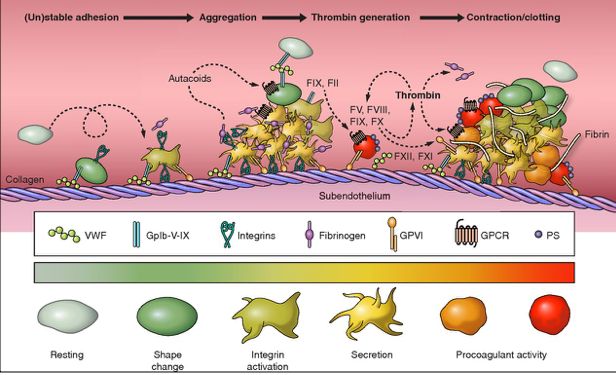
Stages of platelet actiation and thrombus formation
Platelets adhere to a von Willebrand factor (VWF)/collagen matrix, get activated, secrete granular contents, aggregate via integrins, produce thrombin after developing a procoagulant surface, and form a contracted thrombus with fibrin. Heat map with color codes from green (low Ca2+ signal) to red (high Ca2+ signal). Interactions of platelets with coagulation factor are indicated, as described. Note that procoagulant platelets provide a phosphatidylserine (PS)-exposing surface for the tenase complex (activated FVIII and FIX) and the prothrombinase complex (activated FV and FX). Thrombin provides positive-feedback reactions to activate platelets via GPCR, to activate coagulation factors, and to convert fibrinogen into fibrin.
Platelets:
- Adhere to subendothelium of a damaged blood vessel
- Recruit additional platelets
- Provide a surface for blood coagulation to occur
- Participate in clot maturation
- Provide growth factors for wound repair
- Possess endothelial maintenance function
- Possess adjuvant immune/inflammatory functions
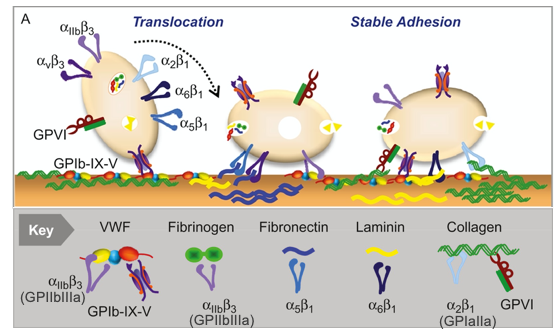
Platelet receptor-ligand interactions during primary adhesion and activation
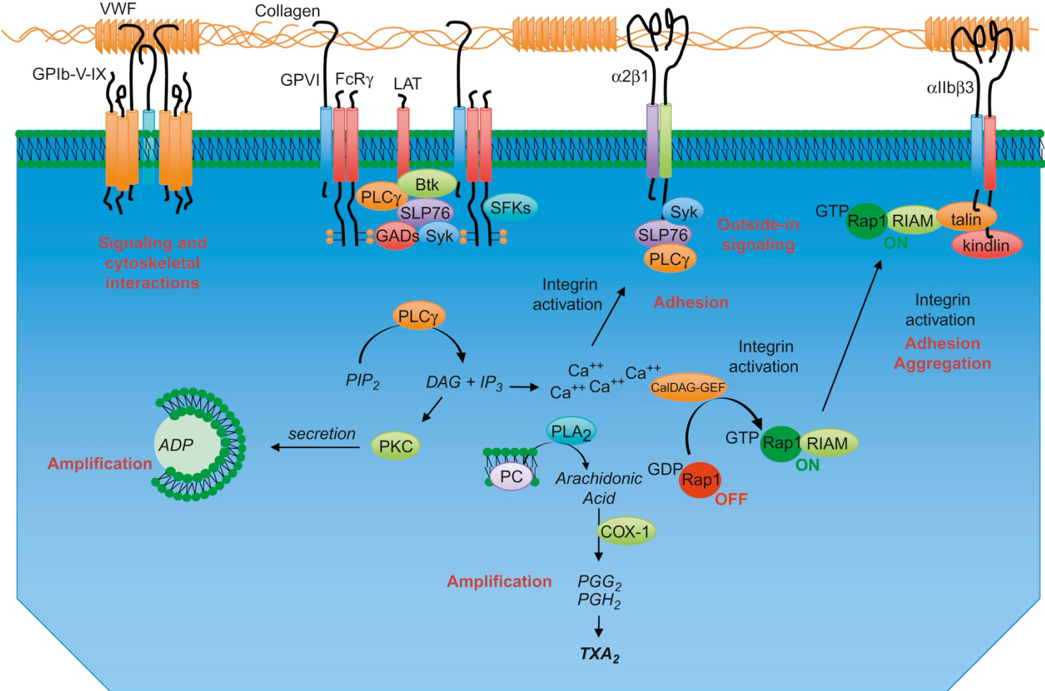
Platelet activation by collagen
Platelet interactions with collagen involve several receptors including:
- vWF through GpIb-V-IX receptor and GPIIbIIIa receptor
- Collagen through GPVI signaling receptor and GPIaIIa receptor
- These ligand receptor interactions activate signaling events including activation of Src kinases, PLCg, release of DAG and Ca++, activation of PKC, PLA2, Rap1
- Which, in turn, lead to release of granules, generation of TxA2 and activation of fibrinogen receptor by inside-out signaling.
Shape changed of platelets
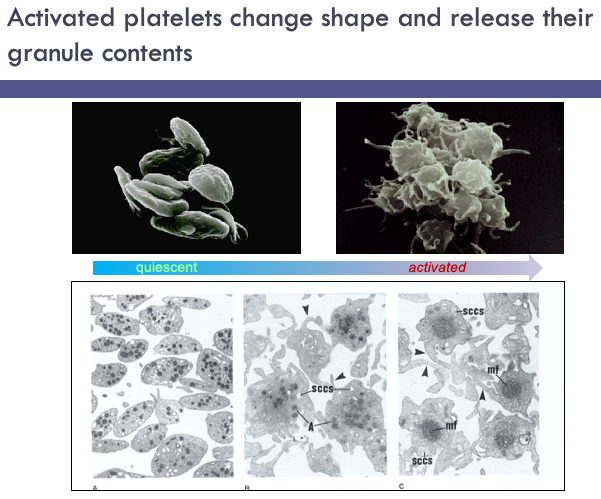
Platelet recruitment
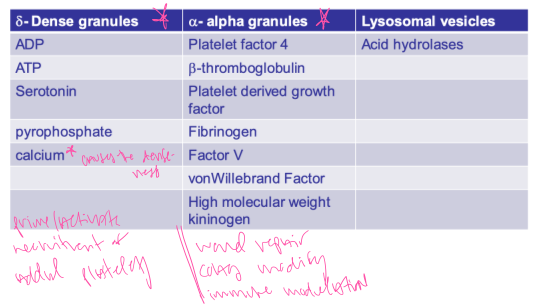
- Platelet granule release (ADP)
- Thromboxane (TxA2) synthesis
- Fibrinogen receptor (GPIIbIIIa) activated
- Platelets bind fibrinogen
Roles of platelet granules
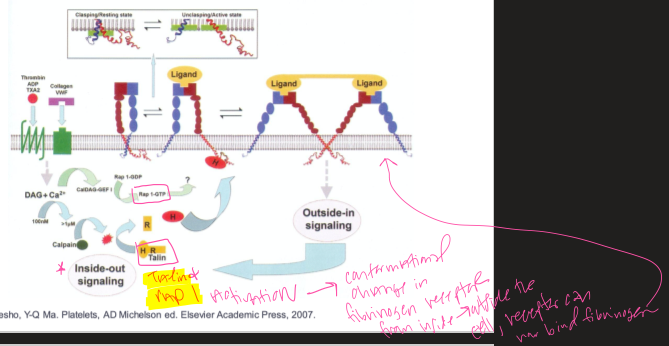
GPIIbIIIa signaling
Talin-H may bind the β3-tail and unclasp the membrane-proximal complex of aIIb and β3 cytoplasmic tails. The unclasping triggers a conformational switch in the integrin extracellular domain, resulting in its conversion from a resting to an activated state. The activated state is competent to bind the ligand fibrinogen. Subsequently, outside-in signaling initiated by ligand binding further propagates and enhances the inside-out signaling.
Model showing allosteric activation of platelet integrin receptors (GPIIbIIIa) during platelet activation which promotes platelet binding to fibrinogen and platelet aggregation.
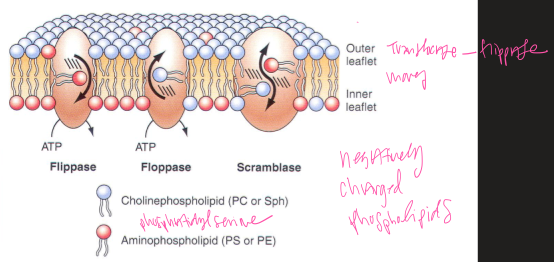
Role of membrane phospholipids in platelet activation
Plasma membrane (pm) transporter-controlled phospholipid exchange by flippase, floppase and scramblase enzymes. Aminophopholipids (PS and PE) are normally transported to the inner cytoplasmic leaflet by flippase, while choline phospholipids are directed to the outer leaflet of the pm by floppase. Scramblase catalyzes the bidirectional phospholipid transport between the two leaflets. Surface exposure of phosphatidylserine in activated platelets occurs by activation of scramblase by calcium influx or during apoptosis of pathological cells. The surface expression of phosphatidylserine provides sites for anchorage of vitamin K-dependant clotting factors in combination with calcium ions.
During platelet activation, a high Calcium influx leads to activation of scramblase which favors increased net presentation of PS on the outer leaflet of the platelet membrane. PS complexes with Ca+2 and coagulation factors on the surface of the platelet membrane.
Platelet fucntions in hemostasis
- ¨Receptor engagement, adhesion and signaling
- ¨Granule release and shape change
- ¨Platelet recruitment and aggregation
- ¨Coagulation activation and adherence to the fibrin clot
- ¨Clot retraction and maturation
Methods to measure platelet functio
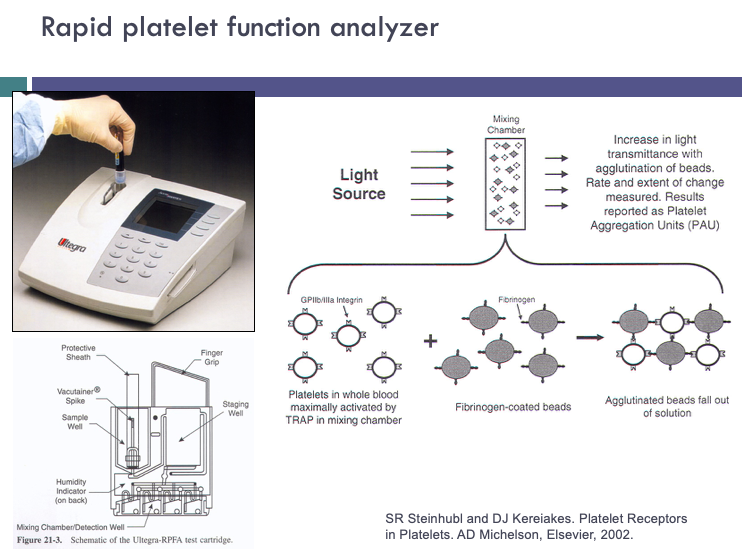
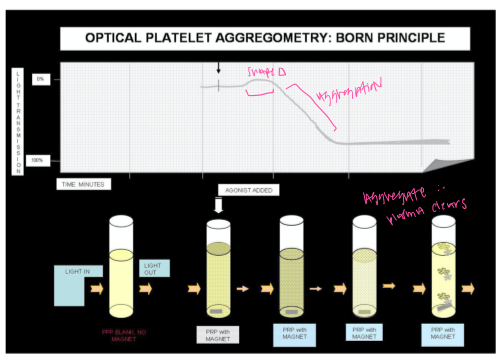
Aggregation
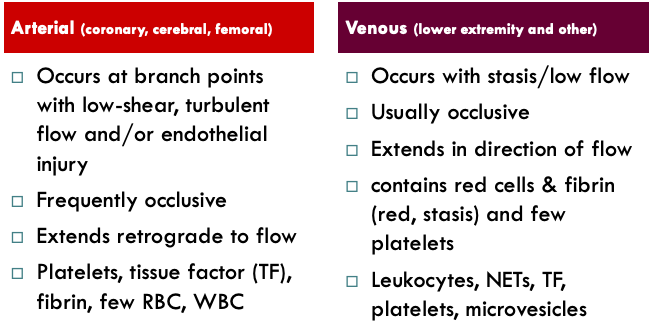
Features of Arterial vs Venous Thrombosis
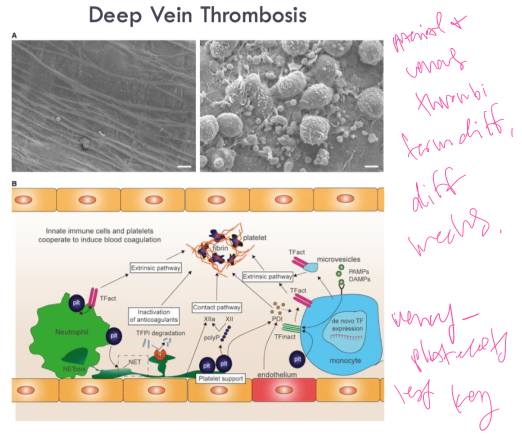
DVT
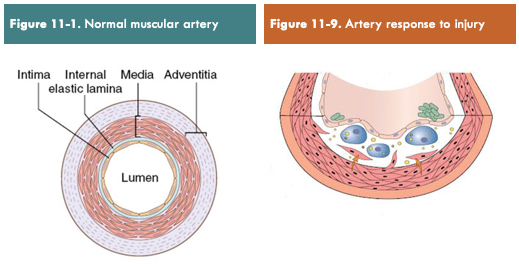
Arterial wall: normal muscular, vs response to injury
The subendothelial matrix intima contains collagen which can activate platelets. This is the first line of defense against hemorrhage; collagen activates platelets. The media and adventitia express Tissue Factor, which initiate the coagulation cascade. Activation of thrombin leads to platelet activation and serves as a second line of defense against hemorrhage, by activating platelets and thrombus formation.
The subendothelial connective tissue intima is the site of development of the atherosclerotic lesion, with the accumulation of monocytes, lipids with smooth muscle proliferation and collagen and extracellular matrix deposition.
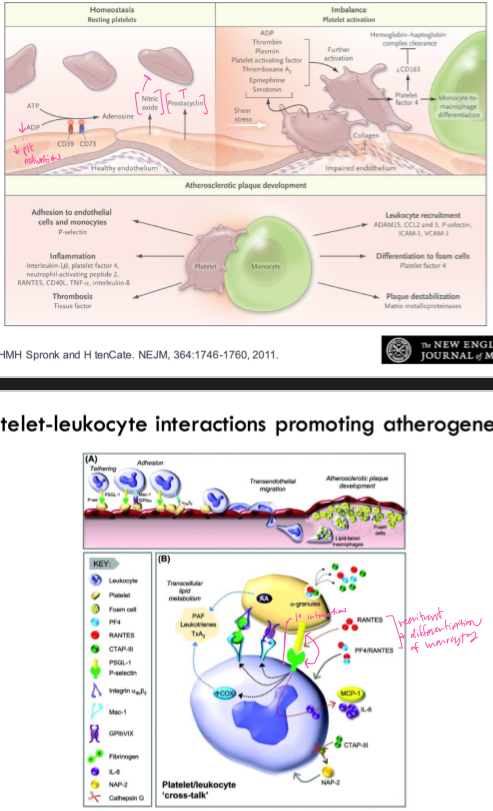
Role of platelets in atherosclerosis and thrombosis
- Platelets localize to the site by adhering through platelet and endothelial integrin receptors.
- Platelet chemokines and growth factors are found in atherosclerotic plaques.
- Increased platelet-derived thromboxane metabolites are associated with atherosclerosis risk factors.
- Platelet activation occurs at vulnerable sites where the fibrous cap over the lipid-rich core is disrupted.
- Platelet activation may progress to an intraluminal thrombosis.
- Antiplatelet drugs reduce risk of ischemic events and death.
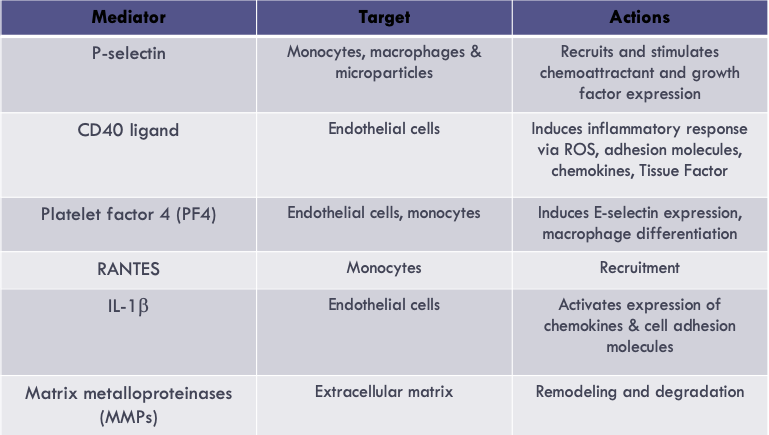
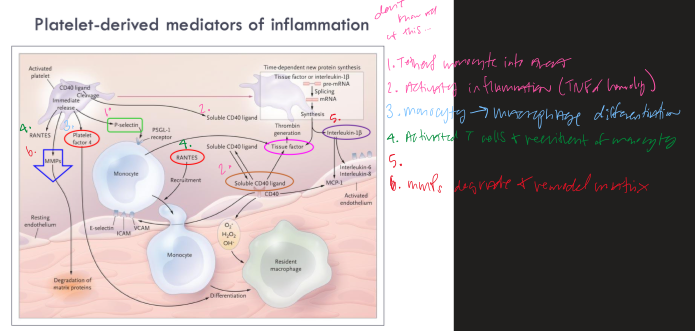
Platelet-derived mediators of inflammation
ROS are produced by endothelium, smooth muscle cells, inflammatory cells and platelets
O2- scavenges nitric oxide (NO), a key platelet inhibitor
O2- inhibits CD39 ecto-ADPase
ROS cause lipid peroxidation; generation of bioactive isoprostanes and increases platelet activation
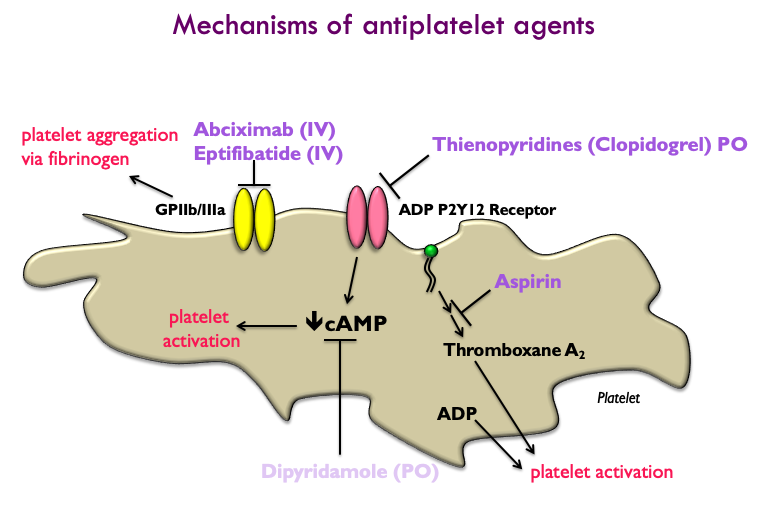
Antiplatelet therapies
- Inhibit P2Y12 ADP platelet receptor activation
- Examples: Clopidogrel, Prasugrel, Ticlopidine, nucleosides
- Inhibit platelet activator TxA2 synthesis and secretion
- Example: Aspirin
- Increase platelet cAMP levels
- Examples: Dipyridamole
- Inhibit GPIIbIIIa receptors
- Examples: Abciximab, tirofiban, eptifibatide
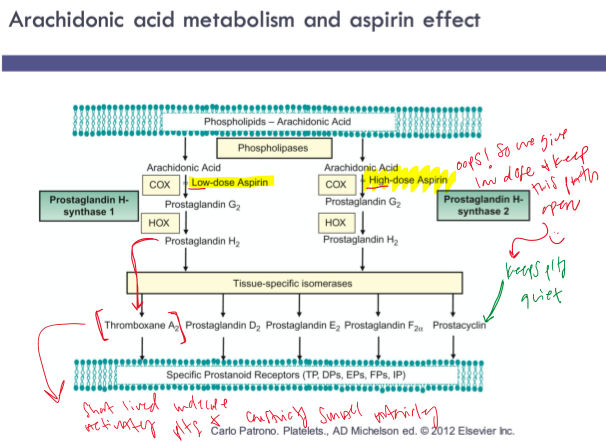
Arachidonic acid metabolism
Aspirin (ASA) irreversibly acetylates the cyclo-oxygenase enzyme blocking the production of Thromboxane A2 platelet agonist from arachidonic acid. This pathway is blocked by ASA for the life of the platelet. NSAIDs also block cyclo-oxygenase, however, the effect is reversible and returns to normal after the drug is withdrawn. NSAIDs given close to the time of aspirin may interfere with the inhibitory effect of the latter.
Factors that affect clopidogrel response
Genetic
- •CYP2C19 and other CYP450 enzyme polymorphisms
- •P2Y12 receptor polymorphisms
- •Intestinal absorption receptor
Clinical
- •Drug-drug interactions (PPIs, statins, Calcium channel blockers), elevated body mass, smoking, diabetes, poor compliance

-
107 Cardiovascular Circuit and Hemodynamics18
-
108 Cardiovascular Histology14
-
110 Cardio Embryology14
-
111 Cardiac Cycle PV Loops18
-
112 Cardiac Muscle Contraction20
-
113 Normal Cardiac Electrical Activity11
-
114 Impulse Propagation and Pacemaking12
-
115 Cardiac Output and Venous Return8
-
116 Regulation of Arterial Pressure11
-
117 ECG 127
-
119 Integrative function6
-
118 Microcirculation18
-
121 Hemostasis: Platelet Function19
-
122 Erythropoiesis20
-
123 Normal Hemostasis: Coagulation / Fibrinolysis20
-
124 Anticoagulants17
-
126 Pathogenesis of Atherosclerosis5
-
125 Lipoprotein Metabolism / Pharm27
-
127 Ischemic Heart Disease16
-
128 Ischemic Heart Disease21
-
129 Management of Acute Coronary Syndromes15
-
132 Cardio Drugs14
-
133 Hypertension50
-
134 Coronary Blood Flow IHD7
-
135 Bradycardia8
-
136 Tachycardia13
-
137 Peripheral Vascular Disease7
-
138 Heart Failure23
-
140 Antiarrhythmic Drug Therapy47
-
141 Valvular Heart Disease4
-
130 ECG II3
-
131 ECG III9
-
143 Hemodynamics and Ventricular Function16
-
144 Heart Failure Tx23
-
146 Myocardial Disease12
-
147 Pathology of CHD14
-
148 CHD II7
-
149 Endocarditis19
-
Drugs91



