The goal of normal human ambulation (gait) is to facilitate travel from one location to another while ___ ___ and ___ ___ ___ across a wide variety of walking conditions.
The goal of normal human ambulation (gait) is to facilitate travel from one location to another while minimizing effort and maintaining adequate stability across a wide variety of walking conditions.
step length vs stride length.
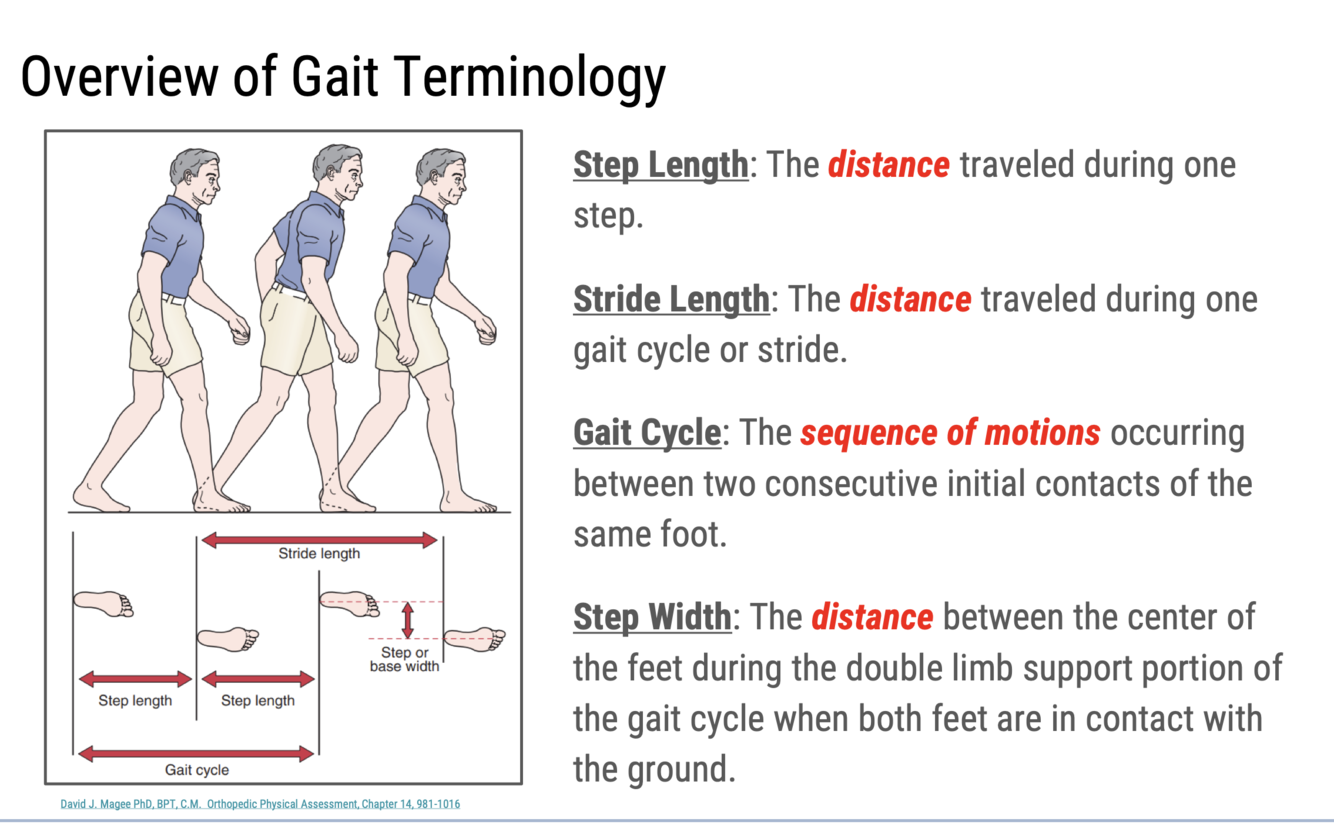
stance vs swing phase
Stance Phase: Limb in contact with floor.
- Initial Contact
- Loading Response
- Mid-Stance
- Terminal Stance
- Pre-Swing Swing Phase: Limb not in contact with floor.
- Initial Swing
- Mid-Swing
- Terminal Swing
concentric vs eccentric
- Concentric contraction: muscle shortens
in length, to generation motion - Eccentric contraction: muscle increases
in length, slowing motion
Abnormal muscle activation will lead to dysfunctional gait that is less efficient or unsafe.
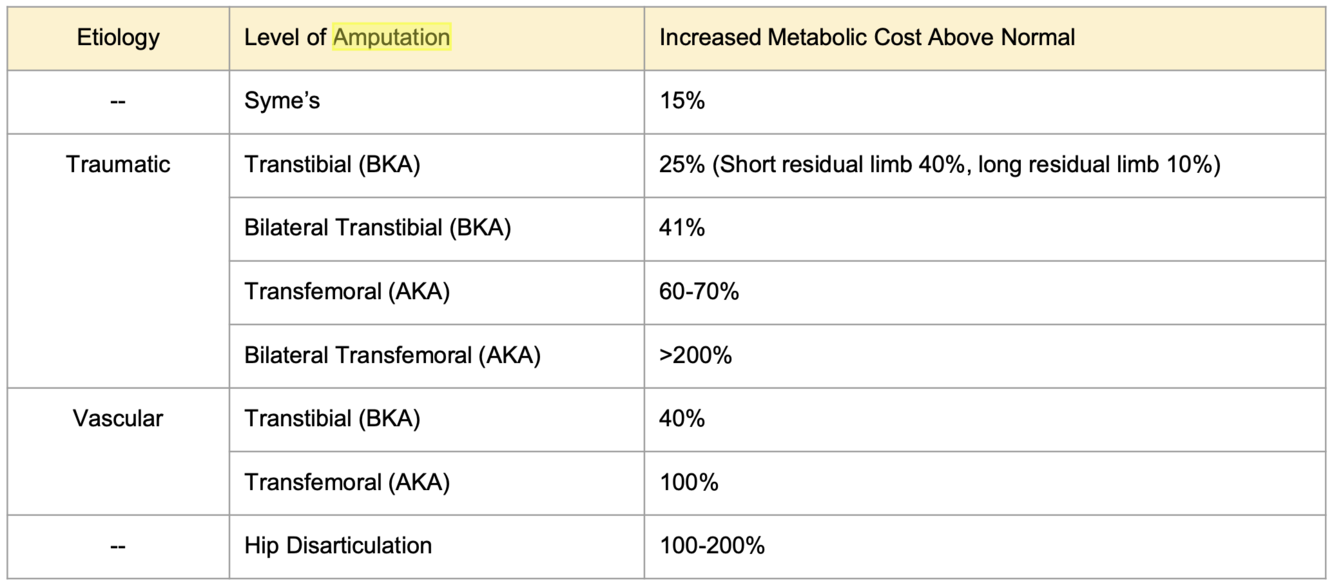
trend between energy expenditure and level of amputation
amputees adapt to the higher Oq cost by seleting a slower walking speed at which the mean rate of O2 consumption does not significantly exceed the normal rate.
the larger the amputation, the increased metabolic cost above normal.
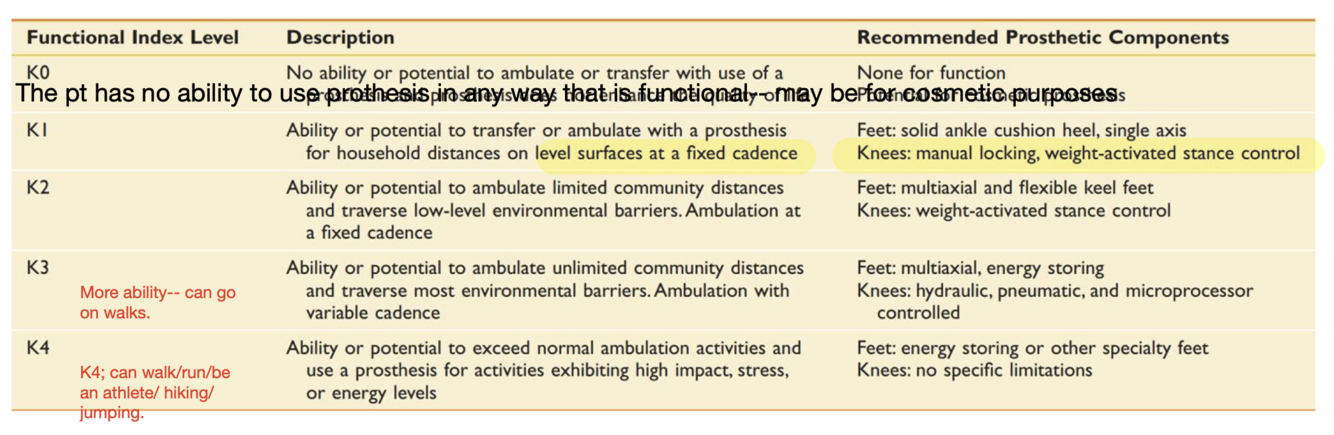
what is a K level
a functional index level. used to classify lower limn amputees based on their predicted or actual ability to use a protehsis.
K0= cannot function
K4= can run/atheletic/jumping/ iking
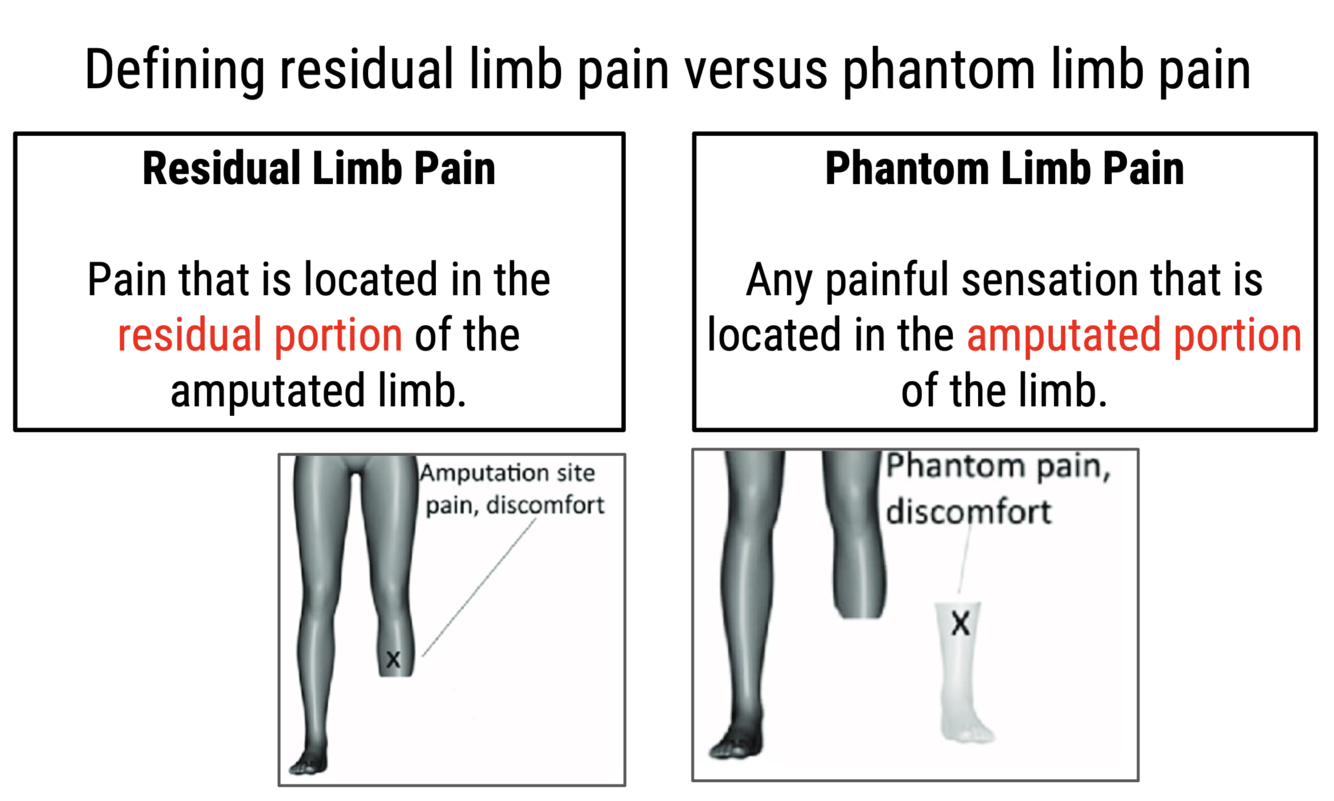
residual limb pain vs phantom limb pain.
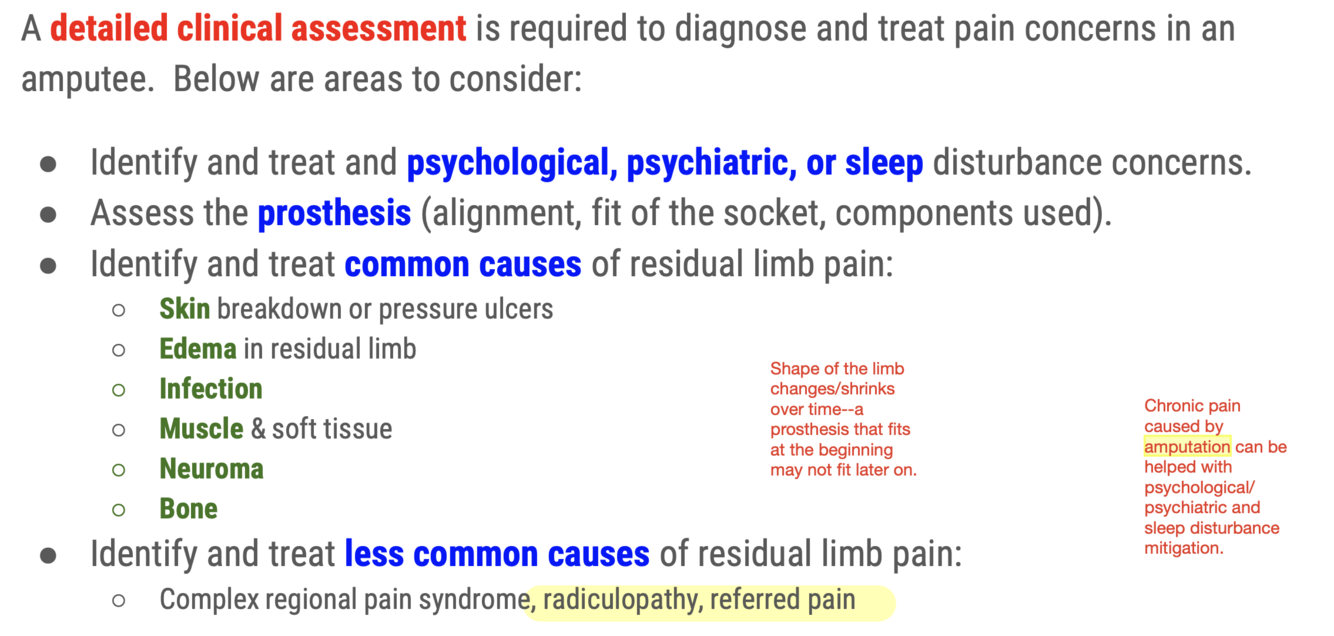
appraoch to residual limb pain
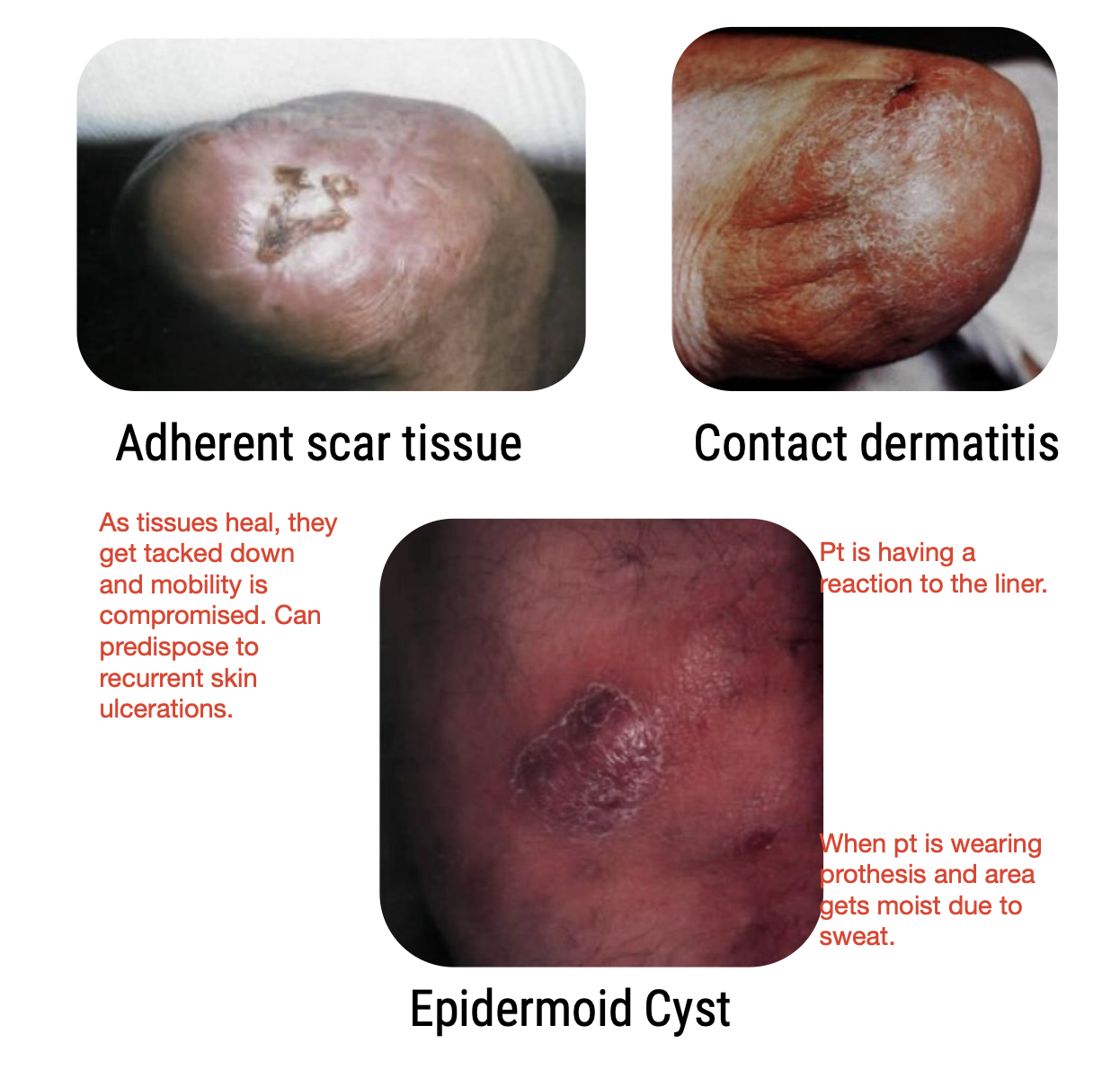
dermatologic conditions of the amputation
- adherent scar tissue
2 .contact dermatitis
- epidermoid cyst.
lower limb amputees are at risk of developing flexion contractures.
- transtibial amputation predisposes to ___ flexion contractures
- transfemoral amputation predisposes to ___ flexion contracture.
- transtibial amputation predisposes to KNEE flexion contractures
- transfemoral amputation predisposes to HIP flexion contracture.
Contractures have significant consequences including difficulty using a prosthesis, affecting mobility and transfers.
Contractures are largely preventable with conservative measures like a stretching program and positioning.
potential medical causes of residual limb edema:
- congestive heart failure
- underlying infection in residual limb (cellulitis)
- kidney disease
- deep vein thrombosis
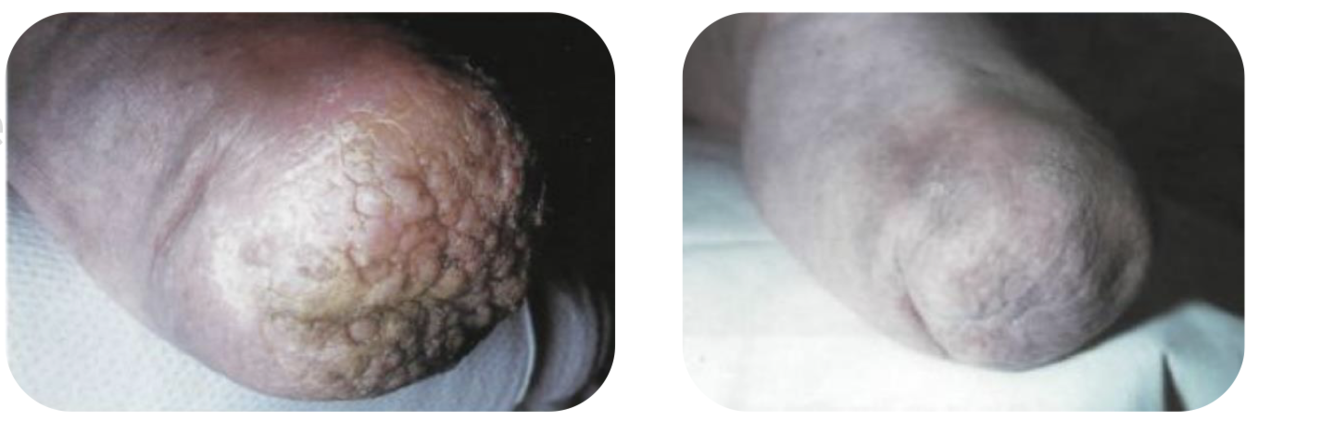
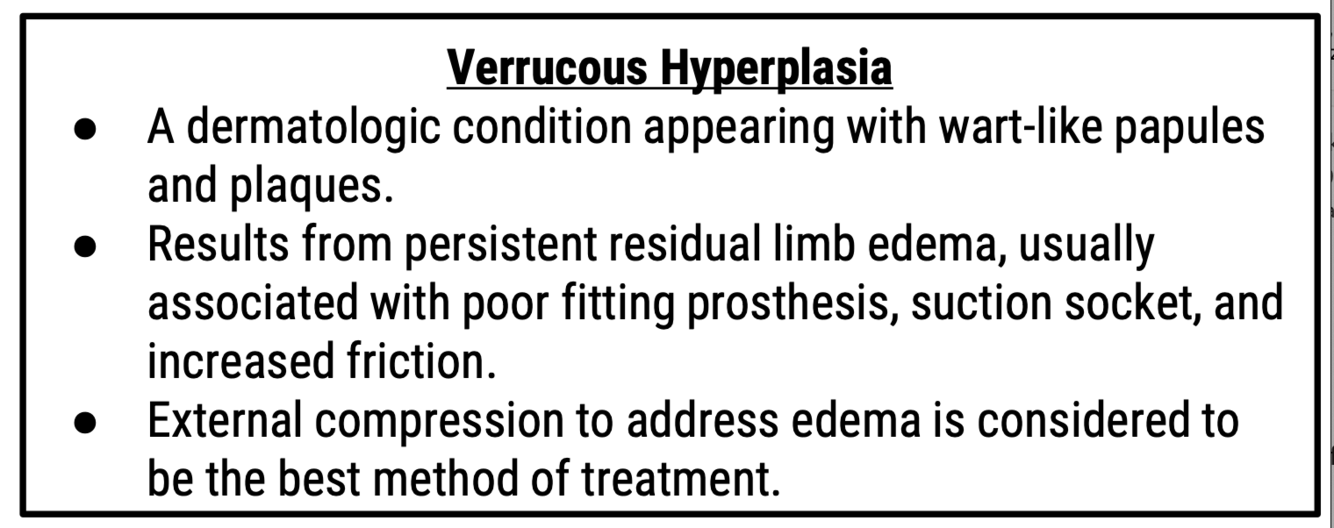
Verrucous Hyperplasia
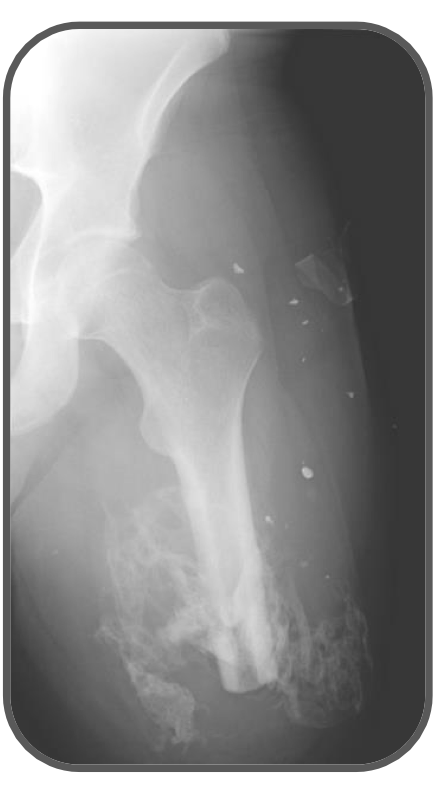
what is heterotopic ossification
HO refers to the formation of bone in soft tissues surrounding the residual limb.

-
Rheumatoid Arthritis50
-
Approach to Polyarticular Arthritis46
-
Heritable Connective Tissue Disorders20
-
Crystal Arthropathies (Gout)17
-
Osteoarthritis25
-
Systemic Lupus Erythematosus34
-
Approach to Monoarthritis38
-
Systemic Vasculitis33
-
Principles of Management of Rheumatic Disease31
-
Pain Between Joints31
-
Seronegative Polyarthritis33
-
Pediatric Rheumatology30
-
Intro to Dermatology and Benign Skin Lesions12
-
Benign Melanocytic Skin Lesions7
-
Common Pediatric Lesions12
-
Malignant Skin Lesions: Actinic Keratoses and Non-Melanoma Skin Cancer19
-
Derm Morphology31
-
Malignant Skin Lesions: Sun Damaged Skin9
-
Malignant Skin Lesions: Malignant Melanoma13
-
Skin Infections: HPV and Molluscum14
-
Bullous Diseases33
-
Skin Infections: Staph and Strep29
-
Acne Rosacea and Perioral Dermatitis24
-
Skin Infections: Herpes11
-
Skin Infection: Infestations12
-
Skin Infections: Tinea and Candida29
-
Acne Vulgaris17
-
Workshop: Benign and Malignant Skin Lesions49
-
Workshop: Blisters13
-
Burns32
-
Myalgic Enceophalomyelitis: Chronic Fatigue Syndrome13
-
Workshop: Facial Eruptions18
-
Workshop: Skin Infections59
-
Atopic Dermatitis12
-
Topical Therapy12
-
Eczematous Eruptions10
-
Psoriasis14
-
Other Papulosquamous Disease25
-
Phases of Wound Healing and Aberrant Wound Healing14
-
Vasculitis8
-
Genital Lesions25
-
Drug Eruptions9
-
Urticaria-Wheals13
-
Cutaneous Manifestation of Systemic Disease27
-
Workshop: Fever and Rash28
-
Workshop: Red Scaling Eruptions, Erythroderma, and Corticosteroids23
-
Nail and Hair0
-
Derm Review0
-
Rheumatology Review61
-
Lower Extremity: Acute Knee Injury45
-
Bone Biology and Fracture Healing23
-
Ortho Trauma and Fracture Management39
-
Fractures in the Elderly21
-
Shoulder and Elbow55
-
Orthopedic Principles: Hand and Wrist38
-
Common Foot and Ankle Conditions51
-
Sports Medicine25
-
Hip-Knee Arthritis and Degenerative Conditions-Arthroplasty12
-
Lower Back Pain: Non-Surgical Management46
-
Non-Accidental Trauma6
-
Spine Pathology44
-
Common Pediatric MSK Problems45
-
Pediatric Trauma and Fractures27
-
Spine and Back Pain18
-
MSK Infections32
-
MSK Oncology51
-
Amputations13
-
Extremity Wound Reconstruction18
-
Sports Medicine Part 250
-
Approach to Pediatric Bone Tumours31



