Antibody Overview
- Proteins that recognize and bind to foreign substances
- Comprise immunoglobulins - glycoproteins
- Present in circulation and on B-cells
B-cell Overview
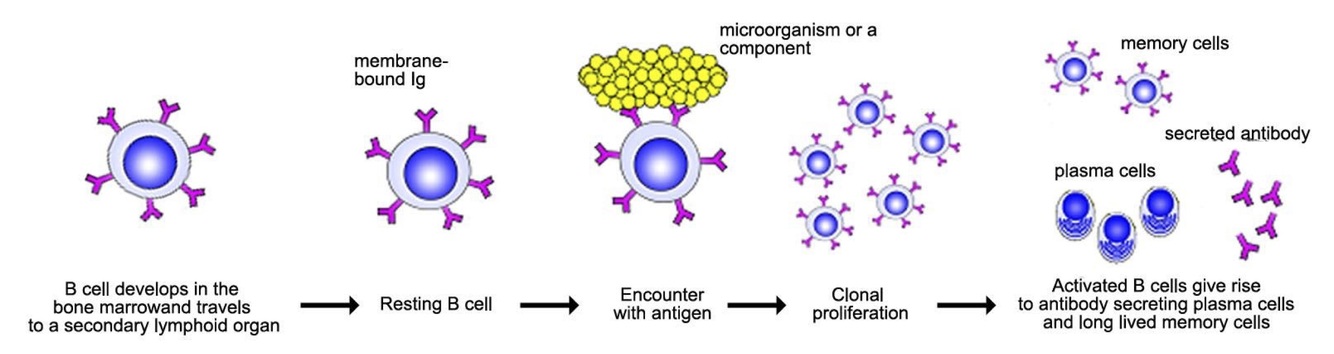
- B-cells rearrange DNA to produce Ig receptors
- Once receptor expressed the B-cell is committed to that Ag
- Humoral immunity mediated by Ab and B-cells
Antigen Classes
Ab able to recognize a wide variety of antigens:
- Microbial surface Ag
- capsular components
- viral envelops
- Internal components
- capsid
- transcriptase from virus
- dsRNA
- Soluble microbial mediators
- secreted toxins
Ab & B-cell
Summary
Ig Electrophoresis
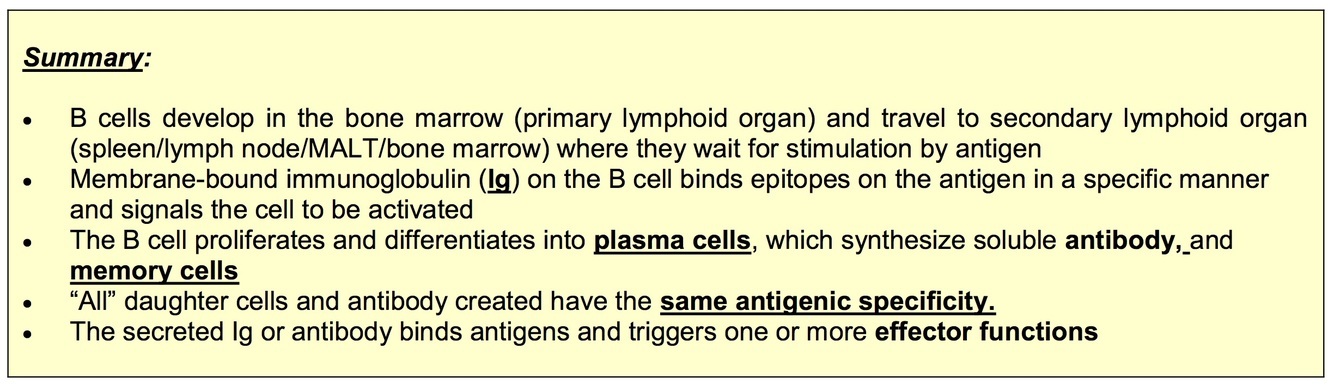
- Humans have a broad gamma peak (hence gamma globulin) due to Ab diversity
- Individuals with multiple myeloma produce a single Ab in blood
- Also have Bence Jones proteins in urine
- dimers of Ig kappa or Ig lambda light chains
- Also have Bence Jones proteins in urine
Antibody Structure
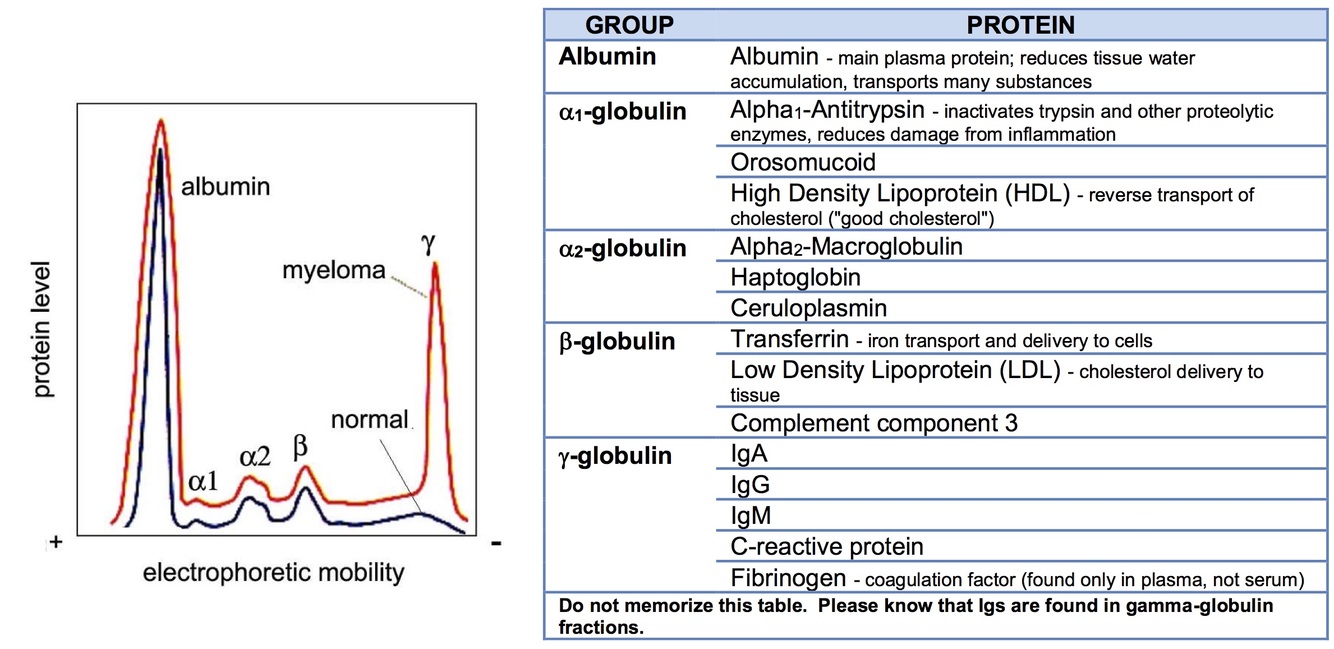
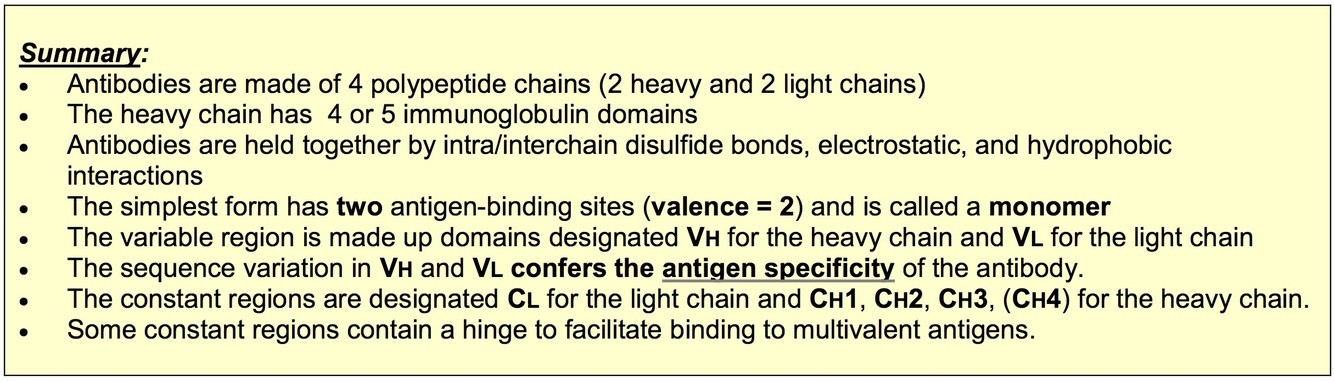
- Comprised of two heavy chains and two light chains
- Held together by disulfide and non-covalent bonds
- N-terminal variable region
- __Includes 2 antigen binding sites
- Formed by combination of the light and heavy chains
- __Includes 2 antigen binding sites
- Remaining domains termed c_onstant region_
- Hinge region joins Ag binding domain to Fc region
- Flexibility allows binding at different angles
Ab Structure Summary
Ab Genes
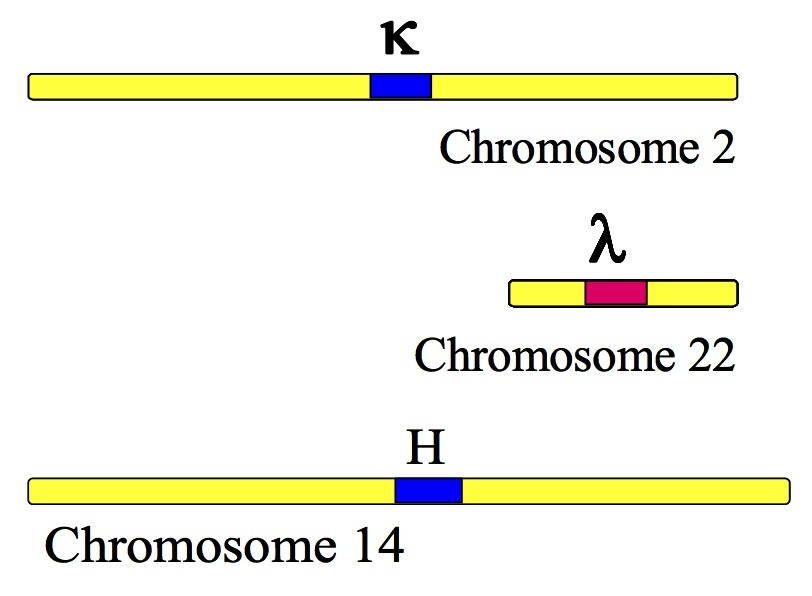
- Light chain
- Kappa chain on chromosome 2
- Lamda chain on chromosome 22
- Each B cell expresses one or the other
- Predominance of one type suggests malignancy
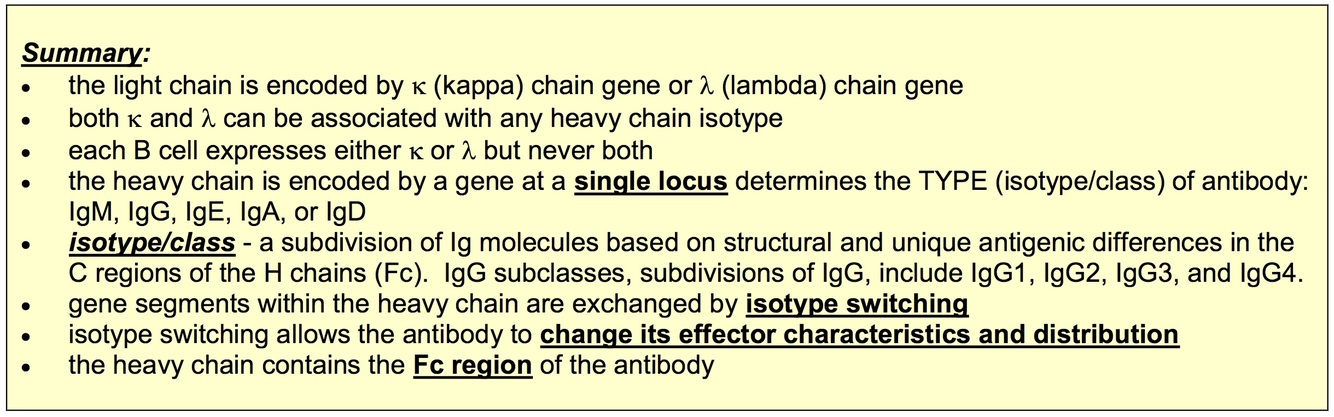
- Heavy chain
- Single gene locus on chromosome 14
- Determines Ab class
- Which gene segment is closest to the variable region on the genome determines isotype production
- μ (mu) = IgM
- γ (gamma) = IgG
- α (alpha) = IgA
- ε (epsilon) = IgE
- δ (delta) = IgD
- Which gene segment is closest to the variable region on the genome determines isotype production
- Heavy chain determines effector activities and tissue distribution
Ig Class Summary
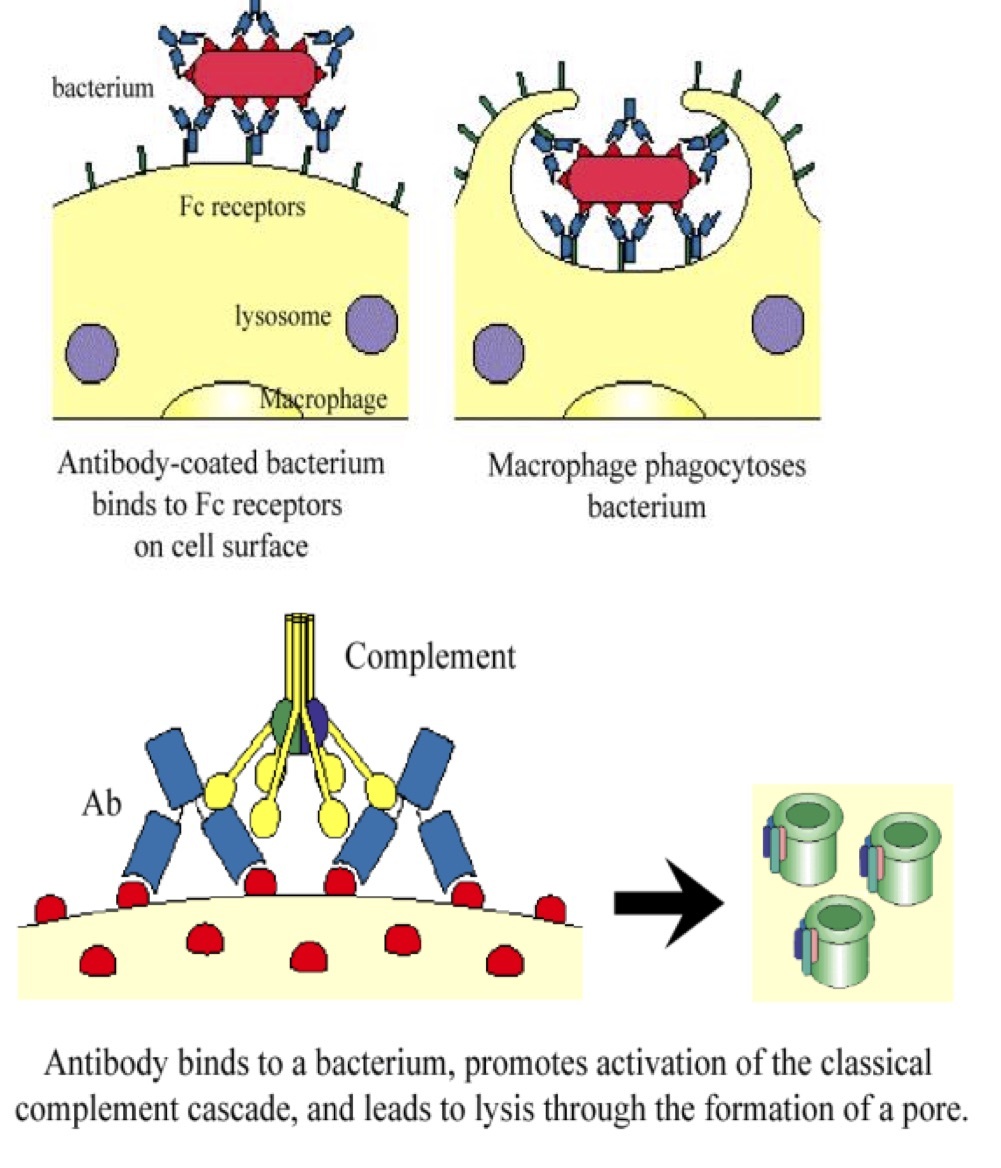
Ab Opsonization
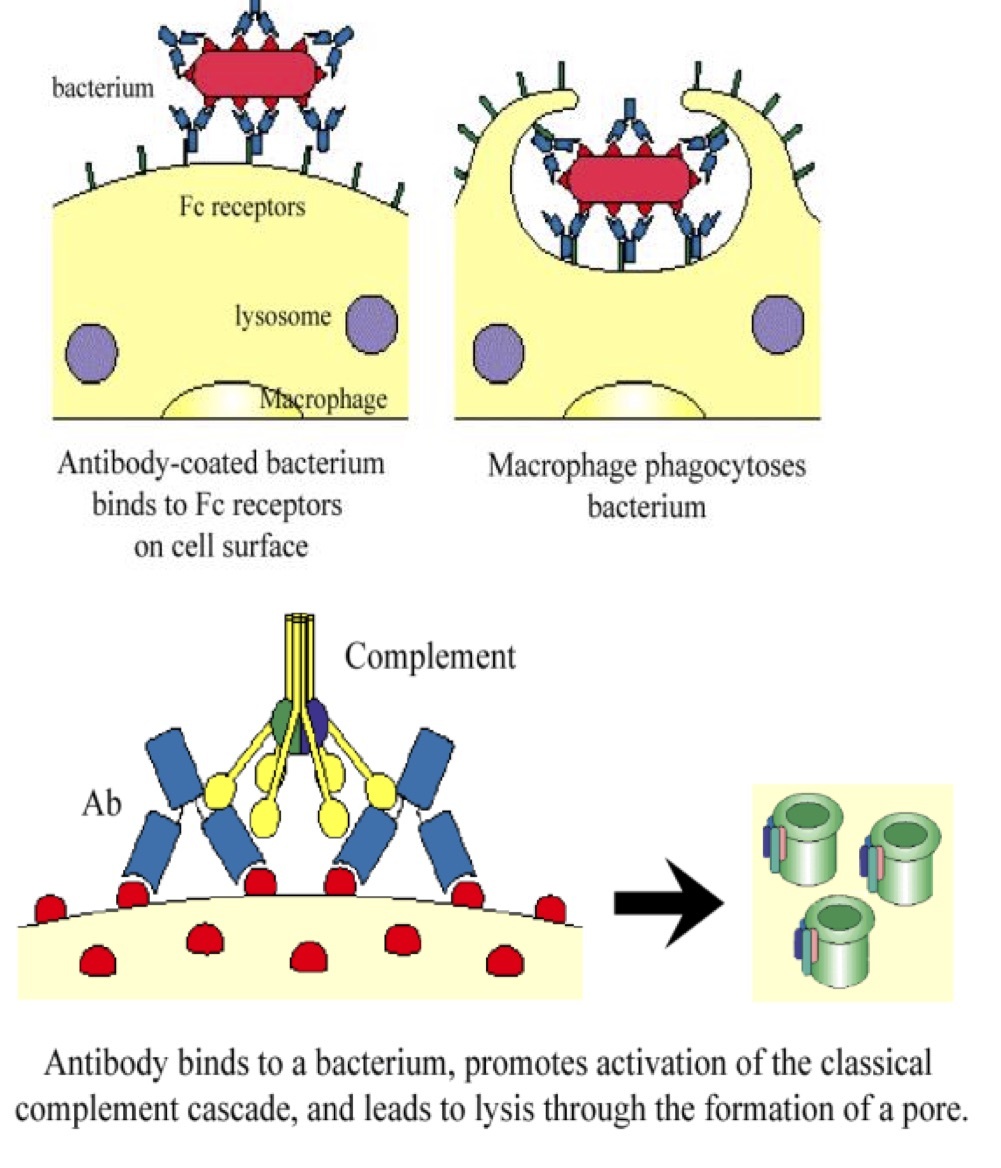
- Ab coats the surface of a pathogen to promote phagocytosis
- IgG potent opsonin through binding of Fc region with Fc receptors on phagocytes
Ab Complement Fixation
- IgG and IgM can activate the classicle complement pathway
- C1q binds to Fc region
- Activation leads to:
- MAC formation
- C3b binding and phagocytosis
- Release of proinflammatory mediators
- C5a
- C3a
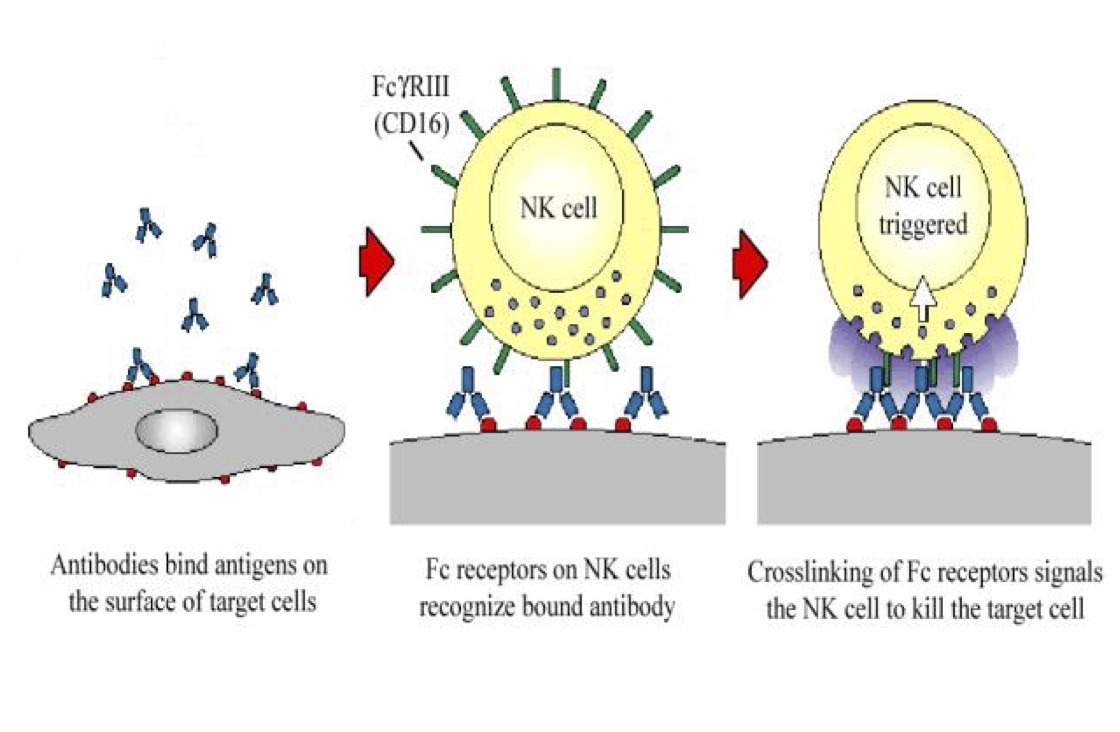
Antibody-Dependent Cellular Cytotoxicity
(ADCC)
- Innate effector cell selectively kills a target cell coated with Ag-specific Ig
- Mostly NK cells but also neutrophils, macrophages, eosinophils, and basophils
- Cells express Fc receptors that bind to Ig
- If phagocytes are unable to take in the pathogen they are programmed to self-destruct on its surface leading to tissue damage
Neutralization
Ab defends a cell or the host from Ag or pathogen.
Ab binds to pathogen or toxin and sterically hinders their binding to cell surface receptors.
Ex. IgA prevents attachment and colonization of muscosal sites.
Induced through a number of vaccines to prevent the effects of microbial released toxins.

Agglutination
Ab binds to and promotes clumping of particulate Ag.
Ab have at least 2 Ag-binding sites - one Ab can bind two epitopes on different Ag and hold them together.
Increases likelihood of phagocytosis.
Mast Cell Degranulation
Antigen cross-links IgE already bound to high affinity FcεRI receptors on mast cells and basophils.
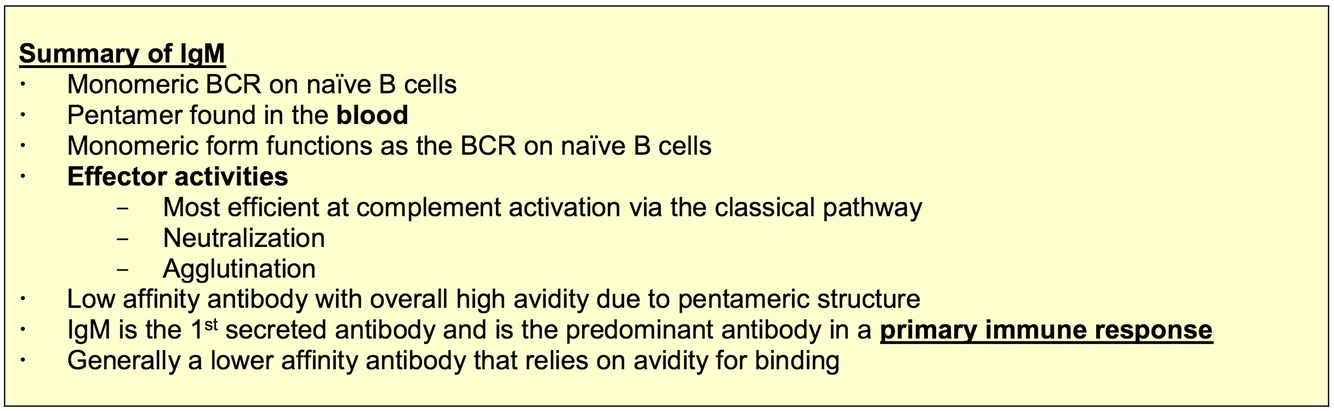
IgM
- Monomeric IgM found on the surface of B-cells as the BCR
- Plasma IgM found as pentameric structure
- 5 monomers linked by a single J-chain
- 10 potential Ag binding sites but usually can only bind 5 due to steric hinderance
- First Ab made following activation of naive B-cells
- Found early in primary immune response
- Adopts a planar conformation normally
- After binding Ag takes on a “staple” or “crab” formation which exposes binding sites on Fc region
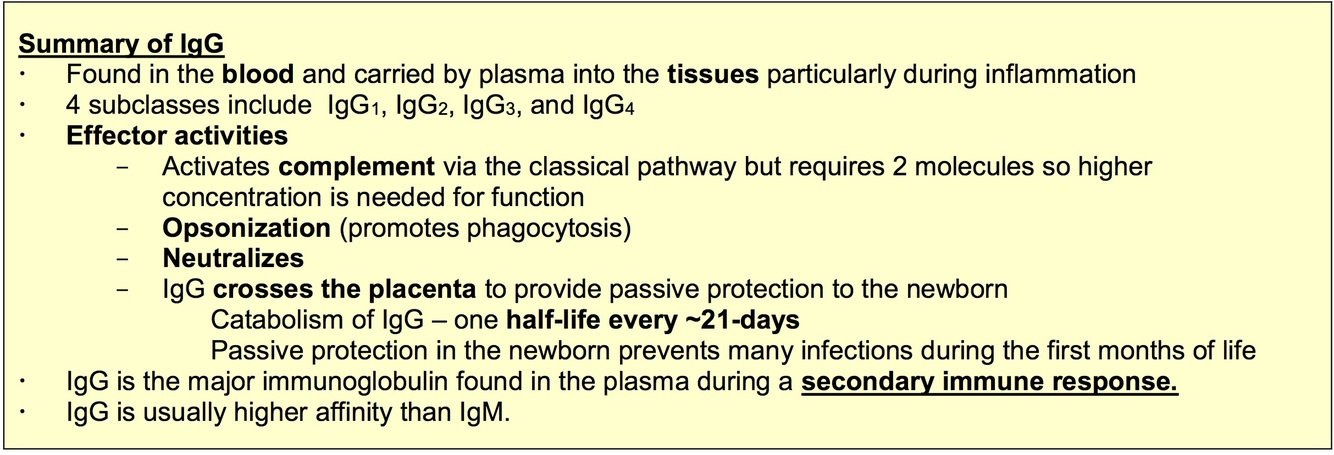
IgG
- 75% of blood Ig
- Major Ab isotype found in interstitial fluids
- 25% of IgG pool exchanges between intravascular and extravascular sites daily
- Allows tissue to be constantly bathed in IgG containing plasma
- Four subclasses
- Made later during primary immune response
- Major Ab during secondary immune responses
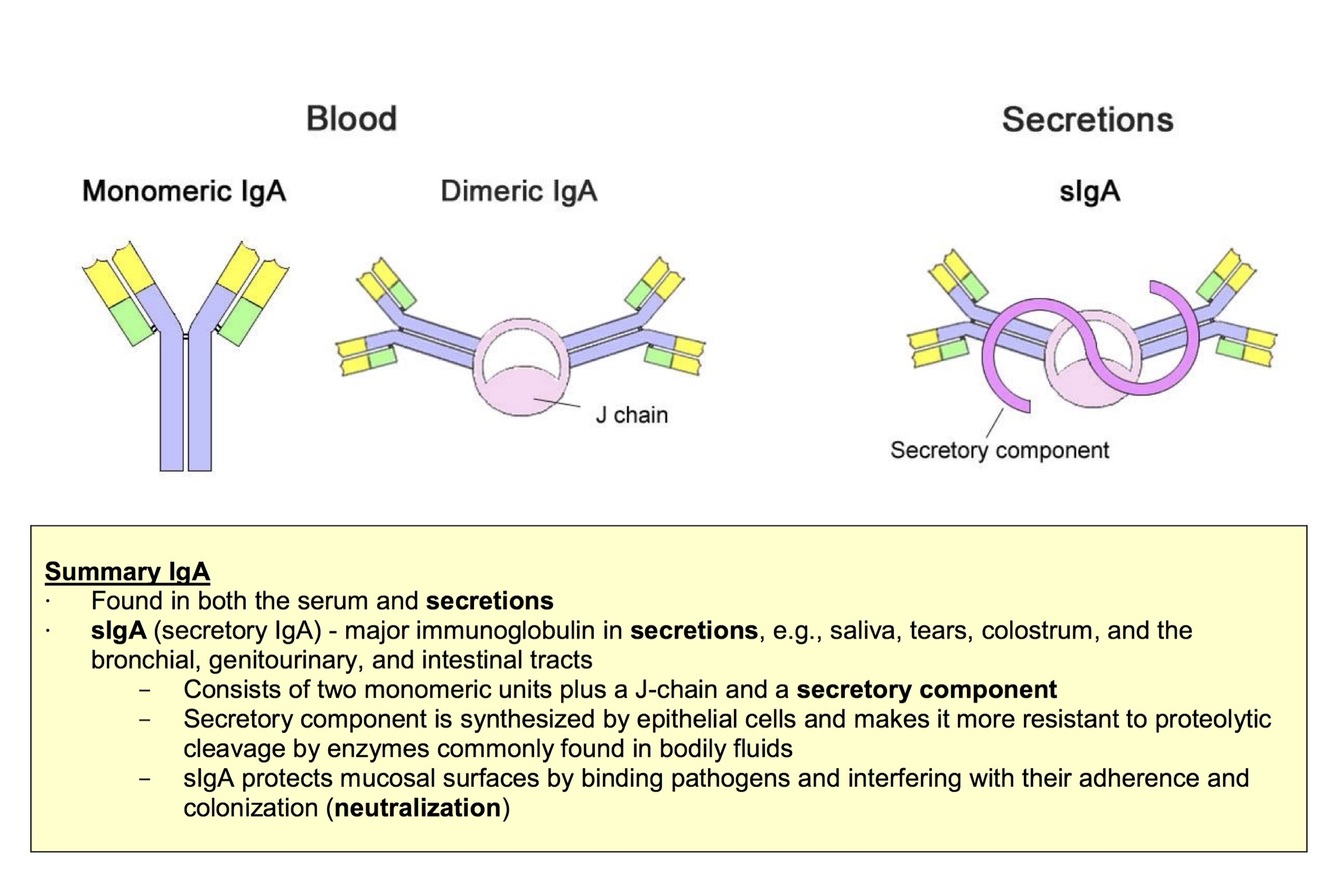
IgA
- Found in the blood and predominant Ab in seromucous secretions
- Two subclasses - IgA1 and IgA2
- Monomers linked by a J-chain
- Monomeric and dimeric IgA ~ 15-20% of blood Ig
- Secretory IgA (sIgA) is the most made Ig
- Actively secreted through the cells of the mucosal epitheilum into secretions
- Saliva
- Tears
- Colostrum
- Bronchial/genitourinary/intestinal tracts
- Found in breast milk and passed to infant
- Secretory component made by epithelial cells
- Facilitates transport of sIga across epithelium
- Protects and extends half-life
- Actively secreted through the cells of the mucosal epitheilum into secretions
IgE
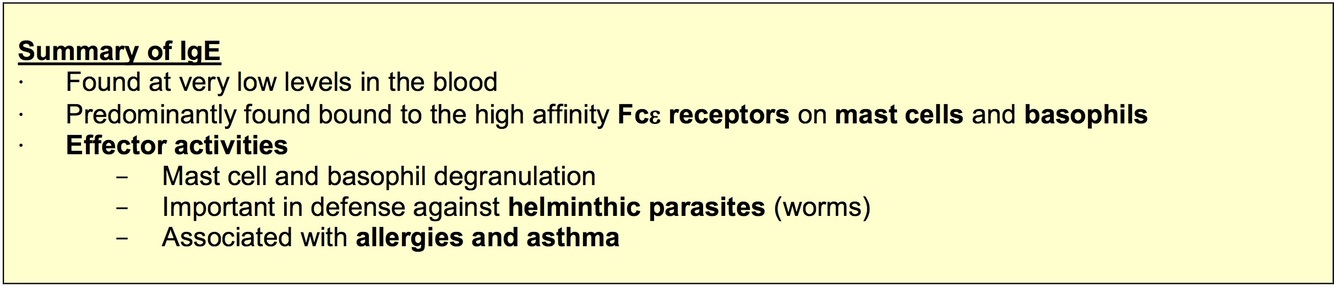
- Monomer with very short half-life in the blood
- Can remain bound to high affinity Fcε receptors on mast cells and basophils for weeks to months
- Only instance where Ig remain bound to Fc receptors for a long time in absence of Ag
- Binds as a monomer
- Dimerization by Ag results in degranulation
IgD
- Monomer
- Synthesized as BCR on naive B-cells
- No secreted form - only found in blood after it falls of B-cell
- No known biological role

Antibody Distribution
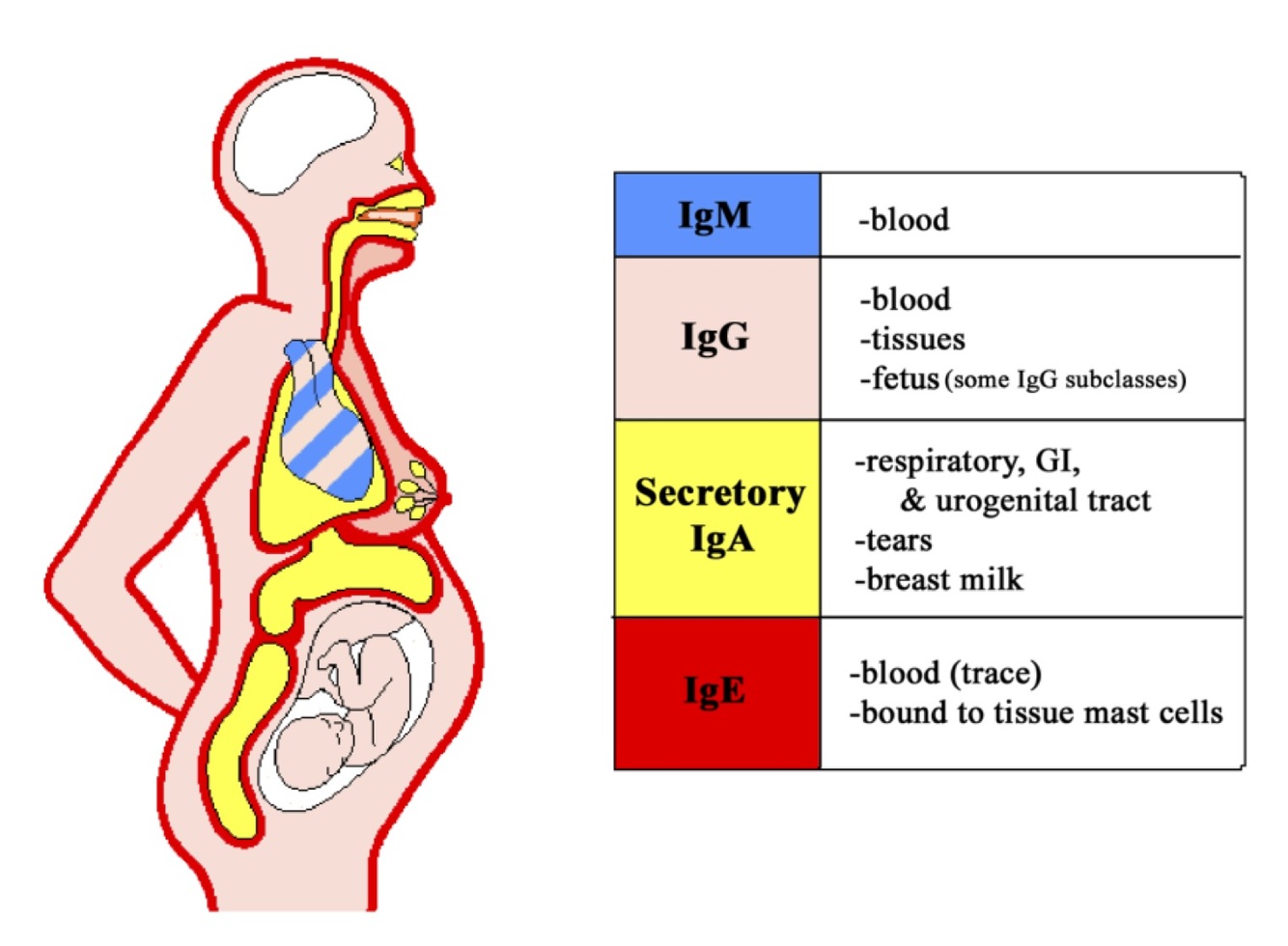
- Found in blood plasma, perfused tissues, and most secretions.
- IgM and IgG most in blood
- IgG constantly bathes tissues
- sIgA in secretions
- Provides barrier to microbial adhesion and colonization of mucosal surfaces
- IgE found in mucosal tissues and connective tissues
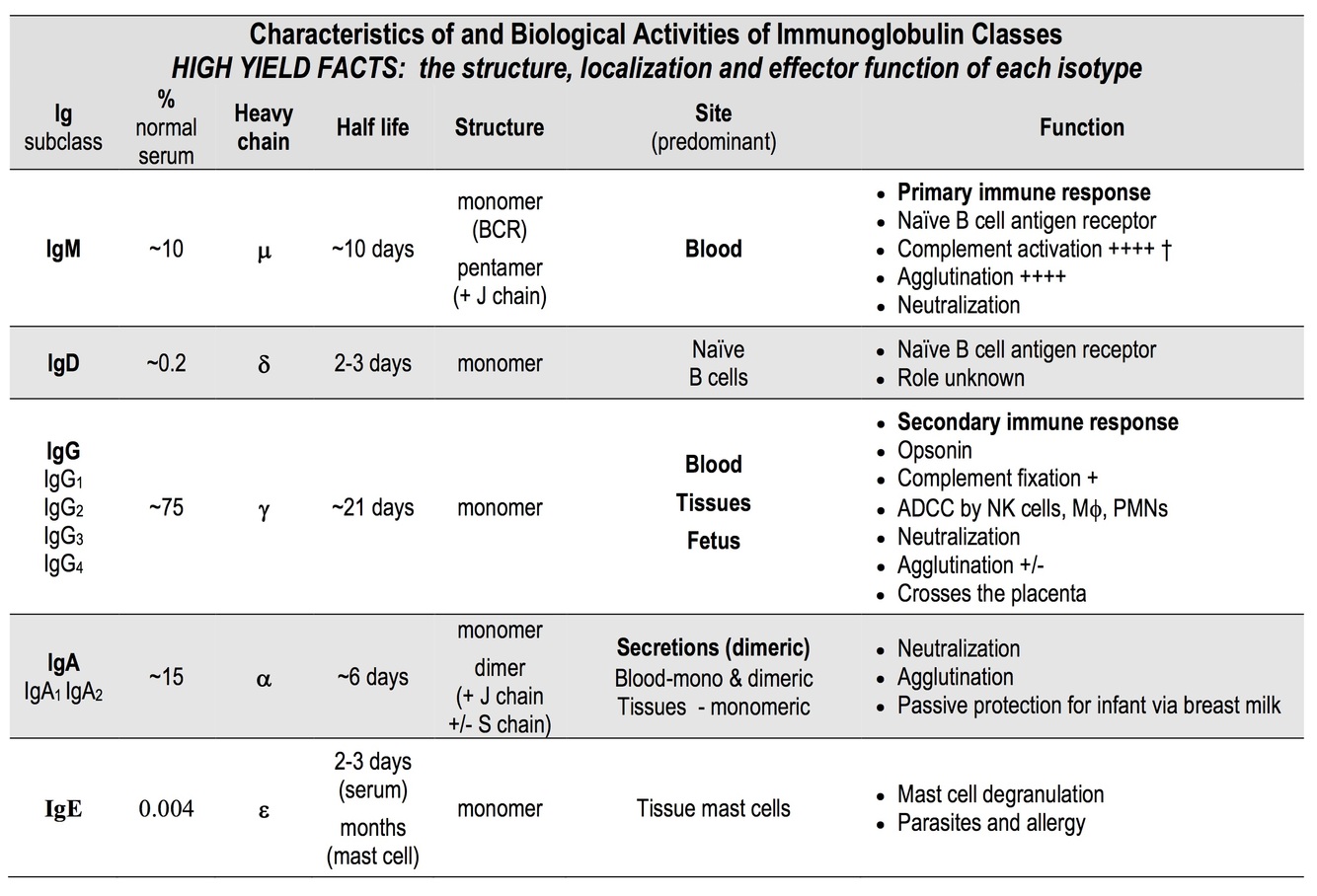
Immunoglobulin Classes Summary Table
HIGH YIELD
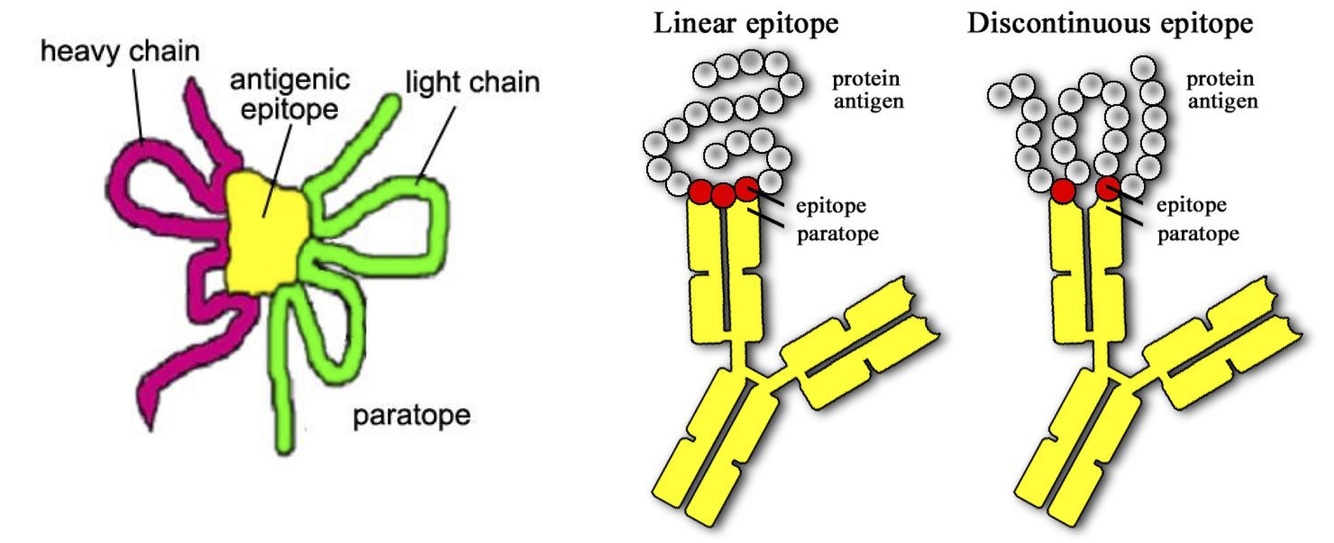
Antigenic Epitopes
- Component of the Ab which is actually bound by Ab
- Dependent onf the 3-D structure
- Can be linear or conformational
- Includes:
- proteins
- polysaccharides
- lipids
- nucleic acids
- many small chemicals
Paratope
Tertiary structure of the Ab formed by a combination of the light and heavy chains which binds the 3-D structure of the epitope.
Lock and key fit.
Potential to bind soluble Ag, integral membrane components, or degraded components.
Allows Ab to bind to just about any potential threat.


-
Introduction32
-
Innate Immunity30
-
Complement27
-
Inflammation & Hematopoiesis30
-
Antibody Structure and Function38
-
Antibody Recognition and Generation of Diversity15
-
B-Lymphocyte Development and Antibody Production14
-
Clinical Applications of Ab/Ag Interactions6
-
TCR and MHC14
-
Antigen Processing and T-cell Ontogeny13
-
T Cell Activation and Effector Functions13
-
TC & TH Cells25
-
Immunity to Infection13
-
Cancer30
-
Hypersensitivities46
-
Immune Regulation & Tolerance24
-
Autoimmunity19
-
Transplantation32
-
Immunodeficiencies30



