Plasma Osmolarity
=2 [Na + K] + [glucose] +[urea]
Normal: 280-290 mosmol/l
Anion Gap
= [Na + K] - [Cl + HCO3]
Normal: 10-16mmol/l
Increased: renal failure, diabetic/alcohol ketoacidosis, lactic acidosis, salicylate poisoning, methanol, ethylene glycol, paraldehye
Decreased (increased unmeasured cation): potassium, magnesium, calcium, hypoalbuminaemia
ECG
timing: small square: 0.04s (40ms), big square: 0.2s (200ms)
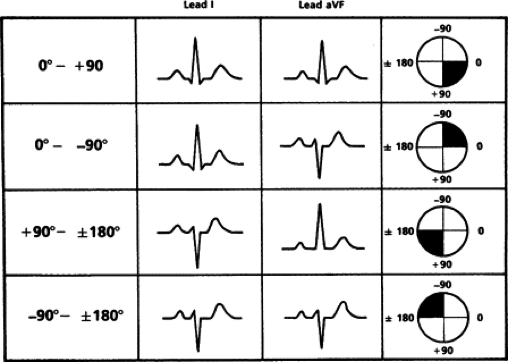
region: V1-2 right ventricle, V3-4 septum, V5-6 left ventricle
P axis: right to left -30 to +90 degrees
Right axis deviation: can be normal or associated RVH
Left axis deviation: usually abnormal conduction
PR interval: <0.16s in children, <0.18s adolescents
QRS interval: <0.12s children
QT interval: <0.44s QTc=QT/(square root RR)
P wave: amp <3mm, duration< 0.09s
QRS wave: voltage <0.03s
T wave: until 8yrs T wave inversion V1 is normal
J point: beggining S wave, early repolarisations, normal in kids if <3mm
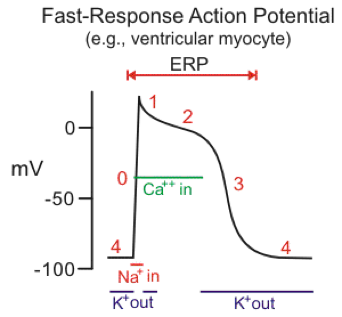
Cardiac depolarisation
- Resting membrane potential
0. Depolarisation phase: Na+ in: positive feedback mechanism – more Na+ in causes more Na+ gates to open
1. Na+ gates close at -40mV. Slow influx Ca++ – > calcium induced calcium release peaks 0mV and causes binding to tropomyosin and muscle contraction.
2. Plateau phase: small trickle out of K+
3. Repolarisation : K+ out
4. Resting membrane potential
Myocardial Contraction
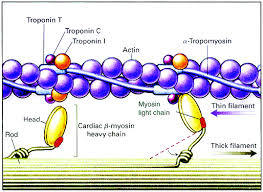
cardiac muscle: thick (myosin) and thin (actin) filaments
contractile components: troponin (I/C/T), tropomyosin
- I: inhibits binding, C: binds Ca, T: binds tropomyosin
action:
- Ca enters and binds TnC changing the configuration and allowing actin/myosin to interact
- myosin binds ATPase
- powerstroke of myosin causes shortening
- relaxation with Ca release
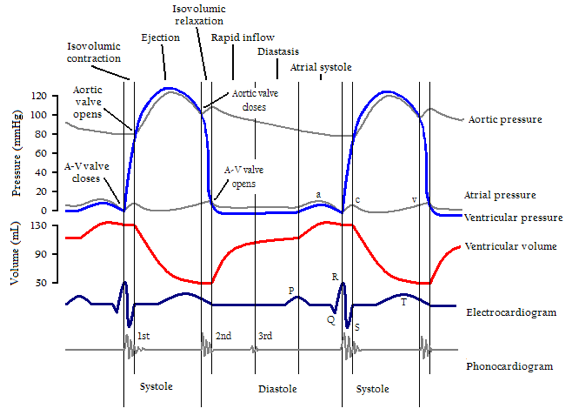
Cardiac Cycle
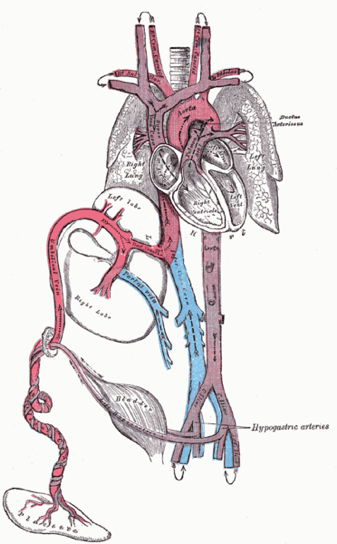
Fetal Circulation
right ventricle:
- 10% output to lungs, 90% to aorta via ductus arteriosus
- twice the output LV
left ventricle:
- input from pulmonary vein and foramen ovale
- output (65% oxygen) to cerebral circ/coronaries
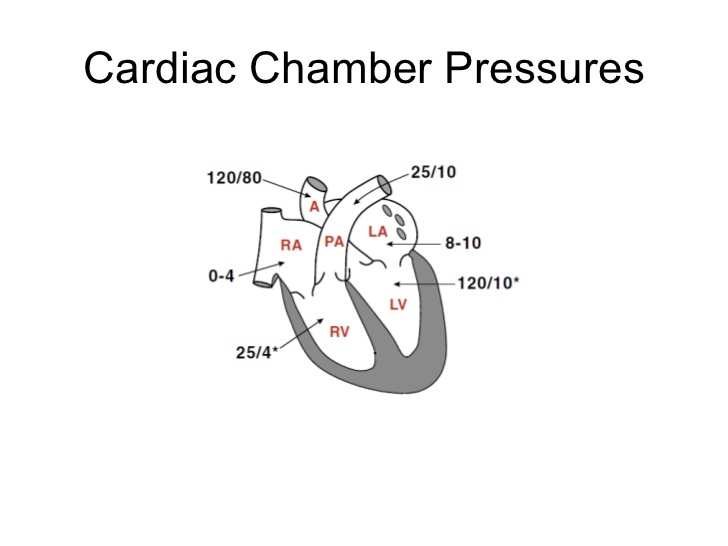
Cardiac Pressures
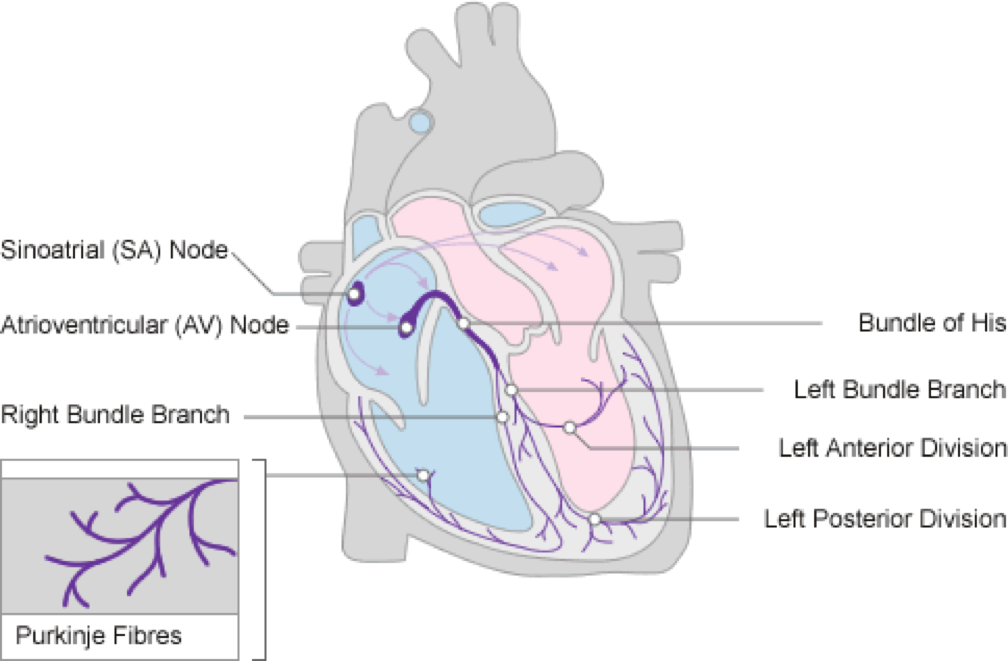
Cardiac Conduction System
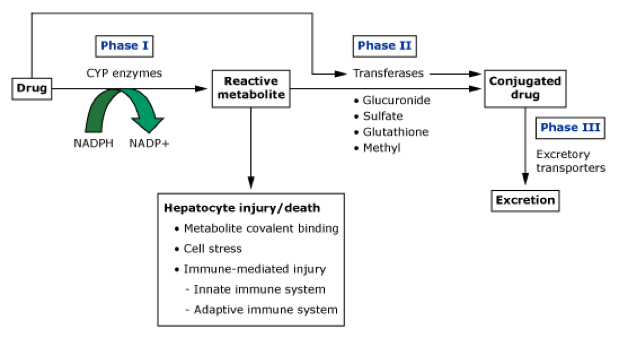
Liver metabolism of drugs
phase 1: CYP450 (1, 2, 3) enzymes oxidate, reduce or hydrolyse to make water sol.
phase 2: addition metabolite to water soluble group
phase 3: transport of conjugate drug into bile
Ventricular Hypertrophy
RVH
- R in V1: 5<1 month, 4>1 month, 3>1 year
- S in V6: 3<1 month, 2>1 month, 1>1 year
LVH
- S in V1: 1<1 month, 2>1 month, 3>1 year
- R in V6: 3<1 month, 2>1 month, 1>1 year
Pulmonary to Systemic Blood Flow Ratio
Qp:Qs = Sa(Aorta) – Sa(SVC) / Sa (Pulm vein) – Sa (Pulm artery)
= 90-70 / 95-90
=4/1 (4:1)
Pulmonary Vascular Resistance
PVR= (pulmonary artery mean pressure- left atrial mean pressure)/pulmonary flow
Thermodilution
definition: most accurate measure CO
method:
- catheter in PA
- inject known volume at set temperature into blood stream
- time take for temp to reach catheter indicates CO
Systemic Vascular Resistance
SVR= (aortic mean pressure- right atrial mean pressure)/systemic flow

-
Acute Care28
-
Basic Sciences15
-
Cardiology109
-
Dermatology26
-
Developmental43
-
Endocrinology99
-
Gastroenterology151
-
Genetics127
-
Haematology72
-
Immunology102
-
Metabolic Disorders19
-
Microbiology133
-
Neonatology94
-
Neurology89
-
Oncology105
-
Orthopaedics37
-
Psychiatry13
-
Renal128
-
Respiratory66
-
Rheumatology36
-
Statistics/Epidemiology22
-
Surgery4
-
Pharmacology19



