ADHD
-comorbidities-
psychiatric disorder: 50-90%
- ODD 70% males, 40% females
- conduct disorder 33%
- learning difficulties 20-60%
- anxiety 20-30%
- depression 33%
- tic disorders 10-20%
ADHD
-criteria-
One of the following 2:
A. Inattentive signs (6 or more; > 6 months duration)
- fails to give close attention or makes careless mistakes
- cannot sustain attention
- does not follow through or finish tasks
- difficulty organising tasks
- dislikes / avoids tasks requiring sustained mental effort
- easily distracted by external stimuli
- does not listen when spoken to
- loses things necessary for tasks
- forgetful
B. Hyperactive / Impulsive signs (6 or more; >6 months duration
– fidgets, squirms in seat
- leaves seat
- runs about / climbs
- cannot play quietly
- always “on the go” or “driven by a motor”
- talks excessively
- blurts out answers before questions completed
- difficulty waiting his turn
- interrupts or intrudes others (games, conversations)
Symptoms present before 7 yo (some symptoms required only)
Symptoms present in 2 or more settings (some symptoms required only)
Clinically significant impairment
Not associated or caused by another disorder
Adolescent cognition
middle childhood (6-11)
- shift from “preoperational “ to “concrete logical operations” (Piaget)
- apply rules based on observations, factor in multiple points of view, and interpret their perceptions using physical laws
early adolescence (10-13)
- transition from concrete operational thinking to formal logical thinking
- reason from principles, weigh many opinions, and think about the process of thinking
middle adolescence (14-16)
- question and analyze extensively
- understand the intricacy of the world, see beyond themselves, and use moral and legal context
Autism
DSM IV criteria
1. qualitative impairment of social interaction (>2)
2. qualitative impairment of communication (>1)
3. restrictive or repetitive patterns of behaviour, interests and activities (>1)
4. onset before 3 years
associations: seizures (1/3), ↓IQ (75%), vision/ hearing problems, ADHD, depression/ schizophrenia
screening: recommended 18mo-2yrs with Modified Checklist for Autism in Toddlers questionnaire (M-CHAT)
Blindness
legal blindness: vision 20/200 or worse
incidence: 1/35,000
causes:
- retinopathy of prematurity (most common)
- amblyopia (usually secondary to cataracts)
others: albinism, hydrocephalus, infection, birth asphyxia
Car restraints
Cerebral palsy
incidence: 3.6/1000
definition: non-progressive motor impairment arising before or after birth
causes:
birth: preterm/LBW, congenital malformations, kernicterus
acquired: trauma, meningitis, stroke
unknown: 50% no identified risk
diagnosis: usually <18months with failure to obtain motor milestones or assymetric gross motor function, hypertonia, hypotonia
comorbidities: epilepsy, learning disorders, behavioural issues, sensory impairment
Classification CP
Limb distribution:
- hemiplegia: 39%
- diplegia: 34%
- triplegia: 3%
- quadriplegia: 24%
Motor disorder:
- spastic: 83%
- dyskinetic: 6%
- ataxic: 5%
- hypotonic: 2%
Constipation
prevalence:
- constipation: 37% 5 to 12 years
- constipation with overflow: 1-4%
Crying
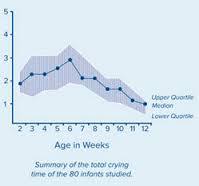
duration of crying:
2 weeks: minimal
6 weeks: 3 hours/day
12 weeks: 1 hour/day
excessive crying: less than 5% infants with excessive crying have pathology
Deafness
inherited: 50% childhood deafness
genetics: 80% AR
Connexin 26 defect (50%): disrupts K+ flow in ear
- early onset deafness 1-6yrs
other: 18% AD with variable penetrance; 2% XLR
syndromes: Usher, Pendred, Jervell Lange-Nielson, Brachio-otorenal, Alport, treacher-collins, Waardenberg, NF-2
infections: TORCH, bacterial meningitis, mumps, mastoiditis, TB, Kawasaki, EBV, scarlet fever, pertussis
neonatal causes: hyperbilirubinaemia, hypoxia, GBS meningitis, PPHN, prolonged ventilation, LBW
drugs: aminoglycosides, frusemide
endocrine: hypothyroidism
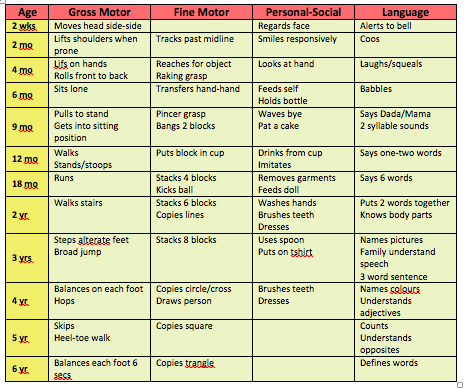
Denver Screening Test
age: birth to 6 yrs
domains:
- personal-social
- fine motor-adaptive
- gross motor
- language
use: screening tool but limited socioemotional development scale
Development Table
Developmental delay
Gross motor
2 yrs: not walking
3-5 yrs: not pedalling tricycle, clumsy, falling frequently, not hopping
5-8 yrs: unable to throw, catch or kick ball
Fine motor
<1 year: hand preference
10 mths: pincer grip
3-5 yrs: avoiding fine motor tasks
Personal/ social
3-5 yrs: disinterested in peers, little awareness of toileting needs, inability to dress self
Developmental Delay
-investigations-
1st LINE:
- chromosomes (including fragile X)
- FBC/EUC/TFTs/CK/Lead/Urate/Ferritin/Biotinidase
2nd LINE:
metabolic screen: IF family hx/ consanguinity/regression/ organomegaly/ coarse face
neuroimaging: IF abnormal head size/ seizures/ focal neurology
EEG: IF speech regression/ seizures/ neurodegenerative
genetics: IF dysmorphic, abnormal growth, sensory impairment, odd behaviour, family hx
Dyslexia
definition: difficulty with accurate and or fluent word recognition due to a deficit in the phonologic component of language
Enuresis
definition: urinary incontinence in a child who is adequately mature enough to achieve continence
classification
- diurnal: daytime (day dryness from 4 yrs)
- noctural: night time (night dryness from 6 yrs)
distribution:
- 22% day only, 17% both day/night, 61% night only
prevalence noctural enuresis:
- 15% 5yr olds
- 7% 8 yr olds
- 1% 15 yr olds
Erikson’s stages
Global developmental delay
impairment in at least 2 of the following areas:
1. motor
2. speech and language
3. cognition
4. personal/social
5. daily-living skills
Hearing impairment
causes:
conductive (mild-moderate)
- chronic middle ear effusion
SNHL (severe):
- congenital infection eg. rubella, CMV, meningitis
- birth asphyxia
- kernicterus
- ototoxic drugs
- tumours
- inherited defect
treatment:
hearing aids: amplification of sound
cochlear implant: >12months with severe SNHL
Hearing tests:
neonatal:
otoacoustic emissions: measure sounds waves produced in middle ear by measuring echo when sounds are played
auditory brainstem response (ABR): measures how brain responds to sound via electrodes on the head
middle ear function:
pneumatic otoscope: most sensitive/specific
tympanometry/acoustic reflectometry: supportive
children:
audiometry: test conductive and sensory hearing in both ears
Hymen anatomy prepuberty
variations:
- crescenteric (most common): no tissue at 12 o’clock
- annular (2nd most common)
- fimbriated: erratically shaped
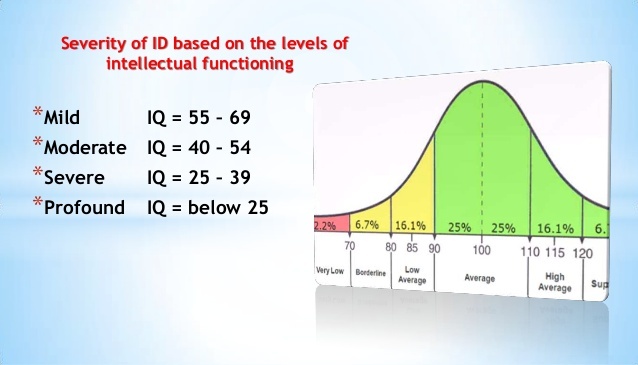
Intellectual Disability
Intelligence scales
Bayley Scales: 0-2yrs
Differential Abilities Scales: 2.5- 17 yrs
Kaufman Assessment Battery for Children: 2.5- 12.5yrs
Leiter International Performance (non-verbal abilities): 2.5-18 yrs
McCarthy Scales of Children’s Abilities: 2.5- 8.5 yrs
Stanford-Binet Intelligence Scale: 2- 23 yrs
The Griffiths Mental Scales: 2-8 yrs
Wechsler Preschool + Primary Scale of Intelligence (WPPSI): 3-7 yrs
Wechsler Intelligence Scales for Children (WISC III): 6-12yrs


-
Acute Care28
-
Basic Sciences15
-
Cardiology109
-
Dermatology26
-
Developmental43
-
Endocrinology99
-
Gastroenterology151
-
Genetics127
-
Haematology72
-
Immunology102
-
Metabolic Disorders19
-
Microbiology133
-
Neonatology94
-
Neurology89
-
Oncology105
-
Orthopaedics37
-
Psychiatry13
-
Renal128
-
Respiratory66
-
Rheumatology36
-
Statistics/Epidemiology22
-
Surgery4
-
Pharmacology19



