Zoonoses
Infectious diseases of other animal species that are accidentally transmitted to humans.
May be viral, bacterial or parasitic.
Vector
Arthropod that transmits infection from animal to human.
Not all zoonoses are transmitted by vectors.
Reservoir
The animal species in which the microbe is maintained in nature.
Lyme Disease
- Caused by Borrelia burgdorferi
- Spirochete transmitted by deer ticks (Ixodes dammini) to man during a blood meal
- Serious public health problem in the USA (300k cases per year)
- Esp. in regions w/ a large deer population
- ↑ # of deer and deer ticks ⇒ ↑ incidence of Lyme
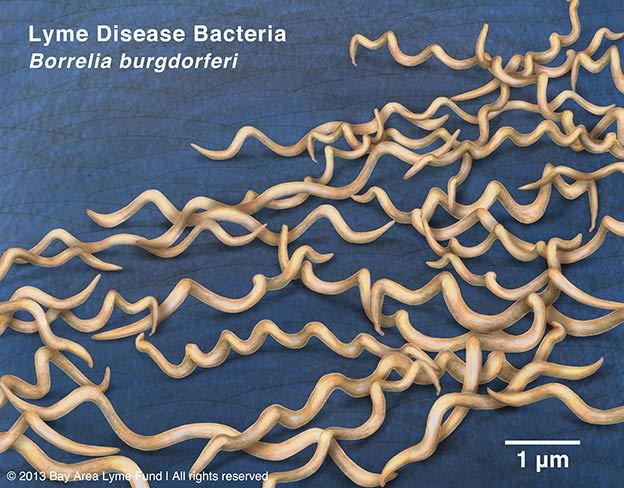
B. burgdorferi
Morphology and Cultivation
- Loosely-coiled spirochete
- Contains several outer surface proteins ⇒ OspA and OspB
- May undergo antigenic variation
- Fastidious
- Grows best at 33°C in a complex liquid medium
B. burgdorferi
Reservoirs
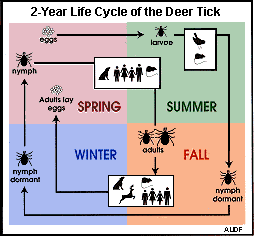
Zoonotic disease w/ animal and tick reservoir.
White footed mouse ⇒ larval and nymph forms (spring)
White tailed deer ⇒ adult ticks (late summer)
Infection of humans (accidental)
B. burgdorferi
Transmission
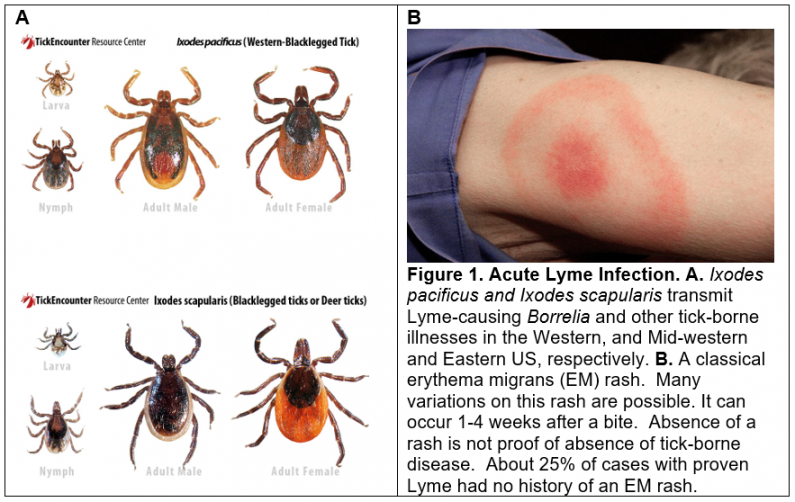
Spirochetes transmitted by ticks that normally feed on deer and white footed mouse:
- Lives in tick midgut until it takes a blood meal
- Contact with mammalian blood ⇒ ∆ expression of Osps ⇒ replication ⇒ gut wall invasion ⇒ dissemination throughout the tick including salivary glands ⇒ injected into mammalian host
- Process takes 24 to 36 hrs
- Tick must feed for 18-24 hrs before mature spirochetes will be injected into the host
- If ticks are removed on a daily basis, risk of transmission is low
B. burgdorferi
Epidemiology
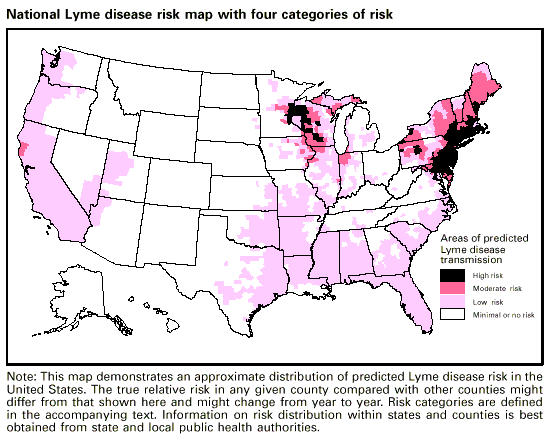
Transmission occurs in areas with a large deer population.
Three distinct geographic regions in the US:
- Northeast corridor ⇒ Massachusetts to Maryland
- Highest transmission
- Upper Midwest ⇒ Wisconsin and Minnesota
- Northern California
B. burgdorferi
Clinical Infection
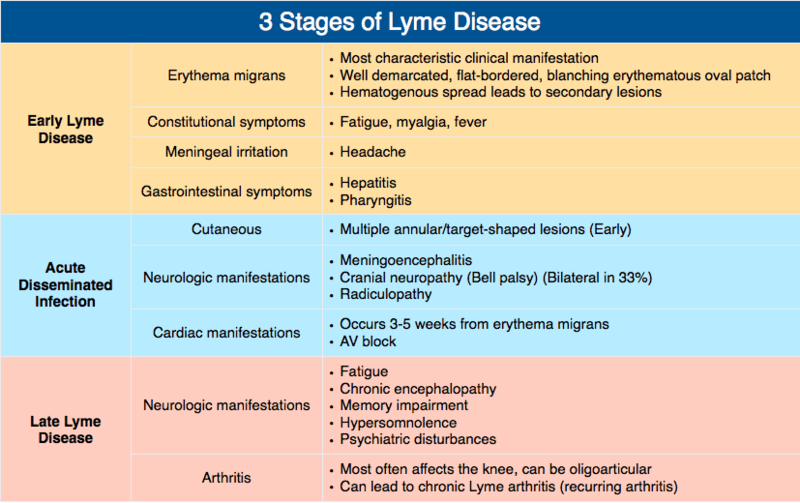
3 stages of Lyme disease:
- Stage 1 - Early localized
- Local spread of B. burgdorferi in the skin
- Characteristic annular lesion @ site of tick bite (bullseye) ⇒ erythema migrans
- Usually occurs within 2 weeks of bite
- Fever, malaise and headache may accompany the rash
- Stage 2 - Early disseminated
- Local dissemination
- Multiple smaller annular rashes
- Other common manifestations:
- Cranial nerve palsies
- Meningitis
- Conjunctivitis
- Systemic sx such as fever, malaise, fatigue and arthralgia
- Stage 3 - Late disseminated
- Period of latency (months to several years)
- ± Attacks of arthritis affecting large joints, esp. knees
- Episodes become progressively longer
- Small % of individuals may become chronic and progressive
- Chronic neurologic involvement may also occur
B. burgdorferi
Pathogenesis
Pathology not due to the organism ⇒ no toxins or direct tissue damage
- Early stages ⇒ viable bacteria/inflammation
- Late stage ⇒ immune-mediated injury
- Microbial persistence ⇒ immune response ⇒ bystander injury to the host
- Affected tissues w/ inflammatory infiltrate of lymphocytes and monocytes
- Potent inducer of IL-1 and TNF-α
- HLA-DR4 and IgG to OspA (chronic patients)
B. burgdorferi
Diagnosis
- Lesion > 5 cm is pathognomonic
- Difficult to cultivate and visualize
- Pts with Stage 1 disease frequently seronegative ⇒ dx based on clinical manifestations
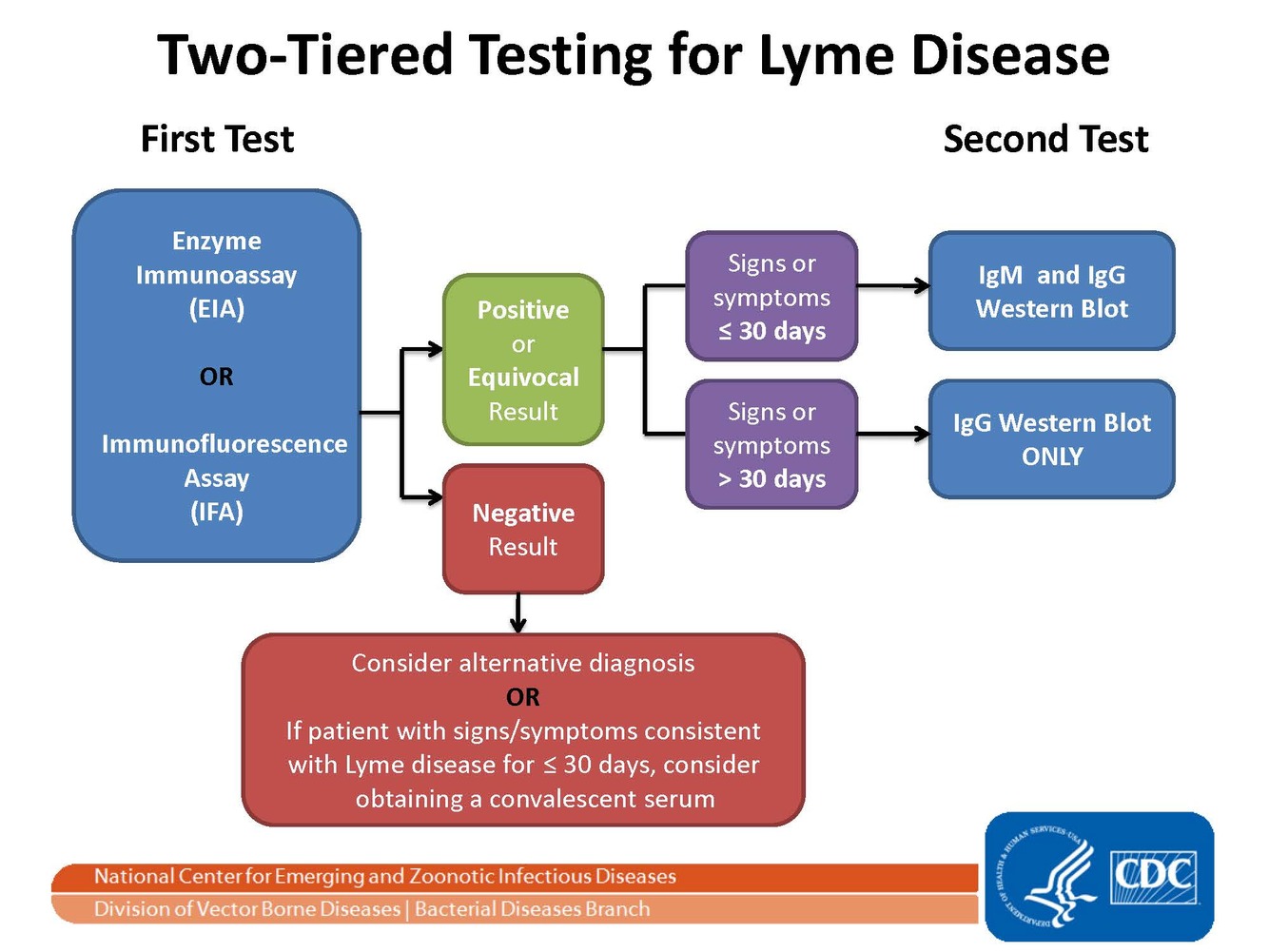
- More advanced pts ⇒ dx by two-step serological process
- EIA or ELISA
- Done with whole cell antigens
- Numerous false positives with other spirochete antigens, viral infections and autoimmune diseases
- Positive or equivocal EIA must be corroborated with an immunoblot
- Immunoblot or Western
- Uses proteins specific to B. burgdorferi
- EIA or ELISA
B. burgdorferi
Treatment
- Doxycycline or Amoxicillin PO vs IV
- Duration of therapy is guided by clinical course
- Usually 2-4 weeks
- Treating stage 1 or 2 prevents stage 3
- Re-infection is possible
Post-Treatment
Lyme Disease Syndrome
- 10-20% of treated pts have prolonged sx
- Fatigue
- Muscle and joint pain
- Cognitive issues
- May be d/t tissue damage not continued presence of organism
- No e/o to support long term abx tx
Chronic Lyme Disease
Persistent pain, fatigue, cognitive sx in the absence of clinical and serological e/o infection w/ B. bergdorferi
Not recognized by the IDSA
B. burgdorferi
Prevention
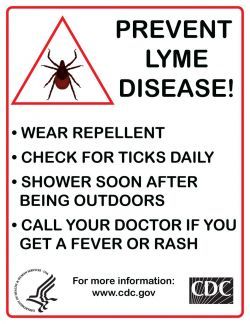
Cover all exposed skin areas and/or use repellent when in tick infected areas
Check for ticks and remove daily
Relapsing Fever
Overview
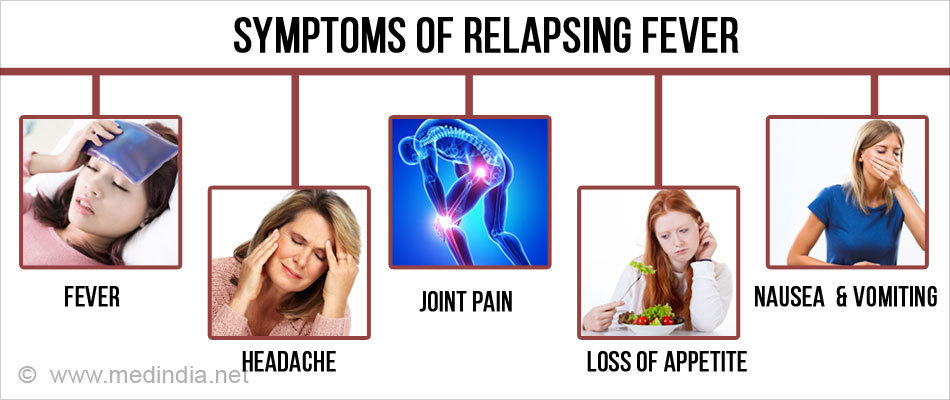
- Periodic episodes of pyrexia with septicemia and apyrexia
- Two forms: epidemic vs endemic
- Caused by several species of Borrelia ⇒ B. recurrentis, B. hermsii, B. turicatae
- Transmitted to man by:
- Soft bodied ticks (Ornithodoros) ⇒ Tick Borne
- Human louse (Pediculus humanus corporis or Pediculus humanus capitis) ⇒ Louse Borne
Epidemic
Relapsing Fever
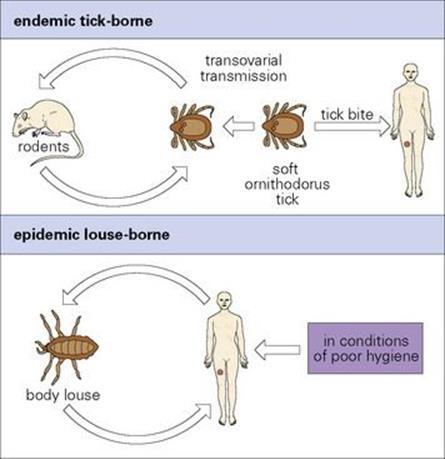
Louse Borne Relapsing Fever
- Caused by Borrelia recurrentis
- Reservoir host is unknown
- Transmitted to man and spread from man to man by the body or head louse
- Usu. occurs during times of breakdown of public health infrastructure, war, natural disasters etc.
- Common in Sudan, Somalia, and Ethiopia
- Virtually non-existent in the USA
Endemic
Relapsing Fever
Tick Borne Relapsing Fever
- Caused by B. hermsii and B. turicatae
- Transmitted from infected animals ⇒ tick ⇒ man
- Animal reservoirs are wild rodents and other forest animals
- Vector is the Ornithodorus species (soft tick)
- Borrelia may be passed trans-ovarily to subsequent generations in the tick
- Occurs primarily in the Western US, Grand Canyon, state and national parks
- Occurs most often in summer
Relapsing Fever
Virulence Factors
- Antigenic variation of the infecting strain
- New variants are responsible for relapses
- Ab is not protective for new strains
Relapsing Fever
Pathogenesis and Clinical Disease
- Infection is initiated by entry of organisms by bite or crushing of the insect vector
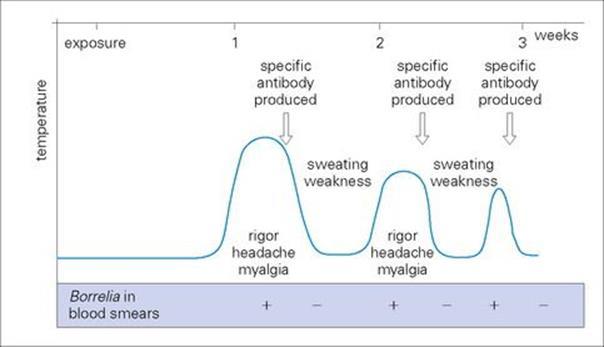
- Spirochetemia develops ⇒ febrile period (~ 7 days)
- Various organs of the reticuloendothelial system may become infected
- Heptatosplenomegaly
- Hepatic necrosis
- Cardiac failure
- Cerebral hemorrhage
- Various organs of the reticuloendothelial system may become infected
- Disappearance of Borrelia from the blood stream ⇒ fever remission (3-10 days)
- Reappearance of fever and Borrelia with new antigenic types ⇒ relapse
- Antigenic variation critical to pathogenesis of the organism
- Relapses are usually limited to 3 or 4
Relapsing Fever
Diagnosis
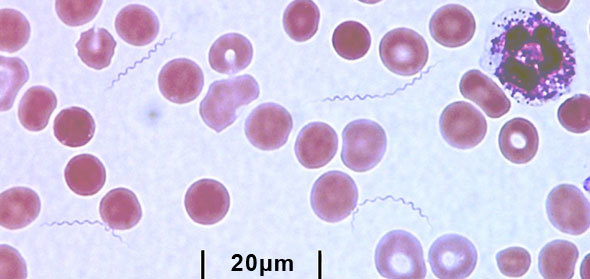
- Visualize the organism in blood during febrile period
- Direct staining of blood smears by Giemsa or Wright procedures
- Darkfield microscopy (uncommon)
- Serology by EIA or immunoblot
- Methods are not standardized
- Serum samples should be sent to the CDC
Relapsing Fever
Treatment and Prevention
- Tx w/ Tetracycline or Erythromycin
- Endemic form - 5% mortality
- Epidemic form - 40% mortality
- Preventative measures include delousing, de-ticking and control

-
Ophthalmology47
-
Pharmacology of the Eye30
-
Soft Tissue Pathology46
-
Joint Pathology30
-
Arthritis101
-
Gout Treatment20
-
Rheumatoid Arthritis Treatment46
-
Borrelia22
-
Bone Pathology91
-
Osteomyelitis7
-
Metabolic Bone Disease19
-
Back Pain24
-
Eicosanoids18
-
NSAIDs31
-
Local Anesthetics27
-
Muscle Relaxants30
-
Opiods47
-
Gender Differences in Pain18
-
Autoimmune Diseases73
-
Vasculitis45
-
Viruses Causing Exanthums16
-
Leprosy9
-
Bacterial Zoonotics63
-
Dermatopathology81
-
Fundamentals of Dermatology1
-
Common Dermatologic Conditions0
-
Skin and Soft Tissue Infections31
-
Mycoses38
-
Anaerobic Infections30
-
Herpes, Varicella, and Small Pox34
-
Ectoparasites21
-
Transfusion Medicine18
-
Pediatric Tumors29
-
Malignant Hematology23
-
Leukemia54
-
Lymphoma58
-
Stem Cell Disorders41
-
Plasma Cell Dysrasias11
-
Intro to Oncology0
-
Cancer Treatment30
-
Pharmacogenetics10
-
Latent Viruses26
-
Immunocompromised Hosts29



