Nociceptive Pain
- Early warning system for a potentially damaging stimulus
- Includes inflammatory pain
- Ideally promotes healing of injured tissue
Neuropathic Pain
- Maladaptive, persistent, and recurrent
- PNS or CNS damage ⇒ abnormal sensory processing
- Pain is real but no anatomic lesion present
NSAIDs
Indications
- Acutely for nociceptive pain
- Provide pain relief
- Reduce inflammation and feve
- Chronically for inflammatory pain
- Reduce inflammation caused by osteoarthritis, rheumatoid arthritis, ankylosing spondylitis
- Do not stop the progression of the disease
NSAIDs
MOA
⊗ Cyclo-oxygenase
Responsible for the production of inflammatory mediators
COX converts arachidonic acid → prostaglandins
Two isozymes ⇒ COX I and COX II
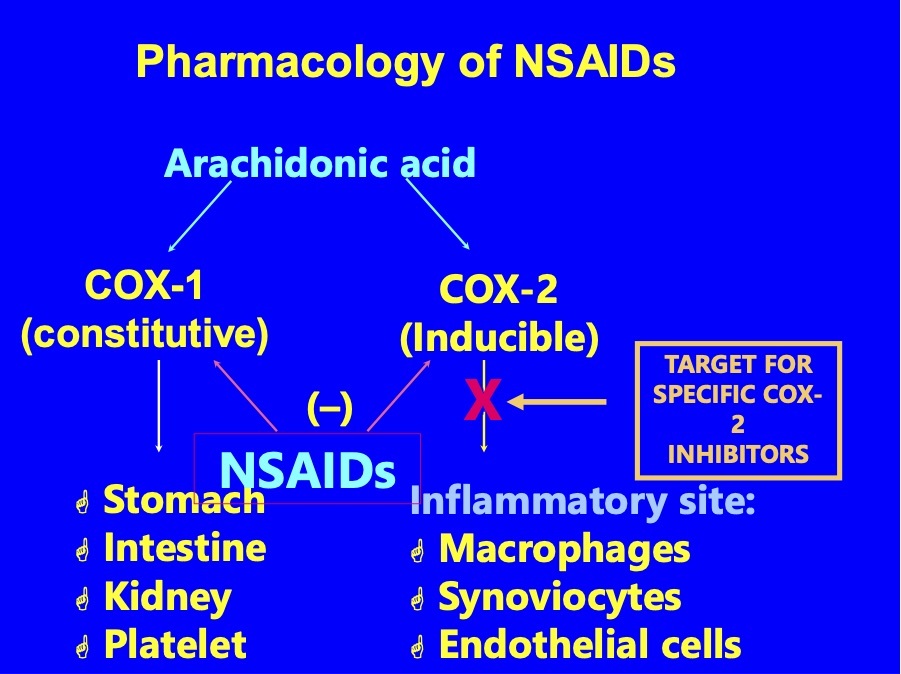
COX Products
Effects
- COX I is constitutively active
- GI protection
- PGI2 ⇒ ⊗ acid secretion
- PGE2 & PGF2α ⇒ ⊕ mucus synthesis
- Platelet function
- TXA2 ⇒ ⊕ aggregation
- Regulates renal blood flow
- Prostaglandins ⇒ vasodilation
- Balances the effect of vasoconstrictors
- Prostaglandins ⇒ vasodilation
- GI protection
- COX II is an inducible enzyme
- Responsible for producing prostaglandins that mediate pain, inflammation, and fever
NSAIDs
Actions
3 main pharmacological actions:
- Analgesia for mild to moderate pain
- PGE2 ⇒ ↑ terminal membrane excitability @ site inflammation ⇒ sensitization of nerve endings to chemical mediators
- NSAID’s ⊗ peripheral PGE2 production ⇒ ↓ sensation of pain
- May be used in combo with opioids
- Anti-inflammatory
- Infection or injury ⇒ WBC infiltration ⇒ prostaglandin production ⇒ vasodilation & ↑ permeability of post-capillary venules ⇒ edema
- NSAIDS ⊗ COX ⇒ ↓ production
- Antipyretic
- Inflammation ⇒ pyrogens ⇒ ↑ PGE2 in the hypothalamus
- ↓ PGE2 ⇒ ↓ fever when hypothalamic set point is elevated
- Do not affect temperature in healthy individuals
NSAIDS
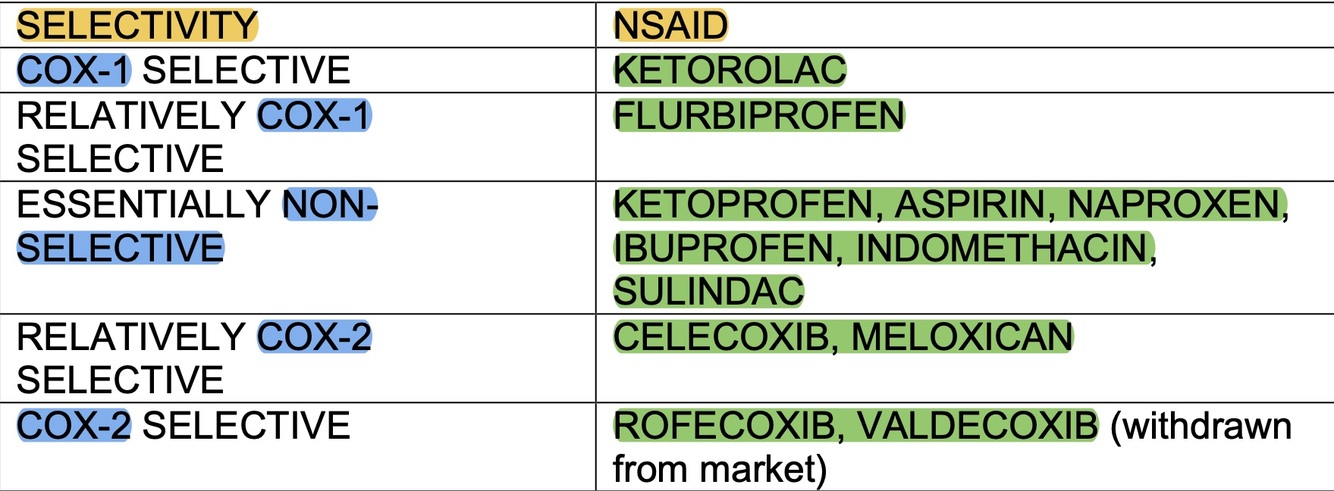
Selectivity
COX II ⊗ most important for therapeutic effect
Always used @ concentration that will ⊗ COX II
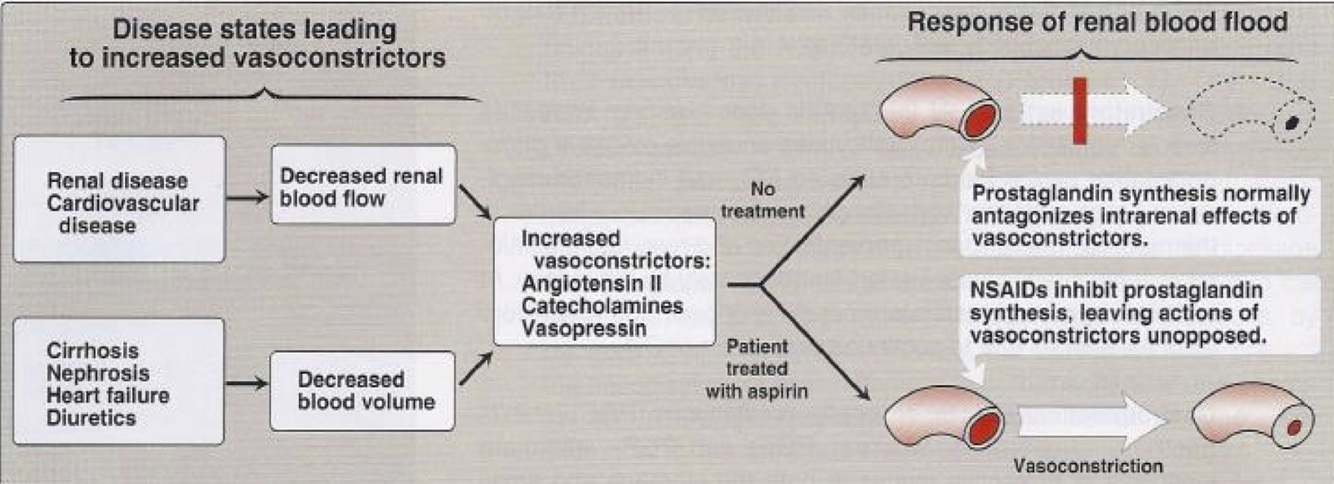
Renal
Adverse Effects
- Hypovolemia, cirrhosis, heart failure, diuretics, renal and CV disease ⇒ ↑ vasoconstrictors such as Ang II and catecholamines
- Prostaglandins antagonize the intrarenal effects of vasoconstrictors ⇒ maintains blood flow
- NSAIDs ⊗ prostaglandin synthesis ⇒ allows vasoconstriction to predominate
- Can lead to acute renal failure
Gastrointestinal
Adverse Effects
GI bleeding and ulcers
NSAIDs irritate the lining of the GI tract via several mechanisms:
Many are weak acids ⇒ traps H+ inside gastric mucosal cells ⇒ topical effect on stomach lining
⊗ of prostaglandin synthesis ⇒ ↓ gastric mucous synthesis & ↑ acid secretion
↓ TXA2 ⇒ ↓ platelet aggregation ⇒ ↑ risk of GI bleeds
Prevention of GI irritation
Misoprostol is prostaglandin agonist which reduced the risk of gastric
and duodenal ulcers
It may also cause diarrhea. It induce abortions in
women.
Proton pump inhibitors reduce acid secretion. Generally, they have few
adverse effects but they can cause diarrhea, constipation, abdominal pain, headache, and long-term use may lead to stomach infections. They can also inhibit the absorption of vitamins and ions that are dependent on an acid environment.
GI Adverse Effects
Prevention
- Misoprostol ⇒ prostaglandin agonist
- ↓ Risk of gastric and duodenal ulcers
- May also cause diarrhea
- Induce abortions in women
- Proton pump inhibitors ⇒ ↓ acid secretion
- Can cause diarrhea, constipation, abdominal pain, headache,
- Long-term use may lead to stomach infections
- ⊗ Absorption of vitamins and ions that are dependent on an acid environment
Platelet Function
Adverse Effects
Inhibition of platelet function
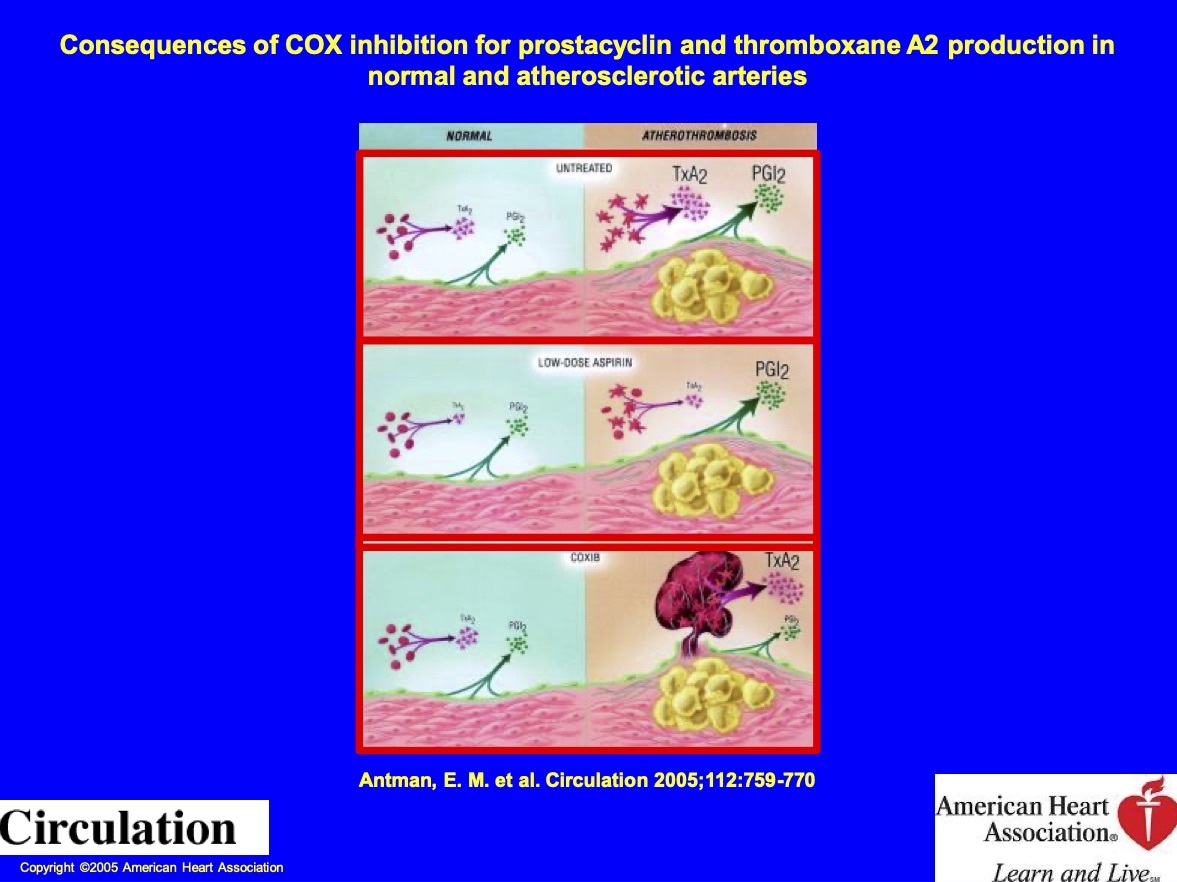
- COX-1 in platelets ⇒ TXA2 production ⇒ ↑ platelet aggregation
- COX-2 in endothelial ⇒ PGI2 production ⇒ ↓ platelet aggregation
- Platelets cannot make more COX but endothelial cells can
- Aspirin irreversibly ⊗ in platelets
- Prevents MI by causing a long-lasting ⊗ of platelet aggregation
- Other NSAIDs ⇒ transient ⊗ of COX
- Can ⊗ antiplatelet action of ASA by blocking access to COX
Cardiovascular
Adverse Effects
- All NSAIDS except ASA
- Low-dose ASA platelet specific
- ↑ risk of serious CV thrombotic events, MI and stroke
- Risk ↑ w/ duration of use & underlying CV disease
- Due to an imbalance between actions of TXA2 and PGI2
- COX-II selective inhibitors ⇒ ⊗ PGI2 production in endothelial cells w/o sign. ⊗ of TXA2 in platelets ⇒ ⊕ platelet aggregation and clot formation
- Rofecoxib & Valdecoxib removed from market d/t cardiotoxicity
- May also be related to ∆ endothelial function, oxidative stress, and renal effects
Aspirin
(Acetylsalicylic acid)
Indications
- Low-dose (80 mg/day) used prophylactically to ↓ risk of MI & CVA
- Used for low intensity pain, to reduce fever, and as an anti-inflammatory (325 to 650 mg)
- Used to reduce inflammation in RA (1 to 4 g/day)
- Long-term use at low doses ⇒ ↓ incidence of colon cancer and possibly other cancers
Aspirin
Pharmacokinetics
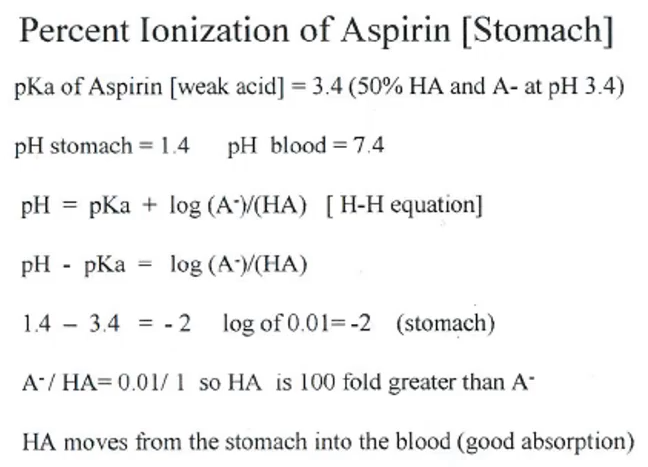
- Readily absorbed from stomach or small intestine
- Weak acid ⇒ uncharged and better absorbed in the stomach
- Surface area of small intestine much greater ⇒ large amount also absorbed there
- Widely distributed in all tissues ⇒ CSF, peritoneal cavity, synovial fluid
- Bound to plasma proteins ⇒ can displace other drugs ⇒ ↑ toxicity
- ASA acetylates albumin
- Deacylated in liver and plasma by esterases → salicylic acid (also an NSAID)
- Low dose (325 to 650 mg) ⇒ T½ = 3 hours min
- High dose (1 g) ⇒ T½ = 15 hours
- D/t saturation of metabolic paths (zero order kinetics)
- Urinary excretion is pH dependent
- Sodium bicarbonate ↑ urine pH ⇒ ↑ excretion of salicylic acid (weak acid is charged at alkaline pH)
Aspirin
Unique Adverse Effects
- Strong ass. b/t ASA taken for viral illnesses and development of Reye’s syndrome
- See confusion, brain swelling, and liver damage
- Salicylism
- Acid-base imbalance
- Gout
- Therapeutic levels ⇒ ↓ uric acid elimination
- Toxic levels ⇒ ↑ uric acid elimination
Aspirin
Hypersensitivity
- Aspirin-exacerbated respiratory disease (AERD)
- Low incidence in general population
- ↑ to ~ 20% in asthma & higher in pts w/ asthma + nasal polyps
- Likely d/t shift of arachidonic acid metabolism to leukotriene pathway
- Aspirin induced urticaria/angioedema
- May be due to histamine release
- True anaphylaxis is rare
Aspirin
High Therapeutic Doses
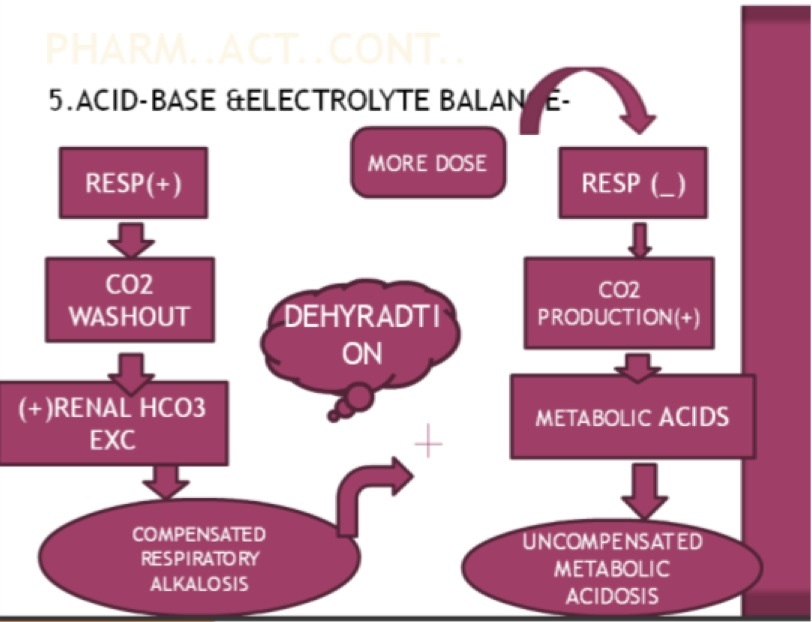
- Uncouples ox. phos. mainly in skeletal muscle ⇒
- ↑ O2 consumption ⇒
- ↑ metabolic production of CO2 ⇒
- ⊕ Respiration by ↑ CO2 & a direct effect on respiratory center ⇒
- Hyperventilation ⇒ respiratory alkalosis ⇒
- Renal compensation via HCO3- excretion ⇒
- Fever, dehydration, hypokalemia ⇒
- Compensated respiratory alkalosis
Aspirin Poisoning
Moderate Doses
Moderate toxicity causes salicylism
Symptoms:
Sweating
Vomiting
Epigastric pain
Tinnitus
Blurred vision
Aspirin Poisoning
Toxic Doses
- High concentrations depress the respiratory center ⇒
- Retention of CO2 ⇒
- Plasma HCO3- is already low, so retention of CO2 leads to an uncompensated respiratory acidosis ⇒
- Superimposed on a metabolic acidosis d/t build up of pyruvic,
- lactic and acetoacetic acids and aspirin itself ⇒
- Fever, dehydration, hypokalemia
Aspirin Poisoning
Management
- Therapeutic levels usu. < 300 ug/ml
- Mild or moderate salicylism (500-750ug/ml)
- Requires only oral or IV rehydration
- Particular attention to K+ supplements
- Marked signs/symptoms of salicylism or levels > 750 ug/ml
- Requires specific elimination therapy
- Oral activated charcoal
- Alkalinization of urine
- Hemodialysis is required for any of the following:
- Levels > 1,000 mg/ml (7.25 mmol/l)
- Persistent/progressive acidosis
- Deteriorating level of consciousness
- Requires specific elimination therapy
Ibuprofen
- ~ Equal to ASA for relief of arthritic pain
- Lower frequency of GI irritation
- Used for rheumatoid arthritis and osteoarthritis
- 2,400 mg/day is anti-inflammatory
- Lower doses have analgesic properties
- May also be used for PDA
- Concomitant use with ASA may limit anti-inflammatory and anti-platelet effect
- Cross allergy with aspirin
- Naproxen also in this category of drugs
Indomethacin
- Very potent COX inhibitor
- Significant GI toxicity
- Indications:
- For moderate to severe arthritis pain
- Reserved for use in gouty arthritis, ankylosing spondylitis, and osteoarthritis of the hip
- May also be used for PDA
- For moderate to severe arthritis pain
- Sulindac is a prodrug related to indomethacin
- Side effects less severe
Ketorolac
- Only NSAID available for IM admin
- Also given intranasal and PO
- For moderate to severe pain (e.g. postoperative pain)
- Analgesic potency equal to a moderate dose of morphine
- Not used as an anti-inflammatory
- Short-term use only (1-5 days)
- High level of GI upset, renal effects, risk of bleeding
- Do not use before surgery
Celecoxib
Relatively COX-2 selective
Anti-inflammatory & analgesic w/o GI damage
Indications:
- OA and RA in adult patients
- Management of acute pain in adults
- Treatment of primary dysmenorrhea
- Management of familial adenomatous polyposis (FAP)
- ↓ # of adenomatous colorectal polyps


-
Ophthalmology47
-
Pharmacology of the Eye30
-
Soft Tissue Pathology46
-
Joint Pathology30
-
Arthritis101
-
Gout Treatment20
-
Rheumatoid Arthritis Treatment46
-
Borrelia22
-
Bone Pathology91
-
Osteomyelitis7
-
Metabolic Bone Disease19
-
Back Pain24
-
Eicosanoids18
-
NSAIDs31
-
Local Anesthetics27
-
Muscle Relaxants30
-
Opiods47
-
Gender Differences in Pain18
-
Autoimmune Diseases73
-
Vasculitis45
-
Viruses Causing Exanthums16
-
Leprosy9
-
Bacterial Zoonotics63
-
Dermatopathology81
-
Fundamentals of Dermatology1
-
Common Dermatologic Conditions0
-
Skin and Soft Tissue Infections31
-
Mycoses38
-
Anaerobic Infections30
-
Herpes, Varicella, and Small Pox34
-
Ectoparasites21
-
Transfusion Medicine18
-
Pediatric Tumors29
-
Malignant Hematology23
-
Leukemia54
-
Lymphoma58
-
Stem Cell Disorders41
-
Plasma Cell Dysrasias11
-
Intro to Oncology0
-
Cancer Treatment30
-
Pharmacogenetics10
-
Latent Viruses26
-
Immunocompromised Hosts29



