cranial volt hold - list the placement of the following fingers:
- index finger
- middle finger
- ring finger
- little finger
- index - GW sphenoid
- middle - temporal bone, anterior to ear
- ring - temporal bone, mastoid area
- little - squamous occiput
what is the placement of each finger when doing a vault hold?
- index - GW sphenoid
- middle - temporal bone, anterior to ear
- ring - temporal bone, mastoid area
- little - squamous occiput
in a cranial vault hold, which finger is placed on the greater wing of the sphenoid?
the index finger
in a cranial vault hold, which finger goes on the squamous occiput?
the little finger
cranial flexion / extension: sphenoid an occiput move in
- [same / opposite] directions
- around a […] axis
- opposite
- two horizantal
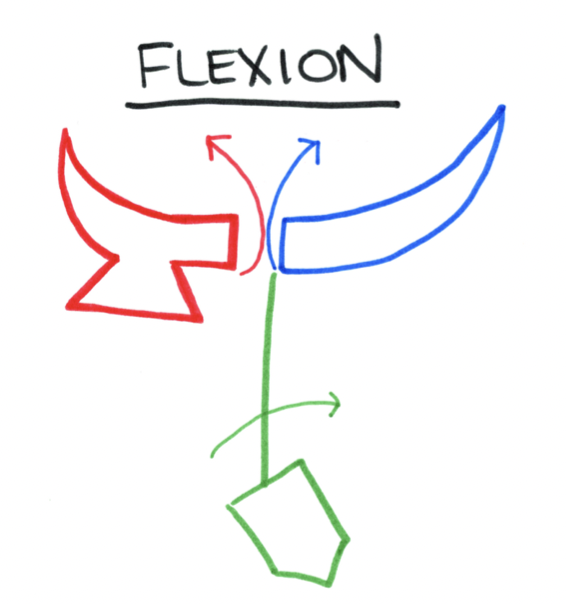
in cranial flexion, the sphenoid and the occiput both […] moving in […] directions around […] axis, resulting in a
- […] AP axis
- […] transverse axis
- […] sacrum
externally rotate, opposite directions, two horizantal axes
- short AP axis
- wide transverse axis
- counternutated (extended) sacrum
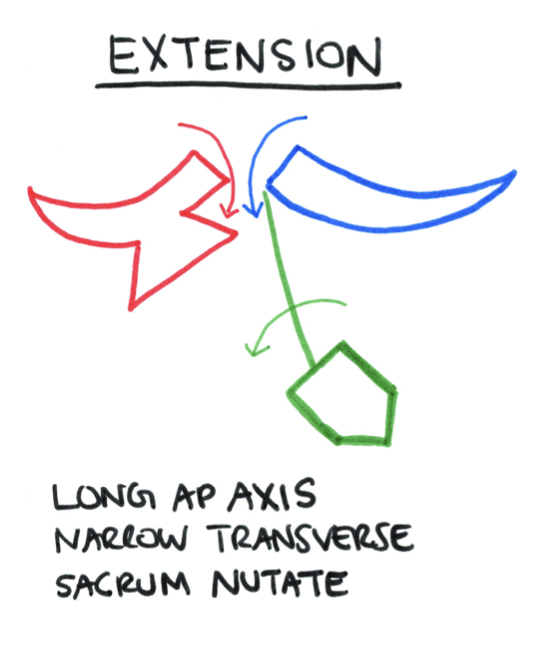
in cranial extension, the sphenoid and the occiput both […] moving in […] directions around […] axis, resulting in a
- […] AP axis
- […] transverse axis
- […] sacrum
internally rotate, opposite directions, two horizantal axis
- long AP axis
- narrow transverse
- sacral nutation (flexion)
cranial flexion vs extension
- internal rotation / external rotation
- short AP axis / long AP axis
- wide transverse / narrow transverse
- sacrum nutation / sacrum counternutation
- flexion - ER, short AP, wide transverse, counternutation
- extension - IR, long AP, narrow transverse, nutation
in flexion, your index and little finger will move […] one another and towards […] and in extension, your index will little finger will move […] one another and towards […]
- away from, the patients feet
- towards, the patients head
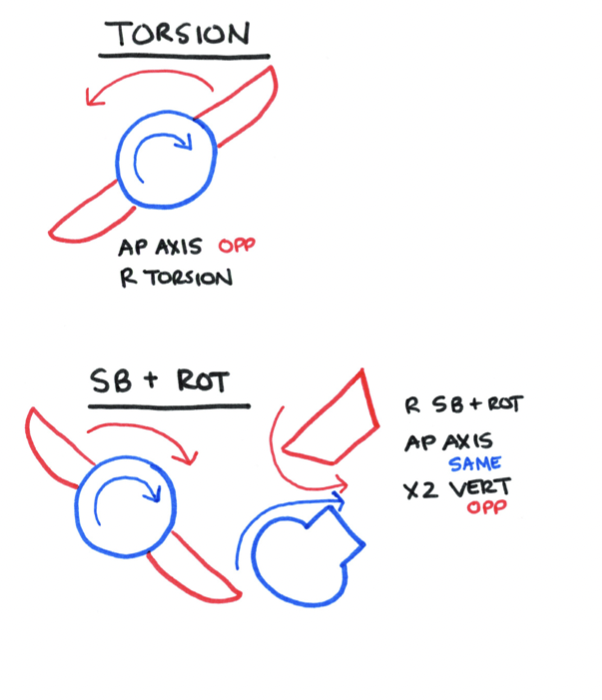
in cranial torsion, the sphenoid and the occiput rotate in the […] direction around a […] axis
opposite
singular AP axis
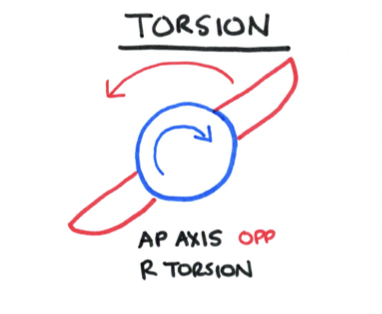
in cranial torsion, a right vs left torsion is diagnosed based on […]
which GW of the sphenoid (i.e., the index finger) is more superior
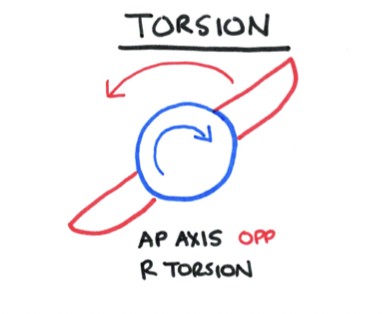
in palpation of cranial torsion, a right vs left cranial torsion dx is made based off which […] finger is more superior
index
in a cranial sidebending & rotation dysfunction, the sphenoid and occiput move in […] directions around a […] axis
- same direction around an AP axis
- opposite directions around two vertical axis
in a sidebending and rotation dysfunction, the sphenoid and occiput move in […] directions around an AP axis
the same
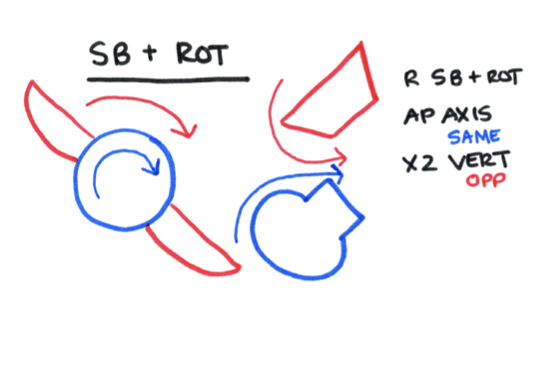
in a cranial sidebending & rotation dysfunction, right vs left dysfunction is named based off of […]
the side of the SBS that is convex, or
which palpating hand moves into exaggerated flexion
in a cranial sidebending and rotation dysfunction, a right vs left diagnosis is made based on the hand that moves into exaggerated […], which is when the index and little finger move […]
flexion
apart and towards the patients feet
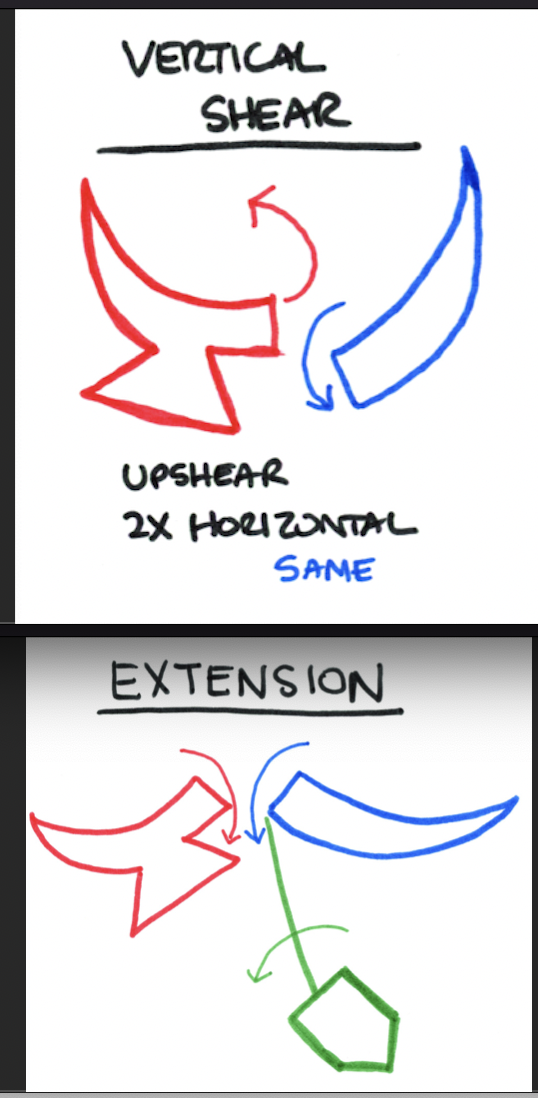
in a vertical shear, the sphenoid and the occiput move in the […] direction around a […] axis
same
two horizantal axis
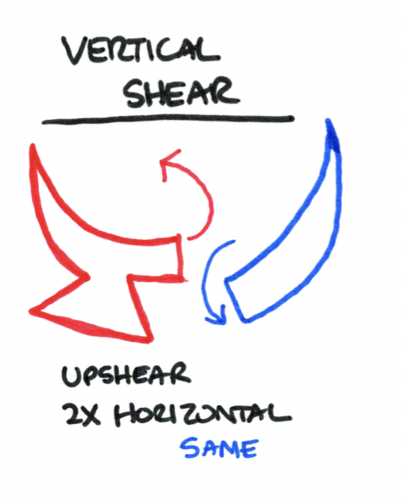
in a vertical shear, diagnosing an upshear vs downshear is based on the […]
the directionality of the sphenoid (inferior vs superior) at the SBS - if the portion of the sphenoid at the SBS is located more superior than the occiput, its an upshear
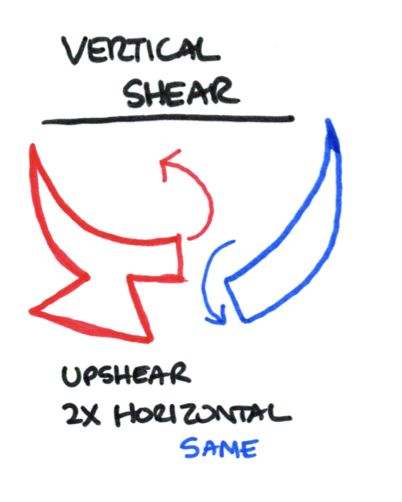
in a cranial upshear, the […] is […] at the […], and in a cranial downshear, the […] is […] at the […]
- sphenoid, inferior to the occiput, SBS joint
- sphenoid, superior to the occiput, SBS joint
in palpation of a cranial vertical shear, an upshear vs downshear diagnosis is made based on […]
the direction of the scooping motion - scoop up is an upshear
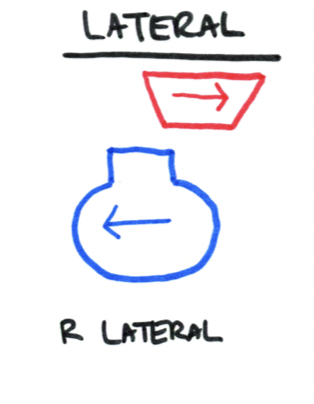
in a lateral shear, the sphenoid and the occiput move […] in […] directions
lateral to the SBS
in opposite directions
which shears involve movement around a horizantal axis?
- flexion / extension - opposite directions
- vertical shear - same direction
which two shears involve movement around an AP axis?
- torsion - opposite directions
- sidebending - same direction
CRI (cranial rythmic impulse) is normally […]
8-12 / minute




