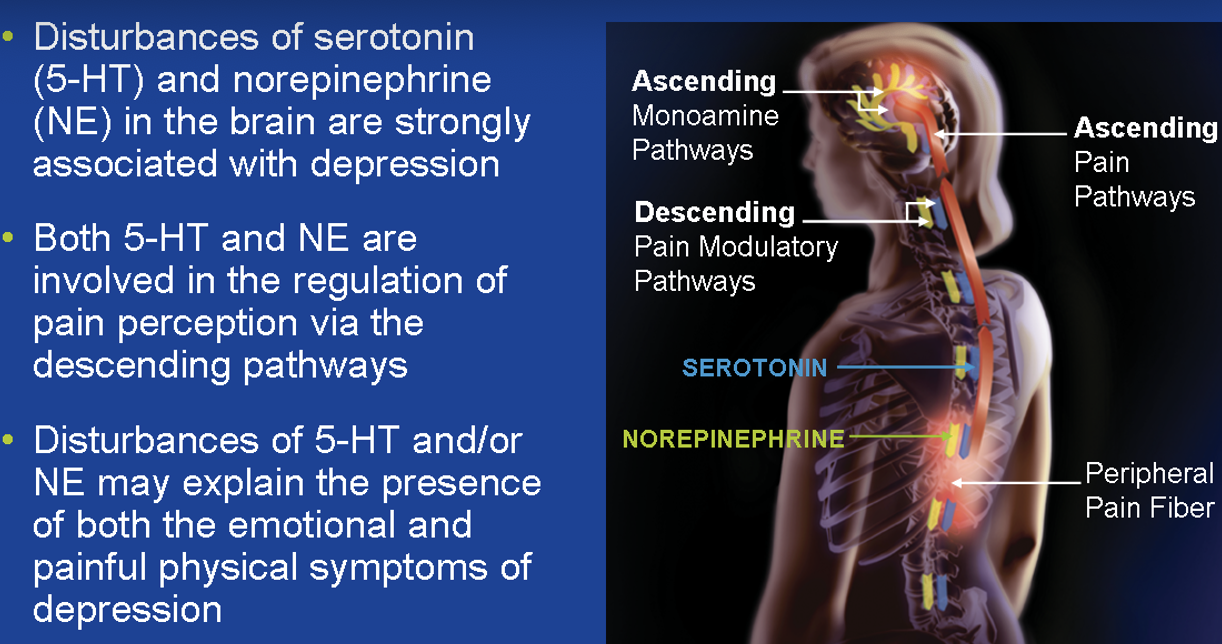
Neurochemical link between emotional and painful physical symptoms in depression
5-HT & NE are involved in pain perception → depression decreases these → more pain is preceived
Link between depression and cardiovascular disease
- Increase risk of development
- Worse prognosis
(possible increase in platlet activation & reactivity)
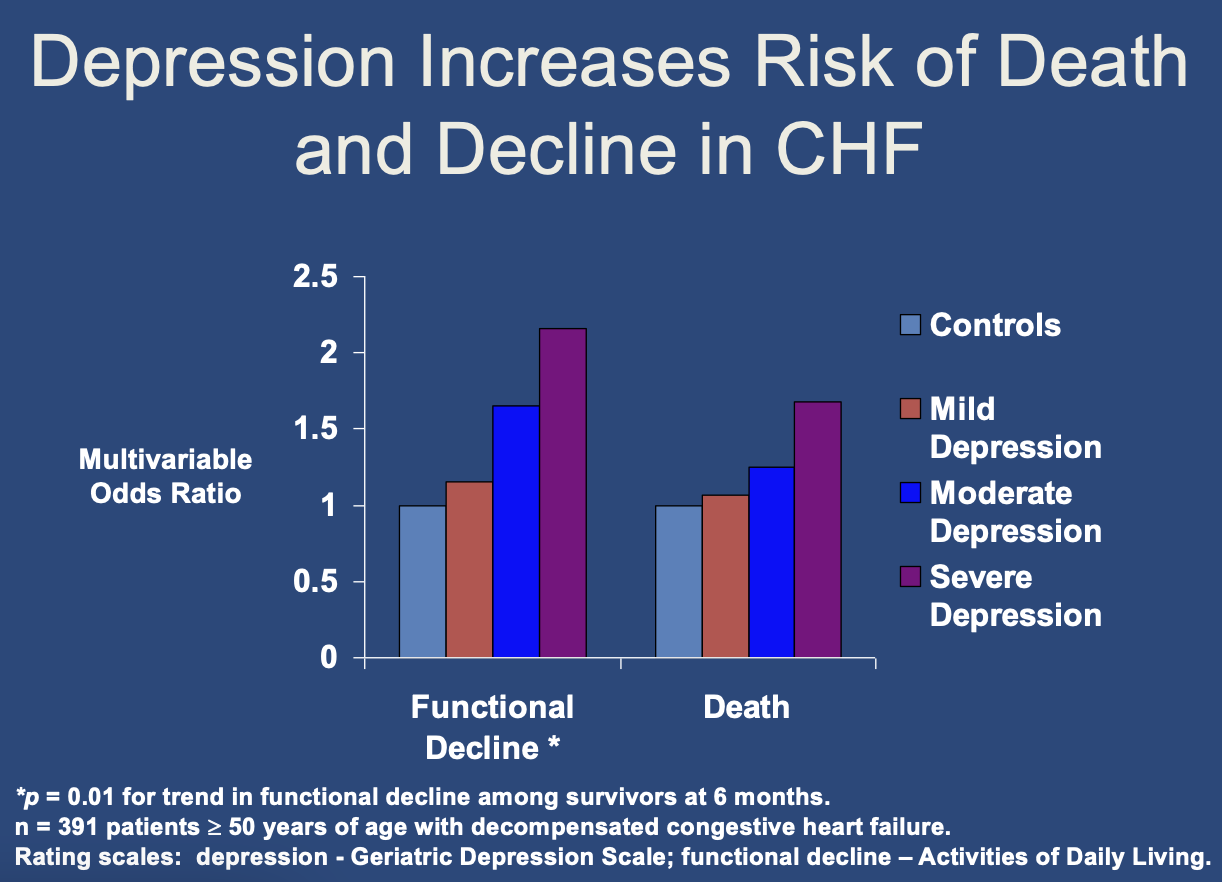
Depression and risk of death in congestive heart failure
(less likely to recover from MI as well. They can’t take care of themselves)
Depression and platelet activation link (in comorbid pts w/depression & ischemic heart dz).
- Enhance his baseline platelet activation & responsiveness
(Platelet Factor 4 & beta-thromboglobulin)
Depression and diabetes link
- Increase risk of diabetes 20%
- Pts w/diabetes 30% risk of depression, 50 % if on insulin
(association not causation)
Why do patients with develop (3)?
- Diabetic management is stressful
- Depression may interfere with blood sugar monitoring
- Patients feel bad when they don’t comply with doctor’s instructions
(to help them, it is important to guide them away from negative thinking, i.e. “one more sign that I’m a failure”)
Depression and anxiety increase the risk of hypertension by ____.
~ 1.8 xs
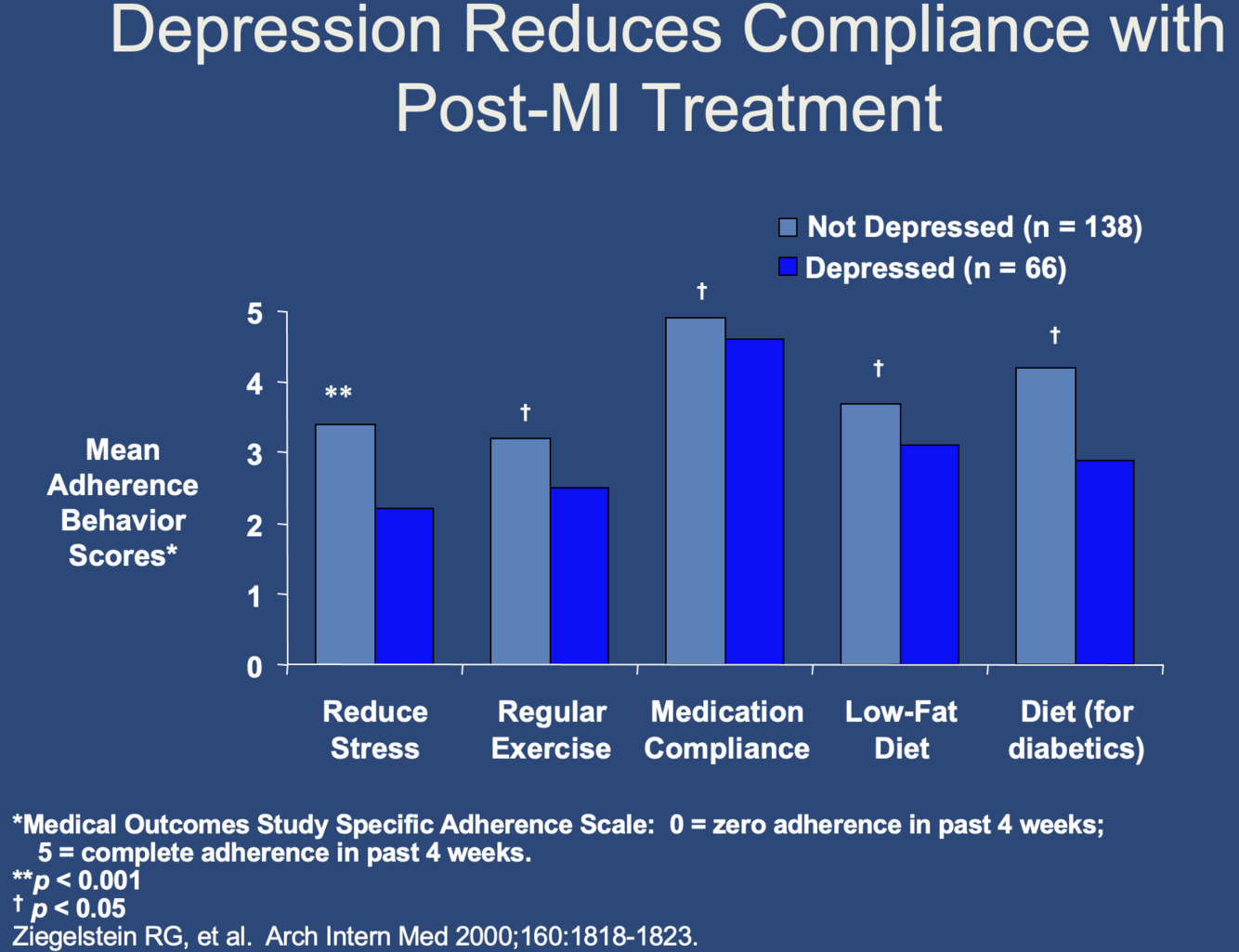
How does depression hinder self-management of medical illness?
- 40% less likely to quit smoking
- Coronary artery disease patients less likely to take low-dose aspirin
- Post MI patients less likely to stick w/exercise program
Immunologic effects of depression (3).
- Reduce natural killer cell activity
- Decrease in adaptive immune measures
- Decreased CD4 T-cells (HIV pts)
(Increased mortality for patients in skilled nursing facility & post-strok)
Comorbidities with depression more common in men
Alcohol & substance use disorder
(ex: stim, weed, hallucinogens)
Comorbidities with depression more common in women
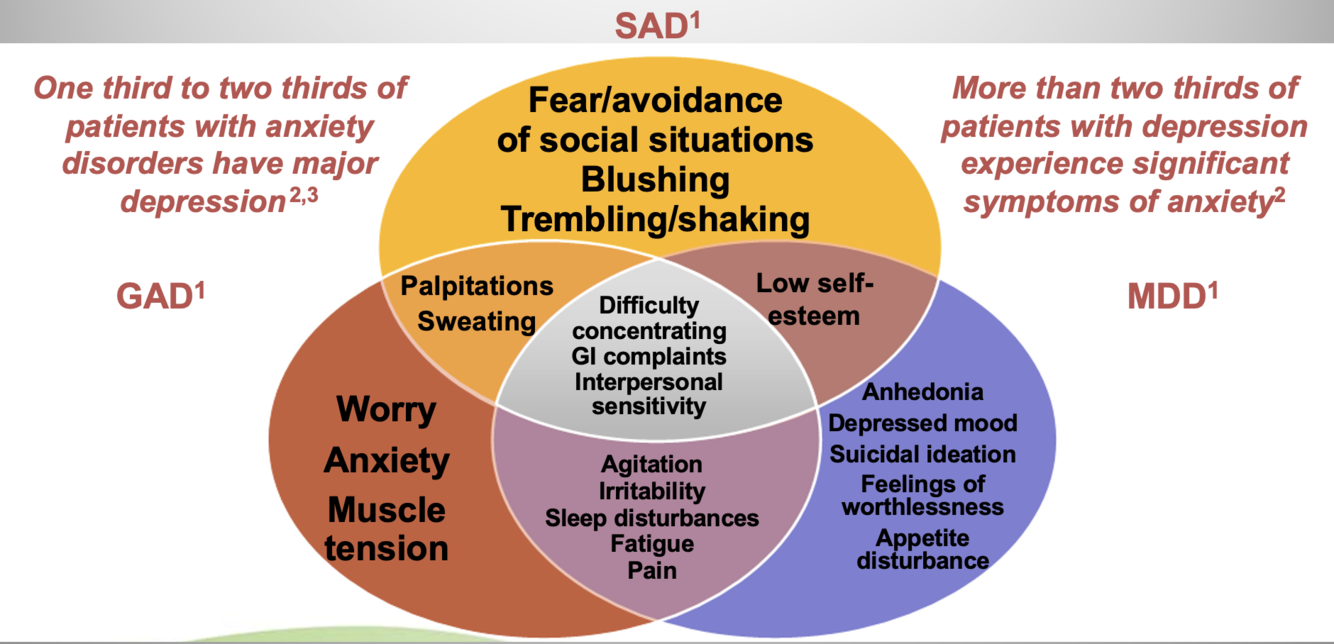
- Panic disorder
- Generalized Anxiety Disorder
- Social phobia
- Bulimia
- Thyroid disease
- Migraine
- Fibromyalgia
- Chronic fatigue syndrome
Depression: differential diagnosis: bereavement, dementia, _____(4).
- Schizophrenia
- Anxiety
- Substance abuse
- Bipolar disorder
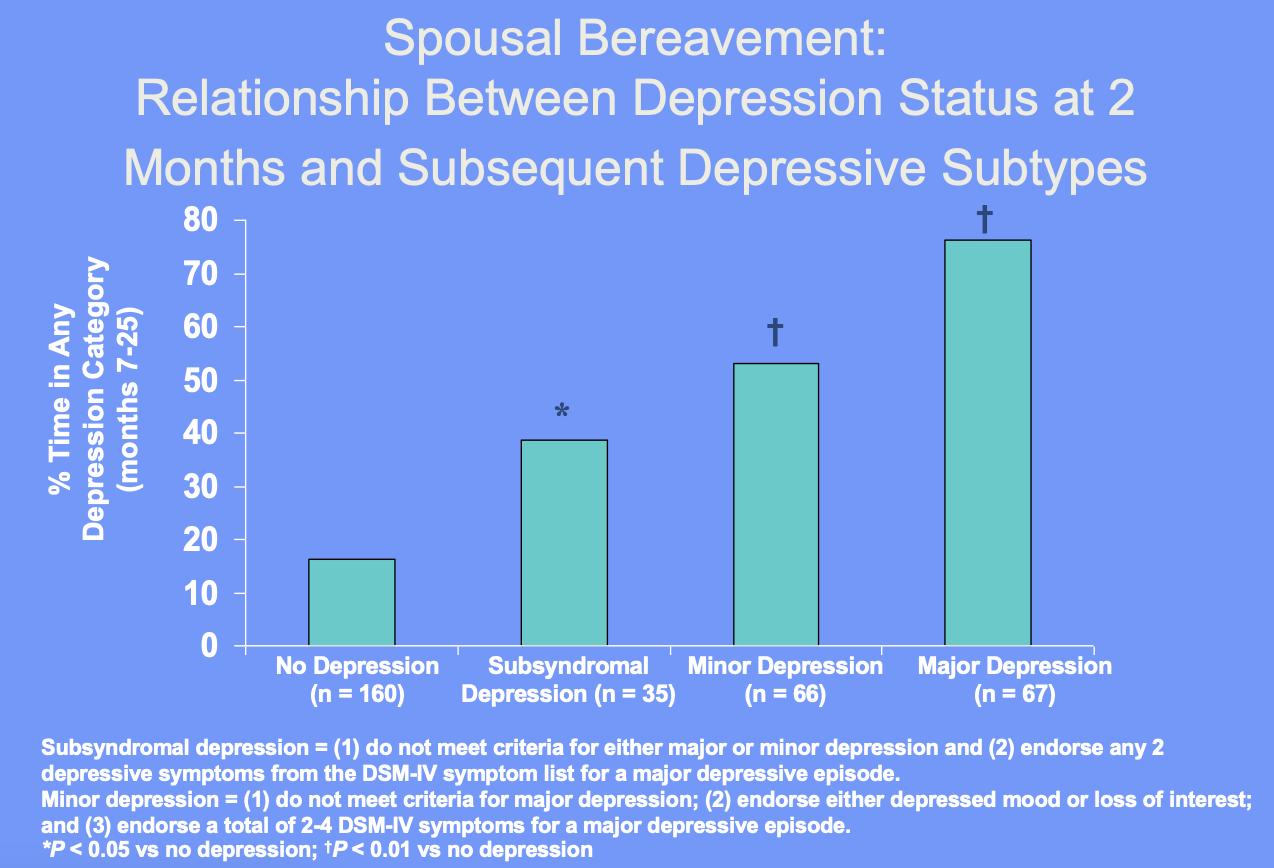
If a bereft person meets the criteria for major depressive disorder after _______, they are likely to develop depression.
2 months time
What is the link between long-term brain injury and depression?
Prolonged depression may results in progressive and cumulative brain damage
(this may indicate that chronic depression may not be a fully reversible disorder)
When do symptoms of seasonal affective disorder emerge?
fall and winter
Symptoms of seasonal affective disorder
- Lethargy
- Fatigue
- Hypersomnia
- Overeating
Persistent depressive disorder (dysthymia) onset and duration criteria
Depressed mood most of the day, and more days than not for at least 2 years
Persistent depressive disorder (dysthymia) symptom criteria
Must have at least 2 of the following: (and not w/o sx > 2mo. out of the year)
- low self-esteem
- feelings of hopelessness
- insomnia or hypersomnia
- low energy or fatigue
- poor concentration or difficulty making decisions
- poor appetite or overeating
(low self-esteem & hopelessness aren’t in SIG:ECAPS; may also have had MDD in the past if it ended in remission)
What are the differences in the DSM-V diagnosis for dysthymia in children?
- Depressed or irritable mood most of the day, more days than not
- For at least 1 year
- Not w/o sx for 1 the year): Depressed + … 2 of the same symptoms seen in adults
(appetite, sleep, Energy, self-esteem, concentraion/decision making, hopelessness)
Two groups of children that present with Dysthymia (old term = “depressive neurosis”)
- Since childhood or late adolescence
- Those who appear healthy when young but experienced major loss and fall into a state of demoralization
(10% each year will develop MD episode)
Dysthymia (aka persistant depressive disorder) life prevalence
- Women: 4%
- Men: 2%
Disruptive mood dysregulation disorder behaviors: (3)
- Severe recurrent temper outbursts (verbal or physical)
- Inconsistent with developmental level
- 3 or more times per week
Disruptive mood dysregulation disorder onset and course
- Outburst is persistently irritable or angry most of the day, nearly every day
- Sx present 12 or more months without a period of 3 months or more w/o sx
- Age of onset before 10 y.o.
Diagnosis of Disruptive Mood Dysregulation Disorder should not be made before the age of ____ or after the age of _____.
- Six
- Eightteen



-
Intro46
-
Mental Status Exam26
-
Anti-depressants55
-
Anti-depressants 255
-
Depression 147
-
Depression 239
-
Depression 382
-
Bipolar 124
-
Bipolar 244
-
Bipolar 3: Tx47
-
Psychotherapy 115
-
Psychotherapy 2 Types of Therapy67
-
Antipsychotics87
-
Schizophrenia 146
-
Schizophrenia 2: Subtypes49
-
Schizophrenia 3: Meds & Side Effects77
-
Anxiety41
-
Anxiety 221
-
Anxiety 356
-
Anti-anxiety Meds56
-
Drugs of Abuse 138
-
Drugs of Abuse 247
-
Suicide65
-
Substance Use Disorders 147
-
Substance Use Disorder 270
-
Substance Use Disorder 357
-
Personality Disorders 141
-
Personality Disorders 229
-
OCD39
-
Adjustment Disorder43
-
Trauma39
-
Violence36
-
Dissociative Disorders33
-
Somatoform39
-
Legal - Forensic Psychiatry49



