C. difficile: Bacteriology and Pathogenesis
- Ingested spores survive gastric acid barrier and germinate in the colon
- Associated with acid-reducing agents
- Colonization occurs after alteration of normal
intestinal microbiota, usually by antibiotics
• 1/3 to 2/3 of colonized patients develop clinical
symptoms
Bacillus spp. characteristics
Aerobic Gram-positive, large rods
- Spore forming
- Predominantly found in soil
- Can be contaminants in laboratory cultures but can also cause infection in compromised hosts
- B.cereus group includes Sub-sp B.cereus, B.thuringiensis, B.anthracis.
Necrotising Soft Tissue Infections pathogens
- Group A strep is principal cause
- Klebsiella spp.
- Clostridium perfringens
- E. coli
- Staphylococcus aureus
Noroviral acute gastroenteritis timeline
- Incubation period 24- 48h
- Infectious period – 4h before symptoms to
48h after resolution of symptoms
Noroviral acute gastroenteritis sx
- Clinical features: nausea, abdominal pain, vomiting ( projectile), watery diarrhoea, fever, myalgia, headache..
- Sometimes just nausea and ? indigestion,
sometimes only diarrhoea, and sometimes
no symptoms but still infected (asymptomatic infection)
Chikungunya Virus: Epidemiology
- Humans and Primates are the reservoir
- Usually endemic in Africa, India, Fiji Islands, Mauritius and SE Asia
Chikungunya Virus: Diagnosis, prevention and control
- Diagnosis by virus isolation, RT-PCR and serology
- Prevention, No Vaccine is available, mosquito control
- Asprin is not recommended
C. difficile prevention
- Rational Anti-infective prescribing
- Reduced use of acid-reducing agents
- Commodes & the environment must be clean…
- Hand washing by staff
- Hands of patients can be the vector
- Food services including food from relatives
NDM-1 organism characteristics
Gram-negative bacteria like Klebsiella
C.difficile tx
metronidazole or vancomycin
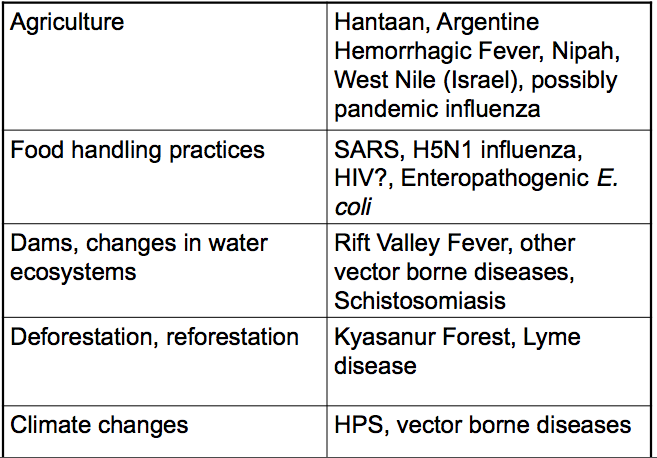
New Opportunities for Pathogens: Ecological Changes
What is NDM-1?
New Delhi metallo-ß-lactamase-1, or NDM-1 for short, is a gene carried by bacteria that makes the strain resistant to carbapenem antibiotics.
C. difficile structure
Gram-positive, spore-forming anaerobic bacillus
Chikungunya Virus: Pathogenesis
- Incubation, 1-12 days (2-3 days common)
- Causes fever (400C/ 1040F), arthritis, Rashes (maculopapular or petechial) and encephalitis
- Counters type I(α andβ) INF by viral NS2 protein
BSE- vCJD characteristics
Origin is scrapie infected sheep or by mutation in cattle
- Either way, animal concentrates fed to cattle triggered the outbreak of BSE
- BSE jumped the species barrier ( if from scrapie) and triggered vCJD
Chikungunya Virus characteristics
Ss+ polarity RNA (Baltimore class IVb)
• Family: Togaviridae
– Genus: Alphavirus (Semliki Forest virus
complex
– Virus:Chikungunya virus
Norovirus another name
Norwalk
MERS-CoV: Epidemiology
4 groups;
– Alpha: Bats
– Beta: Bats
– Gamma: Birds
– Delta: Birds
MERS-CoV: Pathogenicity
- Infects bronchial epithelium
- Evades immune attack
- Antagonistic to INF
- Attaches to CD26 (DPP4) peptide expressed in the bronchial epithelium and the kidneys
Norovirus characteristics
possess single-stranded positive sense RNA genomes.
• Now detected by nucleic acid amplification
MERS-CoV: Virus characteristics
• Ss+ Polarity RNA (Baltimore class IV)
Possibly zoonotic in nature
Hospital water-borne infections
- P. aeruginosa
- Enteric gram-negatives
- Legionella
Opportunities increasing emerging diseases
–Changes in land use
–Rural to urban migration
–Internal displacement
–Globalization of people and goods, travel, international migration
–Medical technologies




