Endocrine Flashcards

(133 cards)

1
Q

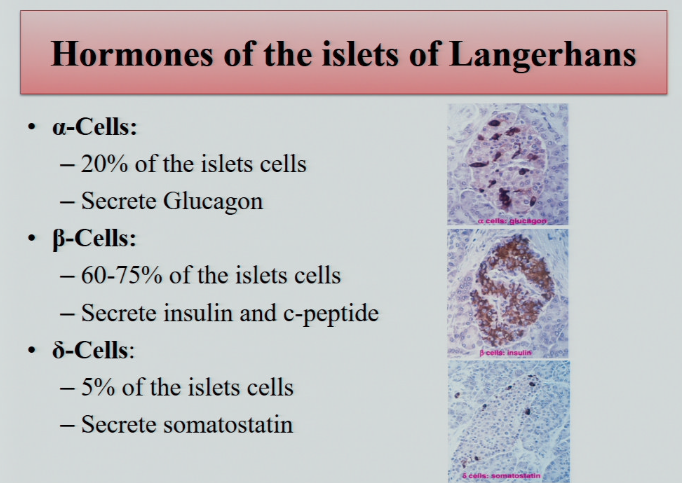
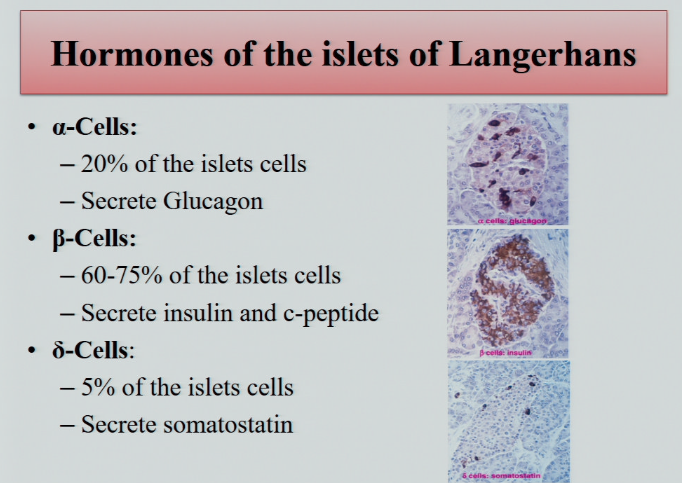
α-cells in the islets of Langerhans secrete ____

A

α-cells in the islets of Langerhans secrete glucagon
2
Q

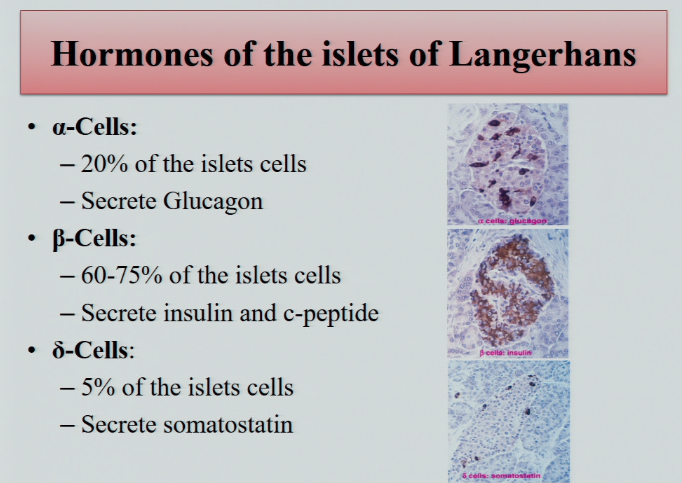
β-cells in the islets of Langerhans secrete ____ and ____

A

β-cells in the islets of Langerhans secrete insulin and c-peptide
3
Q

δ-cells in the islets of Langerhans secrete _____

A

δ-cells in the islets of Langerhans secrete somatostatin
4
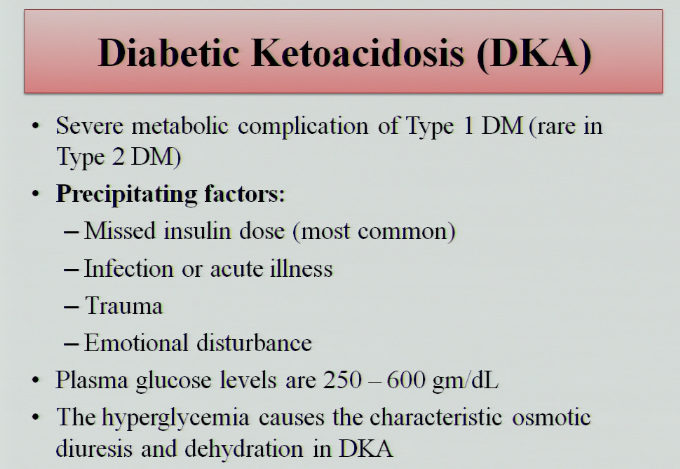
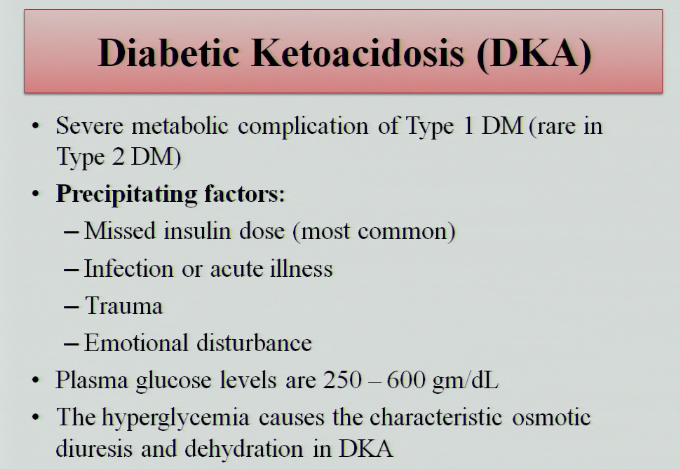
Q

describe the effect of insulin on potassium

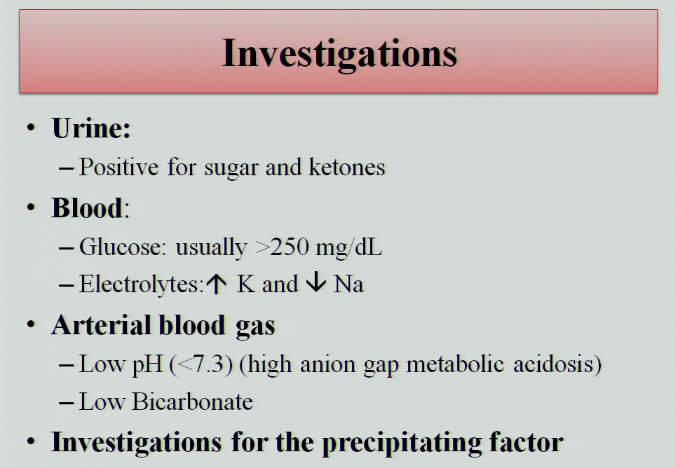
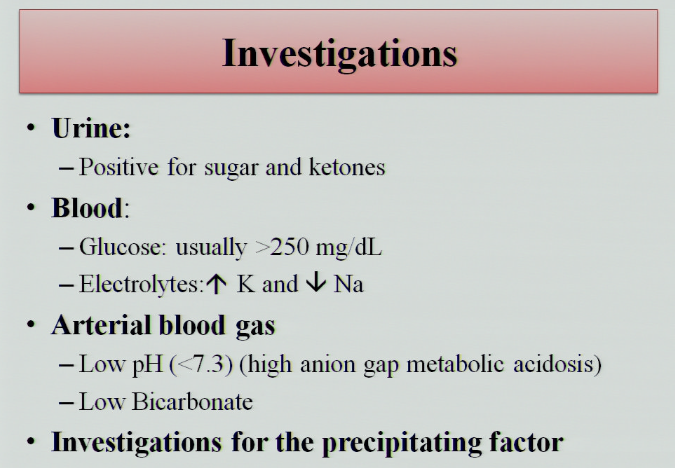
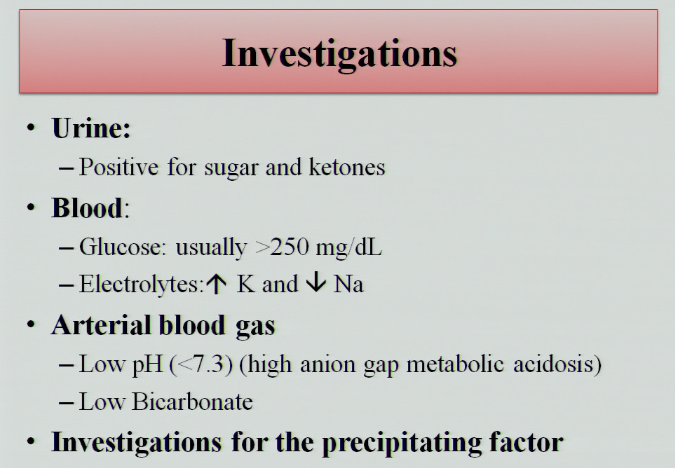
A
  • promotes K+ movement INTO cells
    • increases the action of the Na/K/ATPase
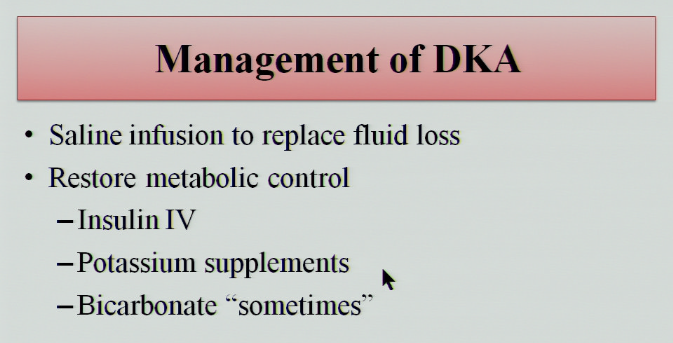
    • this effect is used in treating life-threatening hyperkalemia by co-administering insulin + glucose
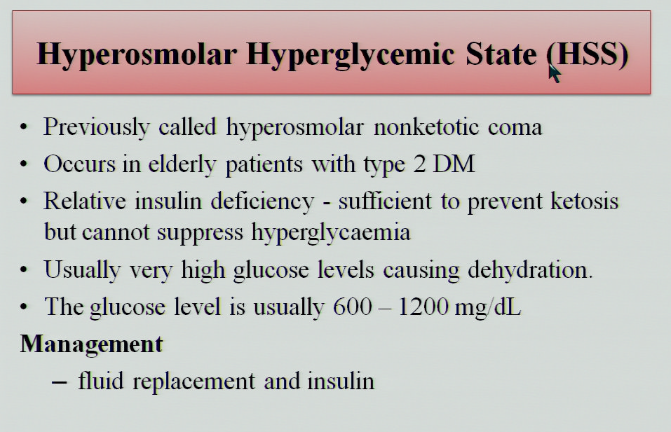
5
Q

insulin promotes K+ movement (into or out of?) cells by ____

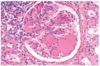
A

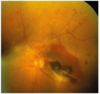
insulin promotes K+ movement into cells by increasing the action of the Na/K ATPase
6
Q

list the infections associated with secondary DM

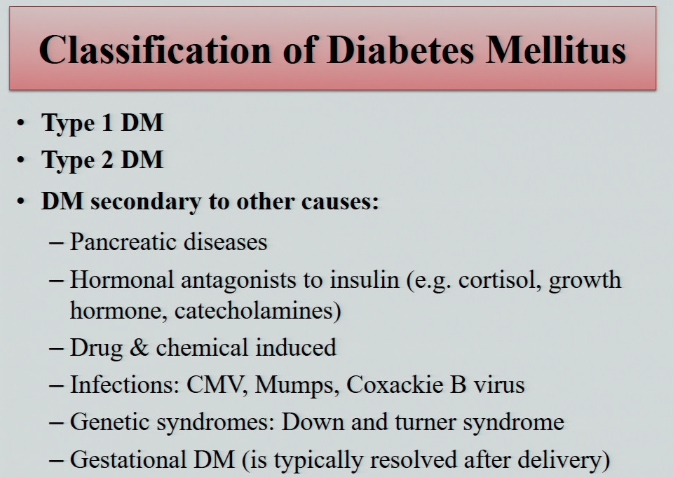
A

CMV

mumps

Coxsackie B virus

7
Q

which 2 genetic syndromes are associated with secondary DM?

A

Down syndrome and Turner syndrome

8
Q

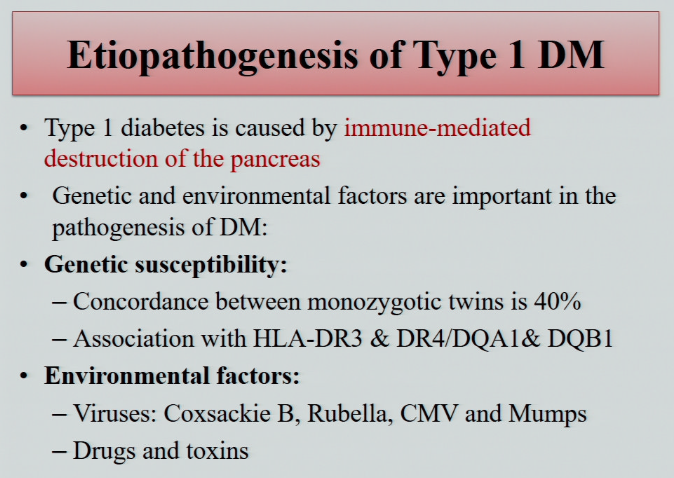
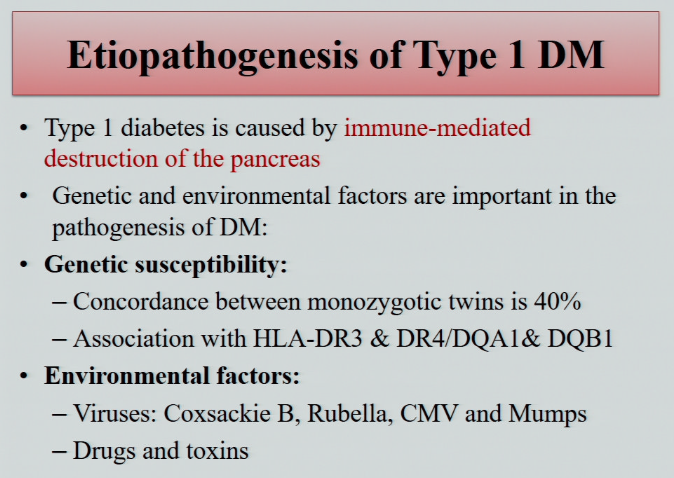
T1DM has an association with HLA-___, ____ & ____

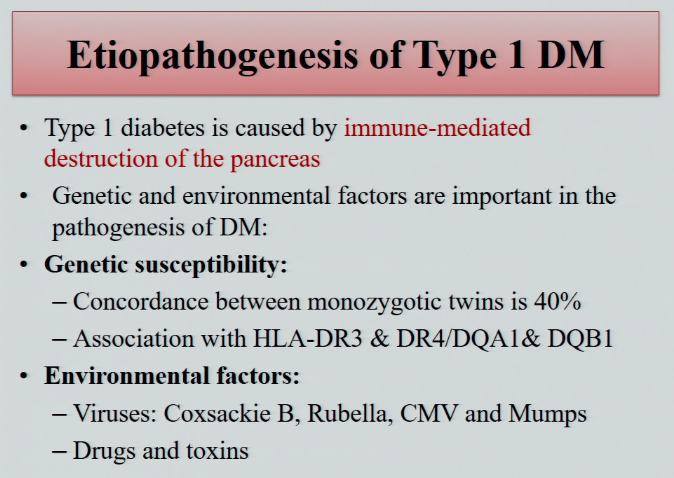
A

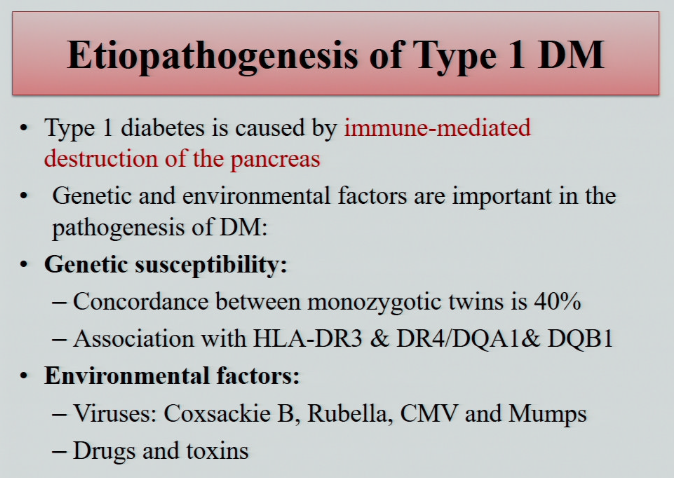
T1DM has an association with HLA-DR3, DR4/DQA1 & DQB1
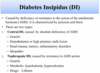
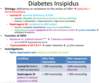
9
Q

T1DM is associated with which 4 viruses?

A

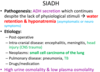
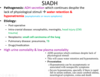
Coxsackie B

Rubella

CMV

mumps

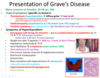
10
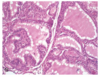
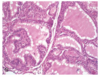
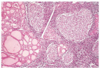
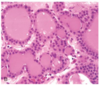
Q

T1DM is characterized by ____ reacting against endogenous ____ due to failure of ____

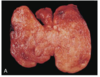
A

T1DM is characterized by immune effector cells reacting against endogenous B-cells antigens due to failure of self-tolerance in T-cells
11
Q

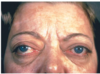
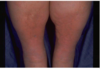
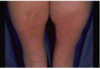
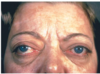
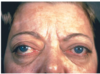
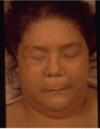
____ antibodies may play a role in T1DM

A

islet cell antibodies may play a role in T1DM
12
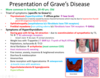
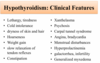
Q

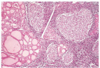
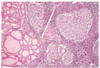
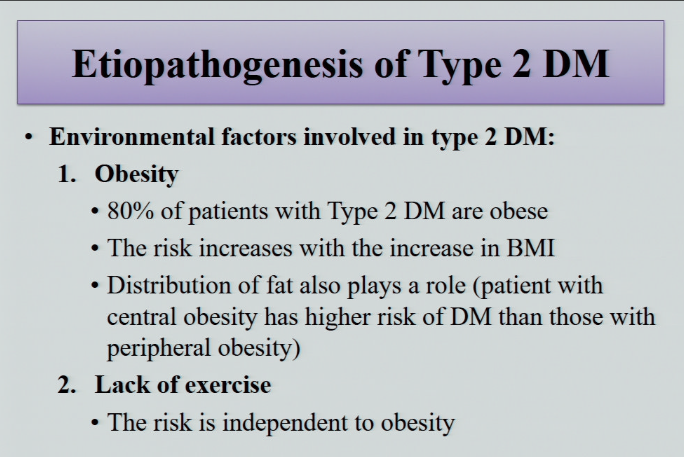
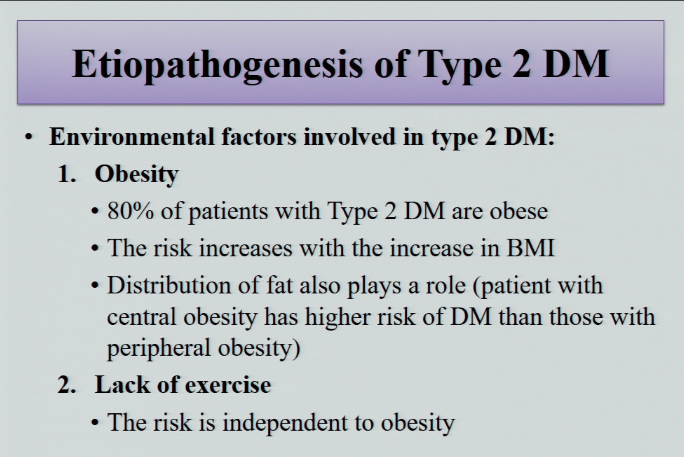
the risk of T2DM increases with an increase in ____

A

the risk of T2DM increases with an increase in BMI
13
Q

distribution of fat also plays a role in development of T2DM; patients with ___ obesity have higher risk of DM than those with ____ obesity

A

distribution of fat also plays a role in development of T2DM; patients with central obesity have higher risk of DM than those with peripheral obesity
14
Q

list the 3 ways in which obesity can lead to T2DM

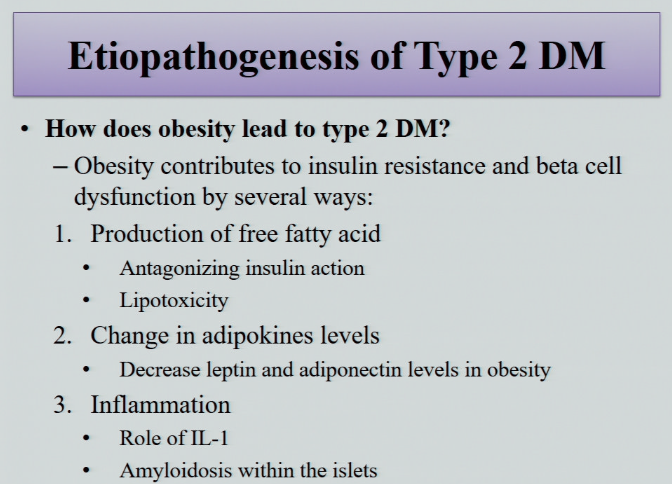
A
  1. production of free fatty acid
    • antagonizing insulin action
    • lipotoxicity
  2. change in adipokines levels
    • decrease leptin and adiponectin levels in obesity
  3. inflammation
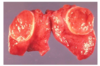
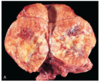
    • role of IL-1
    • amyloidosis within the islets
15
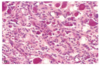
Q

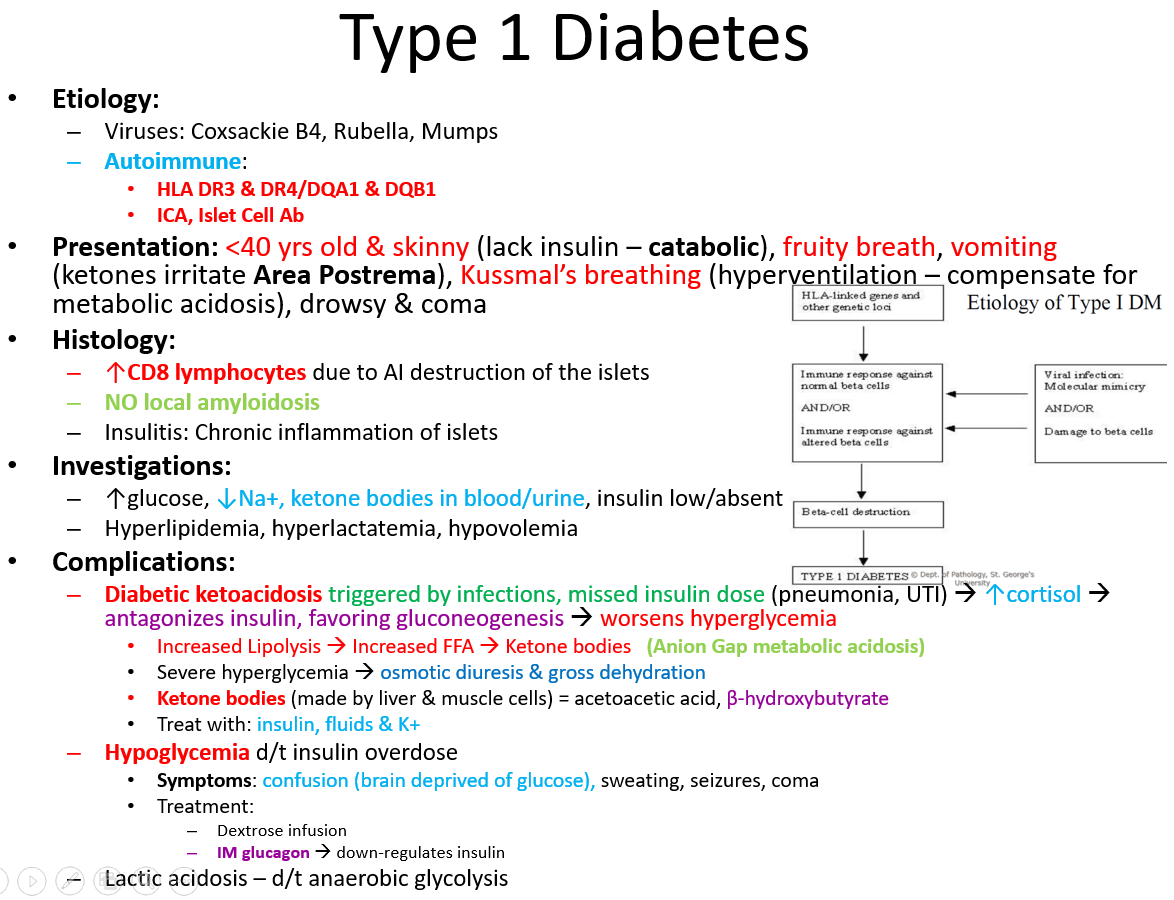
describe the presentation of a patient with the type 1 form of the condition seen in the image
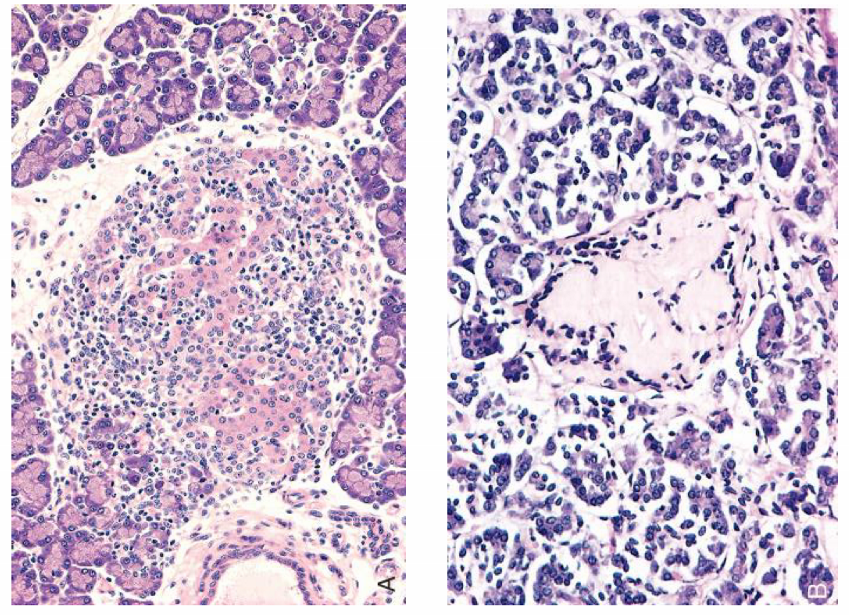
A
  • <40 yrs old & skinny (lack of insulin → catabolic state)
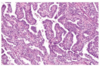
  • fruity breath (caused by ketones)
  • vomiting (ketones irritate area postrema)
  • Kussmaul breathing (hyperventilating to compensate for met. acidosis)
16
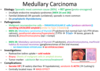
Q

describe the OGTT levels in normal, diabetic and pre-diabetic patients
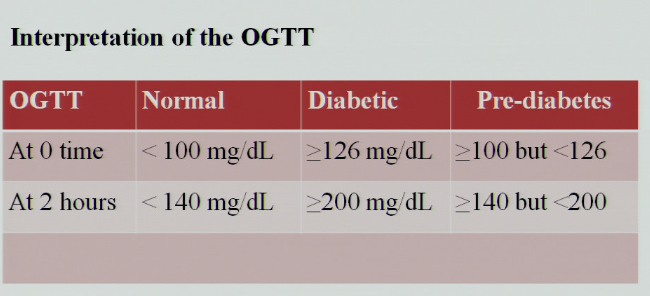
A
17
Q

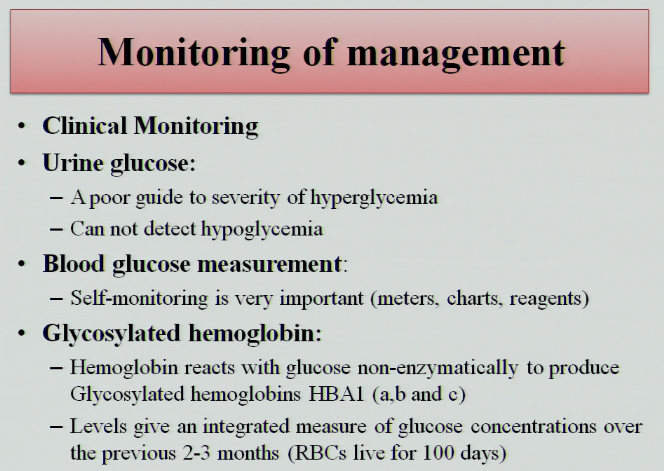
_____ levels give an integrated measure of glucose concentrations over the previous 2-3 months because RBCs ____

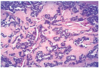
A

glycosylated hemoglobin (HbA1c) levels give an integrated measure of glucose concentrations over the previous 2-3 months because RBCs live for 100 days
18
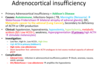
Q

____ is the most common precipitating factor for DKA; what are 3 other causes?

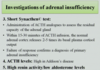
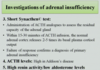
A

missed insulin dose is the most common precipitating factor for DKA

  • infection or acute illness
  • trauma
  • emotional disturbance
19
Q

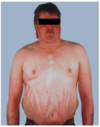
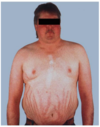
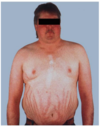
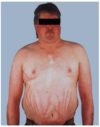
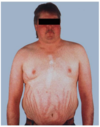
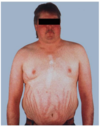
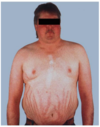
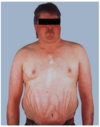
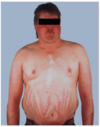
the hyperglycemia causes the characteristic ___ and ___ in DKA

A

the hyperglycemia causes the characteristic osmotic diuresis and dehydration in DKA
20
Q

describe what is seen in the urine during DKA

A

positive for sugar and ketones

21
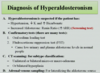
Q

describe the electrolyte levels seen in DKA

A

increased K

decreased Na

22
Q

describe the arterial blood gas levels seen in DKA

A

low pH (<7.3) with high anion gap metabolic acidosis
low bicarbonate

23
Q

describe the management of DKA

A

saline infusion to replace fluid loss

insulin IV in small increments (to reduce glucose slowly)

potassium supplements
24
Q

_____ occurs in elderly patients with T2DM (instead of DKA)
A

hyperosmolar hyperglycemia state occurs in elderly patients with T2DM (instead of DKA)
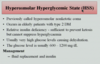
25
in hyperosmolar hyperglycemic state (HSS), there is usually very high ____ levels causing \_\_\_\_
in hyperosmolar hyperglycemic state (HSS), there is usually very high **glucose** levels causing **dehydration**
26
describe microangiopathic complications in the condition seen in the image
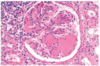
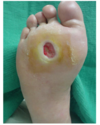
microangiopathic complications: * affects capillaries, arterioles, small blood vessels * characterized by thickening of BMs which causes leakiness * **manifestation**: nephropathy, retinopathy, neuropathy
27
the first morphological sign of the condition seen in the image is ___ and \_\_\_\_
the first morphological sign of the condition seen in the image is **basement membrane thickening** and **mesangial expansion**
28
describe the 2 types of the condition seen in the image
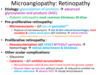
* _pre-proliferative retinopathy:_ * **microaneurysms: d/t loss of pericytes** * **​​**rupture of **microaneurysms → dot & blot retinal hemorrhages, hard exudates & cotton wool spots** (d/t ischemia → retinal infarct) * _proliferative retinopathy:_ * **neovascularization (due to VEGF) WITHOUT pericytes** → hemorrhage → retinal detachment and blindness
29
the condition seen in the image occurs when ____ accumulates in tissues ## Footnote **explain this**
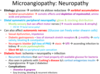
**accumulation of sugar alcohols (polyols) in tissues** which do not require insulin for glucose uptake glucose → sorbitol sorbitol accumulation causes osmotic effects and depletion of myoinositol, AAs and K+
30
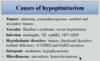
list the vascular causes of hypopituitarism
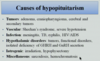
Sheehan's syndrome (post-partum hemorrhage) severe hypotension
31
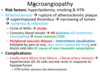
describe macroangiopathic complications of the condition seen in the image
32
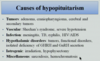
list 4 infections that can cause hypopituitarism
meningitis TB syphilis HIV/AIDS
33
name 2 systemic conditions that can cause hypopituitarism
sarcoidosis hemochromatosis
34
in hypopituitarism \_\_\_ is the first hormone to be lost in children; \_\_\_\_ is the first hormone to be lost in adults and ___ is the last
**GH** is the first hormone to be lost in **children**; **LH and FSH** is the first hormone to be lost in **adults** **ACTH** is the last
35
\_\_\_ is the most common hormone secreted from the condition seen in the image
36
what are other causes of the most common form of the condition seen in the image?
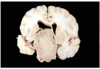
image = pituitary adenoma * physiological i.e. stress * drugs: * antipsychotics decrease dopamine and lead to more prolactin secretion * OCPs * renal failure
37
describe the presentation of the most common form of the condition seen in the image in females vs. males
females: **galactorrhea, amenorrhea, anovulation, infertility** males: headache, **decreased libido, erectile impotence**
38
the condition seen in the image occurs with ____ secretion after \_\_\_\_
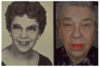
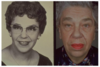
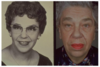
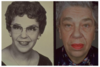
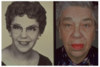
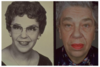
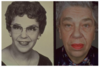
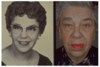
the condition seen in the image occurs with **excessive GH** secretion after **fusion of the epiphysis**
39
the condition seen in the image is part of ___ syndrome explain other components of this syndrome
the condition seen in the image is part of **MEN-1** syndrome * **pituitary adenoma** = increased GH potentially * **pancreatic tumor** * VIPoma, ZE gastrinoma, insulinoma * **parathyroid adenoma/hyperplasia**
40
\_\_\_\_ are used as a screening test for the condition seen in the image
**IGF-1 levels** are used as a screening test for the condition seen in the image GH acts on the liver to produce IGF-1 **IGF-1 is more stable than GH** and therefore more important in diagnosis of acromegaly
41
\_\_\_ is a test used for definitive diagnosis of the condition seen in the image what is seen as a positive result in this test?
**hyperdynamic testing (OGTT + serial GH levels)** is a test used for definitive diagnosis of the condition seen in the image * in normal patients, decreased GH due to presence of glucose * **acromegaly patients:** **presence** **of glucose does NOT inhibit GH (remains high)**
42
\_\_\_\_ is the most common cause of death in the condition seen in the image
**heart failure** is the most common cause of death in the condition seen in the image ## Footnote **due to cardiomegaly + concentric hypertrophy from HTN**
43
in the condition seen in the image, there is hypertension due to ____ which allows \_\_\_\_
in the condition seen in the image, there is hypertension due to **upregulation of α receptors** which allows **permissive action of catecholamines leading to vasoconstriction**
44
in the condition seen in the image, there is hypertrophy of ___ glands leading to \_\_\_\_
in the condition seen in the image, there is hypertrophy of **sweat** glands leading to **body odor & oily skin**
45
list complications of the condition seen in the image
* diabetes (due to insulin resistance from GH) * obstructive sleep apnea * osteoarthritis * carpal tunnel * heart failure from HTN = MC COD
46
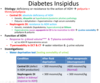
contrast central vs. nephrogenic DI
* **central = absolute def. of ADH** * genetic, idiopathic, hypothalamic/pituitary stalk lesion * **nephrogenic = resistance to ADH action** * genetic, metabolic (hypokalemia, hypercalcemia) or lithium * hypercalcemia causes aquaporin in CD to be insensitive to ADH → decreased urine osmolality → polydipsia & polyuria
47
list causes of central DI
* genetic * hypothalamic or high pituitary stalk lesion * head trauma, tumors, inflammatory disorders * idiopathic
48
list metabolic and pharmacologic causes of nephrogenic DI
* metabolic: * **hypercalcemia** = causes aquaporin in CD to be insensitive to ADH → decreased urine osmolality → polydipsia & polyuria * **hypokalemia** * drug: * **lithium**
49
give the results for water deprivation test in central vs. nephrogenic DI
50
SIADH causes an increase in ___ secretion which ultimately causes ___ and leads to \_\_\_\_
SIADH causes an increase in **ADH** secretion which ultimately causes **water retention** and leads to **hyponatremia**
51
in SIADH, the retention in water can cause ____ which can lead to \_\_\_\_
in SIADH, the retention in water can cause **hyponatremia** which can lead to **cerebral edema, neurological symptoms, coma, and death**
52
list the causes of SIADH
* post-operative * intra-cranial disease: * encephalitis, meningitis, head injury * neoplasms: small cell ca. of the lung * pulm. disease: pneumonia, TB * drugs/medications
53
the organ that is causing the condition seen in the image originates from \_\_\_\_
the organ that is causing the condition seen in the image originates from **the floor of the pharynx**
54
the condition seen in the image is the most common cause of ___ in the US and is a type ____ hypersensitivity
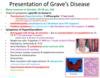
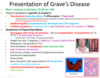
the condition seen in the image is the most common cause of **hyperthyroidism** in the US and is a **type II hypersensitivity**
55
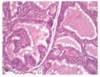
describe the image and what condition it is seen in
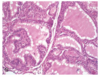
the follicles are **lined by tall columnar epithelial cells** that are actively resorbing the colloid in the centers of the follicles, resulting in a **"scalloped"** appearance of the colloid
56
in the condition seen in the image, T cells induce B cells to produce \_\_\_\_
in the condition seen in the image, T cells induce B cells to produce **IgG antibodies against the TSH receptor (stimulating Abs)**
57
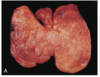
in the condition seen in the image, the thyroid gland is (smaller or larger?) due to diffuse ____ and hyperplasia of \_\_\_\_
in the condition seen in the image, the thyroid gland is **larger** due to **diffuse hypertrophy** and **hyperplasia** of **follicular epithelial cell**
58
in the condition seen in the image, the lumen is lined by ____ instead of the normal ___ and the colloid within the follicular lumen is \_\_\_\_\_
in the condition seen in the image, the lumen is lined by **columnar cells** instead of the normal **cuboidal cells** and the colloid within the follicular lumen is **pale with scalloped margins**
59
in the condition seen in the image, there is ____ uptake
in the condition seen in the image, there is **radioactive iodine** uptake
60
describe blood levels in the condition seen in the image
**increased TSI (thyroid stimulating Ig), T3 and T4** **decreased TSH** (bc free T3 downregulates TRH receptors in the AP to decrease TSH release)
61
list the triad of symptoms that are specific to the condition seen in the image
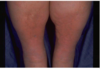
* **finger clubbing (thyroid acropachy)** * **ophthalmopathy** (exopthalmos b/c fibroblasts have TSH receptors and pushes the eye forward) * **pretibial myxedema** (non-pitting edema b/c fibroblasts have TSH receptors → GAGs)
62
the most common cause of death in the condition seen in the image is \_\_\_\_
the most common cause of death in the condition seen in the image is **arrhythmias**
63
describe the cholesterol and glucose levels in the condition seen in the image
**HYPOcholesterolemia** (increased LDL receptors from T3/T4 = increased removal from blood) **HYPERglycemia** (T3/T4 cause gluconeogenesis and glycogenolysis)
64
describe "thyroid storm" in relation to the condition seen in the image
**stress causes elevated catecholamines and massive hormone excess → arrhythmias, hyperthermia, vomiting, hypovolemic shock**
65
list the clinical features associated with the condition seen in the image
66
describe the image and the condition it is seen in
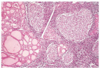
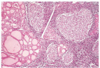
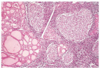
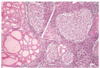
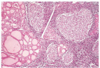
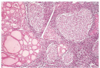
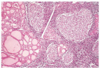
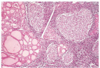
the thyroid parenchyma contains a dense lymphocytic infiltrate with germinal centers; residual thyroid follicles lined by deeply eosinophilic Hurthle cells are also seen
67
the condition seen in the image is the most common cause of ____ and is caused by a type ___ hypersensitivity
the condition seen in the image is the most common cause of **hypothyroidism** and is caused by a **type IV hypersensitivity**
68
the condition seen in the image is characterized by chronic inflammation with ___ & \_\_\_\_metaplasia (which are atrophic thyroid follicles filled with \_\_\_)
the condition seen in the image is characterized by chronic inflammation with **germinal centers** & **Hurthle cell** **metaplasia** (which are atrophic thyroid follicles filled with **eosinophilic granular cytoplasm**)
69
describe serum levels of T3, T4, TRH and TSH of the condition seen in the image
decreased T3 and T4 increased TRH and TSH
70
in the condition seen in the image, ___ is increased which leads to increased \_\_\_ explain this effect on men vs. women
in the condition seen in the image, **TRH** is increased which leads to increased **prolactin** _females_: amenorrhea, galactorrhea, infertility (bc no LH surge) _males_: gynecomastia, decreased libido, infertility
71
list the 2 antibodies found in the condition seen in the image
**anti-thyroglobulin** **anti-microsomal antibodies (**aka **anti-thyroid peroxidase)**
72
the condition seen in the image is associated with which tumor?
monoclonality of germinal center → **non-Hodgkin's B cell lymphoma**
73
describe how the condition seen in the image can affect the vascular system
**atherosclerotic plaques → MI, stroke,** peripheral vascular disease
74
the condition seen in the image is characterized by generalized ____ due to accumulation of \_\_\_\_
the condition seen in the image is characterized by generalized **myxedema** due to accumulation of **GAGs**
75
describe the cholesterol levels in the condition seen in the image
**hypercholesterolemia** due to lack of thyroid hormones which causes a decrease in LDL receptors
76
the condition seen in the image causes generalized ____ which can compress the ___ nerve leading to \_\_\_\_
the condition seen in the image causes generalized **myxedema** which can compress the **median** **nerve** leading to **carpal tunnel syndrome**
77
\_\_\_\_ is characterized by high TSH levels and normal FT4/FT3 levels in an asymptomatic individual
**sub-clinical hypothyroidism** is characterized by high TSH levels and normal FT4/FT3 levels in an asymptomatic individual
78
sub-clinical hypothyroidism is characterized by high ___ levels and normal ____ levels in an asymptomatic individual
sub-clinical hypothyroidism is characterized by **high TSH levels** and **normal FT4/FT3 levels** in an asymptomatic individual
79
patient has the following levels: high TSH normal FT3/FT4 what else is associated with the condition the patient has?
associated with **endothelial dysfunction → atheroma**
80
patient has the following levels: high TSH normal FT3/FT4 the condition the patient has can convert into ___ especially if ___ are present
the condition the patient has can convert into **hypothyroidism** especially if **anti-thyroid antibodies** are present
81
the condition seen in the image is caused by a mutation in \_\_\_\_
the condition seen in the image is caused by a mutation in **KRAS**
82
in the condition seen in the image, there is ___ metaplasia
in the condition seen in the image, there is **Hurtle cell** **metaplasia**
83
complications of the condition seen in the image occurs from ____ and can compress which 3 structures?
complications of the condition seen in the image occurs from **mass effect** and can compress: * **left recurrent laryngeal nerve** → hoarseness * **trachea** → dyspnea * **esophagus** → dysphagia
84
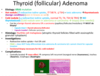
the condition in the image is benign solely because the ____ is intact
the condition in the image is benign solely because the **capsule** is intact
85
the most important risk factor for the condition seen in the image is \_\_\_\_
the most important risk factor for the condition seen in the image is **iodine deficiency**
86
the condition seen in the image occurs due to a mutation in \_\_\_\_
the condition seen in the image occurs due to a mutation in **KRAS** (since its a progression of follicular adenoma, which also has KRAS mutation)
87
in the condition seen in the image, there is invasion of ____ as well as \_\_\_\_
in the condition seen in the image, there is invasion of **capsule** as well as **hemorrhage**
88
the condition seen in the image spreads \_\_\_\_
the condition seen in the image spreads **hematogenously (to liver, lungs, bone)**
89
the most important predisposing factor for the condition seen in the image is \_\_\_\_\_
the most important predisposing factor for the condition seen in the image is **long-standing ionizing radiation**
90
the condition seen in the image is caused by a mutation in \_\_\_\_
the condition seen in the image is caused by a mutation in **BRAF**
91
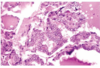
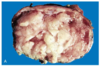
the condition seen in the image has ____ projections with ___ core and ____ bodies
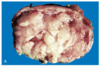
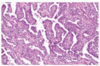
the condition seen in the image has **papillary** projections with **fibrovascular** core and **psamomma** bodies
92
the condition seen in the image is lined by cells with ____ nuclei
the condition seen in the image is lined by cells with **clear "Orphan Annie eye"** **nuclei**
93
the complications of the condition seen in the image are due to \_\_\_\_
the complications of the condition seen in the image are due to **mass effect**
94
the condition seen in the image occurs due to a mutation in ____ which is a ____ gene
the condition seen in the image occurs due to a mutation in **RET which is a proto-oncogene**
95
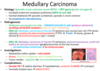
in the condition seen in the image, there are malignant ___ cells secreting \_\_\_\_
in the condition seen in the image, there are malignant **parafollicular (C cells)** cells secreting **localized amyloid**
96
\_\_\_\_ is a tumor marker for the condition seen in the image and is used to measure \_\_\_\_
**calcitonin** is a tumor marker for the condition seen in the image and is used to measure **recurrence/response to therapy**
97
explain how the condition seen in the image can be part of MEN2A
MEN2A = 2 P's, 1 M * MEN2A consists of: * **medullary carcinoma of the thyroid** * **parathyroid adenoma/hyperplasia** * **pheochromocytoma**
98
explain how the condition seen in the image can be part of MEN2B
MEN2B = 3 Ms, 1 P * MEN2B: * medullary carcinoma of thyroid * marfinoid habitus * mucosal neuromas * pheochromocytoma
99
MEN2A and MEN2B are caused by mutations in \_\_\_\_
MEN2A and MEN2B are caused by mutations in **RET**
100
the condition seen in the image secretes which 3 hormones in its paraneoplastic syndrome?
MAVS **M**edullary carcinoma **A**CTH **V**IP **S** erotonin
101
on biopsy of the condition seen in the image, there are \_\_\_\_\_
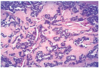
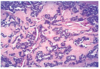
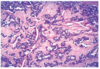
on biopsy of the condition seen in the image, there are **sheets of malignant cells in amyloid stroma**
102
\_\_\_\_ carcinoma of the thyroid are ___ tumors
**anaplastic** carcinoma of the thyroid are **undifferentiated** tumors
103
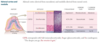
describe the hormones synthesized by the different layers of the adrenal cortex
104
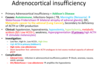
the most common cause of Addison's disease is \_\_\_\_
the most common cause of Addison's disease is **autoimmune disease**
105
list the infections that can lead to adrenocortical insufficiency (Addison's disease)
* **TB** * **AIDS** * **meningitis** → Waterhouse-Fredericksen syndrome, which causes hemorrhage and destruction of the adrenal glands
106
describe the short Synacthen test
* administration of ACTH analogues to assess the residual capacity of the adrenal gland * within 15-30 min of ACTH infusion, the normal adrenal cortex releases 2-5 times its basal plasma cortisol output * **failure of response confirms a diagnosis of primary adrenal** **insuff****.**
107
in patients with adrenal insufficiency (Addison's), there is high ___ activity due to low ____ levels
in patients with adrenal insufficiency (Addison's), there is **high** **renin** activity due to **low** **aldosterone** levels
108
an anterior pituitary adenoma can cause the condition seen in the image and (does or does not?) respond to feedback from high dose \_\_\_\_
an anterior pituitary adenoma can cause the condition seen in the image and **DOES** respond to feedback from **high dose dexamethosone**
109
ectopic ACTH can cause the condition seen in the image and (does or does not?) respond to feedback from high dose \_\_\_\_
ectopic ACTH can cause the condition seen in the image and **DOES NOT** respond to feedback from **high dose dexamethosone**
110
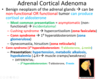
the condition seen in the image can be caused by unilateral adrenal cortical adenoma and causes ____ atrophy of adrenal gland
the condition seen in the image can be caused by unilateral adrenal cortical adenoma and causes **contralateral** atrophy of adrenal gland
111
low-dose dexamethosone test separates ____ from \_\_\_\_\_
low-dose dexamethosone test separates **pseudo-Cushing's (obese patients, drugs, stress, alcohol)** from **true Cushing's** true Cushing's = increased urinary cortisol b/c low dose DOES NOT suppress it
112
high-dose dexamethasone is used to differentiate between ___ and \_\_\_, where ____ is suppressed by the high dose
high-dose dexamethasone is used to differentiate between **anterior pituitary adenoma** and **ectopic ACTH production**, where **anterior pituitary adenoma (Cushing's Disease)** is suppressed by the high dose
113
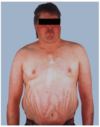
the condition seen in the image causes ____ of fat which can lead to which 3 characteristic feature?
the condition seen in the image causes **redistribution of fat** which can lead to: -**moon facies** **-****truncal obesity** **-buffalo hump**
114
the condition seen in the image causes HTN b/c cortisol is a weak ____ and also upregulates \_\_\_\_
the condition seen in the image causes HTN b/c cortisol is a weak **mineralocorticoid (acts like aldosterone)** and also **upregulates α-1 receptors**
115
the most common cause of death in the condition seen in the image is \_\_\_\_
the most common cause of death in the condition seen in the image is **MI & arrythmias (due to atherosclerosis and HTN)**
116
\_\_\_\_ is the 2nd most common cause of death in the condition seen in the image
**recurrent infections (b/c cortisol is an immunosuppressant)** is the 2nd most common cause of death in the condition seen in the image
117
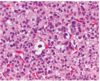
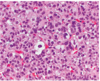
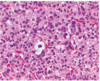
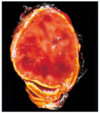
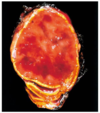
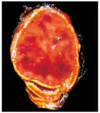
describe the image
**the neoplastic cells are vacuolated because of the presence of intracytoplasmic lipid**
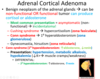
118
the condition seen in the image can lead to ___ because cortisol is a catabolic hormone
the condition seen in the image can lead to **osteoporosis → pathologic fractures** because cortisol is a catabolic hormone
119
the most common presentation of the condition seen in the image is \_\_\_\_
the most common presentation of the condition seen in the image is **asymptomatic (non-functional)**
120
the condition seen in the image can cause Cushing syndrome if it arises from zona \_\_\_\_
the condition seen in the image can cause Cushing syndrome if it arises from **zona fasciculata**
121
the condition seen in the image can cause primary hyperaldosteronism, which is also called \_\_\_\_, if it arises from zona \_\_\_\_
the condition seen in the image can cause primary hyperaldosteronism, which is also called **Conn syndrome**, if it arises from **zona glomerulosa**
122
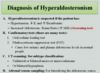
the ____ test can be used to diagnose hyperaldosteronism
the **fludrocortisone suppression test** can be used to diagnose hyperaldosteronism
123
a screening test for hyperaldosteronism is an increased ___ to ___ ratio
a screening test for hyperaldosteronism is an increased **aldosterone:renin ratio**
124
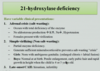
describe 21-hydroxylase def.
125
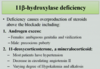
describe 11B-hydroxylase def.
126
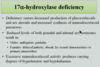
describe 17a-hydroxylase def.
127
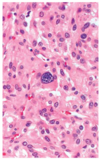
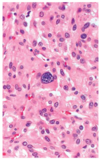
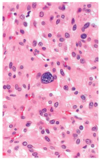
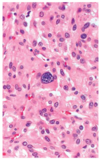
describe the image
characteristic **nests of cells with abundant cytoplasm** **bizarre** **cell** is seen in the center of the image
128
the condition seen in the image is a tumor of ___ (\_\_\_ cells)
the condition seen in the image is a tumor of **adrenal medulla (****chromaffin** cells)
129
the condition seen in the image can be part of which 4 conditions?
**MEN2A** **MEN2B** **Von-Hippel-Lindau syndrome (w/ RCC)** **Neurofibromatosis**
130
describe the presentation of the condition seen in the image
episodic HTN, anxiety, palpitations, headache, excessive sweating, cardiac arrhythmias
131
the most common cause of death in the condition seen in the image is caused by \_\_\_\_\_
the most common cause of death in the condition seen in the image is caused by **cardiac arrhythmias**
132
for the condition seen in the image: \_\_\_\_ testing is more sensitive \_\_\_\_ is more specific
for the condition seen in the image: **plasma metanephrine** testing is more sensitive **24-hour urinary catecholamines and metanephrines** is more specific
133
\_\_\_\_ is reserved for biochemically confirmed cases in which CT scanning or MRI does not show a tumor
**MIBG scintigraphy (metaoidobenzylduanidine)** is reserved for biochemically confirmed cases in which CT scanning or MRI does not show a tumor