Most common site of forelimb lameness in the horse?
- the foot (hoof)
4 clinical examination components for direct examination of the foot
(without nerve blocking)
- hoof testers
- palpating where DDFT and SDFT insertions are
- Palpating Distal Sesamoidean Ligaments
- Feeling for digital pulses
2 main infectious causes of equine abortion in the UK
- Placentitis (bacterial or fungal) - bacterial occuring at about 3 months (E. Coli or S. zooepidemicus) and fungal at about 6 months (Aspergillus spp.)
- EHV-1 or EHV-2
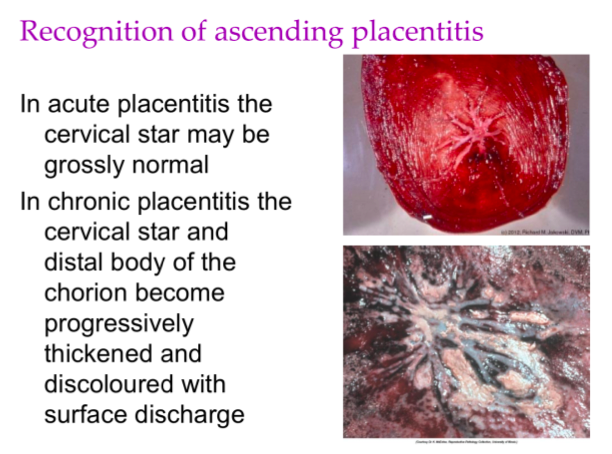
Acute vs. chronic placentitis
(placenta examination)
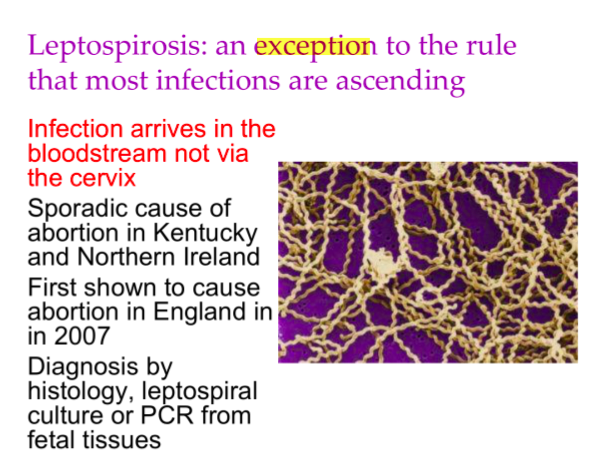
leptospirosis in equine abortion
(how is it different to other infectious causes of placentitis?)
placentitis is diffuse, rather than ascending - wouldn’t see the same gross changes at cervical star as you would for others
3 main roots of spread for EHV-1 infections
- Exhaled virus from respiratory infections
- contact with infected fetuses, membranes or fluids
- reactivation of infection in healthy carrier animals - latently infected horse that reactivates the infection
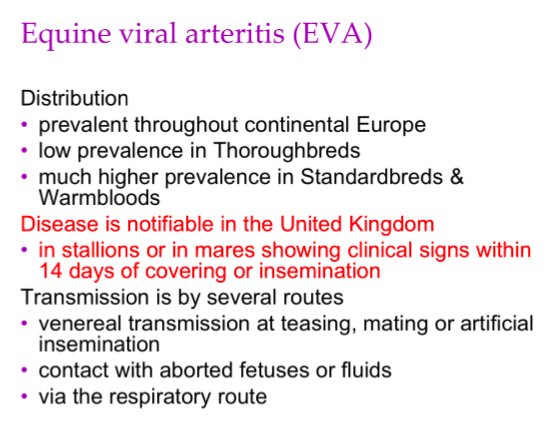
What is an important viral cause of equine abortion to keep. in mind for contnental europe and some other countries? (not UK currently)
- EVA (equine viral arteritis)
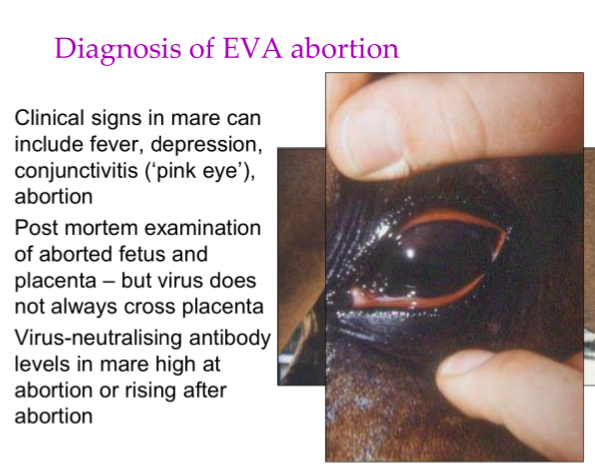
Diagnosis of EVA abortion
- important: the virus does not always cross the placenta. so you may struggle to be able to diagnose off examination of the placenta and aborted fetus
- Virus may have infected the myometrium, the muscular coats of the endometrium causing placental separation
- important to do virus neutralizing antibody
A 1.5-year old Quarter Horse gelding is presented to you for symmetric ataxia, weakness, and spasticity of all limbs, but worse in the hind limbs. When walking, the horse frequently drags his toes and the hind limbs frequently interfere with one another. Based on the signalment, history and physical examination findings, which of the following is the most likely cause of these clinical signs?
Equine Degenerative Myeloencephalopathy (EDM)
- The horse in this question has clinical signs most consistent with EDM; cervical vertebral malformation (wobblers) is also a possibility, but was not provided as an answer.
Botulism
- Botulism is a disease that occurs when toxins produced by the bacterium, Clostridium botulinum, enter the horse’s body causing weakness which may progress to paralysis
- Botulism is a rapidly fatal disease with motor paralysis
- Botulism is associated with generalized muscle weakness
- This organism grows rapidly in decomposing animal tissue and sometimes in plant material. It results in rapid death due to the paralysis of vital organs. Botulism is not usually an infection but a poisoning. The frequency of botulism in animals is not known with accuracy, but it is low in horses
- There are 7 types of Clostridium botulinum toxins; the C1 toxin is seen in most animal species, although type B is most common in North America and Europe
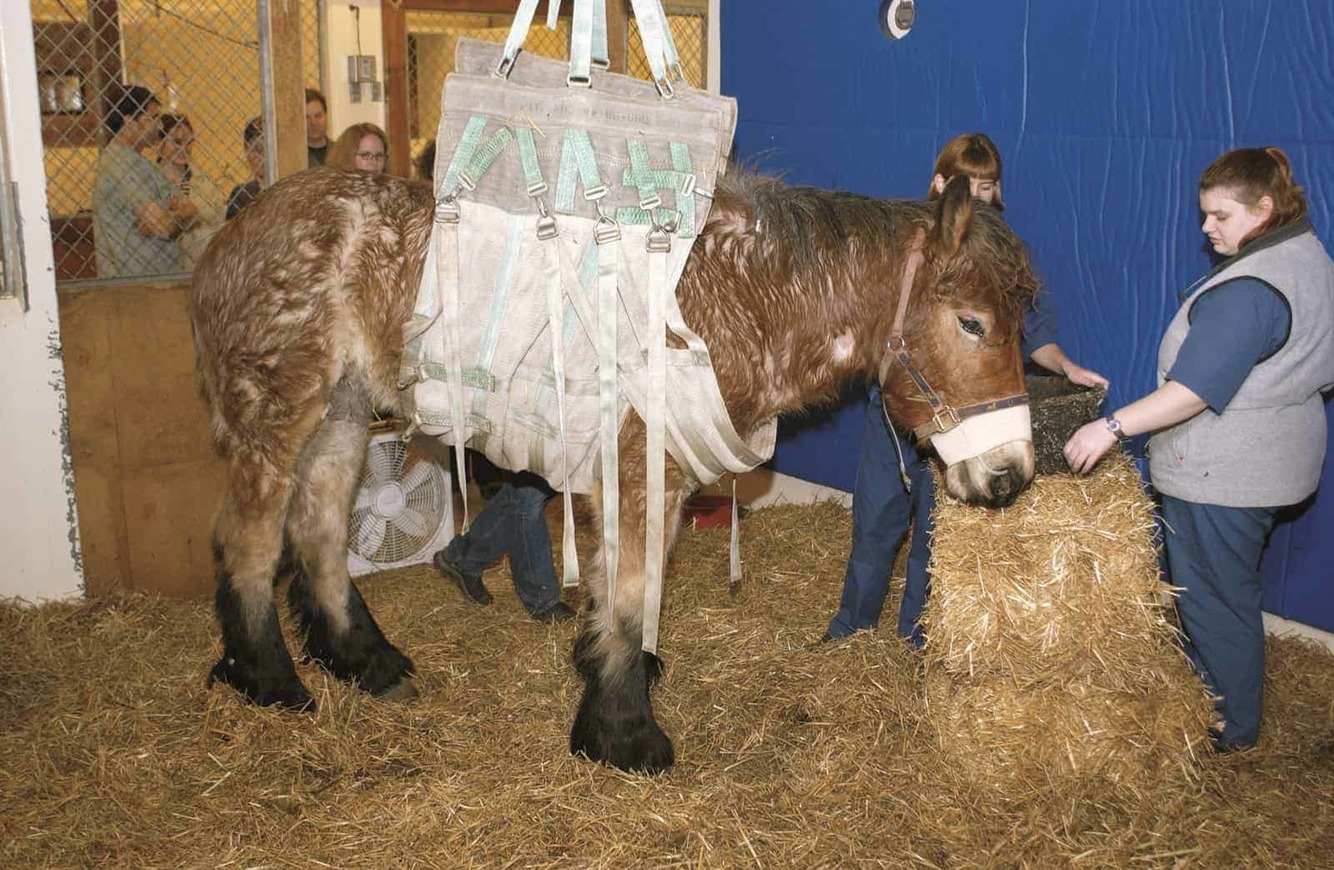
Cauda Equina Syndrome
- Cauda equina syndrome causes analgesia of the perineum.
- Trauma to the sacral/coccygeal area is the most common cause of the syndrome and can result from falls, reversing under obstructions (such as backing under a closed top door to a stall), and tail pulling such as occurs when using the tail to help pick up a down horse
Equine Motor Neuron Disease
(EMND)
What is the clincal picture?
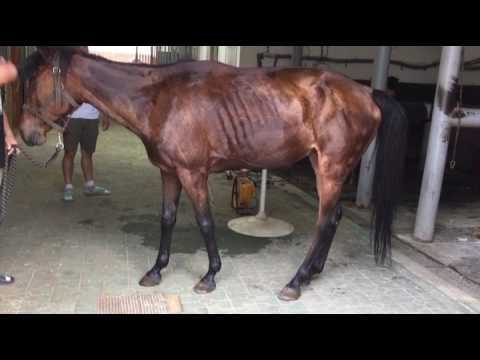
- Equine motor neurone disease (EMND) is a condition in which the sporadic degeneration of muscle nerves in mature horses leads ultimately to excessive muscle weakness and wastage.
- It is characterised as a generalised weight loss (due to muscle wastage, or atrophy) despite a normal or even increased appetite
- EMND is typically associated with muscle tremors, shifting of weight while standing, muscle atrophy and recumbency
Equine Protozoal Myeloencephalitis
(EPM)
- EPM can cause a range of clinical signs, but is typically with asymmetric neurologic deficits
- Equine protozoal myeloencephalitis (EPM) is a common neurologic disease of horses in the Americas; it has been reported in most of the contiguous 48 states of the USA, southern Canada, Mexico, and several countries in Central and South America. In other countries, EPM is seen sporadically in horses that previously have spent time in the Americas
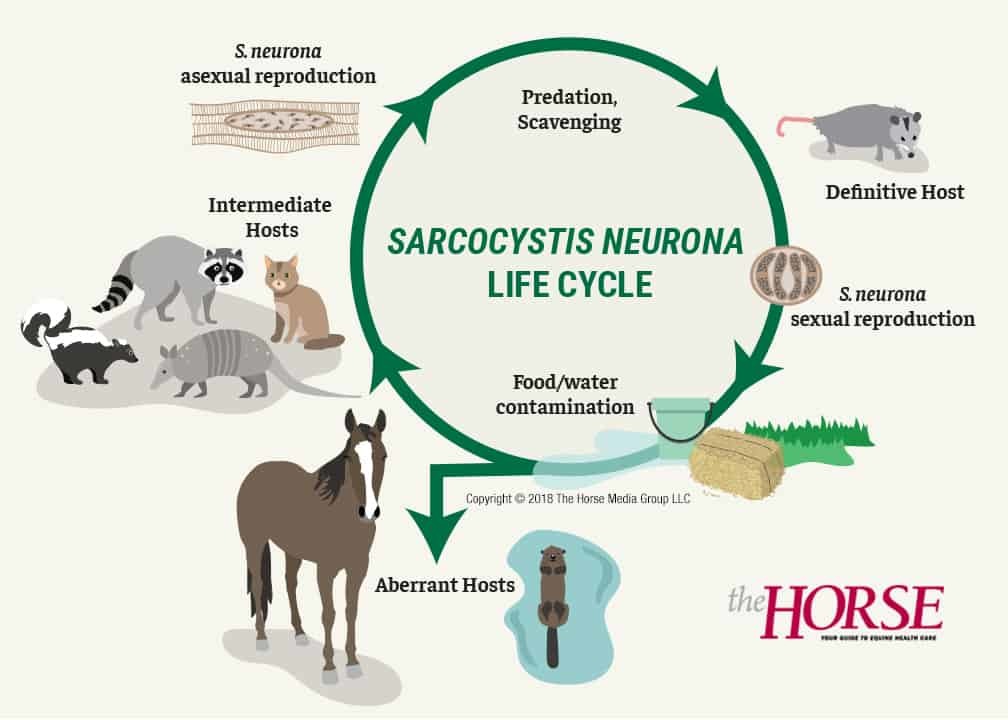
- Most cases of EPM are caused by an Apicomplexan protozoan, Sarcocystis neurona. Horses are infected by ingestion of S neurona sporocysts in contaminated feed or water
Equine Degenerative Myeloencephalopathy
(EDM)
what is the other name for it?
- Equine neuroaxonal dystrophy/equine degenerative myeloencephalopathy (eNAD/EDM) is an inherited neurodegenerative disease characterized by the development of ataxia
- The cause of EDM is unknown, but this disease typically affects young horses (< 2-3 years of age; but older horses can develop disease).
- Clinical signs are a result of diffuse neuronal fiber degeneration of various portions of the central nervous system.
- This disease has been associated with low serum vitamin E concentrations, suggesting that oxidative damage may play a role in the development of disease.
- Describe Pituitary Pars Intermedia Dysfunction in Horses (PPID)
- What clinical signs may be an idication?
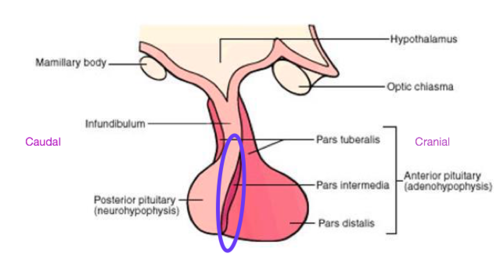
- This disorder used to be called equine Cushing’s. - by far the most common endocrine disease in horses
- This condition is a result of hypertrophy, hyperplasia, and micro- or macroadenoma of the pituitary pars intermedia that secretes increased amounts of propiomelanocortin peptides.
- decreased dopaminergic innervation of pars intermedia results in hypertrophy or hyperplasia of pars intermedia
- Adjacent pituitary tissues are compressed and secrete less of some other peptides. Data suggest that horses with this disease have hypothalamic dysfunction and decreased amounts of dopamine
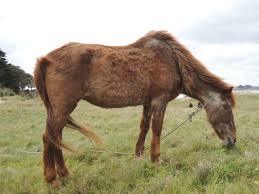
- may see: lack of shedding (during normal spring season), decrease in E, horse in hirsute (more hairy), loss of muscle mass, and may be chronically laminitic
Entropion in foals
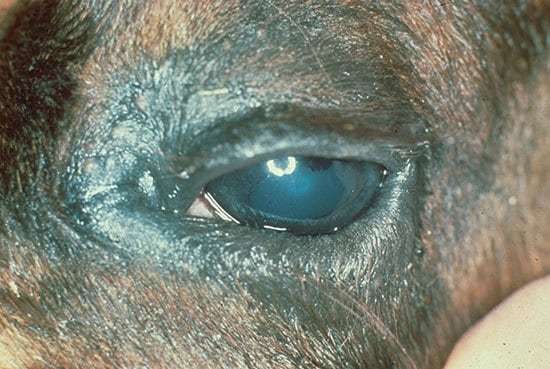
- Entropion in foals is fairly common and will usually resolve spontaneously - likely will not need surgical treatment
- Surgical correction is reserved for cases that do not resolve, because over correction in a young animal could result in further eyelid defects as the foal grows.
- If clinical signs are severe enough, a procedure where local anesthetic is infused and the eyelid is everted and stapled can be performed as a temporary fix until the problem resolves
What vaccine is administered intramuscularly is most likely to cause a local reaction at the injection site of a horse?
- Strangles vaccine
- Historically, an intramuscularly administered Strangles vaccine has been available and has been associated with soft tissue reaction.
- More recently, an intranasal vaccine has become available, which is associated with local protection without any injection reaction
- Not many horses are vaccinated for it in the UK, Isolation is best if there is an outbreak present
- An intranasal product has been shown to stimulate a high level of immunity against experimental challenge. The inductive sites are the pharyngeal and lingual tonsils. Vaccinal organisms must reach these sites in sufficient numbers to trigger protective responses; therefore, accurate vaccine delivery is critical to vaccine efficacy.
- In a small percentage of cases, residual vaccinal organism virulence may result in formation of slowly developing mandibular or retropharyngeal abscesses
A pregnant mare was brought out to your barn for observation in anticipation of parturition. After several hours of restless behavior, several gallons of allantoic fluid rush out from the vulva. Which of the following would you expect to happen next for a normal parturition?
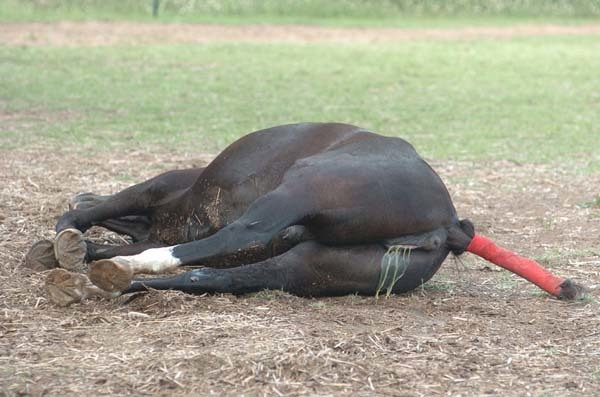
- The thin, white, glistening amniotic membrane emerges from the vulva
- This case description is consistent with stage I of labor in the horse leading to stage II
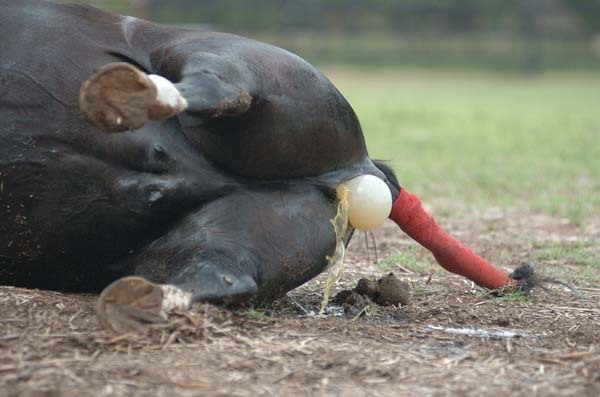
Describe Stage I of Foaling
Stage II?
Stage III?
- The first stage of foaling typically lasts 30 minutes to 4 hours. - During this stage, mares act restless and may exhibit signs similar to colic such as flank watching, pawing, and constantly getting up and down.
- When the placenta ruptures (“water breaks”), there may be several gallons of allantoic fluid that come out.
- Usually, within about 5 minutes, the second stage of labor begins and the foals feet and nose appear at the vulva, covered in the white, thin, glistening amnion.
- Stage III - after the foal is born, within 30 minutes to 3 hours after foaling, the placenta should be expelled
What does it mean if a red, velvety membrane is seen during stage II of foaling?
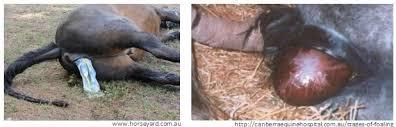
If a red, velvety, membrane is seen, this is the chorioallantois which indicates premature placental separation which can impair oxygen delivery to the fetus and can result in death of the foal. Usually, the muzzle will emerge from the amnion by the time the foal’s hips pass through the pelvis but if not, the amnion can be gently broken and removed. Usually, the umbilical cord breaks naturally when the mare stands or foal begins to rise.
Template Bleeding Time (TBT)
- The TBT is a test that determines the functional ability of platelets to plug a minute wound.
- A buccal mucosal bleeding test is similar to template bleeding time.
- The APTT and PT determine if there are deficiencies in the coagulation factors and do not assess platelet function.
- Antithrombin activity is sometimes measured when disseminated intravascular coagulation (DIC) is a concern, but is not used to evaluate platelet function.
Corynebacterium pseudotuberculosis
(PIGEON FEVER)
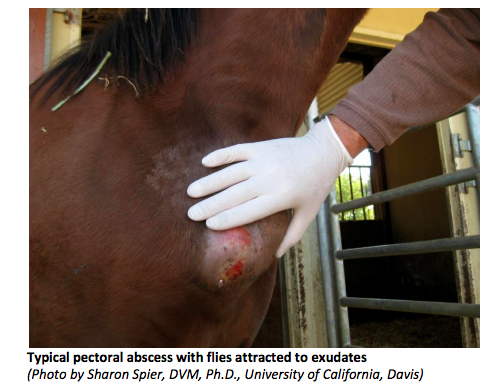
- In horses, Corynebacterium pseudotuberculosis causes ulcerative lymphangitis (an infection of the lower limbs) and chronic abscesses in the pectoral region and ventral abdomen.
- Corynebacterium pseudotuberculosis is a gram-positive bacteria with worldwide distribution. Corynebacterium pseudotuberculosis is considered an emerging disease in North America; cases have been reported throughout the United States.
- It is a common and economically important infectious diseases of horses and cattle worldwide
- Three forms of PF have been described in horses: external abscesses, internal infection, and ulcerative lymphangitis or limb infection. Ulcerative lymphangitis and internal infection must be treated more aggressively with antimicrobial therapy, while use of antimicrobials for external abscesses is generally unnecessary.
*
Rhodococcus Equi
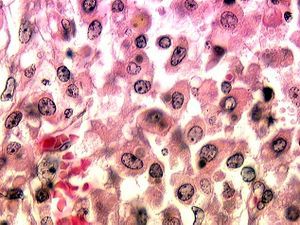
- Rhodococcus equi is a Gram-positive coccobacillus bacterium.
- The organism is commonly found in dry and dusty soil
- causes pneumonia in 1 to 4 month old foals. Disease does not occur in adult horses unless there is a severe immunodeficiency
- The disease is often confused with Rotavirus, a highly contagious virus that causes diarrhea in foals. R. equi may occasionally also cause disease in other body systems.
- Inflammation of the eye (uveitis), bone infection, inflammation of the joints, diarrhea and abdominal abscess formation are noted infections outside of the lungs
- Currently, we have identified antibiotics that are very good at treating the infection. Erythromycin, clarithromycin and azithromycin are individually paired with rifampin to treat foals






