Feline Asthma
- there are no clinical signs or laboratory tests that are specific for feline asthma, it is primarily a diagnosis of exclusion, made by ruling out other causes of dyspnea, wheezing and coughing in an otherwise healthy cat
- Clinical signs of labored breathing, wheezing, cough
- Often acute onset at first presentation but may be chronic
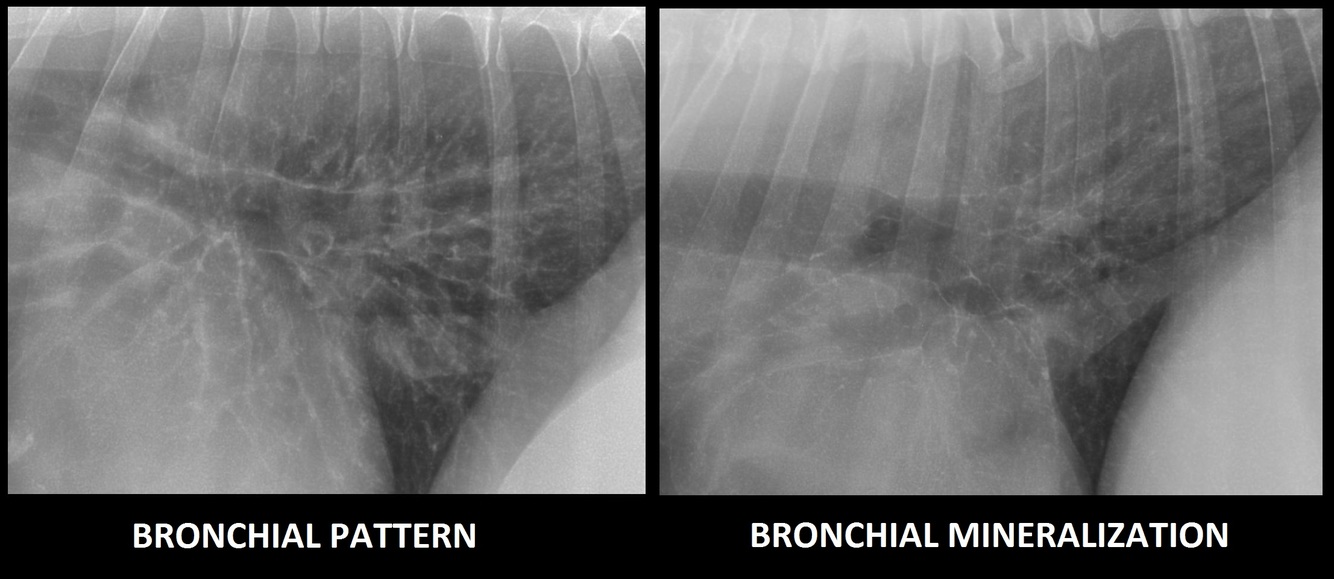
- Radiographic bronchial pattern
- Treated with oral and/or inhaled steroids and bronchodilators
Pathophysiology of Feline Asthma
What does inflammatory infiltration cause? (3)
Airway reduction occurs from? (3)
why can CS’s be severe with mild airway constriction? (2)
There are many potential underlying causes and triggers of asthma that result in inflammatory cell infiltration into bronchial mucosa and submucosa. This causes:
a. Damage, hypertrophy and/or metaplasia of airway epithelium
b. Increased mucous production by goblet cells
c. Hypertrophy and spasm of bronchial smooth muscle
● Airflow reduction occurs from:
a. Airway edema
b. Airway narrowing from cellular infiltrates c. Airway smooth muscle constriction
● Dramatic clinical signs can be seen with relatively mild airway constriction because:
a. 50% reduction in diameter equals a 16-fold reduction in airflow
b. Stimulation of cough mechanoreceptors by inflammatory infiltrate
● Similarly therapeutic interventions allowing even small increases in airway size can yield dramatic benefits.
3 Presentations of Feline Asthma?
Comon signs? (4)
Differentials? (6)
Diagnostic Tests? (2)
3 presentations:
a. Cats with intermittent signs (i.e. signs occur less than daily)
b. Cats with consistent signs
c. Acute emergency presentation
● Common signs:
a. Cough
b. Dyspnea
c. Exercise intolerance
d. Wheezing
● Diagnosis of exclusion – major rule-outs are:
a. Heart disease
b. Pneumonia
c. Pneumothorax or pleural effusion
d. Pulmonary neoplasia
e. Inhaled foreign body
f. Respiratory parasites
● Diagnostic tests of choice
a. CBC
b. Thoracic radiographs
i. Classically see a bronchial pattern
ii. Characteristic “train tracks” and “doughnuts” which are thickened bronchial walls
Treatment of 3 Presentations for Feline Asthma?
Prognosis?
● Intermittent signs
a. Consider use of inhalant bronchodilator (albuterol) for use when symptoms occur.
b. Assumption is that chronic inflammation requiring daily anti-inflammatory therapy is not present.
● Consistent signs:
a. Treatment is long term corticosteroids
i. The most consistent and effective treatment is high-dose oral corticosteroids.
ii. Often start at 1-2 mg/kg PO BID for 10-14 days and taper.
iii. Once a response is seen, begin use of inhaled steroids as you taper from oral.
● Emergency presentation in acute respiratory distress:
a. Administer oxygen
b. Consider bronchodilator
c. Consider sedation
● Prognosis
a. For most cats with asthma, the disease is not curable but can be managed through appropriate therapy.
Feline Alveolar Lung Pattern
Pathophysiology (2)
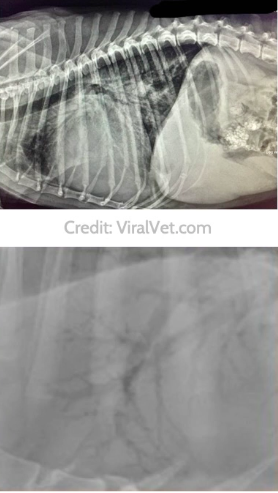
- Fluid/Cells within alveoli
- collapse
will see radiographic fluid/soft tissue opacity
air bronchogram
- “trees in the fog”
- not always present
Differentials for feline alveolar lung pattern
Diseases
- Bronchopneumonia -tend to be more cranio-ventral
- Edema
- Cardiogenic vs. Non-cardiogenic - tend to be caudo-dorsally placed
- Atelectasis - collapse or closure of the lung
- Hemmorhage (less common)
- Mass (less common)
- Granulomatous (fungal)
- Neoplasia (histiocytic sarcoma- can sometime mimick the presence of other alveolar infiltrates such as bronchopneumonia)
- Torsion or infarction (relatively rare)
Location and Character - can guide you into what disease process that may be
“Mucus Plugging”
- a phenomena more often seen in feline asthmatic patients (tends to affect more often R middle lung lobe)
- might have notable atelectasis on Rx - more opacities in region of the lung field, change in position of the cardiac silhouette
- can also see with: pleural diseases (pleural effusion, pneumothorax)
“Lobar Sign”
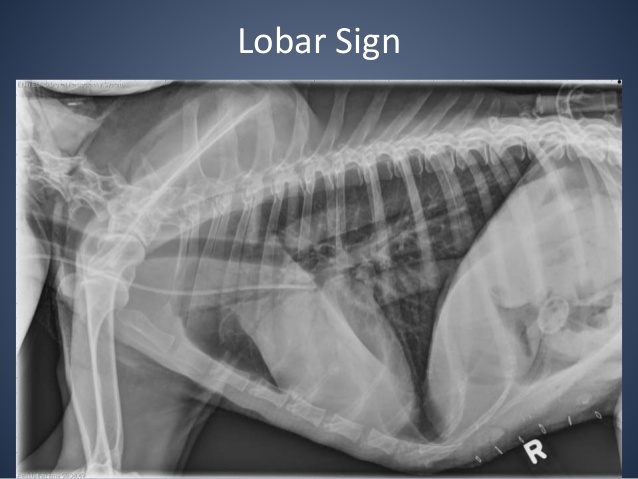
- An alveolar pattern is the result of fluid (pus, edema, blood), or less commonly cells within the alveolar space.
- A total collapse of the alveoli (atelectasis) leads to a similar appearance. Radiographic signs include border effacement with other soft tissue structures such as the pulmonary vessels, cardiac silhouette or diaphragm.
- Smaller, ill-defined patches of alveolar pattern can coalesce into a more homogeneous soft tissue opacity where the only remaining gas is retained in the larger bronchi, seen as “air-bronchograms”.
- Air-bronchograms may not be visible early on in the disease process, their absence does not rule out alveolar disease.
- If the disease process does not spread to an adjacent lung lobe, the border of the affected lobe is sharply demarcated (“lobar sign”)
ptyalism
- hypersalivation
- may be indication of nausea in SA
Top Differential for mass lesion on the tongue of an older cat?
(may coincide with halitosis and ptyalism)
prognosis?
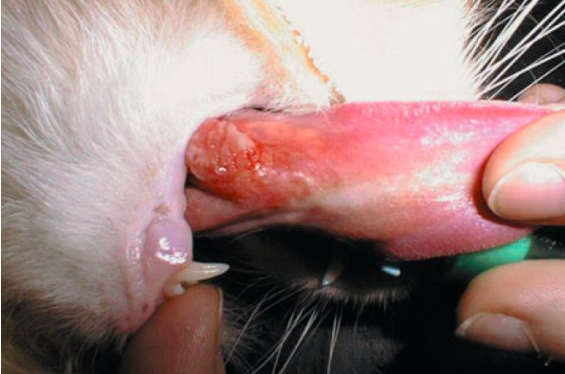
- Squamous Cell Carcinoma (SCC)
- Other differentials including eosinophilic granuloma complex, FIP granuloma, fungal granuloma, and bacterial granuloma are much less common
- Squamous cell carcinoma is a locally aggressive form of neoplasia that is associated with a poor prognosis unless it is caught very early (usually as an incidental finding). Median survival times for cats with this disease is about 2 months with only 10% still living 1 year after diagnosis
Ocular Dermoids in Cats
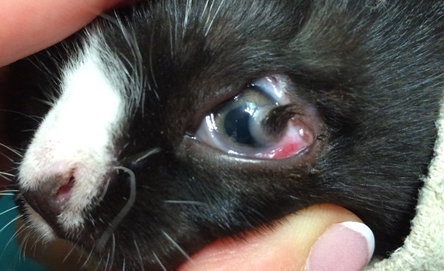
- Ocular dermoids in cats are usually characterized by the growth of hair on or near the cornea, or in the conjunctiva, the white of the eye.
- They may also appear on the upper eyelid. This condition is a rare congenital defect and will typically become apparent early on
Common Ocular Manifestations of herpesvirus in cats?
(2)
other possible findings?
- eosinophilic keratitis
- corneal sequestrum
- corneal ulcers - can be initiated by herpes virus
- conjunctivitis - also caused by herpesvirus - although can be caused by other things as well, such as calicivirus
Urticaria
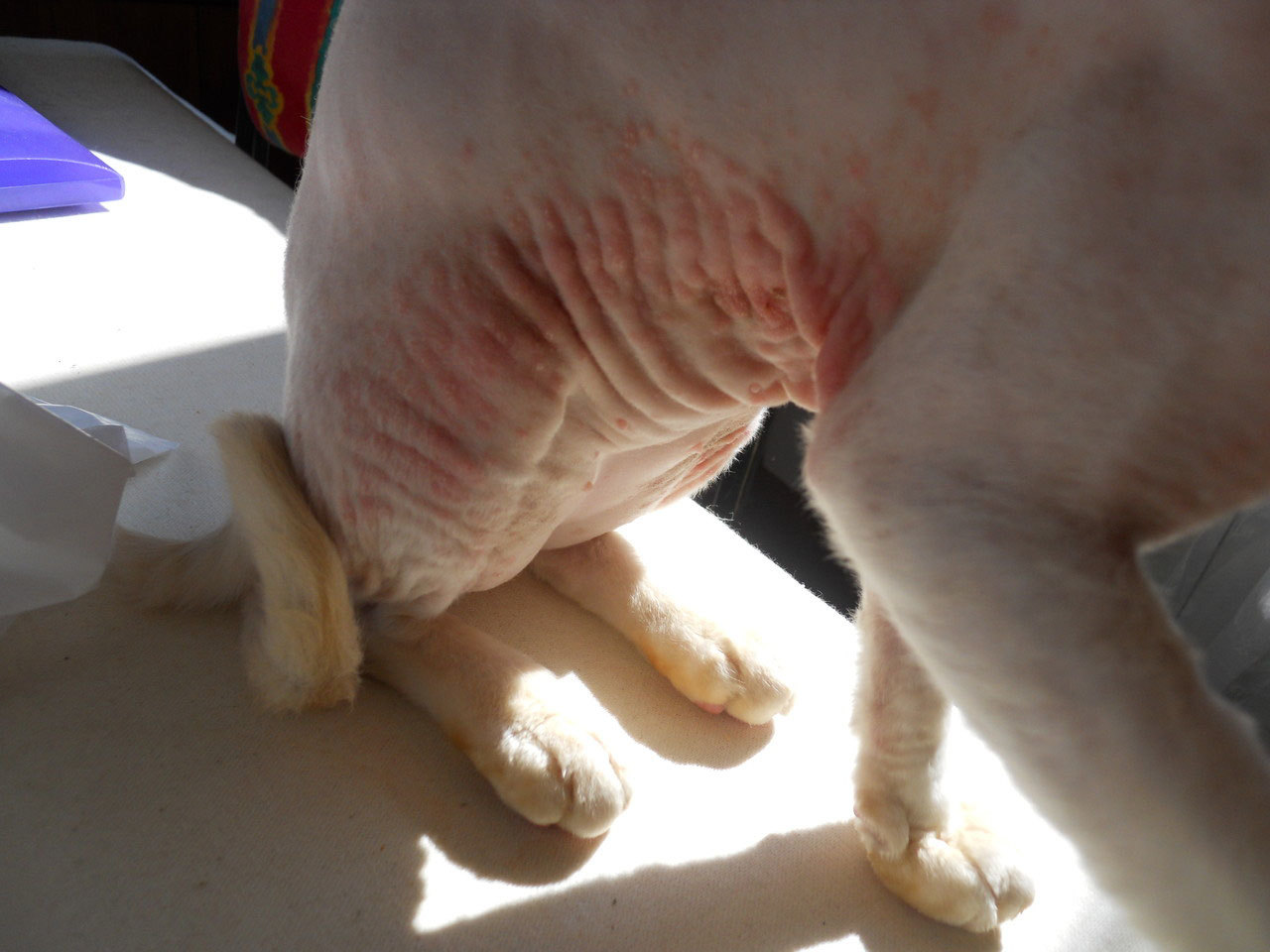
- HIVES
- ed, itchy welts that result from a skin reaction.
- The welts vary in size and appear and fade repeatedly as the reaction runs its course.
- The condition is considered chronic hives if the welts appear for more than six weeks and recur frequently over months or years
What blood type are cornish rex, british short hair, and devon rex cats predisposed to?
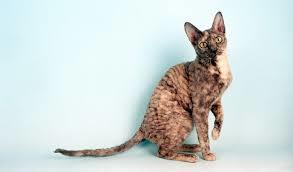
- Type B blood type
- can lead to blood transfusion reactions marked by fever, restlessness, V+, urticaria, and hemoglobinuria
- Type B cats have anti A antibodies and tend to have acute transfusion reactions as compared with type A cats.
Indicated Treatment for Toxoplasma gondii Tx in cats?
What are CS’s possibly seen ?
- CLINDAMYCIN
- pyrexia, neurological signs (seizures), uveitis
- cats are a definitive host for this parasite
- often infected by eating raw food or infected prey
- an elevated IgM titer can show active infection with the organism
- The most common symptoms are lethargy, decreased appetite, and fever.
- The disease can cause diarrhea, upper respiratory symptoms, inflammation of the eyes, and neurologic disease
Tx for Indolent Ulcer in Cats?
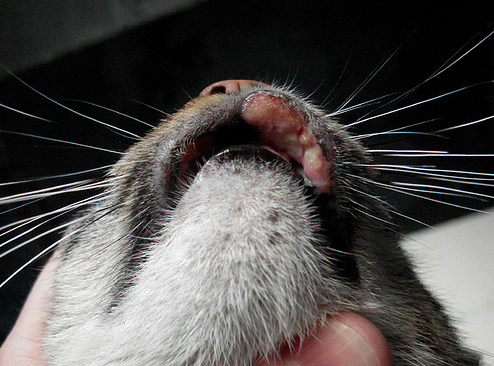
- Immunosuppressive therapy and a change to a hypoallergenic diet
- an indolent ulcer is part of the eosinophilic granuloma complex - mainlyfound on the upper lip of cats
- These lesions can also extend into the oral cavity and can be found at the tongue base or hard palate.
- Typical treatment involves high doses of corticosteroids and identifying possible underlying allergic disease.
- Sometimes, antibiotics are indicated if severe infection is present. A hypoallergenic diet can be helpful if food allergy is the cause.
- Many times, the etiology is unknown but allergy is suspected
What can be effective hairball Tx?
- Frequent brushing, a higher quality diet, and a hairball treatment such as Laxatone (petroleum/mineral oil gel) should be recommended for this cat
- Metoclopramide is an anti-emetic and promotility agent and may be beneficial for hairballs if a high quality diet and laxatone fail to correct the problem.
Primary hyperparathyroidism
- most commonly caused by a parathyroid gland tumor
- commonly get CS’s: PU/PD, lethargy, nodule in thyroid gland region
- Cats will commonly not show significant clinical signs and may be diagnosed incidentally on routine blood work evaluation
- The elevated calcium causes the signs of PU/PD: The most common clinical sign of hypercalcemia is polyuria/polydipsia (PU/PD). This is a direct effect of hypercalcemia on the concentrating ability of the kidney
- Chronic hypophosphatemia usually is the result of decreased renal phosphate reabsorption
- elevated total and ionized Ca, lowered PO4-, hyposthenuria (lower USG0, Calcium oxalate crystals
- Sx is recommended
Hormones involved in Calcium and Phosphorus Regulation
(3)
- Vitamin D
- Parathyroid Hormone (PTH)
- Calcitonin
What would be an appropriate treatment in this case?
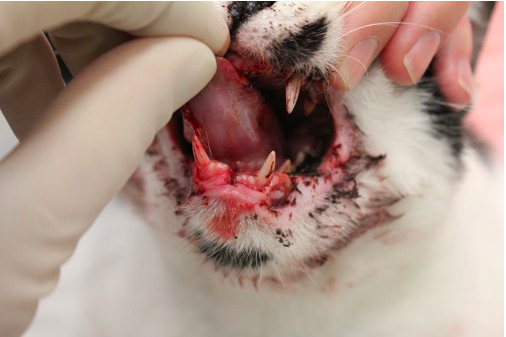
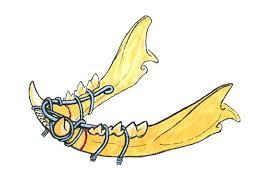
- Circummandibular cerclage wire placed caudal to canine teeth
- Separations of the mandibular symphysis are seen commonly with “high-rise syndrome” or when cats fall from heights because they frequently are able to rotate in mid-air, landing on all 4 feet to break the fall but often also landing with their lower jaw hitting the ground at the same time. This is sometimes referred to as a symphyseal fracture but it is not a true fracture as the mandibular symphysis never fully ossifies or fuses
- Symphyseal separation occurs with this type of trauma and right and left rami become distracted as is evident in the photo.
- The standard treatment is circummandibular cerclage wire placed caudal to the lower canine teeth with the wire tightened once the hemi-mandibles are aligned. A hypodermic needle is often used to guide placement of the wire
Wood’s lamp test
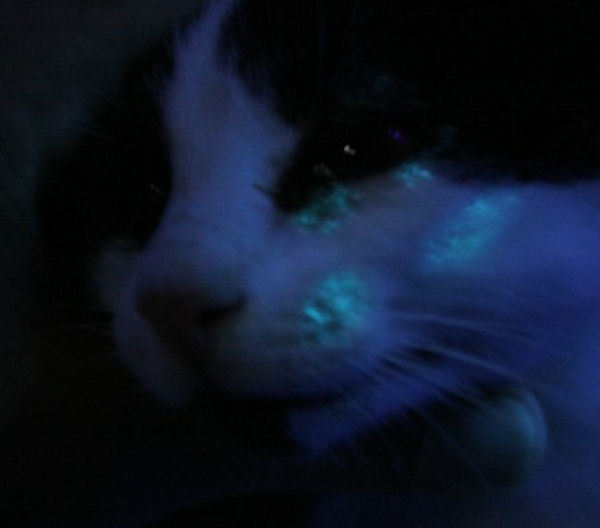
- In veterinary medicine, Wood’s lamps are most commonly used to help identify dermatophytosis caused by Microsporum canis
- Fungal culture is the most definitive diagnostic for dermatophytosis.
- Ketoconazole is not recommended in cats because it causes them to vomit.
- Examination of the lesions under a Wood’s lamp does not definitively rule out dermatophytosis; only about 50% of Microsporum canis organisms actually fluoresce under a Wood’s lamp. Other dermatophyte species do not fluoresce at all.
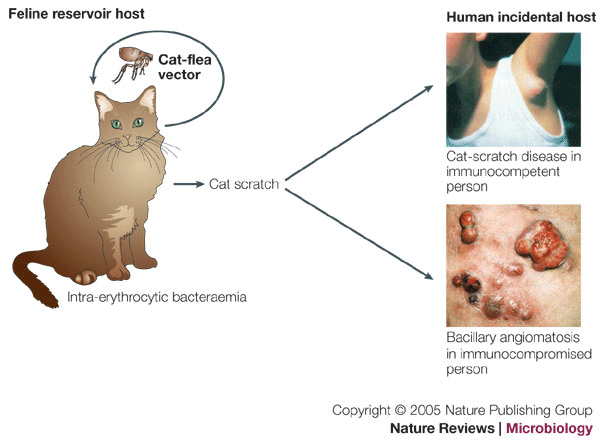
What is the most common cause of Cat Scratch Disease in humans?
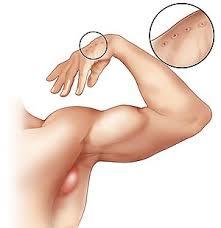
Bartonella henselae
- Usually, you will see a papule at the site of inoculation followed by fever and local lymphadenopathy one week later.
- The lymphadenopathy will last months but is self-limiting. Neat! Cats are generally asymptomatic
IV dextrose
- can aid with hyperkalemia (as may happen with urinary obstruction in a cat)
- Dextrose. IV dextrose is helpful for longer term control of hyperkalemia.
- A 50% dextrose solution (1 mL/kg), diluted to a final concentration of 10% to 20%, is administered as an IV bolus.
- This treatment stimulates endogenous insulin release, causing intracellular translocation of plasma potassium - makes cells have an increased permeability to potassium
- be aware: in some cases, in the immediate post-obstructive period with urinary blockage, cats may develop hypocalcemic tetany - The mechanism is considered to be secondary to laws of mass action that drive down calcium as a result of existing hyperphosphatemia. Judicious use of calcium gluconate can quickly restore their electrolyte balance and prevent further complications such as hypocalcemic seizures
Where is the primary site of Cryptococcus infection in cats?
- In cats, dogs, koalas and psittacine birds, the nasal cavity is usually the primary site of infection.
- In cats, infections with feline leukemia virus (FeLV) and feline immunodeficiency virus (FIV) have been thought to predispose to cryptococcosis






