Female reproductive endocrinology
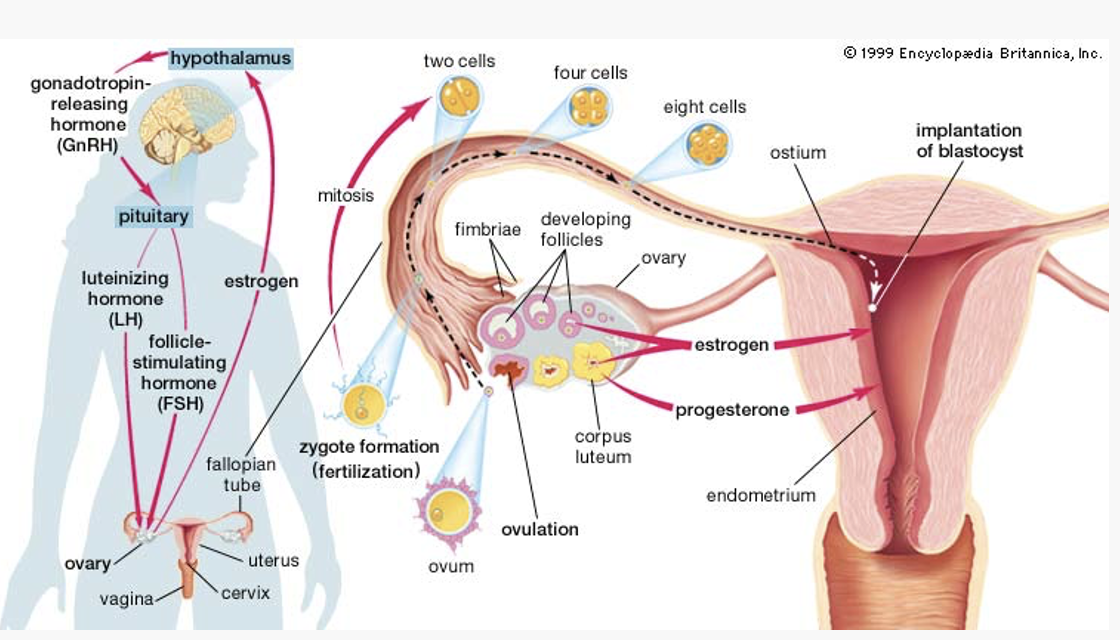
LH and FSH is released and they go to the ovaries to stimulate egg, estrogen and progesterone release.
- This has a negative feedback on GnRH and pituitary to reduce LH and FSH production.
- if you have hormonal contraceptive which has high levels of estrogen and or progesterone then its gonna have the same negative feedback effect on the pituatary and the hypothalamus and decerease the production of LH and FSH and decrease the stimulation of developing follicles and this will make implantatation less likely.
Combined hormonal contraceptives (CHC)
combined = (Estrogen +Progesterone)
-Available as tablets (COC), transdermal patches (CTP), and vaginal rings (CVR).
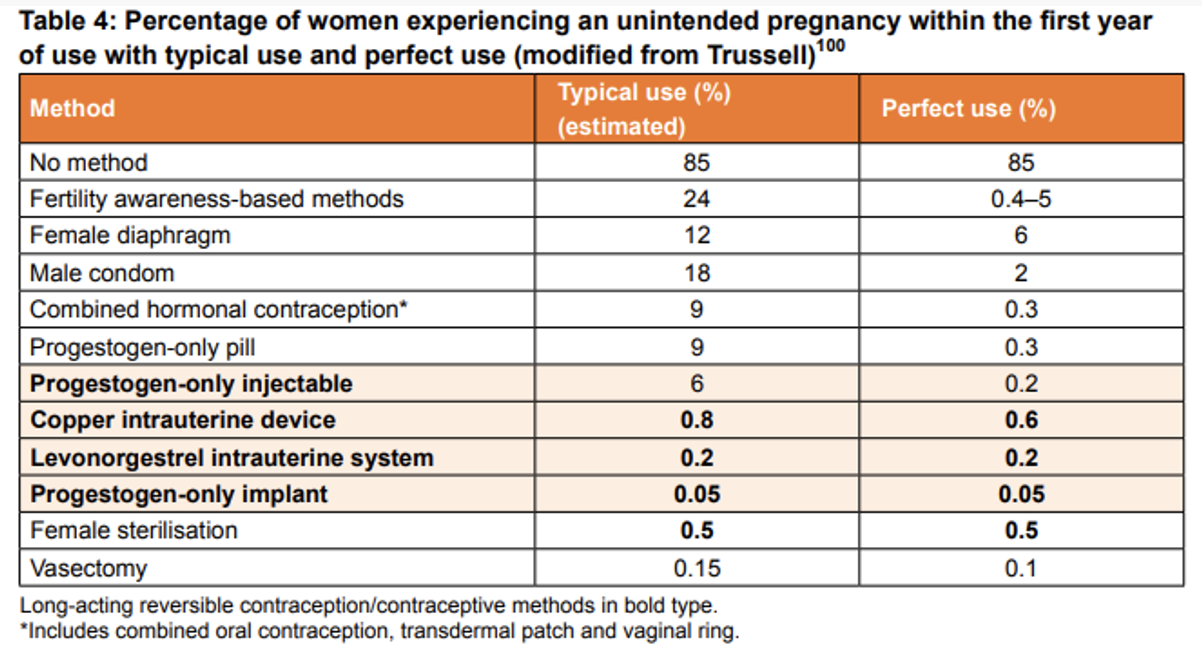
- Highly user-dependant methods where the failure rate if used perfectly (i.e. correctly and consistently) is less than 1%.
- Certain factors such as the person’s weight, malabsorption including diarrhoea and vomiting (COC only), and drug interactions (enzyme inducing drugs) may contribute to contraceptive failure.
- Prescriptions of up to 12 months’ supply for CHC initiation or continuation may be appropriate to avoid unwanted discontinuation and increased risk of pregnancy.
- Should not be continued beyond 50 years of age as safer alternatives exist.
Benefits of Combined hormonal contraceptives
- Reduced risk of ovarian, endometrial and colorectal cancer.
- Predictable bleeding patterns, its not period, its a withdrawal bleed but they happen in a predictable way.
- Reduced dysmenorrhoea (period pain) and menorrhagia (heavy period)
- Useful in the Management of symptoms of polycystic ovary syndrome (PCOS), endometriosis and premenstrual syndrome.
- Improvement of acne.
- Reduced menopausal symptoms.
- Maintaining bone mineral density in peri-menopausal females under the age of 50 years.
Risks with Combined hormonal contraceptives (CHC)
1•Breast cancer and cervical cancer associated with current or recent use of CHC is small, but is greater than that with progestogen-only or non-hormonal contraception.
2•Venous and arterial thromboembolism; CHC is associated with a 3- to 3.5-fold increase in VTE risk compared with non-use of CHC.
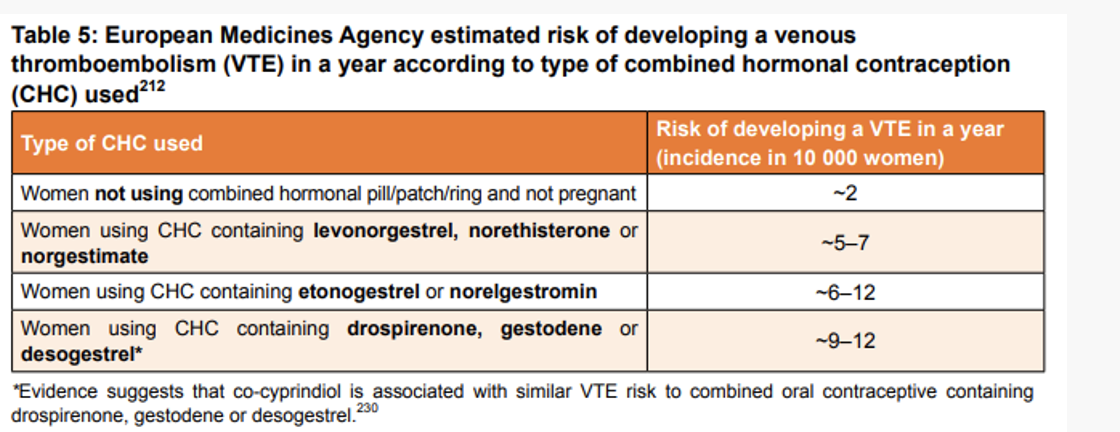
The Absolute risk of VTE during use of CHC is estimated by the European Medicines Agency to be between 5 and 12 per 10 000 women per year of use compared to 2 per 10 000 non-CHC users per year.
NB; VTE risk is lower during CHC use than during pregnancy and the postpartum period. By reducing the rates of unplanned pregnancy, CHC use lowers the overall rate of VTE in the population in comparison to populations without access to effective contraception.
VTE events that do occur during use of CHC, approximately only 1% are fatal.
- Levonorgestrel (LNG), norethisterone (NET) and norgestimate COC are associated with a lower risk of venous thromboembolic events than COC containing newer progestogens, and also the combined transdermal patch and the combined vaginal ring which have a hiogher risk of VTE.
- COC containing higher EE (ethinylestradiol) doses may be associated with greater risk of arterial thrombotic events than lower EE doses.
Risks with CHC
Women who aren’t using any hormonal contraceptive and not pregnant have a risk of VTE of about 2 in 10,000.
If you are taking CHC containing levonorgesterel etc, you risk is about 5-7 per 10,000.
Options for how to use CHC
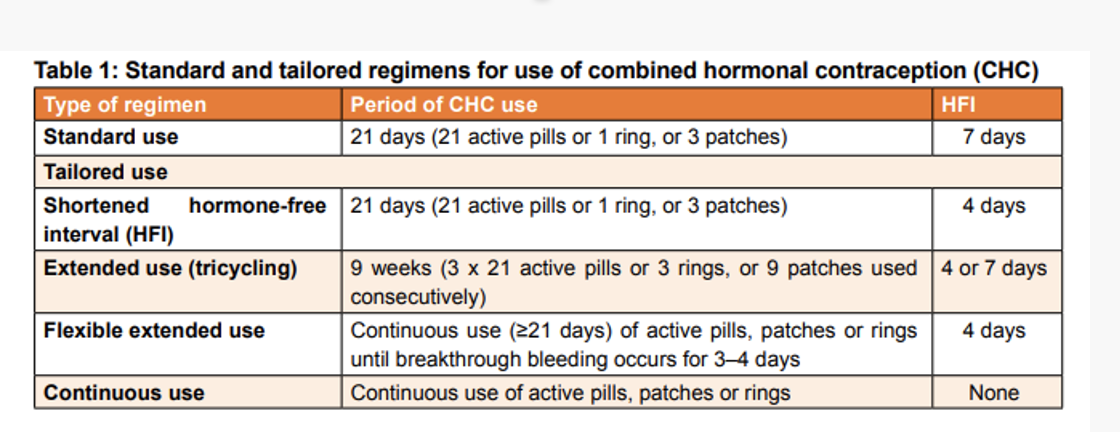
- standard use is a pill packet which comes with 21 days , tends to have days of the week labelled on it.
- you take it for 21 days and then you have a 7day hormone free period.
- this is the same for the vaginal ring.
- the 7 days without the pills is when you have withdrawal bleeds.
- its doesn’t always have to be 7 days free, you can tailor it to yourself like you can do 4. days.
Oral progestogen-only contraceptives
- Alter cervical mucus to prevent sperm penetration and may inhibit ovulation in some women.
- oral desogestrel-only preparations consistently inhibit ovulation and this is their primary mechanism of action.
- Progestogen-only contraceptives offer a suitable alternative to combined hormonal contraceptives when oestrogens are contra-indicated.
Parenteral progestogen-only contraceptives
1•Medroxyprogesterone acetate (Depo-Provera®, SAYANA PRESS®) is a long-acting progestogen given by injection;
- At least as effective as the combined oral preparations
- Prolonged action, it may be used as a short-term or long-term contraceptive for women
- Delayed return of fertility and irregular cycles may occur after discontinuation of treatment but there is no evidence of permanent infertility.
2•Norethisterone enantate (Noristerat®) is a long-acting progestogen given as an oily injection which provides contraception for 8 weeks; it is used as short-term interim contraception e.g. before vasectomy becomes effective.
3•Etonogestrel-releasing implant (Nexplanon®) is also available.
•Highly effective long-acting contraceptive, consisting of a single flexible rod that is inserted subdermally into the lower surface of the upper arm and provides contraception for up to 3 years. Local reactions such as bruising and itching can occur at the insertion site. The contraceptive effect of etonogestrel is rapidly reversed on removal of the implant. It is slightly weight dependent, it might not be effective in the 3rd year in larger women.
Intra-uterine progestogen-only device
•Mirena®, Jaydess® and Levosert® release levonorgestrel directly into the uterine cavity.
•Licensed for contraception and some licensed for the treatment of menorrhagia (heavy period bleed)
•Effects - prevention of endometrial proliferation, thickening of cervical mucus, and suppression of ovulation in some women (in some cycles), the intra-uterine system itself may contribute slightly to the contraceptive effect.
•Return of fertility after removal is rapid and appears to be complete.
•Advantages over copper intra-uterine devices - improvement in any dysmenorrhoea (painful period) and a reduction in blood loss; possible reduced pelvic inflammatory disease.
Comparative contraceptive success rates
Emergency contraception
•Hormonal emergency contraceptives (includes levonorgestrel and ulipristal acetate) should be offered as soon as possible after unprotected intercourse if a copper intra-uterine device is not appropriate or is not acceptable to the patient; either drug should be taken as soon as possible after unprotected intercourse to increase efficacy. Hormonal emergency contraception administered after ovulation is ineffective.
•Levonorgestrel is effective if taken within 72 hours (3 days) of unprotected intercourse and may also be used between 72 and 96 hours after unprotected intercourse [unlicensed use], but efficacy decreases with time.
•Ulipristal acetate is effective if taken within 120 hours (5 days) of unprotected intercourse. Ulipristal acetate has been demonstrated to be more effective than levonorgestrel for emergency contraception.
•It is possible that a higher body-weight or BMI could reduce the effectiveness of oral emergency contraception, particularly levonorgestrel; if BMI is greater than 26 kg/m2 or body-weight is greater than 70 kg, it is recommended that either ulipristal acetate or a double dose of levonorgestrel [unlicensed indication] (see Emergency contraception under levonorgestrel) is given. It is unknown which is more effective.
•Ulipristal acetate should be considered as the first-line hormonal emergency contraceptive for a woman who has had unprotected intercourse 96–120 hours ago (even if she has also had unprotected intercourse within the last 96 hours). It should also be considered first line for a woman who has had unprotected sexual intercourse within the last 5 days if it is likely to have taken place during the 5 days before the estimated day of ovulation.
Male reproductive endocrinologyMale reproductive endocrinology
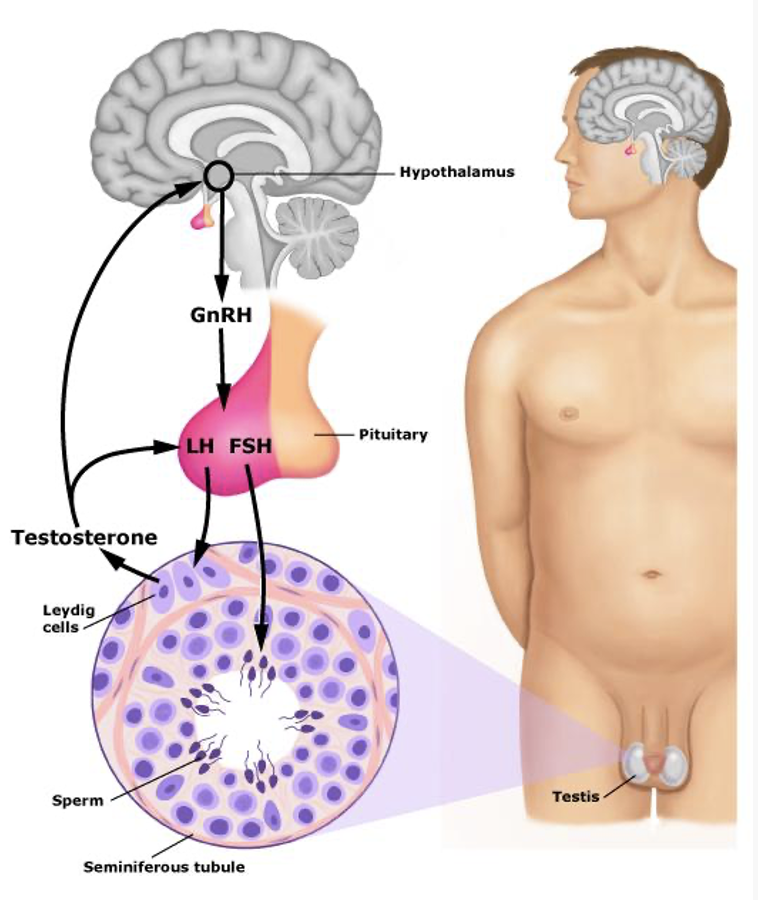
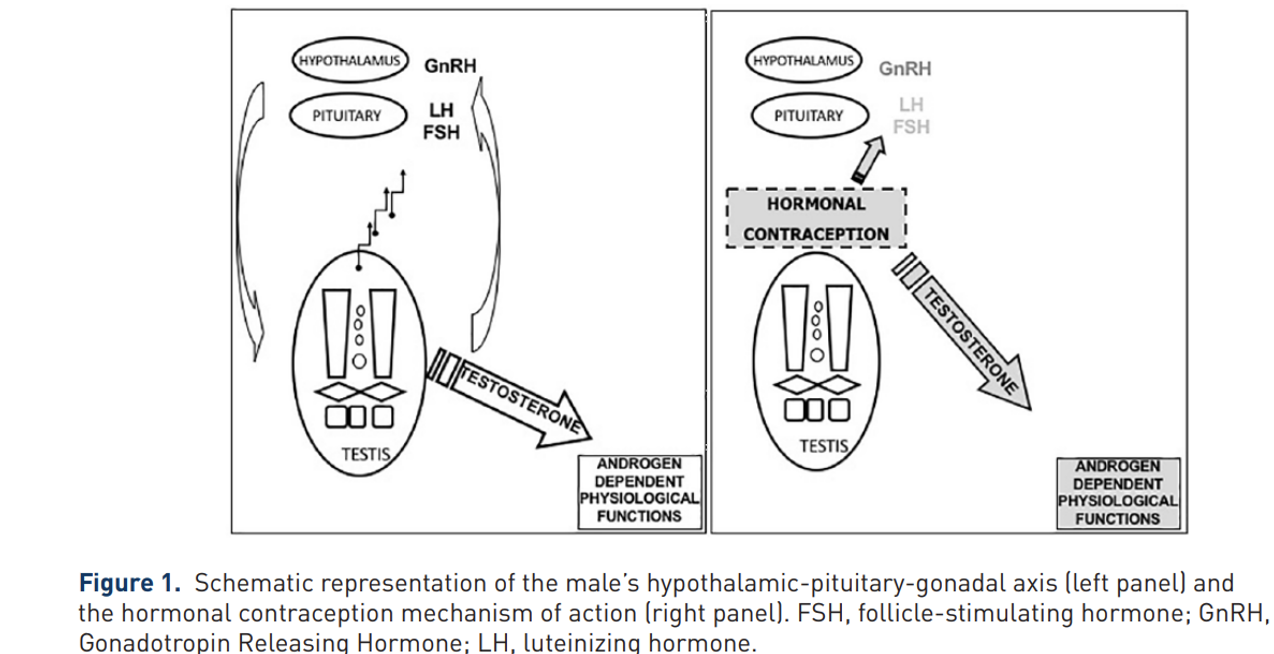
LH and FSH is released from the pituitary. LH goes to the leydig cell in the testes to release testosterone and this has a negative feedback on the hypothalamus and pitutary. Male hormonal contraceptive aim to exploit the negative feedback loop by increasing the testosterone levels to cause a decrease in GnRH which therefore decreases LH and FSH which decreases sperm production.
Update on male hormonal contraception
Giulia Gava and Maria Cristina Meriggiola
Ther Adv Endocrinol Metab 2019, Vol. 10: 1–9
This is just a schematic representation of how the male contraceptive works.
*Male hormonal contraceptives are not licenced in the UK.
Update on male hormonal contraception
Giulia Gava and Maria Cristina Meriggiola
Ther Adv Endocrinol Metab 2019, Vol. 10: 1–9
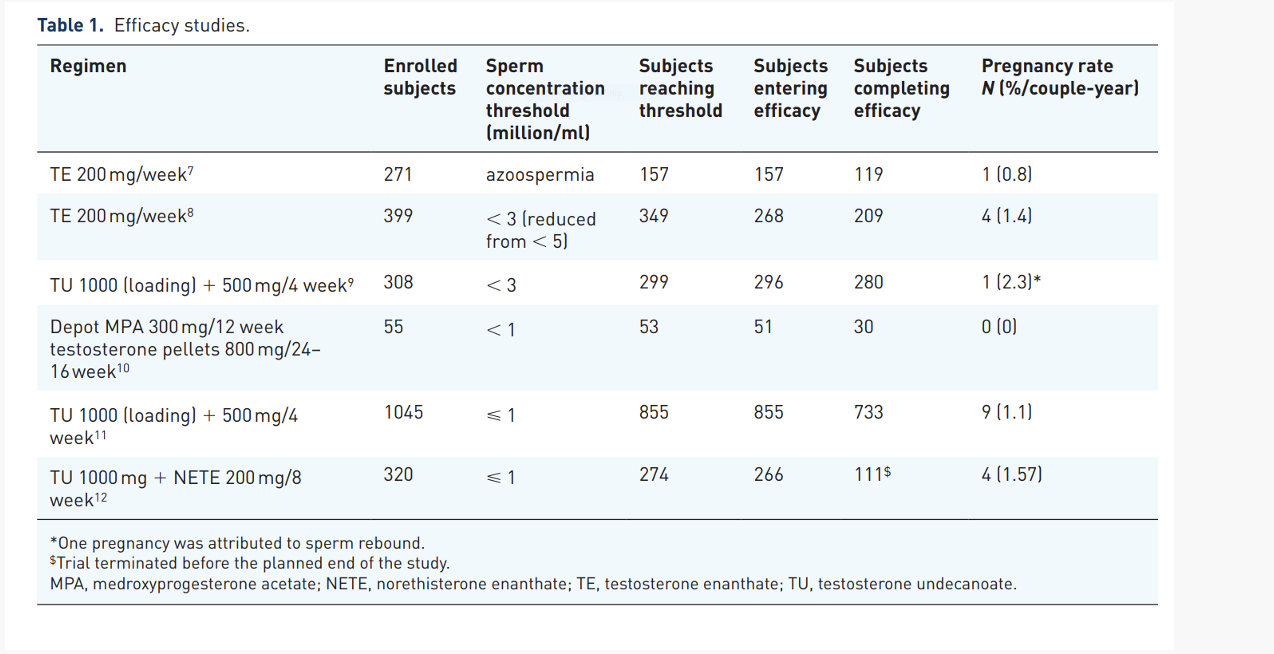
A review paper the options available are testosterone given in large doses per week or testosterone mixed with something which makes it alst longer.
or DEOPT with medroxyorogesterone and testosterione combined.
Side Effects of male hormonal contraceptive
•testosterone-only regimens: acne, altered libido, night sweats, increased weight, and mood changes.
- The combination of testosterone with a progestin allowed a reduction of testosterone dose minimizing androgenic side effects.
- Progestins derived from nortestosterone, which retain their androgenic activity, more often caused androgen-related adverse side effects such as weight gain, acne, or decreased HDL- cholesterol.
- Interestingly, adverse side events reported by 93% of men on active treatment were also reported by 81% of men on placebo treatment.

-
Defining The Pelvic Region38
-
SEXUAL DIFFERENTIATION: HOW TO MAKE A BOY OR A GIRL35
-
Disorders of Ovulation51
-
Puberty – Physiology & Disorders33
-
Defining the Reproductive Tracts70
-
Male and Female Reproductive Endocrinology14
-
Fertility Control15
-
Thinking about populations at a moment in time: Prevalence and cross-sectional studies1
-
Infertility – Basic Science & NICE Guidelines39
-
The testis and spermatogenesis28
-
Measuring Sperm11
-
Normal Birth21
-
Prenatal Screening:NHS Fetal Anomaly Screening Programme24
-
Maternal Hyperglycaemia During Pregnancy29
-
Sexually transmitted infections29
-
Physiology of Pregnancy22
-
Fertilization and Placental development22
-
Fetal growth problems20



