Infertility
-Failure to achieve pregnancy after two years of frequent unprotected intercourse
-Six months for 2ry infertility and women above 36 year old
-Affects 1:6 couples (15%)
Infertility
- 84% of couples achieve pregnancy after one year
- 92% achieve pregnancy after 2 years
- 94% achieve pregnancy after 3 years
*that’s why its okay for a young person to try for 2 years before offering treatment.
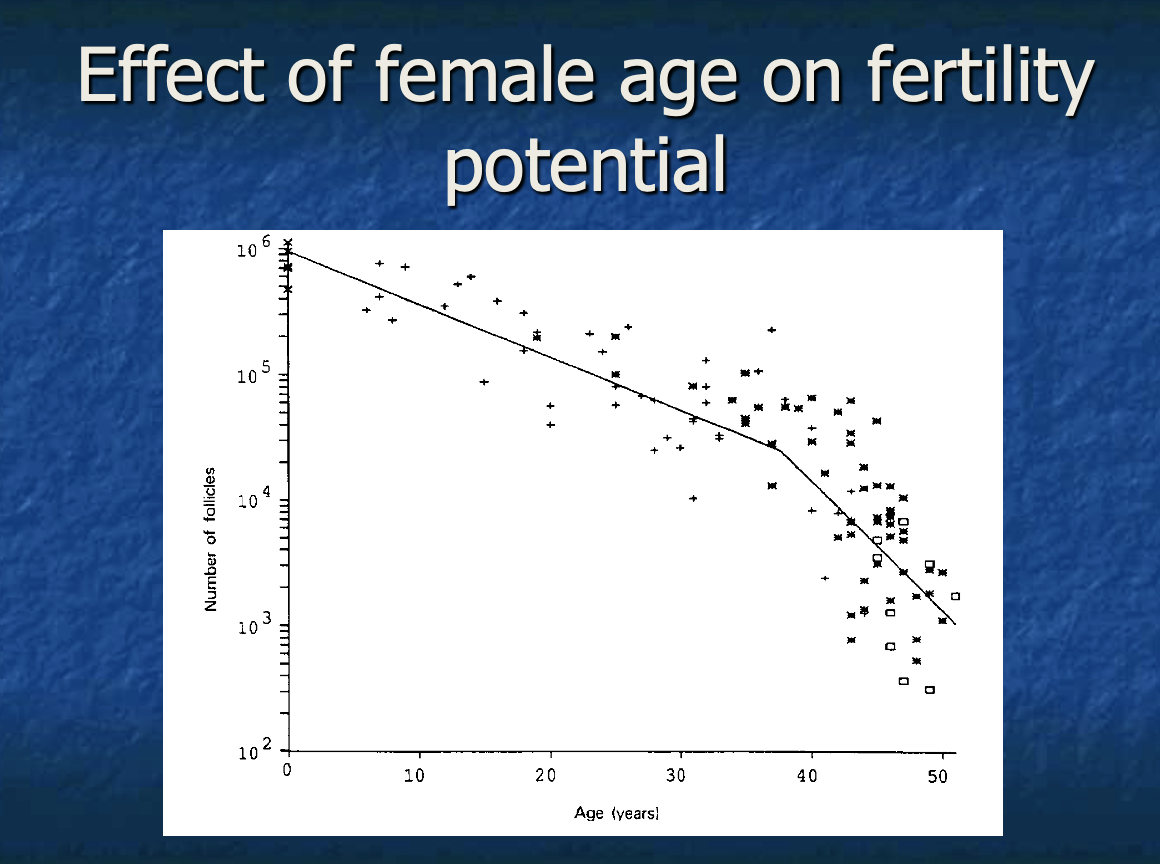
*Women are born with a specific amount of follicles or eggs and there is a consistent depletion of the eggs as women age and in fact, the decline from the number of eggs starts when a woman was a fetus in the uterus.
*The vast majority of eggs are wasted before puberty.
New NICE Guideline for Infertility definition:
a) . The period of time people have been trying to conceive without success after which formal investigation is justified and possible treatment implemented.
b) “If a woman has not conceived after a year, offer further clinical assessment and investigation, along with her partner”
c) “If a woman is using AI (Artificial Insemination) has not conceived after 6 cycles of treatment, offer further clinical assessment and investigation. When AI is using partner sperm, the referral should include her partner”
In artificial insemination, a doctor inserts sperm directly into a woman’s cervix, fallopian tubes, or uterus.
New NICE Guideline
Refer early for specialist consultation:
- Women aged >36 years
- There is a known cause of infertility or history of predisposing factors
- Investigations show there is no chance of pregnancy with expectant management
Causes of Infertility
•Female Factor 30%
•Male Factor 30%
•Combined 10%
•Unexplained 25% (inability to find a medical reason).
•Other causes 5%
EXTRA NOTES;
*low ovarian reserve is not yet recognised as a cause of infertility but it is recognised as a reason to offer treatment.
*Women who have endometriosis tend to have lower fertility potential than women wo do not have endometriosis.
Female Factors Causing Infertility
•Ovulation disorder: PCO (80%), PCOS, POF (premature ovarian failure/aging), Hypopituitarism (no FHS/LH), RadioChemo Treatment.
*we don’t know why women have PCOS but it is related to high Androgen levels, low insulin sensitivity that can mess up ovulation and behaviour of ovaries. these women tend to have multiple follicles. these women do not recruit follicles and ovulate like normal women.
•Tubal blockage: PID (pelvic inflammatory disease) PID is commonly caused by Chlamydia, endometriosis, previous ectopic pregnancy and the tube is removed and the other tube might not be healthy.
•Age-related: Limited Ovarian Reserve
•Uterine problems: Synechiae (adhesion inside the uterine cavity/ this is very rare), polyp (extra pieces of endometrium sitting in the endometrial cavity), fibroid.
BASIC INFERTILITY WORK UP
•HISTORY AND EXAMINATION OF BOTH PARTNERS
• FSH/LH AND OESTRADIOL, PROLACTIN, TFT ON (DAY 2 OR 3)
- MID LUTEAL PROGESTERONE (regular cycles) (can sometimes be called day 21 blood test) this is not accurate. Progesterone levels peak 7 days before starting your next period. this is why its called day 21 blood test) but how about women who have a 35-day cycle. so her progesterone levels will need to be checked at day 28 and not 21. that’s why its better to call it MID LUTEAL PROGESTERONE.
- CHLAMYDIA SWAB & Rubella
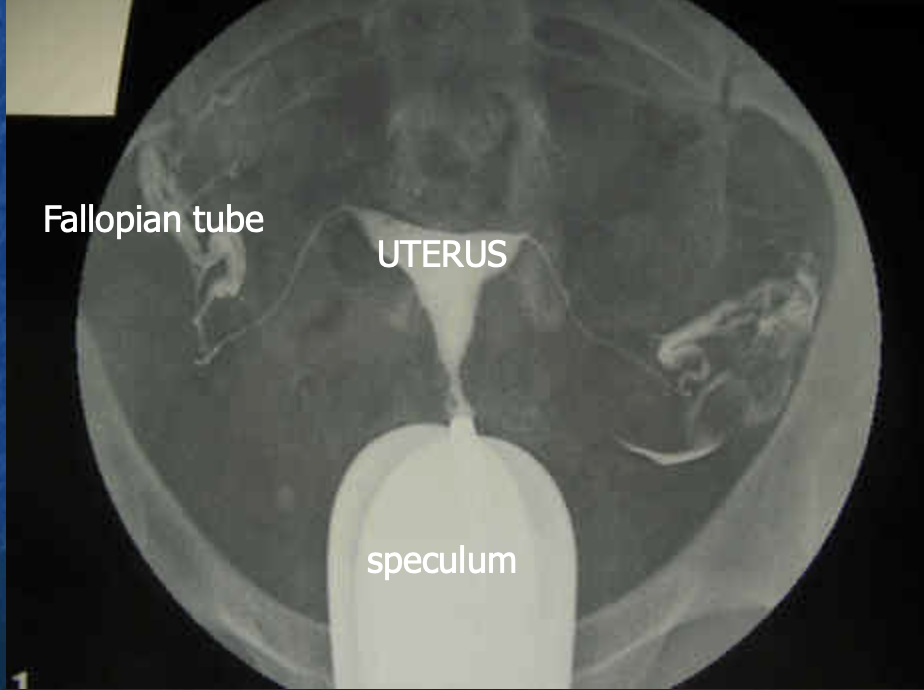
- HSG (hysterosalpingogram) -(to test the fallopian tubes)
- PELVIC ULTRASOUND
*Fibroid is a benign overgrowth of the myometrium (wall of the uterus).
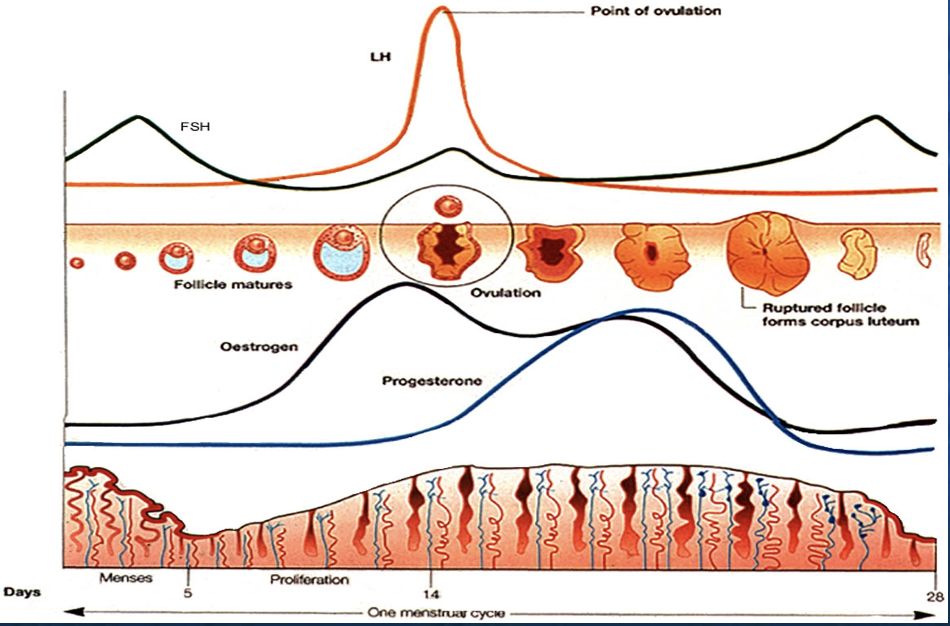
Female Ovulatory Cycle
- The ovulation cycle begins by an increase in FSH levels, it stimulates the ovarian follicles to mature and this helps make estrogen.
- Estrogen has a negative feedback effect on the pitutary, making FSH go down.
- When the follicle is ready to release the egg inside, estrogen levels reach its peak. This then have a positive feedback effect on the pituitary leading to LH surge.
- The follicle then ruptures, to release the egg.
- After ovulation, progesterone starts to go up to make the endometrium ready for implantation. if she does not get pregnant, the corpus luteum can only survive for 18 days, there will be shedding/breakdown of the endometrium.
*Part of the assessment of ovarian reserve is to check FSH level because this is the main driver of the ovaries and if FSH level is high, it means that the woman has low ovarian reserve because that means that the driver is working harder than neccesary. As in the ovaries are not responding well.
*The ovulation prediction sold in pharmacies will test for LH / Estrogen surge.
Ultrasound Evaluation
Antral Follicle Count
Part of the assessment of ovarian reserve is to count the number of follicles which are all potential eggs. the Higher the Antral Follicle Count, the better the ovarian reserve and we count the follicles by doing a vaginal scan measuring the small follicles.
- Part fo the assessment of ovarian reserve is to test a hormone called AMH (Anti-Müllerian hormone). This hormone comes directly from the follicles and it gives the best value of the reserve.
- The higher the Antral Follicle Count, the higher the AMH, the better the ovarian reserve. unlike FAH where the Higher the FSH, the lower the ovarian reserve.
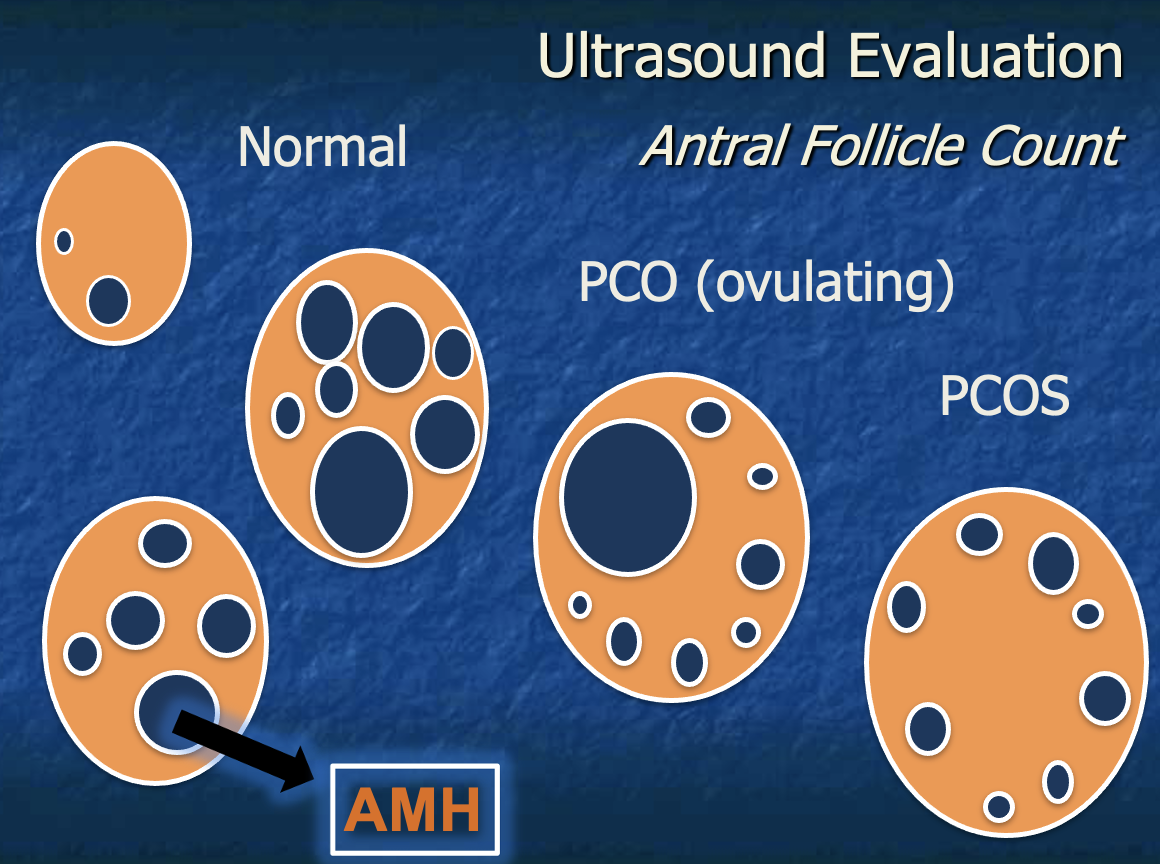
AMH
- Produced by the Granulosa cells (inside the Antra follicles)
- High production in pre-antral and small antral stages
- Levels of AMH constant through monthly periods but declines with age.
- Increasing age means a decreased follicle pool
- Increasing age means a decreasing AMH level
- Higher AMH levels predict a good response
- Lower AMH levels predict a poor response
*The advantage of testing AMH is that FHS has to be timed between day 2 and 3 or day 2-5 of a menstrual period. AMH does not fluctuate and does not have to be timed in relation to the menstrual cycle, you can test AMH for any woman at any time.
The most useful investigations for women with infetrtility
-Ovarian Reserve Assessment
-Day 2-3 FSH, LH, oestradiol, AMH
-Pelvic Ultrasound & antral follicle count
Effect of female age on fertility potential
As a woman becomess more mature the number of follicles reduces.
BASIC INFERTILITY WORK UP
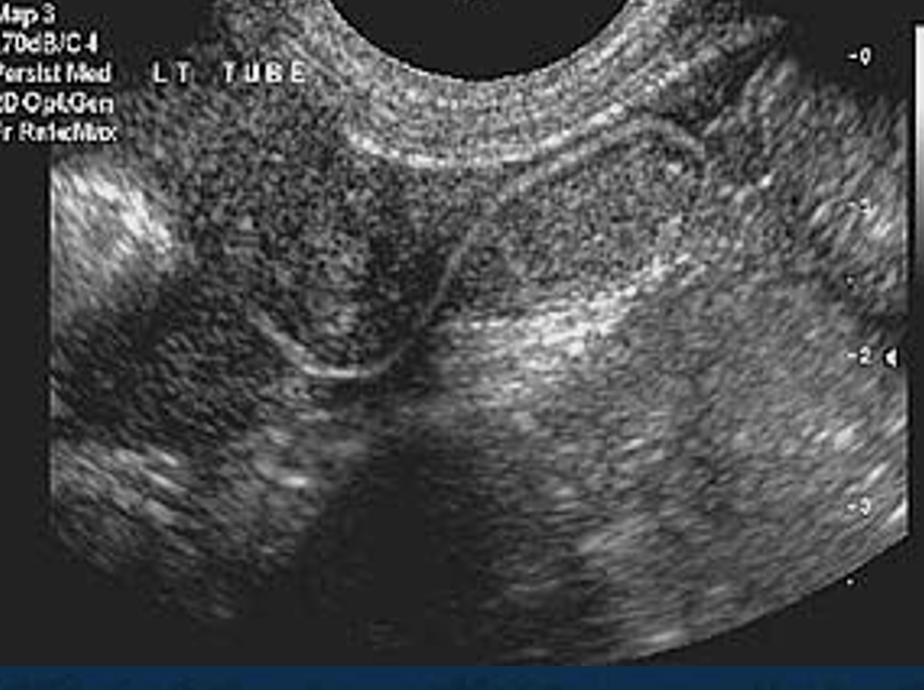
TEST OF TUBAL PATENCY - HSG
Testing the fallopian tube, we can do hysterosalpingogram ( an x-ray procedure WITH A DYE)
HyCoSy (Ultrasound & Dye) test
Hysterosalpingo Contrast Sonography
-This is an alternative for HSG.
BASIC INFERTILITY WORK UP
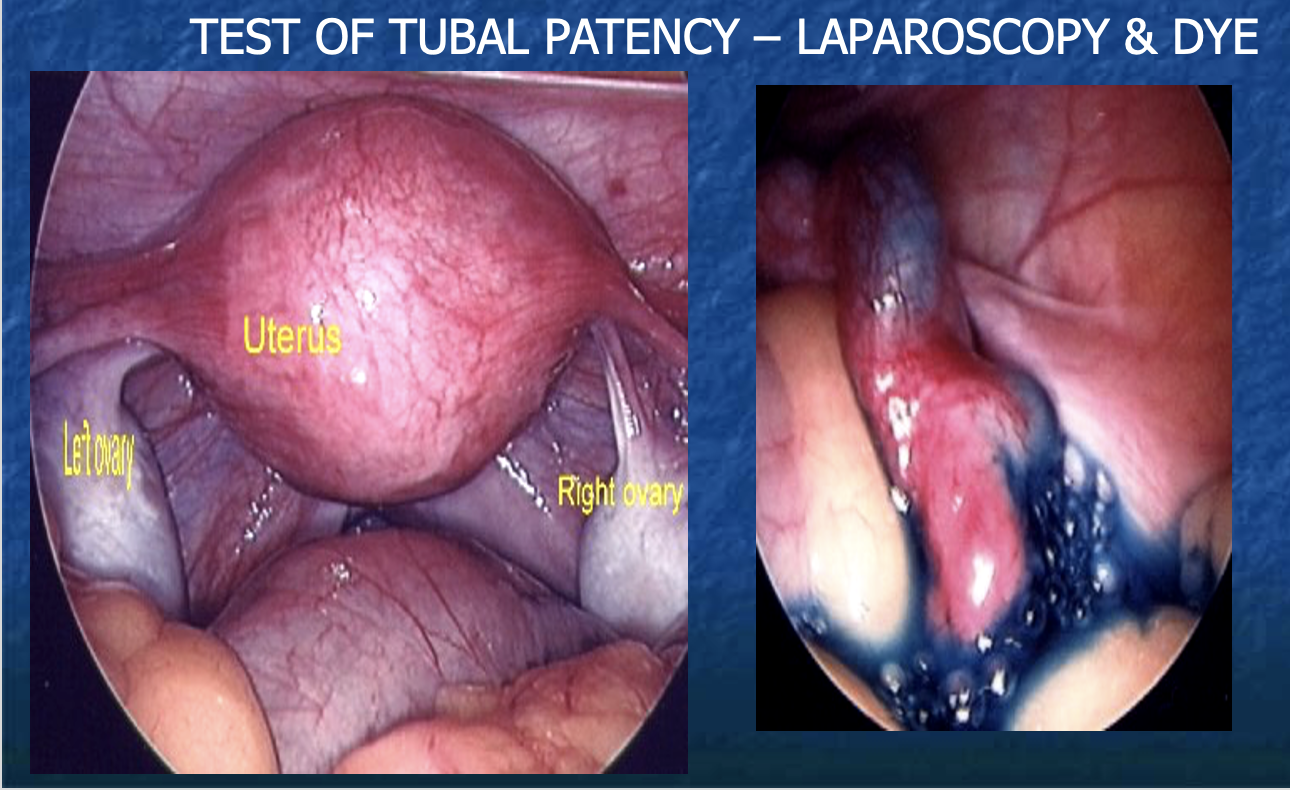
TEST OF TUBAL PATENCY – LAPAROSCOPY & DYE
This is the Gold standard test in comparison to the ultrasound and xray.
BASIC INFERTILITY WORK UP
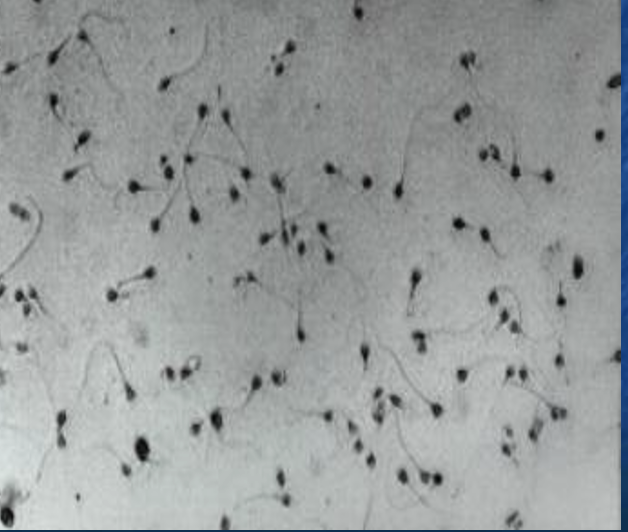
SEMEN ANALYSIS
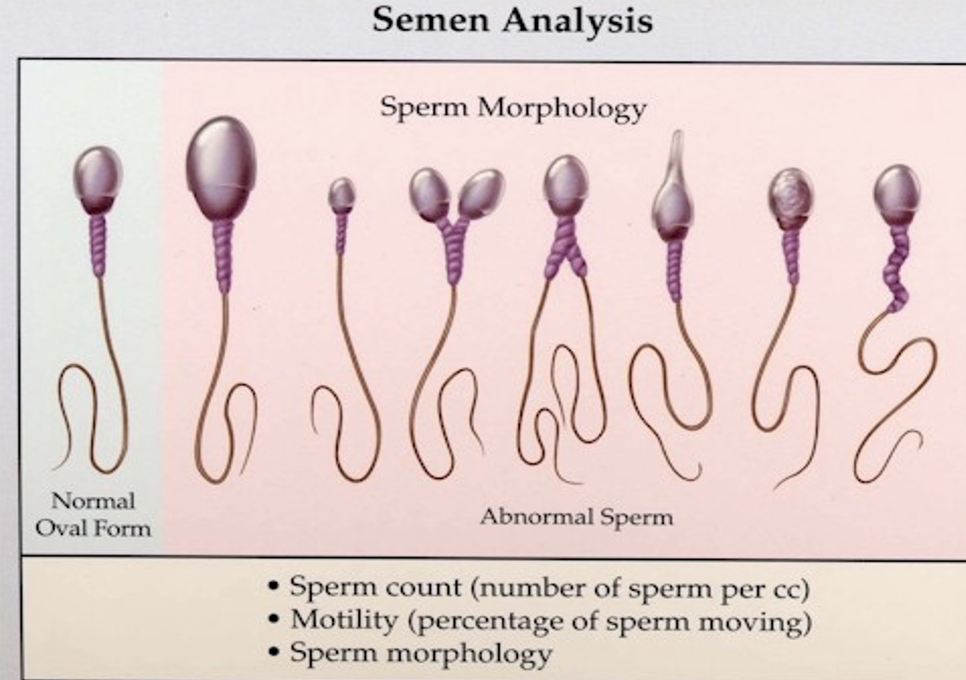
Normal SEMEN ANALYSIS; the volume should be 1.5-6mls. 4% should be normal looking.
Sperm Count > 15 x 106 / ml
Risk of motlity of the sperm should be 33 %
total motility should be about 40%
Abnormal forms < 96%
Semen analysis
You can see the normal-looking sperm vs the abnormal-looking sperms. Men have to ejaculate lots and lots of sperm because vast majority of sperm are abnormal.
-In IVF, we get rid of all the abnormal-looking sperm to use the best and most normal looking sperm to fertilise the eggs.
Recent NICE Guidelines reccomendation
- AMH (Anti-Mullarian Hormone) & not FSH to check ovarian reserve because AMH has a better predictive value of the ovarian reserve.
- No fund for IUI (Intrauterine Insemmination)
- No lower age for women when you offer fertility treatment (but for some regions in the UK 18 is the minimum age).
- Upper age for women to get fertility help is 42 years
- Treat single women
- Treat same-sex couples
New NICE Guideline
For Unexplained infertility:
- Do not offer Intrauterine insemination (IUI) as sometimes it has the same effect as natural intercourse.
- Do not offer oral ovulation stimulation of voluation (i.e FSH injection).
- Offer IVF for women who have not conceived after 2 years and this is unexplained infertility.
New NICE Guideline
-Offer 3 full IVF cycles to women under 40 year
-Offer one full cycle to women aged 40-42 years provided:
- Never had IVF before
- No evidence of low ovarian reserve
- Discuss implications of IVF & pregnancy at this age. (there is a higher risk of chromosomal abnormality and miscarriage as well). such as down syndrome.
New NICE Guideline
-Clomid & FSH injections:
- No association with cancer
- No association with cancer in children born after using either of the 2 methods.
- Long term health outcomes in women & children are still awaited. Clomid has been used for at least 50 years.
Clomifene, also known as clomiphene, is a medication used to treat infertility in women who do not ovulate, including those with polycystic ovary syndrome. Us
Couples having IVF:
- Chance of Live Birth falls with rising female age
- IVF is more effective in women who achieved pregnancy before
- Absolute risks of long term adverse outcomes in children born as a result of IVF are low
Kent Surrey Sussex Funding Criteria for IVF
- Female age less than 40 year
- AMH level at 5 or above
- BMI 19-29.9
- No existing children including adopted children
- Both non-smoker
KSS Funding Criteria
- Ovulation induction is offered when indicated
- No IUI except for heterosexual couples who cannot achieve intercourse
- No fund for treatment involving the use of donor eggs or sperm or surrogacy
- 2 fresh IVF & 2 frozen treatment cycles are available on the NHS


-
Defining The Pelvic Region38
-
SEXUAL DIFFERENTIATION: HOW TO MAKE A BOY OR A GIRL35
-
Disorders of Ovulation51
-
Puberty – Physiology & Disorders33
-
Defining the Reproductive Tracts70
-
Male and Female Reproductive Endocrinology14
-
Fertility Control15
-
Thinking about populations at a moment in time: Prevalence and cross-sectional studies1
-
Infertility – Basic Science & NICE Guidelines39
-
The testis and spermatogenesis28
-
Measuring Sperm11
-
Normal Birth21
-
Prenatal Screening:NHS Fetal Anomaly Screening Programme24
-
Maternal Hyperglycaemia During Pregnancy29
-
Sexually transmitted infections29
-
Physiology of Pregnancy22
-
Fertilization and Placental development22
-
Fetal growth problems20



