Sandifer syndrome - what is it and what is its presentation?
paroxysmal dystonic movement disorder occurring in association with gastro-oesophageal reflux, and, in some cases, hiatal hernia.
P/w food refusal and neck contortions/spasms/arching of back
Diagnosis: Improvement or disappearance of symptoms on a CMP-free diet adds substantial evidence to the diagnosis. If the reintroduction of CMP causes relapse of symptoms, the diagnosis seems established, because a challenge test is considered as the golden standard diagnostic test.
Also normal EEG
What are reducing sugars? Provide examples (x4)
What about non-reducing sugars? 4x examples?
Reducing (FML-G)
Fructose
Maltose
Lactose
Glucose
Non-reducing (LMS-S)
Lactulose
Mannitol
Sorbitol
Sucrose
How to calculate osmotic gap of stool?
How is this helpful?
Osmotic gap = subtracting the sum of the sodium and potassium concentration in stool multiplied by a factor of 2 from 290 mOsm/kg to account for unmeasured anions (ie, 290 - 2 ({Na+} + {K+})
- >100-125 mOsm/kg = osmotic diarrhea ie there is a low concentration of Na and K in the stool
- <50 mOsm/kg = secretory diarrhea ie there is a high concentration of Na and K in the stool driving the diarrhoea
Perianal excoriation and gaseous abdominal distension - what does this indicate from a GI perspective?
CHO malabsorption
Causes- Digital clubbing
3’Cs!
CF
Celiac disease
Chron’s disease
What do you test before starting azathioprine?
TPMT - genotype that metabolises thiopurines (azathioprine)
- > 0.5% can’t metabolise it so should start it
- > 11% are poor metabolisers so need reduced dose
Extraintestinal manifestations crohns
- Oral aphthous ulcers
- Peripheral arthritis = non-deforming
- Erythema nodosum
- Digital clubbing
- Episcleritis
- Renal stones (uric acid, oxalate)
- Gallstones
Sucrase- isolmaltase deficiency
Inheritance?
Pathophys
Sx
Diagnosis
Treatment
- *Inheritance**
- Autosomal recessive disorder
- *Pathophys**
- Complete absence of sucrase and reduced maltase digestive activity
- Can’t break down sucrose (ie fruits) and maltose (ie grains) – disaccharides (Sucrose = glucose + fructose, maltose = 2 x glucose)
- Unable to hydrolyze specific carbohydrates, including sucrose, maltose, and starch, resulting in O_SMOTIC DIARRHOEA_
Sx
o Asymptomatic if diet contains only lactose (ie exclusively breastfed)
o Begin when the infant is exposed to sucrose or a glucose polymer diet
o This can occur with the ingestion of non-lactose based infant formula or on the introduction of pureed food, especially sweets and fruits.
o Diarrhoea, bloating, abdominal pain and poor growth are observed
Diagnosis
o Stool chromatogrpahy: positive for sucrose and isomaltase (note: these are NOT reducing substances -> reduing substances NEG)
o Hydrogen breath test positive after sucrose ingestion
o Direct enzyme assay of small bowel biopsy.
Treatment
o Dietary sucrose restriction
o Enzyme replacement with a purified yeast enzyme, sacrosidase (Sucraid), is a highly effective adjunct to dietary restriction.
What tests would you perform to investigate the cause of fatty stool?
Stool Fat globules – impaired digestion (you cannot digest the globules so they pass right through into the poo)
ie Lipase deficiency (exocrine pancreatic dysfunction) or liver disease (reduced bile salts)
Stool Fat crystals – impaired absorption (capable of partial hydrolysis)
ie mucosal damage (coeliac disease, short bowel syndrome)
Fat soluble vitamins - Serum A, D, E, elevated prothrombin time/inr (marker of K)
What does the α1-antitrypsin stool test help to identify?
o Useful screening test for protein-losing enteropathy.
o This serum protein has a molecular weight similar to albumin’s; however, unlike albumin it is resistant to digestion in the gastrointestinal (GI) tract. Excessive α1-antitrypsin excretion in the stool should prompt further investigations to identify the specific cause of gut or stomach (Menetrier disease) protein loss.
What pathogen can mimic appendicitis?
- what are the sx of this and what is the underlying pathophys?
Yersinia Enterocolita (GNB)
• Watery/bloody diarrhoea and fever resembling salmonella or shigella
• Infection is sometimes followed with arthritis, erythema nodosum or reactive arthritis
Pathophys
• Usually acquired through undercooked pork or contaminated water, meat or milk.
• Mild-self-limiting enterocolitis or terminal ileitis
• Can cause pseudoappendicitis as in the terminal ileum it invades Peyer’s patches lymphadenopathy
Fructose malabsorption VS heridary fructose intolerance
Causes
Presentatiom
Ix/treatment
MALABSORPTION
a. Caused by reduced abundance of GLUT-5 transporter on the surface of the intestinal brush border membrane, which occurs in 5% of the population
a. Children consuming a large quantity of juice rich in fructose, corn syrup or natural fructose can present with diarrhoea abdominal distension and slow weight gain
b. Restricting juice usually involves symptoms without need for investigation
c. Fructose H2 breath testing can help diagnosis
H.F. INTOLERANCE
- Metabolic condition caused by deficiency in fructose 1,6-bisphosphonatealdose (aldolase B)
- Rapid accumulation of frucose-1-phosphate in hepatocytes
- Presents w vomiting, lethargy, jaundice, hepatomeegaly, hypoglycaemia on introduction of frustose into diet (ie puree/fruit and veg etc)
- Definitive dx on liver bx -> enzyme analysis
- Mx - lifelong elimintation of fructose from diet
How do Sucrase isomaltase deficiency and hereditary fructose intolerance differ?
Both due to enzyme deficiencies required for breakdown of product and present with abdo pain, bloating, chronic diarrhoea on introduction of solids/puree/fruit and veg
SID - chronic diarrhoea in toddlers
HFI - jaundice and hepatosplenomegaly with VOMITING and letahrgy; quicker onset presentation
Glucose galactose malabsorption
What causes it
PResentation
Diagnostic ix
Treatment
Deficiency in intestinal sodium/glucose transporter – SGLT1 transporter (SLC5A1 gene)
Presentation
- Would expect to have malabsorption signs from day 1
- Severe life-threatening diarrhoea in neonatal period
- Symptoms (Diarrhoea nad malabsorption) with lactose and sucrose (made of glucose + galactose)
- Diarrhoea resolves when sugars eliminated, E.g. when giving water.
Diagnostic ix
- Metabolic acidosis and dehydration -> can lead to death
- Stool – osmotic, acidic, reducing substances present (CHO malabs)
- Glycosuria – same defect in kidney
- Positive glucose breath hydrogen test
- Normal intestinal biopsy
Treatment – fructose based formula and lifelong dietary restriction
Short Bowel Syndrome
- Causes
- Complications
Loss of >50% bowel (often due to NEC/could be due to hirschsprungs) can result in symptoms of generalized malabsorption disorder or specific nutrient deficiency
Complications
- Watery diarrhoea
- Gastric hypersecretion
- Ulcers with frank bleeding
- Bacterial overgrowth. Occasionally → colitis
- Nutrient and vitamin deficiencies
- Enteric hyperoxaluiria (calcium binds to fat in setting of steatorrhoea)→kidney stones
- “feeding colitis”
- TPN complications (cholestatic liver disease secondary to TPN, catheter breakage and occlusion, central line sepsis)
Hep B virus
What are the serological markers of active infection vs vaccination vs previous infection
- Vaccinated patients: Anti-HBs Ab positive (Hbs Ag NEG, no Hbc Ab)
- Previous infection: Anti-HBs Ab and anti-HBe Ab detected; anti-HBc IgG
- Active infection: HBs-Ag, HBe-Ag (indicates viral replication and infectivity), anti-Hbc IgM
features of Alagile syndrome + inheritance pattern
pathophys?
Autosomal dominant inheritance; abnormal JAG-1 gene on chromosome 20p12
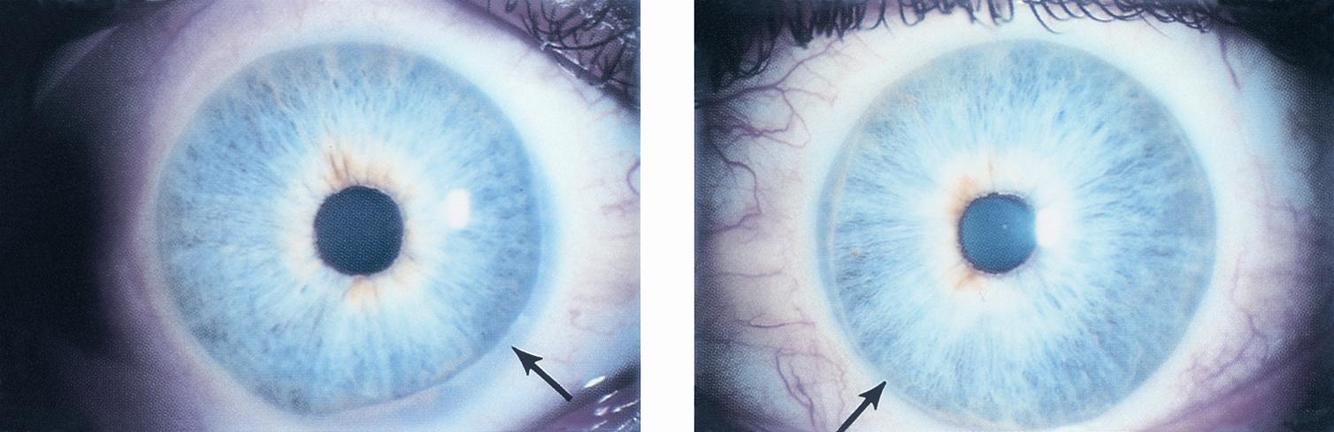
Characterised by paucity of interlobular bile ducts and the following features:
- Chronic cholestasis (91%) -> Prolonged conjugated jaundice
- Cardiac: _peripheral pulmonary stenosis (_85%)
- Butterfly vertebrae (87%)
- Posterior embrotoxon of eye (88%, req slit lamp)
- Renal: TIN
- Dysmorphic facies: broad nasal bridge, triangular facies, deep set eyes (95%)
- Fat malabsorption -> low Vit ADEK and Elevated cholesterol levels
What is the enzyme that conjugates bilirubin in the liver and in what disorders does this process become disrupted?
Bilirubin-uridine diphosphoglucuronate glucuronosyltransferase (UDPGT).
Present w unconjugated jaundice due to defective conjugation enzyme
1) Gilbert syndrome - Polymorphism in UGT1A1 decreasing gene activity by 30%. Presents after puberty, with recurrent episodes of jaundice (in 4%) which may be triggered by, among other things, dehydration, fasting, intercurrent illness, menstruation and overexertion.
2) Crigler Najjar syndrome
Type 1: Complete absence of UDPGT. Severe unconjugated hyperbilirubinaemia in first 3 days of life with kernicterus (=death) and pale stools (low faecal urobilinogen). trace conj bilirubin in bile. Tx: ptx -> liver tx
Type 2: decreased UGT1A1 activity. Unconjugated hyperbilirubinemia usually occurs in the 1st 3 days of life; serum bilirubin concentrations can be in a range compatible with physiologic jaundice or can be at pathologic levels.
NOT assoc w kernicterus or pale stools.
Low conj bilirubin levels in bile.
tx: phenobarbital
How does cows milk reduce iron absorption
- low iron content of CM, which makes it difficult for infants to obtain the amounts of iron needed for growth.
- occult intestinal blood loss associated with CM consumption during infancy, a condition that affects about 40% of otherwise healthy infants. Loss of iron in the form of blood diminishes with age and ceases after the age of 1 year.
- inhibition of non-heme iron absorption by calcium and casein, both of which are present in high amounts in CM.
Gastrin
- Where is it released?
- What is its role?
- What stimulates its secretion?
Released from G cells in gastric antrum
ROLE
- Release of: gastric acid, pepsin, IF
- Gastric emptying
- Pancreatic bicarb secretion
Stimulated by
- vagal nerve stimulation (‘rest and digest’)
- gastric distension
- aa in stomach (ie food)
- gastric pH >1.5
Where is pepsinogen secreted from and what is its role
Secreted from chief cells in stomach
Inactive; converted to active form, Pepsin, by stomach acid
What is the role of pepsin
Formed from pepsinogen on activation by stomach acid
PROTEIN digestion - Breaks proteins into smaller peptides and aa
what is the role of iF and where is it secreted frmo?
Secreted from parietal cels in stomach
Role is to bind to ingested B12, enabling the complex to later be absorbed in distal ileum
What is pernicious anaemia
Megaloblastic anaemia secondary to malabsorption of vitamin B12 secondary to intrinsic factor deficiency
Causes
- Autoimmune gastris (affects fundus; anti-IF Ab or anti-parietal cell Ab)
- Coeliac disease (inflammation of ileum affects absorption of B12/IF complexes)
- Atrophic gastritis (prevention of secretion of IF)



-
Gastro242
-
Resp/ENT/Sleep240
-
ID287
-
Haematology185
-
Oncology163
-
Immunology194
-
Renal131
-
Endocrinology262
-
Cardiology294
-
Neurology168
-
Metabolics72
-
ECG23
-
Neonates114
-
Dermatoloy19
-
Rheumatology54
-
Genetics150
-
Emergency/surgical conditions141
-
Gen med/Dev med155
-
Psych/adolescents55
-
Pharmacology116
-
Epidemiology38



