Reaction formation
Reacting the OPPOSITE WAY to how you REALLY feel
(Is a Defense Mechanism)
Ex:
- Reacting sarcastically (as if you DO know what it is) about something that you really know NOTHING about
Ex:
- “What? You dont know about astrophysics? You’re a moron! I know everything!!”)
Define “Social Constructionism”
- Give an example
WE create the world we live in,
and the world we live in creates US
In other words:
Anything that is created is as a result of a social activity
Example:
- Technology built up by humans with certain values or beliefs
What’s an example of a schema? ex: gender schema
Guys dont ask for directions schema≈model
What’s an example of a script? ex: gender script
scripts are the actions of a schema
Apparent Weight=___-___
actual weight-buoyant force
Buoyant Force formula
Fs=pVg
From where in the cell can RNA be synthesized? (3)
-nucleus -ER -Gytoplasm
Passive Immunity results from receiving the antibody from…?
an outside source (ex: receiving an injection of antibodies to a specific antigen, or an infant receiving antibodies from mother’s milk)
What enzyme(s) are found in the lumen of the small intestine?
Chymotrypsin
“wobble” in genetic code
AA’s coded for by 3 bases (“codons”) in mRNA. A single AA may correspond to several different codons. Third base is BY FAR the most common variation. ex: GGG,GGC most likely code for the same AA.
What makes a good vaccine “Target?”why?
a membrane protein, so that antibodies in bloodstream can access the protein and form an immune response to them.
A point mutation will like change the ___ structure of a protein by changing what?
primary structure of a protein, by changing an AA in the sequence.
What is “oligomerization?” What is an example?
formation of an oligomer from a monomer. ex: alpha and ß subunits of Hb
What is an “oligomer?”
a cpd intermediate b/t a monomer and a polymer, normally having a specified number of units between 5 and 100
A _____ at the 5’ position is required for RNA splicing to occur. What happens if you have a different NT?
Guanine. If you had a different NT, the exon and intron wouldnt get cleaved, and the intron wont be spliced out from the mRNA transcript
E and Z stereochemistry only apply to?
R groups around double bonds
How many Carbons in Lysine?
6 (Lysine has 6 letters)
If Keq=1, what is ∆G?
∆G=0
∆G=? What will you always get taking the log of a (positive) decimal less than 1?
∆G= -RTln(Keq). taking the log of a positive decimal that’s greater than 1 always gives you a NEGATIVE number. This would make ∆G positive, since there’s a (-) before R
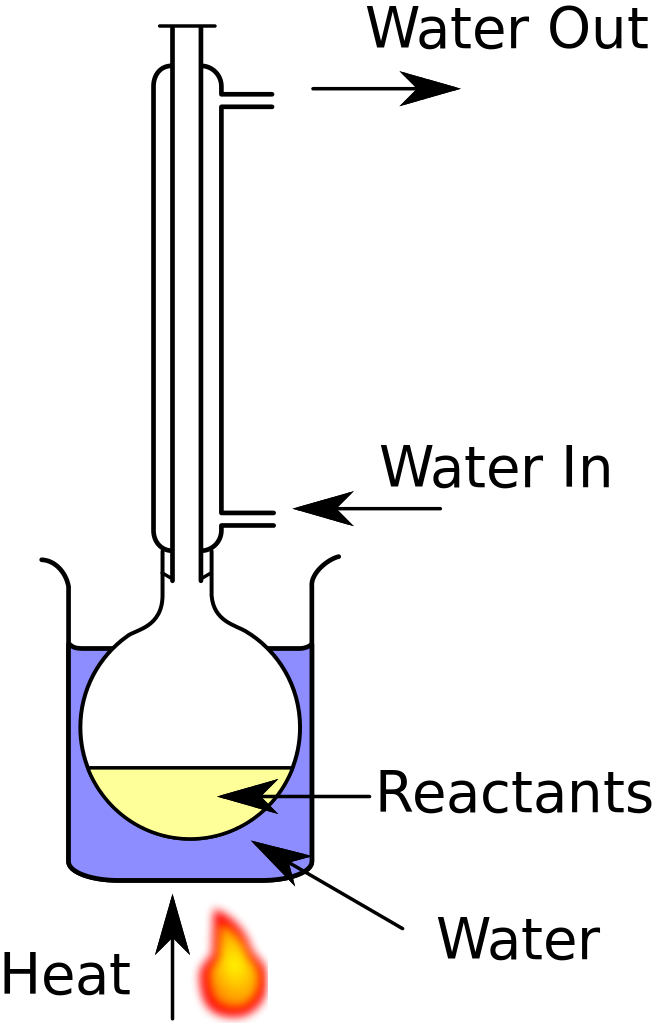
- In chemistry experiements, what does “reflux” mean?
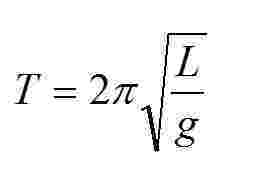
- Pendulum formula
- L=length of wire
- T=period
- is the INVERSE of frequence, 1/f
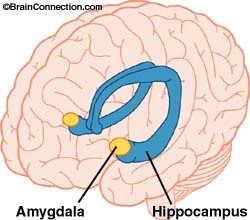
- Compare the Hippocampus and the Amygdala
- Hippocampus
- is responsible for the processing and storage of short-term memory.
- Amygdala
- is responsible for emotions, moods, and other functions related to depression and anxiety.
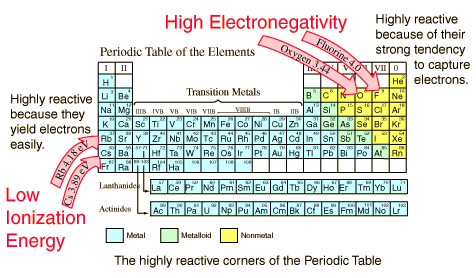
- Periodic trends
- Compare Electronegativity and Ionization Energy
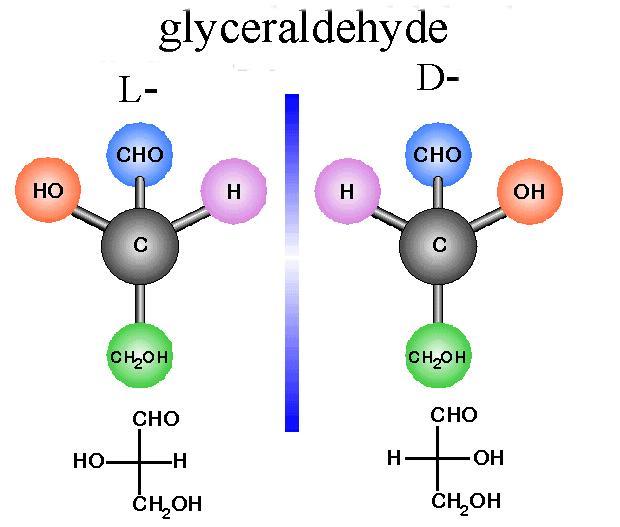
- Draw Fisher Projections for:
- D- and L- Glyceraldehyde
- Where are COOH and R groups going to be located?
- What happens to the D/L config if the only thing you swap is the location of COOH & R groups?
- Where are COOH and R groups going to be located?
- D- and L- Glyceraldehyde
- COOH- and R groups are on TOP and BOTTOM
- If you swap their positions, it changes D to L and vice versa
- What was “D” is now “L”



-
Biology 2170
-
Group Session Missed57
-
Sociology 1155
-
Psychology 1198
-
Physics 135
-
Mnemonics32
-
Biology 1299
-
Chemistry 1122
-
Strategy & Math174
-
Chemistry 1136
-
Physics 271
-
Ochem 1148
-
Psychology 2169
-
Physics 2129
-
Chemistry 368
-
Biochem 1163
-
Chemistry 2160
-
Biology 3126
-
Biochem 2122
-
Ochem 2143
-
Prefixes & Suffixes143
-
Sociology 298
-
Psychology 3142
-
Reactions Overview20
-
EQUATIONS91
-
THINK OF...7
-
FLE Missed128



