haemoposeis
where does it happen in adults / kids?
what are the stem cells?
formation of RBC
adults = bone marrow of axial skeleton ( pelvis, sternum, skull, ribs)
kids = liver and spleen
-haemopoietic stem cells
how do you test for bone marrow functioning?
bone marrow biopsy of axial skeleton (usually pelvis)
put it in trephine biopsy
look at bone marrow and look at architecture of the bone marrow
what do the main 5 lineage pathways arise from?
what are the 5 pathways?
and what differentiates it?
what are important ^?
haemopoietic stem cells
thrombopoiesis , granulopoiesis (basophils, neutrophils, eosinophils) ,monocytopoiesis, lymphopoiesis, erythropoiesis
hormones/ transcription factors/ interactions with non-haemopeotic cells types (endothelial cells)
erythropoietin secreted by kidney c ^ in RBC by decreasing the number of RBC that undergo apoptosis
haemopoietic stem cells
capable of self renewal ( more so than other tissue types)
can differentiate to other cells depending on the stimuli
in patholgical conditions like tha
sources of HPSCs
bone marrow aspiration (rarely done)
GCSF mobilised peripheral blood stem cells (collected by leucopharesis[lab technique seperated from blood sample])
umbilcal cord ‘ cord bank’
reticuloendothelial system (RES) ?
blood & tissue?
main RES organs
types of macrophages depending on the tissue
-network of cells located throughout the body involved in the removal of dead or damaged cells and identify and destroy foreign antigens in blood and tissues
made of monocytes (in blood) and macrophages (in tissues)
types of macrophages depending on the tissue;
liver ; kupffer cells
tissue histiocyte ; CT
microglia ; CNS
peritoneal macrophage ; peritoneal cavity
red pulp macrophage ; spleen
langerhans cells ; skin and mucosa
spleen location and functions and structure
located; inferior to the diaphram , posterior to the stomach ,
Functions = dispose RBC damaged and old , identify and destroy antigens in blood and tissues
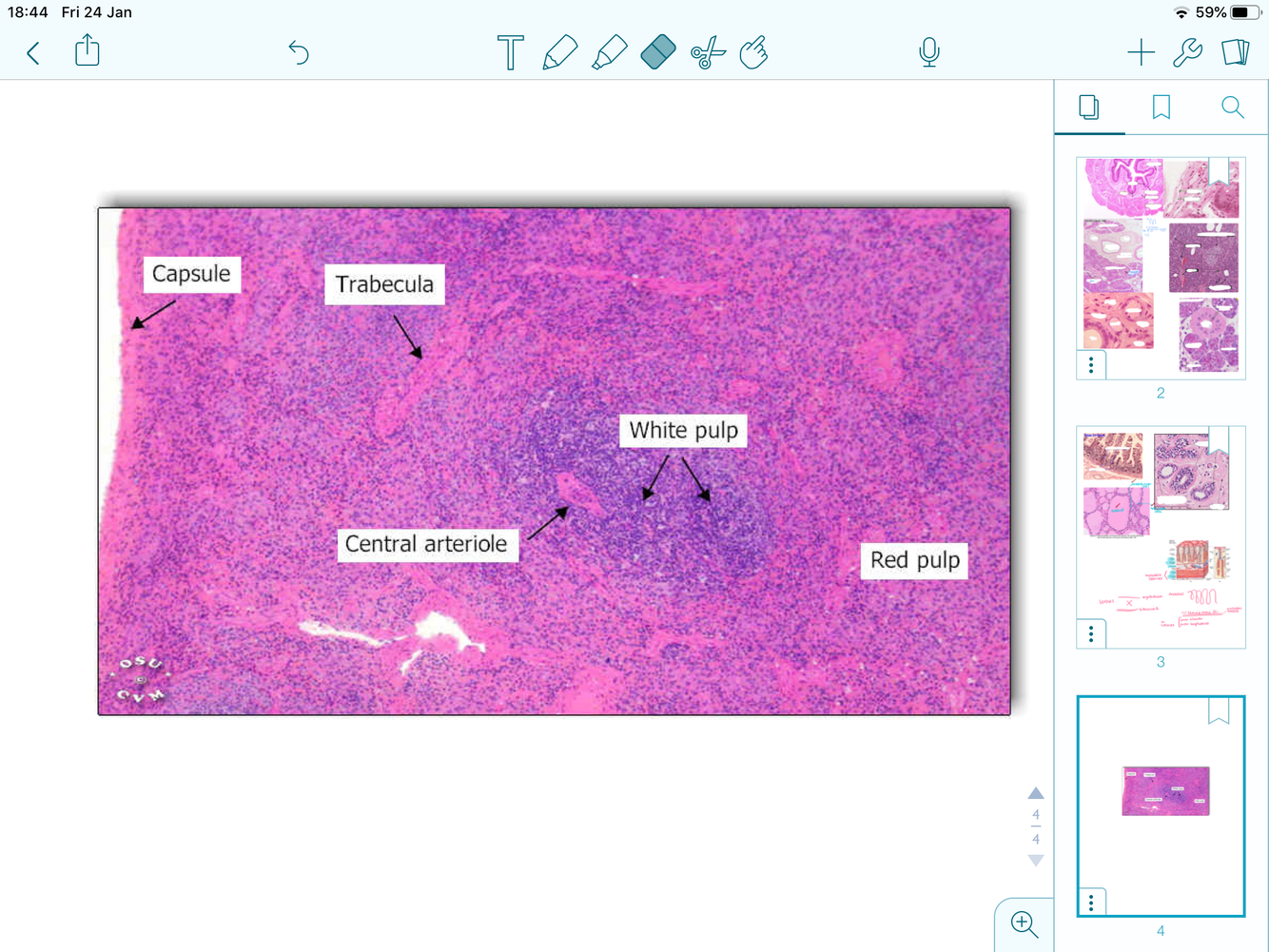
white (similar structure to lymphoid follicles) and red pulp (sinuses lined by endothelial macrophages and cords)
functions of the spleen in adults
- sequestration and phagocytosis; old/ abnormal RBC removed by macriphages
- blood pooling ; platelets and RBC can e rapidly mobilised during bleeding
- extramedullary haemopoiesis ; pluripotential stem cells proliferate during haematological stress or if marrow fails (e.g in muelofibrosis)
- immunological function ; 25% of T cellsand 15% of B cells present in spleen
how does blood enter the spleen?
what are the pulps?
another function of spleen
- blood enters via splenic artery
- synthesises antibodies and removed antigen-coated bacteria white pulp
- Red bled cells pass through and are filtered in + the red pulp metabolises Hb also
- spleen can also serve as a blood pooling function where plateletes and RBC can be mobilised during bleeding?
Splenomegaly causes
- high portal hypertension in liver disease
- over work (red or white pulp)
- reverting to what it used to do -extramedullary haemopoiesis due to high stress on the bone marrow (often seen on thalassemia)
- expanding as infiltrated by cells ( cancers cells orginiating the blood or metastases)
- expanding as infiltrated by other material liek waste in Gaucher’s disease, a defect in the beta-glucosidase enzyme catalses the breakdown of glucocerebroside, a consitiuent of RBC and WBC membrane and this accumulate in fibrils
- some infectious diseases like (sarcoidosis (granulomas like TB infections), HIV and glandular diseasecaused by Epstein Barr virus (EBV)
how to examine spleen
- cant usually palpate the spleen, but with splenomegaly you can( feel under the right costal margin) before moving to the right iliac fossa where you can feel it, upon inspiration you can feel the spleen edge moving towards your hand, feel for the splenic notch,and measure the cm from the costal margin in the midclavicular line
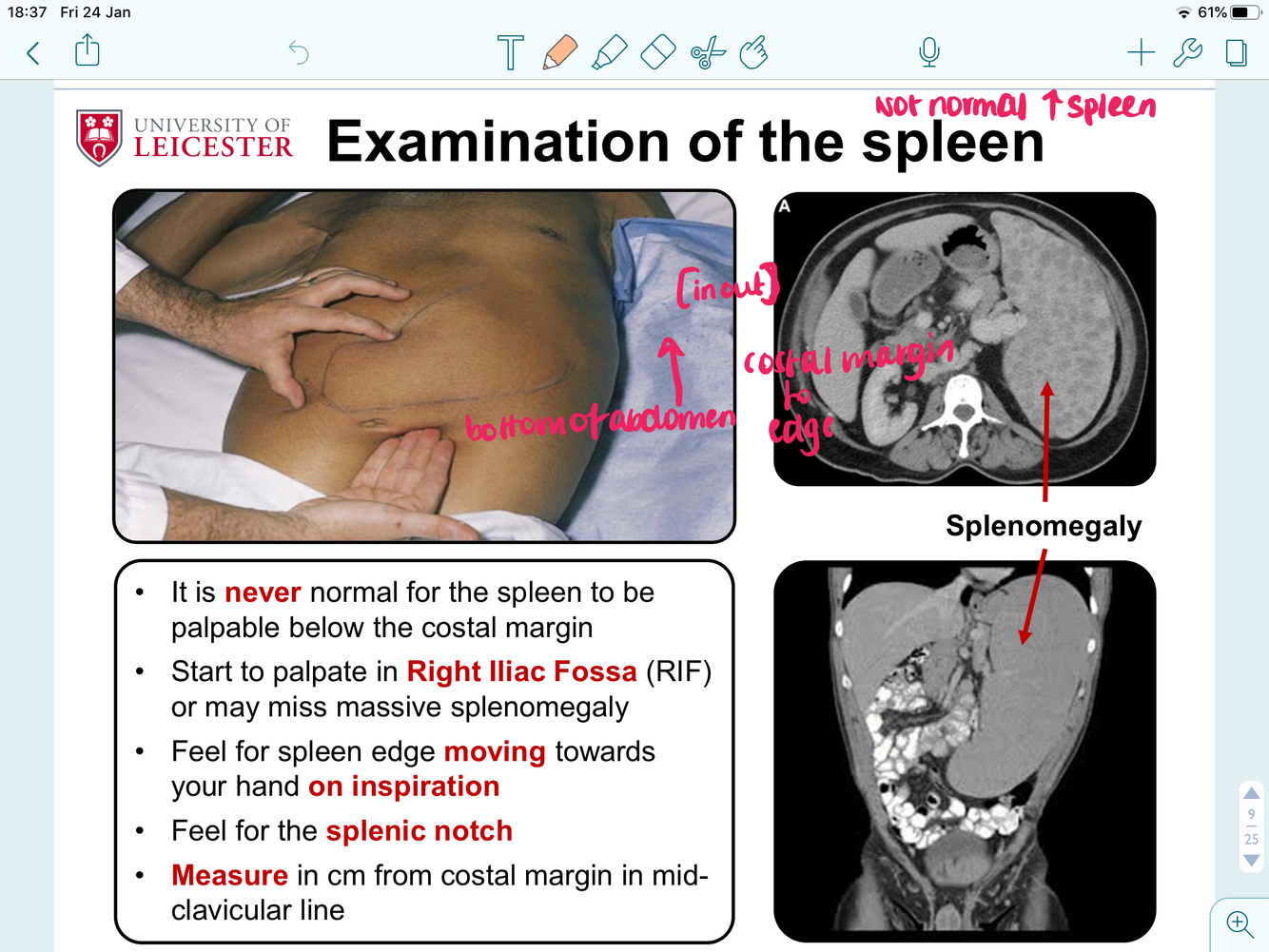
what should you advise people with splenomegaly
- not to do exercise because its large and not protected by the rib cage so high risk of getting ruptured
MASSIVE, MODERATE, MILD causes of splenomegaly
- MASSIVE ; leukemia (e.g chronic myeloid leukiemia)/myelofibrosis/malaria/schistosomiasis (parasitic worm infection which destroys different organs inclusing spleen)
- MODERATE ; lymphoma ( blood cancer that develops from lymphocytes)/myeloproliferative disorders/liver cirrhosis wht portal hypertension/ infections like glandular fever(vial infection)
- MILD; infectious Hepatitis / Endocarditis/ Infiltrative diseases like sarcoidosis (formtion of granulomas v rare on spleen due to collection of inflammatory cells)/autoimmune diseases
what’s hyposplenism?
what causes it?
and what do you see on film?
- lack of functioning splenic tissue
- splenectomy / sickle cell disease (infarcts and fibrosis)
- gastrointestinal diseases like crohns and coeliac and Ulcerative colitis (comprimsied immune system ^ infection risk/ excess loss of lymphocytes)
- autoimmune disordes like systeic lupus (body attacks normal tissue mistakenly)/ hashimotos disease
- Howell Jolly Bodies (DNA remenants because liver not F well so cant remove it completely)
what are pateints from hyposplenism at a risk of?
how do we manage them?
sepsis from encapsulated bactiera like Streptococcus pneumonia, Haemophilus influenza, Meningococcus
(c invasive infections and spleen is the main organ involved in removing them)
- must vaccinate them against ^ and give them life long antibiotic prophylaxis (antibiotics given to prevent bacterial infection)
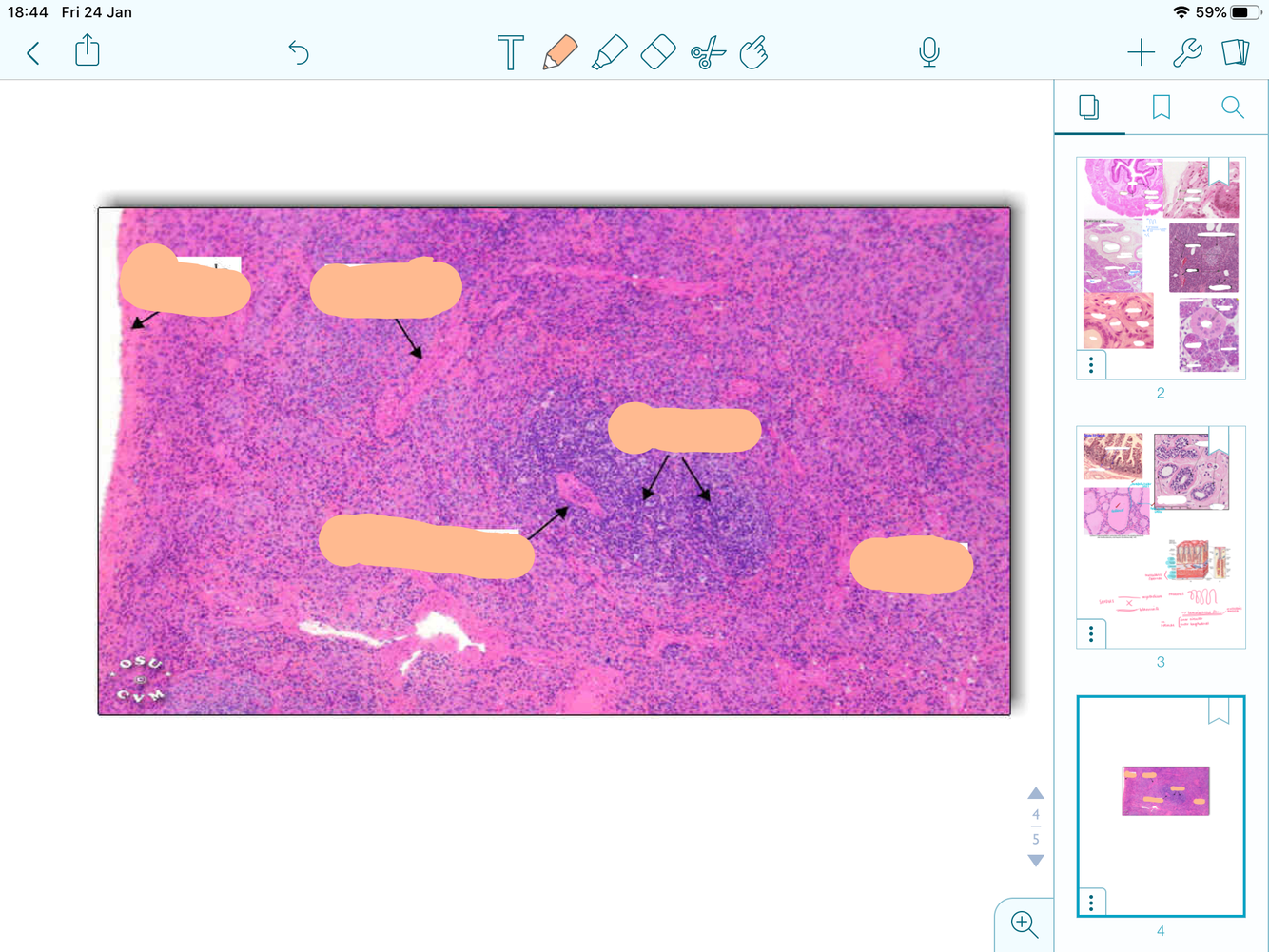
histology of spleen label this
activation of whatcell is thought to be associated with asthma?
what are monocytes and how long do they remain in the blood?
- eosinophils
- 1-3 days they remain in the blood and are capable of phagocytosis, before they are differentiate into dendritic cells or marcophages
what is the life cycle of a B cells
- develops in the fetal liver where it comes into contact with pathogens and develops early immunoglobin genes allowing them to form an array of Antibodies, they then finally mature in the lymph nodes where they can recognise self and non-self antigens and produce alrge quanitites of antibodies.
whats the life cycle of T cells
- arise from the liver and migrate to the thymus early in gestation, where they undergo rearrnagent of their T cell receptor genes giving them the ability to recongise a wide rangeof antigens that can be possibly presented by APC
why do we look at reticulocyte count
gives good diagnostic estimate for amount of erythropoiesis
why are RBC susciptable to Oxidative damage and energy production issues?
- it doesn’t have a nucleus (since it excrudes it) therefore cant replace damaged proteins by re-synthesis , just like in G-6-dehydrogenase deficiency disease, where d to v NADPHoxidative damge occurs to the Hb since it’s a protein, they aggregate and form Heinz bodies
- RBC rely on glycolysis for energy sicne they dont have a mitochondria , so any issue with glycolysis will result in damage to it, just like in Pyrivate kinase deificeny , can tmake energy via glycolysis so cant maintain cellular reaction or the membrane c haemolysis
why is RBc shaped like that?
whats the membrane like? give example of disorder?
- optimised laminar flow properties of blood in large vessels and small ones
- spectrin, ankyrin, band3 and protein 4.2 =their role is to facilitate vertical interactions with the cytoskelton, and play a role in maintaining that concave shape
- hereditary spherocytosis; (recessive) issue with these proteins so not funcitonal membrane wc is excruded partly creating a spherical shape,
^ 2,3 BPG ?
decrease affinity
^ CO
^ affinity

-
Alcohol Metabolism5
-
Oxidative Stress20
-
Haemopoesis27
-
Blood34
-
Glycogen and Lipid17
-
Cholesterol4
-
Vitamin b12 and folate deficiency16
-
Amino Acid Metabolism24
-
Iron metabolism and microcytic anaemia24
-
Haemoglobinpathies ad Haemolytic Anemia22
-
Haemopoiesi24
-
Endocrine Pancreas21
-
Haematology in systemic disease26
-
Endocrine41
-
Diabetes31
-
HPA Axis24
-
Pituitary Disorders22
-
Parathyroid glad and calcium regulation46
-
Endocrine42
-
Metabolic and Endocrine control14
-
Adrenal Disorders52
-
Haematology87
-
intro to anaemia1
-
x1



