what is a hernia
an abnormal protrusion of a viscus out with its normal body cavity
arise from natural openings or due to weakness
name some predisposing factors that all increase intra-abdominal pressure
- coughing
- constipation
- pregnancy
- prostatism
- obesity
- heavy lifting
what is prostatism a sign of
compression or obstruction of the urethra
what can happen to irreducible hernias
obstructed or incarcerated
what happens when irreducible hernias are incarcerated
contents of the hernia sac are stuck inside by adhesions
can become strangulated
what can obstructed hernias lead to
strangulated hernias
where do incsional hernias occur
through a surgical incision
who are paraumbilical hernias seen in
adults (women) and obese patients
who are umbilical hernias seen in
children, especially low birth weight infants
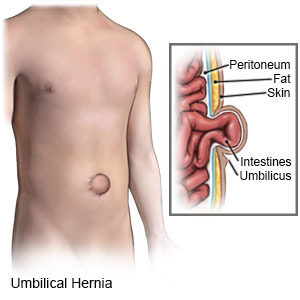
what is the outcome of umbilical hernias
usually resolve by the age of 3, if not then surgery
where does an epigastric hernia occur
pass through the linea alba above the umbilicus
what do epigastric hernias arise from
congenital weakness of the linea alba
who are epigastric hernias more common in
>40 and obese
what is indirect inguinal hernia due to
patent processus vaginalis
who are indirect inguinal hernias seen in
in young male
if the hernia is above and medal to the pubic tubercule what is it
inguinal
if the hernia is below and lateral to the pubic tubercule what is it
femoral
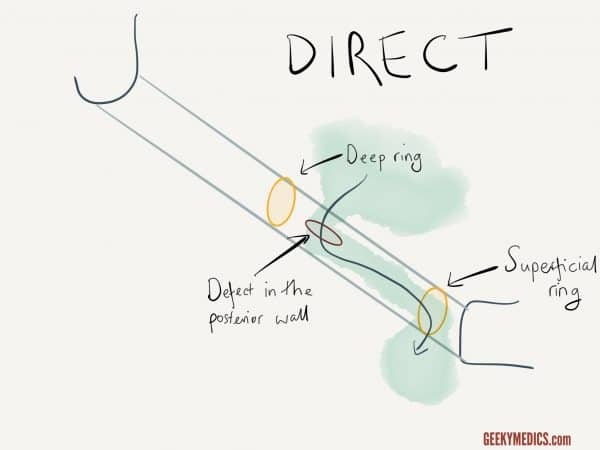
if the deep ring is occluded and the patient coughs and the hernia reappears what is it
direct
position of direct inguinal hernia in relation to inf epigastric vessels
medial
position of indirect inguinal hernia in relation to inf epigastric vessels
lateral
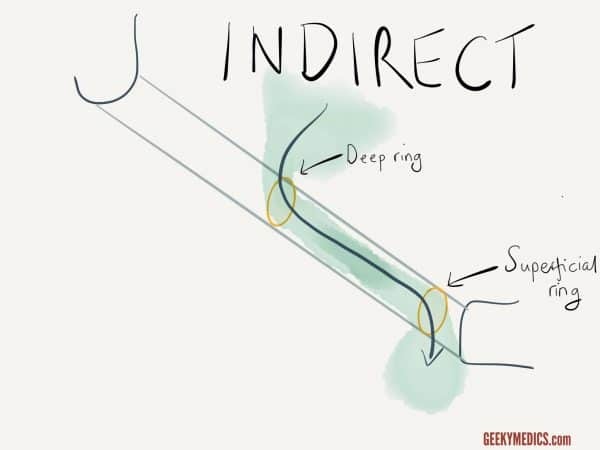
what is the superficial ring
v shaped defect in the ext oblique aponeurosis
which type of inguinal hernia is more likely to strangulate
indirect
who are direct inguinal hernias more common in
older men
complications of inguinal hernias
Haematoma, urinary retention, wound infection, chronic neurogenic pain, hernia recurrence, testicular pain and atrophy

-
Pharmacology of Fluid Motility41
-
Diverticular Disease22
-
Colitis26
-
Coeliac Disease23
-
Appendicitis16
-
physiology and pharmacology of the Liver42
-
biochemistry of the liver25
-
acute liver disease13
-
chronic liver disease57
-
hepatitis42
-
acute pancreatitis33
-
public health19
-
chronic pancreatitis21
-
cancer of the pancreas22
-
biliary tract and gallbladder40
-
histology25
-
tropical sprue, SBO and whipple's27
-
benign liver tumours18
-
benign liver cyst20
-
hepatocellular carcinoma17
-
oesophagus31
-
GORD9
-
Intra Abdominal Infection and Sepsis26
-
bowel obstruction31
-
polyps21
-
colorectal cancer28
-
IBS12
-
microbiology supplementary60
-
IBD general20
-
UC22
-
Crohns17
-
disorders of perianal area21
-
achalasia16
-
stomach and duodenum22
-
gastric cancer15
-
peptic ulcer20
-
physiology 1106
-
liver cirrhosis29
-
NAFLD14
-
alcohol13
-
hernia37
-
STIs26
-
pharmacology of nausea and vomiting52
-
IF and malnutrition42
-
upper GI bleed15
-
cryptosporidosis9
-
biochem of liver42
-
lipid metabolism34
-
jaundice19
-
LFTs13
-
anatomy 1 and 237
-
investigations21
-
questions38
-
bins5



