Describe the synthesis and metabolism of Histamine
Histidine → Histamine → Imidazole → Imidazole acetate
Histidine → Histamine → N1 methylhistamine → N1-methylimidazole acetate
Enzyme from histidine to histamine: Histidine decarboxylase
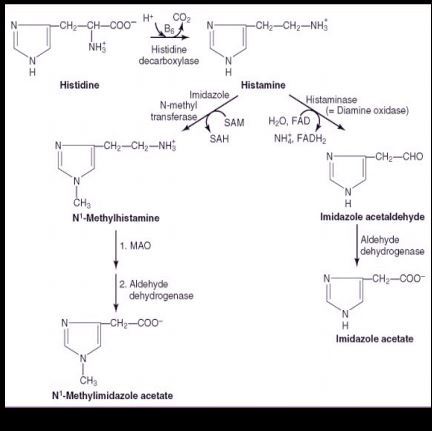
Alterations in ______ ______ _______ can account for histamine intolerance (1% population)
Histamine degrading enzymes
Histamine Functions
- Mediator of immediate allergic and inflammatory reactions
- Role in gastric acid secretion
- Neurotransmitter and neuromodulator
Localization of Histamine
Ubiquitous
- Highest amounts in lung, skin, GI tract
Characteristics of histamine in tissues (mast cells) and in blood (basophils)
- Synthesized and stored in secretory granules in an inactive form
- Bound to a proteoglycan
- Heparin sulfate and ATP: mast cells
- Chondroitin-sulfate: basophils
- Slow turnover
Characteristics of histamine from non-mast cells
- No granules, continuously synthesized and released, rapid turnover
- Histidine decarboxylase levels correlate with activity
Effects of histamine release (within seconds? minutes?)
- Within seconds
- Burning, itching
- Intense warmth
- Skin reddens
- BP ↓
- HR ↑
- Within Minutes
- BP recovers
- Hives
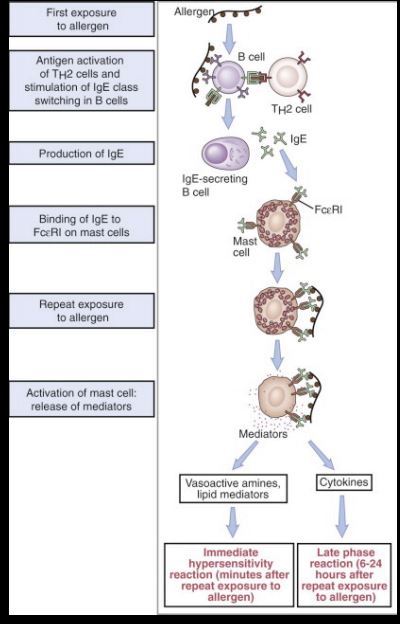
Explain the release of mast cell histamine
- Antigen-antibody reaction
- IgE mediated sensitivity to drugs and other allergens
- Response of IgE sensitized cells to subsequent exposure to allergens
- Ca2+ dependent
Drugs, Venoms, and peptides can promote the release of histamine - what are some examples of each?
Drugs: Succinylcholine, morphine…
Peptides: Bradykinin, complement, substance P
Venoms: Wasps
* mechanism of release is through an increase in intracellular calcium
Red-Man Syndrome
- Caused by vancomycin interaction w/ gram-positive bacteria
- Due to mast cell degranulation
- Rash in face, neck, upper torso
- Following rapid IV infusion
Other stimuli that release histamine
- Cold Urticaria
- Cholinergic Urticaria
- Solar Urticaria
* Urticaria = hives
Cromolyn sodium
Administration:
Mechanism:
Side Effects:
Administration: Inhalation (oral, nasal, opthalmic possible)
Mechanism: Stabilizes mast cell membrane to prevent release of histamine - exact cellular mechanism is unclear
Side Effects: Safe drug/ few side effects
Cromolyn sodium therapeutic uses
- Chronic control of asthma
- Prophylaxis of bronchospasm (NOT A RESCUE MED)
- Nasal formulation for allergies
- Opthalmic for conjuctivitis
- Oral for systemic mastocycosis
- Off label use for food allergy and IBS (irritable bowel)
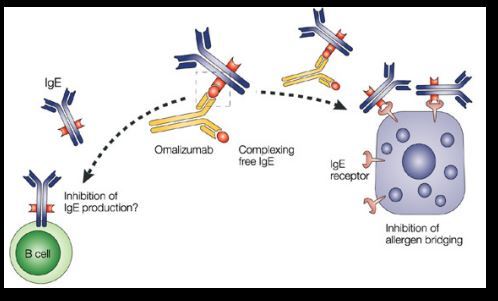
Omalizumab (Monoclonal antibody)
Administration:
Mechanism of Action:
Administration: Subcutaneous
Mechanism of Action:
- Decrease amount of IgE that normally binds to mast cells
- An IgG antibody for which antigen is Fc region of IgE
- Binds tightly to free IgE in circulation to form complex
- No affinity for FcRI
G Protein Coupling and Distribution of Histamine Receptors
H1:
H2:
H3:
H4:
H1:
- G Protein: Gq (Ca2+, ↑ NO and ↑ cGMP)
- Dist: Smooth muscle, endothelial cells, CNS
H2:
- G Protein: Gs (↑ cAMP)
- Dist: Gastric parietal cells, cardiac muscle, mast cells, CNS
H3:
- G Protein: Gi ( ↓ cAMP; ↑ MAP)
- Dist: CNS: presynaptic
H4:
- G Protein: Gi ( ↓ cAMP; ↑ Ca2+)
- Dist: Cells of hematopoietic origin
Representative antagonists for H1 and H2
H1: Chlorpheniramine
H2: Ranitidine
Histamine receptors that induce vasodilation
H1 (endothelial cells) - ↑NO = vasodilation
H2 (vascular smooth muscle cells) - increase cAMP so decrease intracellular calcium
Histamine Receptors and Vasoconstriction of large vessels
H1 receptors located on vascular smooth muscle cells
- Increase intracellular calcium
Histamine Receptors and Blood Pressure
Both H1 and H2 receptors
- In general histamine dilates resistance vessels and causes an overall fall in BP
Histamine Receptors and Increased vascular permeability
- H1 receptors located on post-capillary venules- endothelial cells
- Increase in Ca2+ causes endothelial cells to contract and expose basement membrane
Histamine Receptors and Effects on Heart
Predominantly H2 receptors
- Contractlity increased
- Increase electrical conduction
Histamine Receptors and Bronchioles
H1: contraction
H2: relaxation (minor)
Histamine Receptor activation of Intestinal Smooth muscle, Exocrine Glands and Peripheral nerve endings
Intestinal Smooth Muscle: H1 - contraction
Exocrine Glands (Parietal Cell): H2 - gastric acid secretion
Peripheral Nerve Endings: H1 - pain and itching
Neuroendocrine Effects of Histamine Receptors
Increasing Arousal/wakefullness:
H1 (in the brain)





