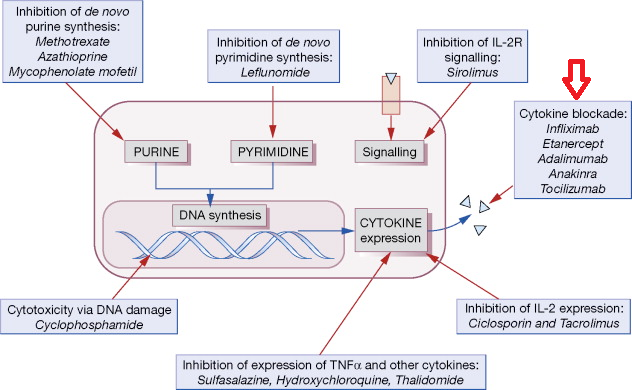
What is inflammation and why is it important to use drugs to treat inflammation?
- body’s mechanism for handling agents that could
damage it - protective response to rid the body of the cause of cell injury and the resultant necrotic cells that cell injury produces
- can be potentially damaging and thus is tightly regulated
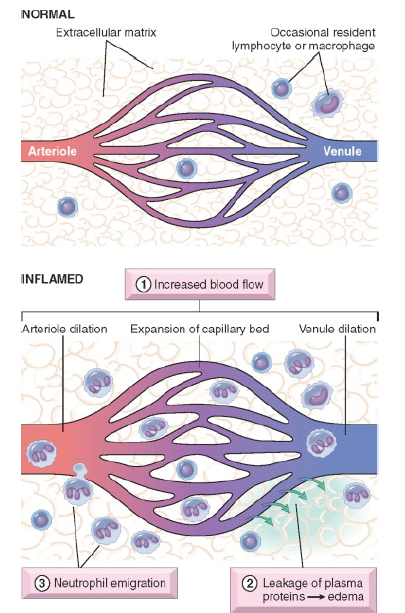
Cardinal Signs of Acute Inflammation:
- Rubor (red discoloration), calor (heat), dolor (pain), tumor (mass effect), and loss of function
- __vasodilation
- increased vascular permeability
- recruitment of neutrophils
CHRONIC Inflammation:
- prolonged duration - weeks, months, or even indefinitely
- participation by lymphocytes, plasma cells, macrophages, fibroblasts and angioblasts
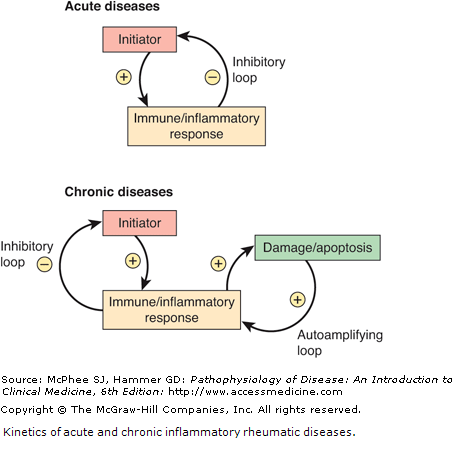
Potential harmful effects of inflammation include:
- inflammatory cells release lysosomal enzymes (collagenases and proteases)
- may digest normal tissue
- inflammatory swelling may result in death:
- swelling that obstructs airways
- swelling within the cranial cavity
“Mediator Theory”:
Definition: signs and symptoms of inflammation are caused by the release of chemicals
Name the inflammatory mediators:
- Histamine
- Bradykinin
- Complement System
- C-Reactive Protein
- Cytokines
- TNF-α
- IL-1 (IL-α & IL-ß)
- Adenosine
- Cell-Adhesion Molecules
- Oxygen-derived free radicals
- Lipid Mediators
- Prostaglandins
- Leukotrienes
- Steroids
HISTAMINE:
- **Cellular source: **
- Physiological response:
- Mechanism:
- **Pharmacology: **
biogenic amine
- Cellular source: mast cells, basophils
- Physiological response:
- vasodilation
- increased vascular permeability
- pain
- Mechanism: Activation of GPCRs
- Pharmacology: antihistamines (H1 antagonists)
BRADYKININ:
- **Cellular source: **
- Physiological response:
- Mechanism:
- Pharmacology:
peptide
- Cellular source: endothelial cells
- Physiological response:
- vasodilation
- increased microvessel permeability
- pain
- Mechanism: Activation of GPCRs
- Pharmacology:
- BK2 receptor antagonist Icatibant
- symptoms of localized swelling, inflammation, and pain
- Treatment of acute attacks of the hereditary angioedema (HAE) associated with increased production of bradykinin
COMPLEMENT SYSTEM:
- Cellular Source:
- Physiological Response:
- Mechanism:
- Pharmacology:
plasma proteins
- Cellular Source: synthesized by liver, circulate in blood
- Physiological Response:
- Chemotaxis: recruitment of inflammatory cells to site of injury
- promote release of mediators from neutrophil
- increase vascular permeability
- excessive activation may contribute to tissue injury
- Mechanism:
- complement protein complexes cause osmotic lysis
- activation of GPCRs
- Pharmacology: Eculizumab, micrococept
C-REACTIVE PROTEIN:
- Cellular Source:
- Physiological Response:
- Mechanism:
- Pharmacology:
plasma protein
- Cellular Source: produced in liver in response to cytokines, also produced in adipocytes
- Physiological Response:
- “acute-phase reactant”
- activates complement cascade
- mediates phagocytosis
- “marker of inflammation”
- Mechanism: bind to phospholipids in bacteria and damaged cells
- may be specific receptors in macrophages
- Pharmacology:
- Elevated CRP may be associated with increased risk of diabetes, hypertension and cardiovascular disease.
- Drugs like statins may be effective in patients with elevated CRP.
CYTOKINES:
- Cellular Source:
- Physiological Response:
- Mechanism:
- Pharmacology:
secreted proteins, in particular the pro-inflammatory cytokines: Interleukin-1 (IL-α and IL-β) and Tumor Necrosis Factor-α (TNF−α)
- Cellular Source: nearly all inflammatory cells
- Physiological Response:
- TNF-α: acute phase reaction, fever, sepsis
- IL-1: acute phase reaction, fibroblast and lymphocyte proliferation, fever
- Mechanism: Bind to specific receptor proteins to induce gene expression of number of proteins via activation of NFκB and AP-1
- increase cyclooxygenase (fever) and lipoxygenases
- increase adhesion molecule expression
- induce collagenase (fibrosis)
- Pharmacology:
- Etanercept (Enbrel®)
- Infliximab (Remicade®)
- Anakinra
ADENOSINE:
- Cellular Source:
- Physiological Response:
- Mechanism:
- Pharmacology:
purine nucleoside formed from breakdown of ATP
- Cellular Source: all cells
- Physiological Response:
- increased extracellularly during injury (anti-inflammatory)
- inhibit cytokine action
- Mechanism: activation of GPCRs
- Pharmacology:
- Adenosine A2 agonists
- Methotrexate: used to treat rheumatoid
- arthritis; folic acid antagonist; also releases adenosine
- Adenosine A3??
CELL ADHESION MOLECULES:
- Cellular Source:
- Physiological Response:
- Mechanism:
- Pharmcology:
family of proteins
- Cellular source: endothelial cells, platelets, leukocytes
- Physiological Response:
- Leukocyte adhesion to endothelium is a pivotal event in host defense and tissue repair
- Endothelial adhesion molecules contribute to recruitment of activated platelets
- Mechanism: “contact molecules”, calcium dependent
- Pharmacology: Abciximab (Reopro®), Natalizumab (Tysabri®)
OXYGEN-DERIVED FREE RADICALS:
- Cellular Source:
- Pysiological Response:
- Mechanism:
- Pharmacology:
superoxide, hydroxy radicals
- Cellular Source: all cells
- Physiological Response:
- intracellular killing of bacteria by neutrophils
- Mechanisms:
- protein oxidation
- lipid peroxidation
- DNA mutations
- Pharmacology: anti-oxidants like Vitamin C and E
PROSTAGLANDINS:
- Cellular source:
- Physiological Response:
- Mechanism:
- Pharmacology:
- Cellular source: virtually all cells
- Physiological Response:
- vasodilation/vasoconstriction
- pain
- fever
- platelet aggregation (via thromboxane)
- Mechanism: activation of specific GPCRs
- Pharmacology: NSAIDS
LEUKOTRIENES:
- Cellular source:
- Physiological Response:
- Mechanism:
- Pharmacology:
LEUKOTRIENES
- Cellular source: macrophages, neutrophils
- Physiological Response:
- increase vascular permeability
- bronchoconstriction
- Mechanism: activation of GPCRs
- Pharmacology:
- 5-lipoxygenase inhibitors (Zileuton)
- cys-leukotriene receptor antagonists (Zafirlukast)
GLUCOCORTICOIDS:
- **Cellular Source: **
- Physiological Response:
- Mechanism:
- Pharmacology:
GLUCOCORTICOIDS
- Cellular Source: adrenal cortex
- Physiological Response:
- inhibition of cytokines
- inhibition of phospholipase A2 (via annexin/lipocortin)
- inhibition of COX-2
- inhibition of CAMs
- Mechanism: activation of nuclear receptors
- Pharmacology:
- steroids most potent and effective agents for controlling chronic inflammatory diseases
- example: inhaled steroids as first-line treatment for chronic asthma
Anti-Inflammatory Drugs:
Steroids
- Mechanism of action: bind to cytoplasmic receptors
- activated receptor-steroid complex:
- localizes to nucleus/binds DNA (GREs) transcription of certain target genes (induction or repression)
- most patients with chronic inflammatory conditions respond to steroids
- small minority of patients are steroid-resistant
- limitations to use are side effects
Anti-Inflammatory Drugs:
NSAIDS
- Mechanism of action: inhibition of cyclooxygenase
- probably the most widely used medications in the world
Anti-Inflammatory Drugs:
- Leukotrienes Receptor Antaognist:
- Leukotriene Synthesis Inhibtors:
- Leukotrienes Receptor Antaognist:
- **zafirlukast (Accolate®): competitive antagonist **
- Leukotriene Synthesis Inhibitors:** **zileuton (Zyflo®)
Anti-Inflammatory Drugs:
Cytokine Inhibitors
- etanercept
- infliximab