What explains the GI complaints associated with aspirin use?
Decreased production of PGs that promote mucus secretion
Why does aspirin increase bleeding time
TXA2 production in platelet decreases
General properties of NSAIDS
- Anti-inflammatory
- Anti-pyretic
- Analgesic
Mechanism of action of all NSAIDS
Inhibition of cyclooxygenase
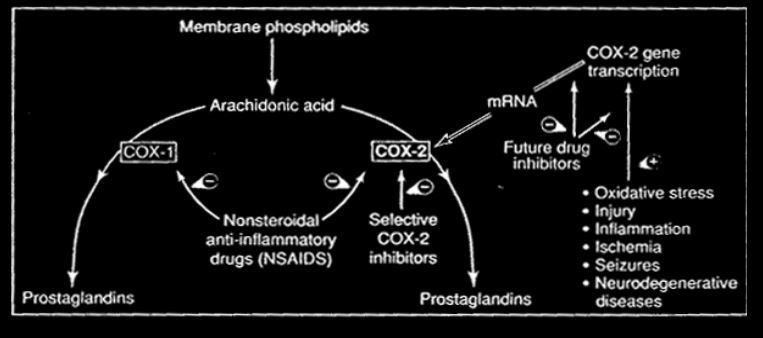
Acetylsalicylic Acid/Aspirin mechanism of action
Irreversible inhibitor of Cox 1 and 2
Acetylation of a serine moiety - Serine 230
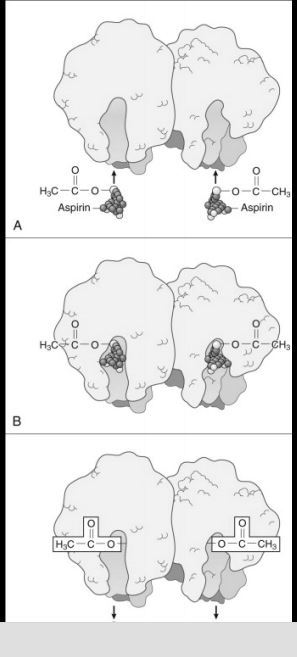
Why doesn’t protein synthesis occur in both Endothelial cells AND platelets
Platelets have no nucleus - once inhibited, cannot create more protein
Aspirin
Absorption:
Distribution:
Absorption: Oral absorption
- Rapidly absorbed from stomach and small intestine
- limited by dissolution rate (chewing increases)
- Buffered (substances which neutralize acid) vs. enteric coated (dissolves in intestines)
Distribution:
- Highly bound to plasma proteins
- Crosses BBB and placental barrier
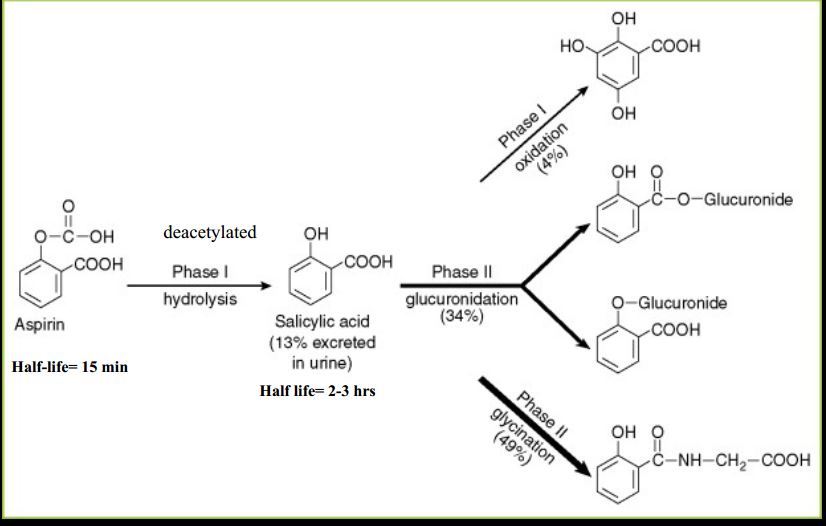
Aspirin Metabolism
Renal Elimination
Plasma half life is dose-dependent
Unique effects specific to Aspirin/Salicylates
Uric Acid Excretion
CNS
Respiration
Uricosuric Effects
- Any agent that increases rate of excretion of uric acid
- Uptake of uric acid from renal tubules via a transporter that acts as an anion exchanger
- Uriosuric agents compete with the urate transporter
What is the dose dependent Uricosuric effect of Aspirin?
Low doses - decrease uric acid exretion
- Secretory component for urate sensitive to low concentrations of salicylates
Large doses - Increase uric acid excretion
- Normal mechanism to block reabsorption via interaction with transpoter (OAT)
CNS effects of high doses of Salicylates (Toxicity)
- Stimulation followed by depression
- Tinnitus, high tone deafness, confusion, dizziness, delirium, psychosis, coma
- Nausea and vomiting
_________ are a major limitation to long term therapy with NSAIDs
GI side effects
PGs and their function in the GI
- Inhibit acid secretion by the stomach
- Promote secretion of cytoprotective mucus in the intestine
NSAID GI Side Effects
Block the production of cytoprotective PGs
- GI ulceration and irritation
NSAIDs and Platelets
- All NSAIDs increase bleeding time by inhibiting platelet TXA2
- Platelets lack nucleus so new COX only with new platelets since ASA irreversible inhibition of COX
Aspirin Hypersensitivity
Blocking COX forces arachidonic acid to follow other pathways leading to products which promote allergy, bronchoconstriction. inflammation and mucus production
- Treated as analphylactic shock (epinephrine)
NSAID renal side effects
- Decrease renal blood flow
- Promote salt and water retention
- Effects more prominant in individuals dependent on vasodilatory PGs
- Elderly
NSAIDs and pregnancy
- Prolongation of gestation
- Prolonged labor
- Increased risk of postpartum hemorrhage
- Intrauterine closure of the Patent Ductus Arteriosus
- NSAIDS still used
Dose needed for Salicylate poisoning
Asprin:
Methyl Salicylate:
Aspirin: dose 10 to 30 grams
Methyl Salicylate: dose of 4.7 grams in children
Aspirin Half Life During Over Dose
15-30 hours
Reye’s Syndrome
- Specific to aspirin
- Most often in children (6-11)
- Acute encephalopathy; Liver degeneration
- Often follows a viral illness
- Mechanism unknown (Mitochondrial damage?)
Drug Interactions for NSAIDs
- Alcohol
- NSAIDS
- Steroids
- Anticoagulants
- Methotrexate
NSAID therapeutic uses:
- Low Dose:
- Intermediate Dose:
- High Dose:
Low Dose (80 mg/day): CV disease
Intermediate Dose (325 mg to 1g/day): Low intensity pain/fever
High Dose (5-8 grams/day): Chronic inflammatory disease/ rheumatoid arthritis






