What are the types of hypersensitivity reactions (Gel and Coombs classification)
Type 1 Immediate hypersensitivity which is assocaited with mast cells Type 2 Antibody mediated cytotoxicity which is associated with IgG or IgM - against cell surface or ECM Type 3 Immune complex mediated - deposition of immune complexes in vascular basement membrane Type 4 is T cell mediated and associated with autoimmunity
More details on Type 1
Type 1 is mediated by mast cells and IgE
- Rapid Vascular leakage causing inflammation
- Varying severity: hays fever, food allergies, asthma, drug allergies and anaphylaxis
- Most frequent disorder of the immune system
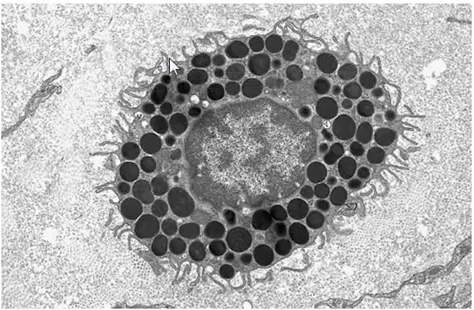
Mast cells
- Important against parasitic infections
- Associated with allergies
- Has granules that contain histamine, leukotrines and prostagladins
- Secrete cytokine such as TNF alpha
It is important to know how they look like
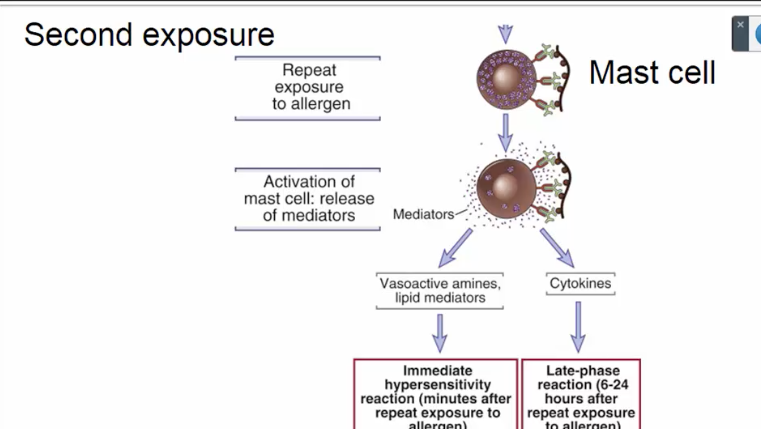
Explain the immediate hypersensitivity reaction associated with Type 1
- First exposure to allergen, B cell is induced by a TH2 cell to switch to IgE antibody. This is done by antigen presentation + IL4 +IL13
- Production of IgE
- IgE binds to the mast cells. AT THIS POINT, WITH THE FIRST EXPOSURE THERE IS NO CLINICAL MANIFESTATION
- Second exposure, mast cells activate and release mediators. There are 2 types, vasoactive amines and lipid mediators cause immediate hypersensitivity and cytokines cause delayed reaction
What cytokine activates a naive mature T cell (along with TCR and CD40 ligand, CD40L is present on the naive T cell)
IL-4
Signaling pathway in mast cells that leads to hypersensitivity reactions
- ITAMs lead signaling pathways
- Granules are released
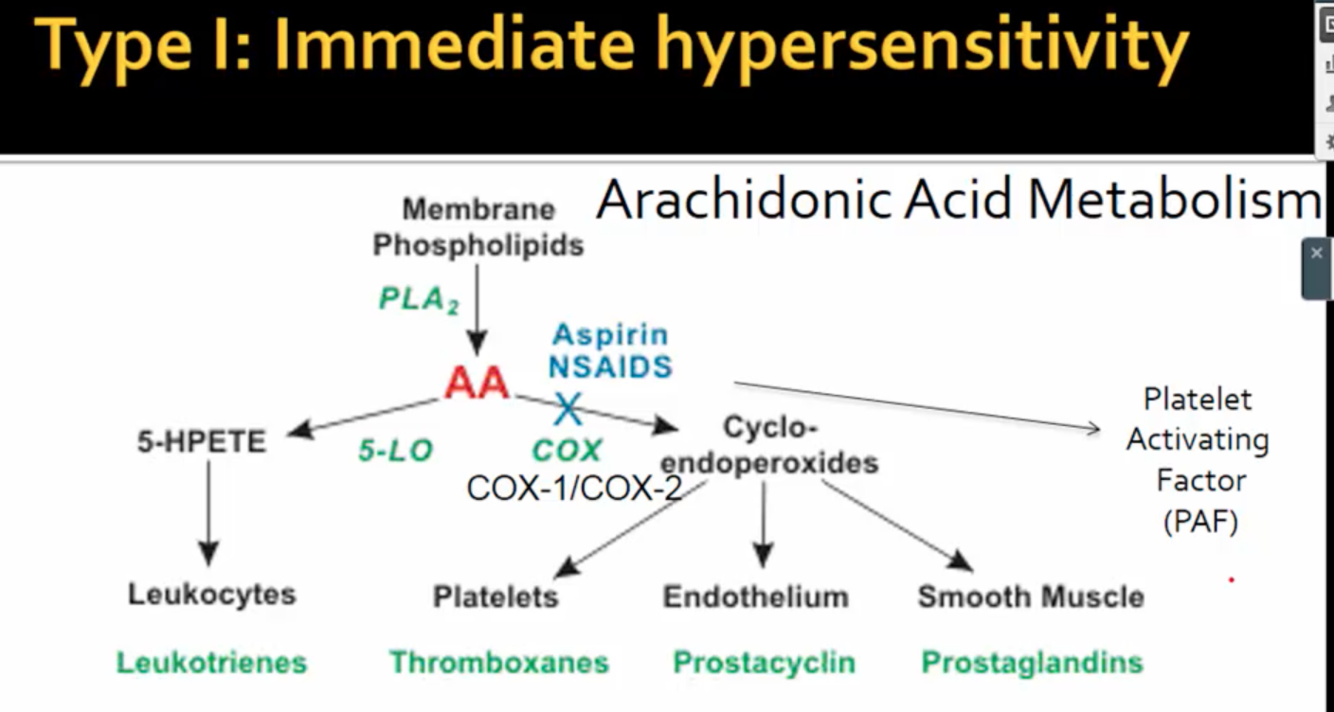
- Arachidonic acid metabolism leading to lipid mediators
- Release of cytokines
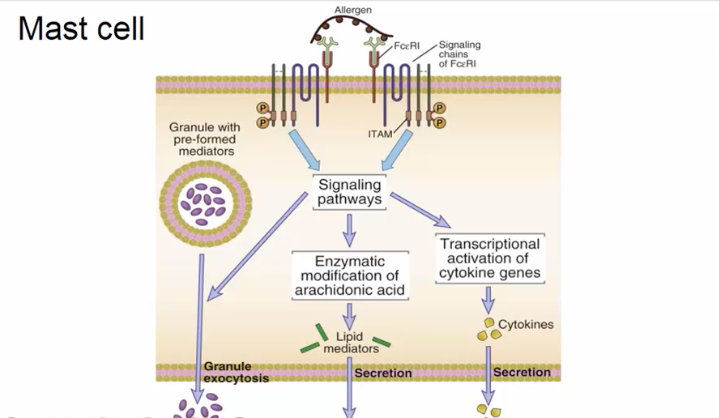
Mechanism of action of signaling in mast cells
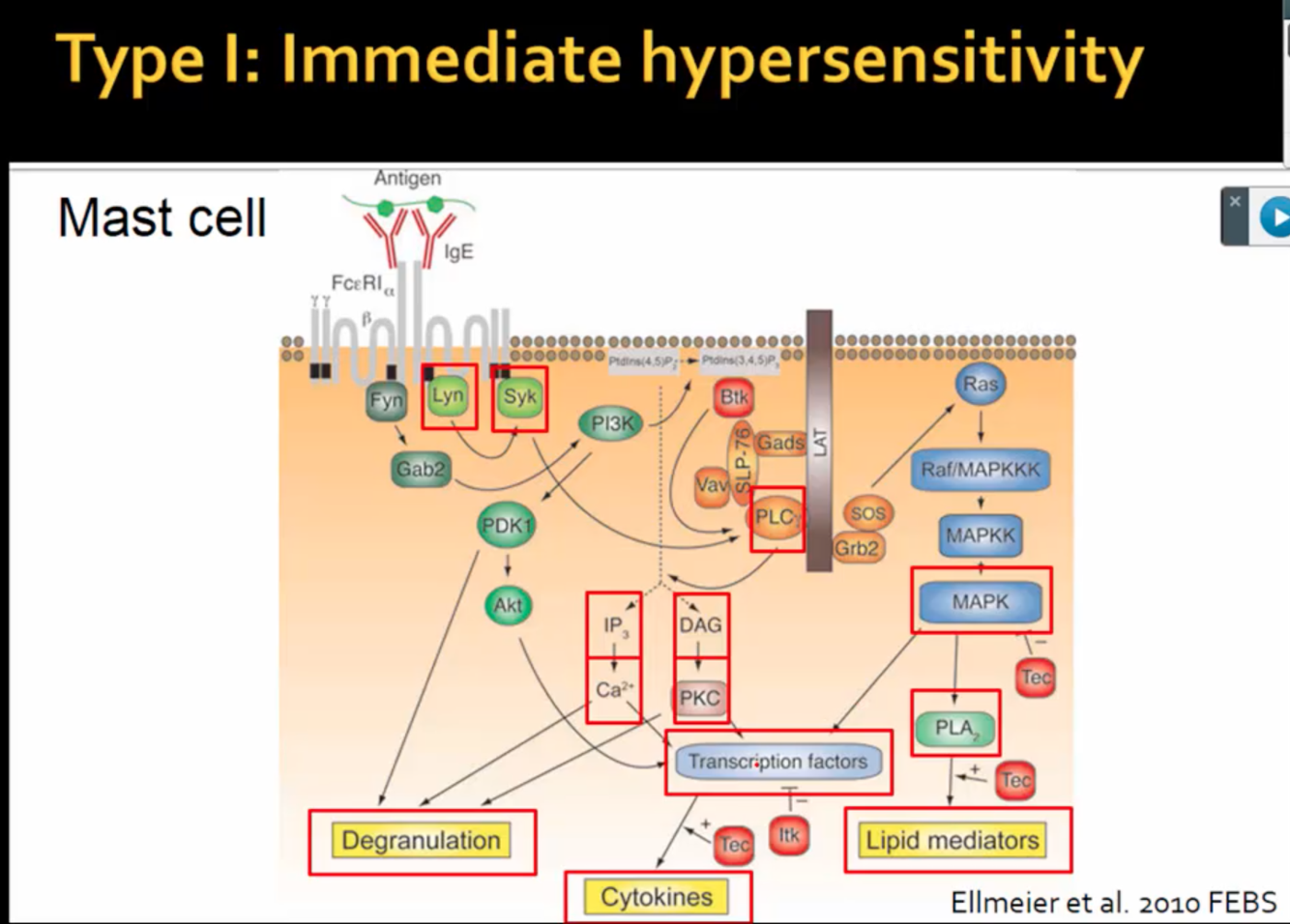
Arachidonic Acid metabolism pathway
What are the mast cell mediator effects
- Chemotaxis
- ICAM-1 upregualtion via TNFalpha and IL1
- Platelet aggregation due to Platelet Activating Factor
- Anti-coagulation since heparin is released in the granules
- Complement activation: C3a and C5a causing inflammation and C4a is also released
- Mast cells make IL3 and IL4
- Th2 cell activation making IL4, IL5 and IL13
Clinical effects of mediators
- itching due to histamine release
- Increased vascular permeability and vasodilation
- Smooth muscle contraction if it is in the gut
- Gut peristalsis
- Tryptase in the granules and leukotrienes cause mucus secretion
Biological phenomenas that happen immediately in hypersensitivity
Histamine causes
1, Dilation of small blood vessels
- Increased vascular permeability
- Transient contraction of smooth muscles
Proteases are released which cause tissue damage
Arachidonic acid metabolites are released (2): Prostaglandins which cause vascular dilation and leukotrienes which cause smooth muscle contraction
Describe the late phase reaction in hypersensitivity
- Mast cells release TNFalpha, IL4 and 5
- Th2 cells release IL4,5 and 13
- Leukocyte recruitment involving neutrophils, eosinophils (IL5) and production of proteases causing tissue damage
What are the clinical syndrome associated with immediate hypersensitivity
- Allergic rhinitus causing inflammation and mucus production
- Food allergies
- Asthma: bronchial smooth muscle hyperactivity, inflammation and tissue injury
Anaphylaxis
- Life threatening
- Systemic reaction involving widespread mast cell degranulation
- Edema, larynx airway obstruction
- Dramatic fall in blood pressure due to vasodilation
Diagnosis of hypersensitivity
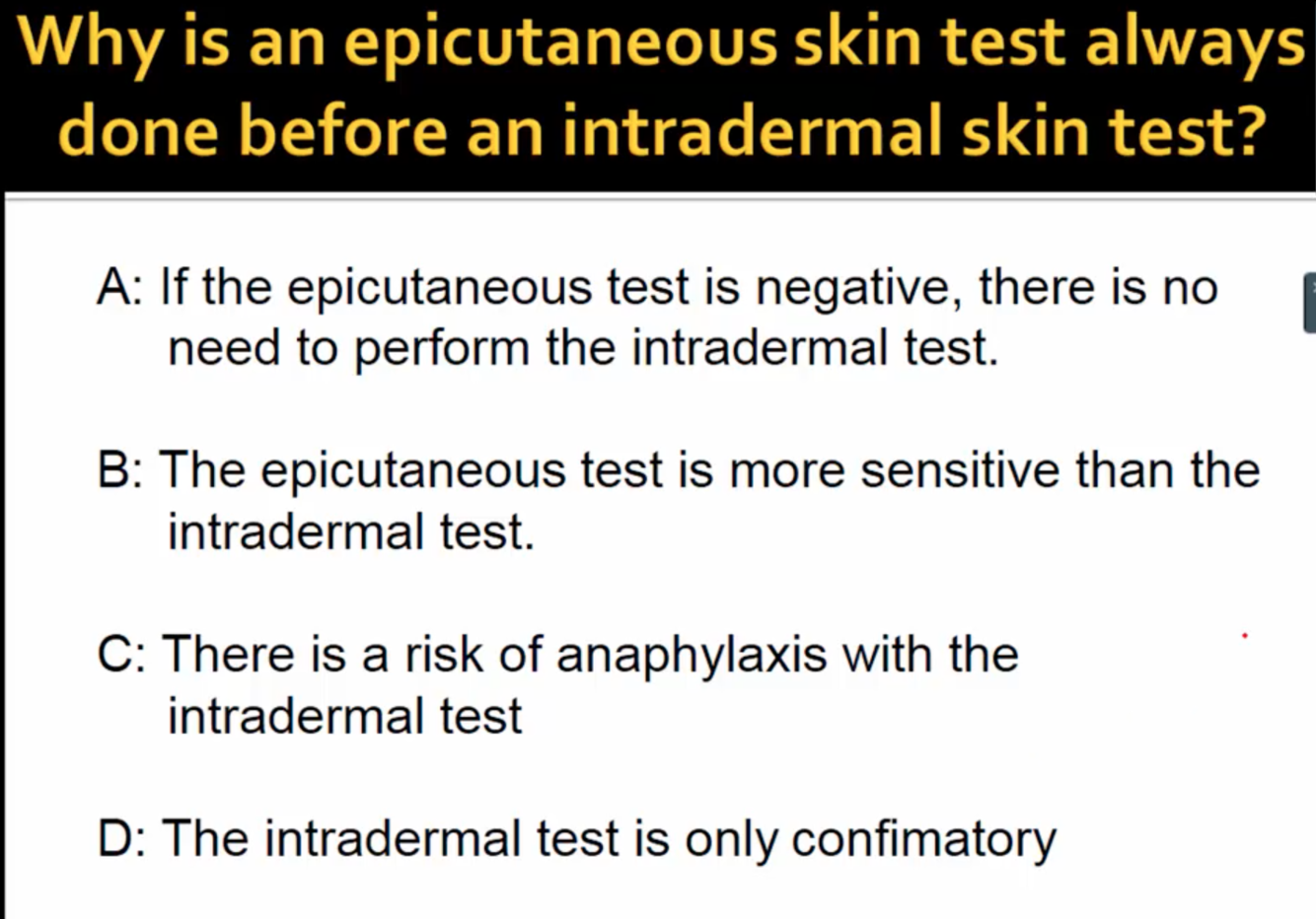
- Diagnosis of atopy involves skin test, looking for the wheel and flare reaction, intradermal test, more sensitivie and Epicutaneous test, skin prick/patch test
- Food challenge
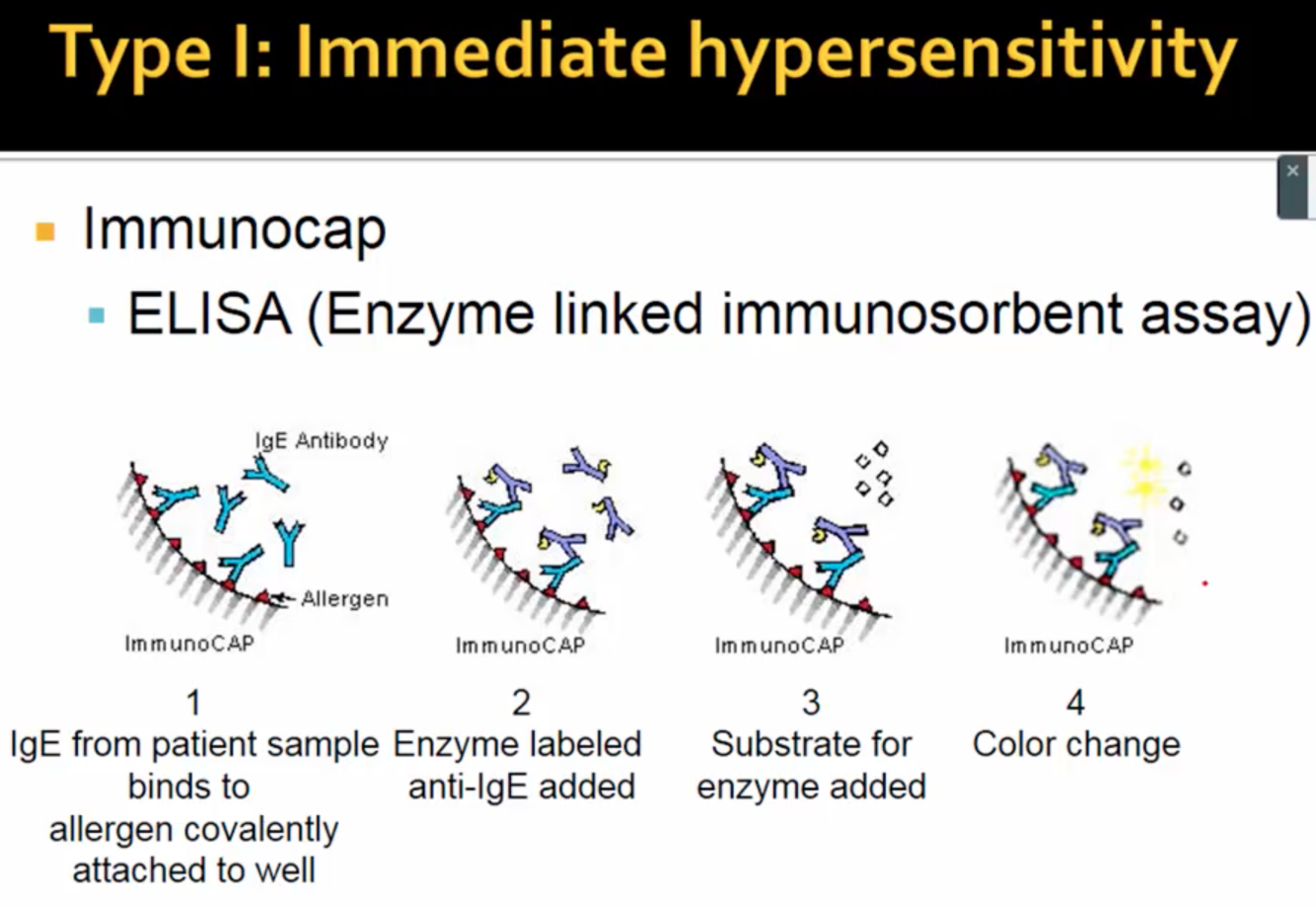
- Immunocap which is ELISA
C
ELISA process
How are Anaphylaxis and Asthma clinically treated
Anaphylaxis is treated by giving epinephrine: increases cardiac output and relaxes aiway muscles
Asthma is treated by giving
- bronchodilators - beta2 adrenergic agonists
- corticosteroids to reduce inflammation
- leukotrienes antagonist
- Histamine receptor antagonist (diphenhydrmaine)
What happens in type II hypersensitivity
Antibodies made in an infection cross reacts with self antigens and causes associated hypersensitivity reactions. The cross reactions can be either with cells or ECM. The most famous example is in streptococcus infection antibodies made react with heart and causes rheumatic fever
What is the first type of type II hypersensitivity reaction that she introduced in lecture
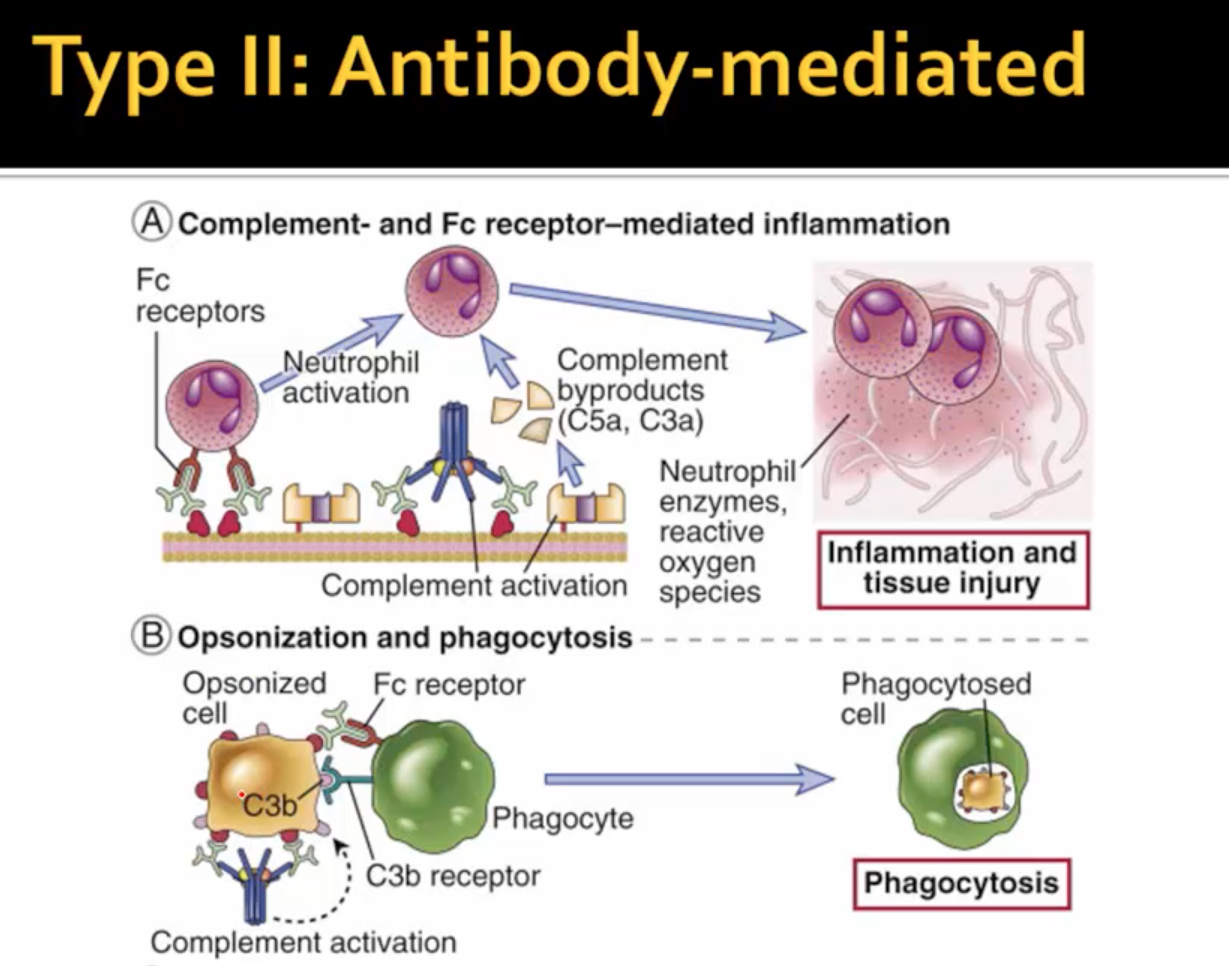
Disease with tissue injury that can happen in transfusion reactions and Rh incompatibility for a mother with the second baby. This happens by the following pathway
- Complement activation
- Fc receptor activation on neutrophils and macrohages
- Opsonization of cells (such as RBCs or other self cells)
Why doesnt this type 1 Type II hypersensitivity happens normally
Because our own cells have inhibitors that doesnt allow the activation of neutrophils or macrophages and also the antibodies are non reactive to self
What is type II
In this other type of type II hypersensitivity reaciton, there is disease without tissue injury. Two examples are
- Myasthenia Gravis: antibodies made against the acetyl choline receptors
- Graves disease: antibodies againt the thyroid-stimulating hormone receptor that acutally STIMUALTE the receptor. (doesnt damage it!)
What is type III hypersensitivity
It is immune complex mediated.
- Immune complexes (antigen-antibody complex) are deposited in the vessels which attract and activate leukocytes.
- Usually caused by IgG since it is the most abundant
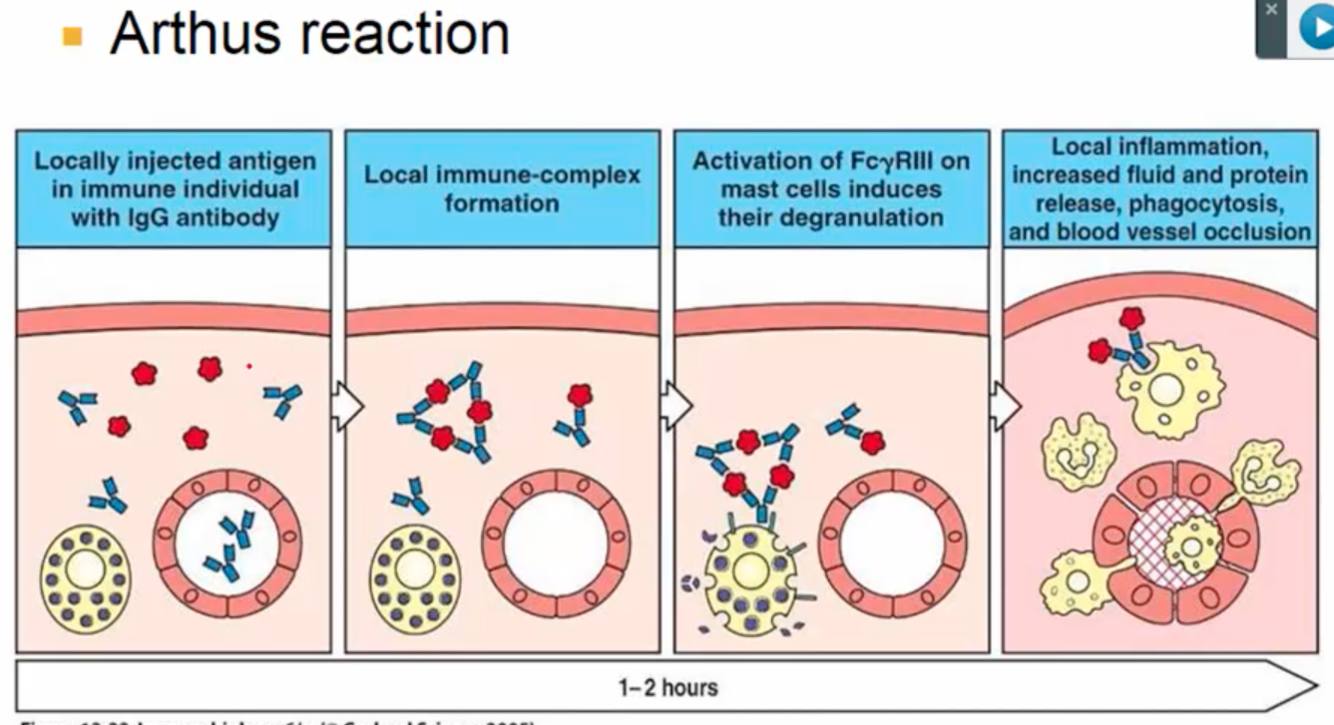
- Summarized by arthus reaction: if we immunize an animal for an antigen and then plant those antigens in their afterwards, mast cells will detect the antigen and antibody complex and degranulate causing inflammation and tissue damage. Look at the attached picture for details
What is the clinical significance of type III hypersensitivity
Serum Sickness
- Injection of large amount of foreign antigens
- This would usually happen to patients after they were given horse serum for anti venin
- Most common cause is penicillin
- Occurs 7 to 10 days after serum injection because thats how long it takes the T cells and B cells to become active
- Clinical manifestations are chills, fever, rash, arthritis and glomerulonephritius

-
Introduction21
-
Innate Immunity43
-
Acute Inflammation and Wound Healing32
-
Inflammation, DIC and Shock29
-
Arthritis and Systemic Inflammation8
-
Antigen Capture37
-
Antigen Recognition in Adaptive Immunity58
-
T Cell Immunity24
-
T Cell Effector25
-
Humoral Immunity34
-
Anti Inflammatory Medications26
-
Immunodeficiencies25
-
Hypersensitivity33
-
Immune Mediated Tissue Damage25
-
Tolerance and Autoimmunity36
-
Humoral Effector37
-
Diseases of B cells Deficiency5
-
Histopathology28
-
Opportunistic Infections7
-
Antibody Disorders16
-
Tumor and Transplant39
-
Immune Mediated Anemia12
-
Serum Sickness7
-
RA48
-
Liver Transplantation4
-
HSCT and GVHD4
-
eLearnings13
-
CNA and Autoimmunity19



