What is an immune system
A system of biological structures and processes that functions to kill pathogens and tumors
Know the self vs non self concept
Everything that is non self doesn’t mean it should be destroyed. A good example of this is bacteria in the GI tract
Why do we study immune system
Because it has pathology associated with it
Innate vs Adaptive
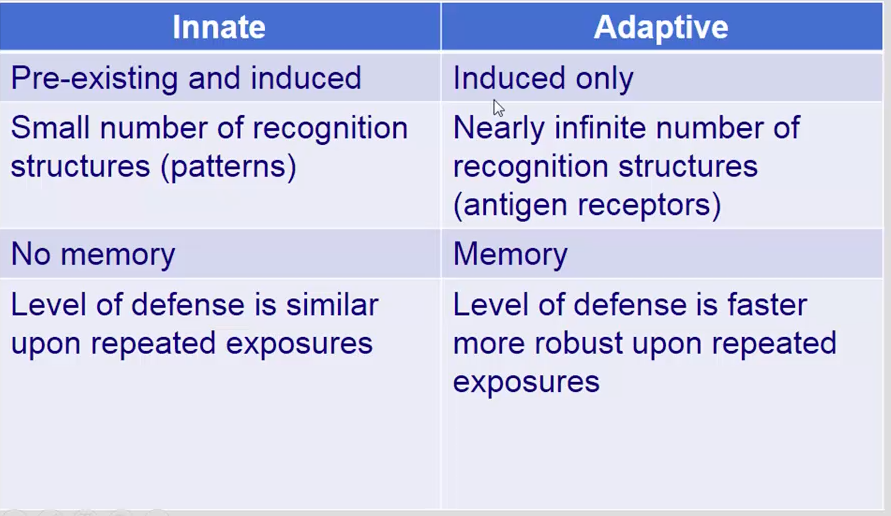
Describe the innate immune response
- It has pre existing structures like skin, mucosa, pH in stomach and proteases in saliva
- Response typically occurs at the site of infection
What are the 3 mechanisms of innate immune response
Three major mechanisms:
- Phagocytosis: neutrophls, macrophages, dendritic cells
- Target cell lysis: neutrophils, macrophages, NK cells
- Inflamamtion: cytokines and chemokines
How does immune system identifies self and non self
The immune system cells have PRMs (Pattern Recognition Molecules) on them that are used to idetnify patterns. Specificly they idenitfy PAMPs (Pathogens Associated Molecular Patterns).
PRMS are basically receptors.
How are phagocytes involved in pattern recognition
They phagocytose the foregin pathogen and present the antigen to other immune system cells as a danger signal to warn other white blood cells
How does the innate immune system and the adaptive immune system tranfer information about disease and pathogens
Mainly the dendritic cells phagocytose the pathogens and they transport it to the lymph nodes where they present the PAMPs via the MHC II. Lymphocytes in the lymph nodes are then activated
Where is the innate and adaptive immune system activated
Innate is activated at the site of infection whereas the adaptive is activated at the lymph nodes and the spleen
Describe the B cell (4) and T cell (2) receptors
B cell receptors are:
- Glycoprotein complexes
- Consist of variable and constant region
- Can be either solouble (Ab) or membrane bound (B cell receptor)
For TCRs
- Multiprotein complexes
- Also consist of variable and constant region
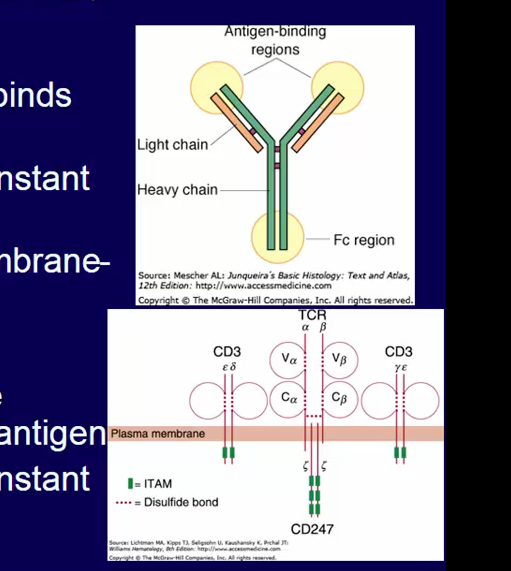
What does the antibodies and T cells bind to
Antibodies can bind to pretty much anything whereas T cells only bind to peptides
What are the 5 properties of adaptive immunity
- Specificity - recognizes one pathogen at a time
- Specialization - response to each pathogen is optimized
- Memory - reponse is quick and more vigorous to recurrent infections
- Nonreactivity to self antigens - prevents autoimmunity
- Cloncal expansion - large number of effector cells are made in response to a pathogen
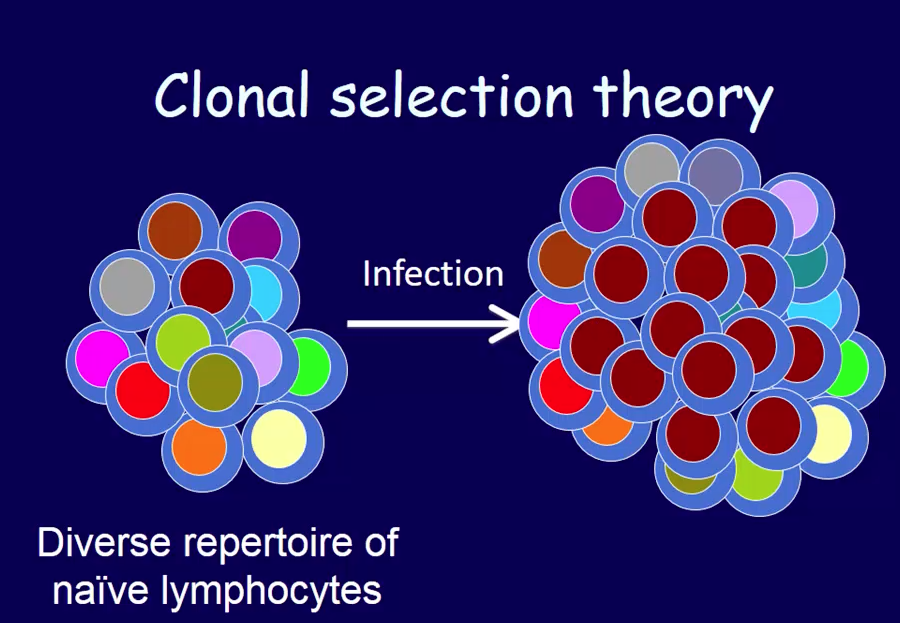
Clonal Selection Theory
- All antigens on a B cell or a T cell are identical, so a given B cell or T cell can only recognize 1 antigen
- To be immune to a large number of antigens, we need many many different lymphocytes
- The concequence for the above 2 points is that relatively few lymphocytes recognize a given antigen
In the picture, the brown cell becomes the dominant lymphocytes in that person’s body
Explain the concept of immunologic memory
- Specific to the antigen that the body was first exposed to
- The body becomes more sensitive to the antigen
- Secondary immune response is more robust and quick
- Memory cells are long lived since they differentiate from naive cells
Define Naive, Effector and Memory cells.
What are their respective life spans
Naive Cells: Mature lymphocytes that have not been activated yet, they have not encountered an antigen in their lives, lifespan = months
Effector Cells: Differentiated lymphocytes that are either helpter T cells, cytotoxic T cells, plasma cells that are actively involved in fighting off the pathogen. Lifespan = days
Memory cells: Differentiated lymphocytes, typically long lived, that can bceome effector cells upon reencounter with the antigen, lifespan = years.
What are the phases of adaptive immunity
There are 5 phases:
- Antigen recognition or antigen presentation: Naive T cell identify the pathogena and naive B cells identify the antigen presented by the APCs
- Lymphocytes activation: this involved clonal expansion and differentiation
- Antigen elimination: this involved humoral immunity and cell mediated immunity which results in elimination of the pathogen
- Contraction phase: active T cells and B cells undergo apoptosis
- Memory: Only memory B cells and T cells remain in the body from the encounter
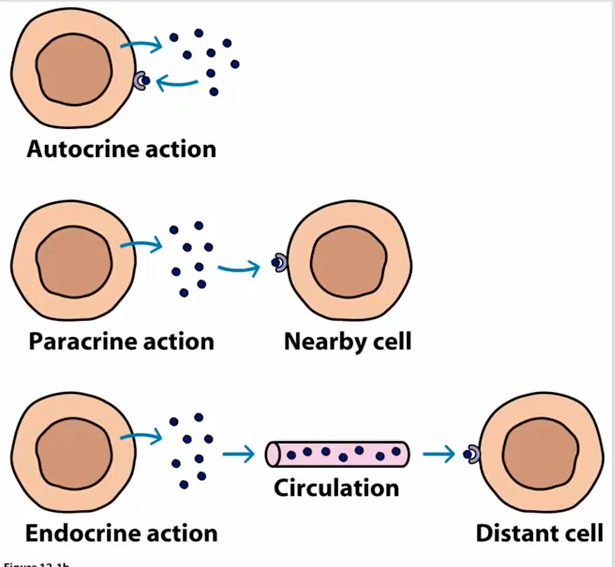
What is a cytokine and a chemokine
Low molecular weight, solouble proteins that trigger activation, proliferation or cell death.
A chemokine is a low molecular weight protein that tells the cell that they need to go somewhere
How do cytokines act
What are the types of lymphoid organs
There are 2 types, primary and secondary, which can also be categorized as central and peripheral
- Primary: These are the organs of myelogenesis and lymphogenesis. These consist of bone marrow and thymus
- Secondary: There are the sites where immune cells are concentrated to optimize immune response. These are spleen, lymph nodes, tonsil, peyer’s patch.
What is the interplay between innate immune response and adaptive immune response
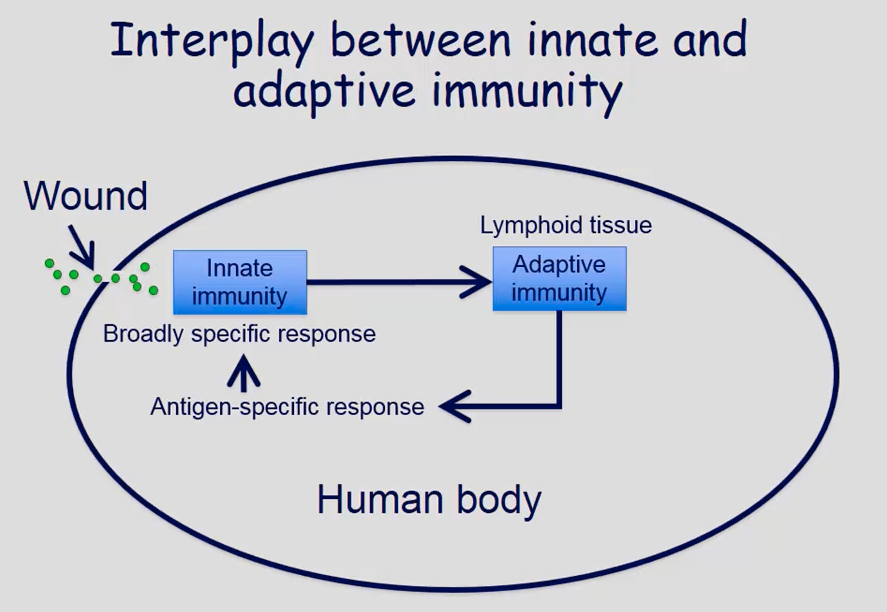
Innate immune response identifies the antigen and tries to contain it. At the same time it talks to the cells in the lymphoid tissue to trigger a highly specific adaptive immune response against the antigen. Once the adaptive immune response is developed it contains the antigen and then it relies on the innate immune response to finish off the pathogen. See the attached slide

-
Introduction21
-
Innate Immunity43
-
Acute Inflammation and Wound Healing32
-
Inflammation, DIC and Shock29
-
Arthritis and Systemic Inflammation8
-
Antigen Capture37
-
Antigen Recognition in Adaptive Immunity58
-
T Cell Immunity24
-
T Cell Effector25
-
Humoral Immunity34
-
Anti Inflammatory Medications26
-
Immunodeficiencies25
-
Hypersensitivity33
-
Immune Mediated Tissue Damage25
-
Tolerance and Autoimmunity36
-
Humoral Effector37
-
Diseases of B cells Deficiency5
-
Histopathology28
-
Opportunistic Infections7
-
Antibody Disorders16
-
Tumor and Transplant39
-
Immune Mediated Anemia12
-
Serum Sickness7
-
RA48
-
Liver Transplantation4
-
HSCT and GVHD4
-
eLearnings13
-
CNA and Autoimmunity19



