Lifestyle factors that affect fertility
- Age
- BMI
- Smoking
- Alcohol
- Recreational drug use
- Stress
What is the WHO clinical definition of infertility? (in an individual)
Inability to conceive over a 12 month period despite exposure to regular, unprotected sexual intercourse
What is the WHO epidemiological definition of infertility? (in a group)
Lack of conception after 2 years in women of reproductive age (15-49 years) who are at a risk of becoming pregnant (sexually active, not using contraception)
When should a patient be referred to an infertility clinic?
- If <35 and no conception after 1 year of regular unprotected intercourse
Early referral if:
- >35 y/o and have been trying for 6 months
- There is a known cause for infertility
Primary infertility
The male and female partner have never conceived before
Main factors affecting a female’s fertility (5)
- Ovulatory dysfunction - not releasing an egg regularly i.e in PCOS
- Low ovarian (egg) reserve
- Tubal factor
- Uterine factor
- Endometriosis
Main factors causing male infertility
- Problems in producing hormones for sperm production i.e hormone control
- Erection and ejaculation problems due to things like prostate surgery, nerve damage, timing of intercourse, medication
- Sperm production problems - genetic causes, failure of testes to descend, infection or torsion etc
- Blockage of sperm transport - infection, absence of vas deferens or vasectomy
When beginning to investigate infertility what important factors/things do you want to find out?
Want to find out whether there are:
- Eggs available? - are they ovulating regularly
- Sperm available? is there enough and are they motile
- Can the sperm and egg meet? - ejaculation etc and is the fallopian tube in tact/patent?
- Any other factors - is the uterine cavity normal?
All these are necessary to have a spontaneous pregnancy
How can you work out if a woman has a good ovarian reserve i.e eggs available?
- Age - steep decline after 35 years
- Ovarian reserve test - blood tests and scan
- Blood test - FSH during day 1-5 of cycle (<10 iu/L) and Anti-Mullerian hormone (AMH) (5.0-25.0pmol/L)
- USS - Antral follicular count - transvaginal - performed in the early phase of your menstrual cycle, in which you can visually count the number of egg-containing follicles that are developing on both of your ovaries.
How can you determine whether ovulation is happening if there are sufficient egg supplies?
Couples can find out themselves by:
- Natural methods:
- Basal body temperature - higher temperatures recorded when progesterone is at peak
- Cervical mucus discharge - maximum around the time of ovulation
- LH ovulation kits
- Detects surge of LH hormone
- Ovulation calendar or apps
One formal diagnostic test:
- D21 serum progesterone - levels of progesterone in the blood is taken on day 21 of a cycle if the woman has regular cycles (expect the hormone levels to be at peak at this point)
- Expected levels = > 20nmol/l show satisfactory ovulation
What invetsigation is done to determine whether a male has a sufficient amount of sperm available?
Semen analysis
How to check fallopian tube patency?
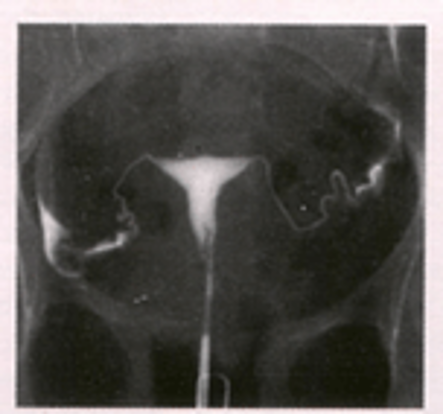
- If no pelvic infection or gynaecological problem in past- Hysterosalpingogram (HSG)
- Uses X-ray imaging. The uterus is filled with an iodine contrast using a catheter inserted in the cervix. As the dye enters the fallopian tubes, it outlines their length and spills out their ends if they are open (see image).
- Abnormalities inside the uterine cavity may also be detected if the fluid movement is disrupted by the abnormality.
- If they have had a pelvic infection or gynae problem in the past then do Laparoscopic dye test
- This is a surgical procedure under GA
What are some other routine tests that need to be done for an infertile couple?
- Serum prolactin
- Thyroid function test
- Chlamydia screening
- Pelvic USS for uterine problems
- Also check- Rubella immunity
- Cervical smear uptodate and normal
If a woman is found to have an ovulation disorder i.e irregular cycles, lack of ovulation…
- How can this be managed?
- What is the most common reason for this?
- Lifestyle factors
- Optimise body weight
- Healthy lifestyle i.e diet, smoking, alcohol etc
- Exercise
- Medication
- Clomiphene citrate - (ovulation induction - makes their cycle more regular)
- Gonadotrophins - hormone replacement
- Surgical
- Laparoscopic ovarian drilling
- PCOS
If a male is found to have a sperm problem i.e low sperm count or no sperm (azoospermia) how is it managed/treated?
Treatment depends on the cause of low sperm
If it is due to insufficient hormones driving sperm production:
- Gonadotropins - hormone replacement in order to drive sperm production
If the problem is in the testicle:
- Surgical sperm retrieval
If still no luck then options are:
- Donor sperm - intrauterine insemination
- ICSI - intracytoplasmic sperm injection - if manage to get some sperm from the father.
What is the management for a female with tubal problems? (2)
- Surgical approach - limited to mild/minor tubal disease
- IVF - gives higher chance of conception
What is the treatment for unresolved fertility?
IVF
Describe the start of the IVF process for a female
- If a woman still has her cycle with her own eggs then she is given gonadotropin injections to stimulate the ovaries and produce multiple eggs in one cycle
- However, if the woman has reduced ovarian reserve, poor quality of eggs, her ovaries have failed prematurely or there is a genetic risk then she can receive donor eggs
How is sperm sourced for IVF?
- If the male has sufficient sperm supply then they get a fresh sample on the day of egg retrieval or use a frozen sample from surgical retrieval or fertility preservation (i.e prior to cancer treatment)
- If the partner has no sperm or sperm is required for a single woman, same sex couple or there is risk of infection (HIV) or genetic cause then can use donor sperm
Key steps in the IVF process
- First stimulate the ovaries to produce multiple eggs in a cycle - hormone injections given for a couple weeks
- Monitor the follicles in the ovaries with USS in 2nd week - check they’re growing
- Trigger ovulation with final injection of HCG (Human Chorionic Gonadotropin)
- 36 hours later do egg retrieval - simple procedure using transvaginal USS + insertion of needle into the follicles - get sperm sample on same day from partner
- Eggs are fertilised in dishes either by insemination (mixed into dish with egg) or Intracytoplasmic Sperm Injection (sperm injected into the egg)
- Incubation/embryo development (3-5 days, no more than 6)
- Embryo transfer - suitable embryo is selected for this - inserted into mother’s uterus. Freeze any other suitable ones
- Progesterone support - vaginal pessaries - maintain endometrium for pregnancy
- Pregnancy test after 2 weeks - if positive - scan at 7 weeks
Risks of IVF treatment
- Ovarian hyperstimulation syndrome (OHSS) - as a result of hormone administration there could be an overresponse of the ovaries and production of multiple follicles - gives rise to symptoms
- Multiple pregnancy - transferring more than one embryo
- Medication side effects - minor usually
- Procedure related - bleeding or infection (Rare)

-
Antenatal screening33
-
Contraception24
-
Embryology27
-
Maternal and perinatal mortality18
-
Pharmacology in pregnancy58
-
Genital symptoms27
-
An intro to STIs23
-
History and examination24
-
Menstrual disorders32
-
Common pathologies in pregnancy33
-
Basic Male reproductive physiology22
-
Breast anatomy25
-
Basic Female reproductive physiology20
-
Prolapse22
-
Incontinence25
-
Infertility21
-
Cervical screening27
-
Cervical cancer21
-
Vulval cancer15
-
Menopause, HRT and Amenorrhoea20
-
Normal labour37
-
Abnormal labour21
-
Obstetric emergencies17
-
Postnatal care18
-
Infant feeding25
-
Complications in pregnancy 128
-
Complications in pregnancy 238
-
Breast cancer + cytology/histology40
-
Pathology of the breast12
-
STIs27
-
Endometrial Cancer15
-
Physiological changes during pregnancy15
-
HRP20
-
Anatomy31



