what is the function of endocrine system
- coordinate and integrate cellular activity within the whole body by regulating cellular and organ function throughout life and maintaining homeostasis
–> regulate sodium and water balance
–> regulate calcium and phosphoate balance
–> regulate energy balance
–> coordinate stress response
–> regulate reproduction, development, growth and senescence
endocrine glands general
- no anatomical connection
- ductless glands
- transport hormones via blood stream
transport of hormones
- endocrine cell located close to blood stream
- releases hormone in blood stream and travels throughout the body at different sites
- therefore has a widespread effect on multiple organ system
ENDOCRINE = within cell
Autocrine = acts on same cell
paracrine = distant cell
hormone half life
- duration in circation is dependent upon protein binding (the greater the protein binding, the greater the half life)
Hormone metabolism (where it ocurs)
–> liver
–> site of action
Excretion
–> urinary excretion (most thorugh urine; can measure hormone levels via urine)
–> biliary excretion (some steroids)
peptide hormone characteristics
- can be small to large (3-200 amino acids in size)
- synthesized as a pre-prohormone
- post-translation processing (peptide cleavage and glycosylation) –> active form
- can be stored in vescile
- calcium dependent release
- hydrophilic
- circulate free (SHORT HALF-LIFE)
- bind cell surface receptors
Steroid hormone characteristics
- LIPOPHILIC
- Derived from cholesterol
- circulate bound (longer half-life)
- cross plasma membranes (INTRACELLULAR)
amino acid derived hormones characteristics
- derived from tyrosine
- CATECHOLAMINES
–> hydrophilic, Circulate free, cell surface receptors
- Thyroid hormones
–> Hydrophilic, circulate BOUND, intracellular receptors (can’t pass through membrane… requires transporter)
G-Protein coupled receptors (GPCRs)
- Amino-acid derived hormones (catecholamines)
- Peptide hormones (TSH, LH, ADH)
Receptor protein tyrosine kinases (RTKs)
- Peptide hormones (insulin, growth hormone)
- only one transmembrane domain
Intracellular receptors
- Thyroid hormones
- steroid hormones (estrogen)
**regulate gene transcription**
Hormone release
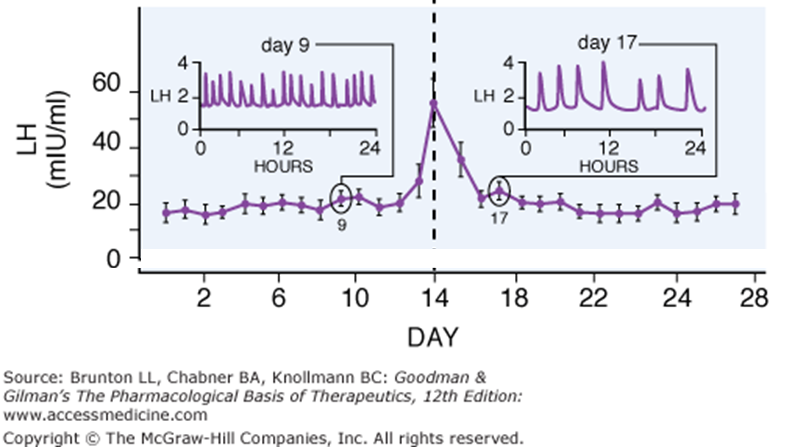
- Release of hormoens is PULSATILE (released in small bursts) and PERIODIC (periodic elevation in hormone levels)
- release is regulated by multiple mechanisms including
–> neural
–> hormonal
–> nutrient/ion regulation
Nuronal regulation of hormone release
- Peripheral (autonomic system)
- central regulation (feedback process)
–> pituitary releases prolactin –> rise in prolactin levels –> increase DA release on hypothalamus –> shuts down pituitary release of prolactin
hormonal regulation of hormonal release
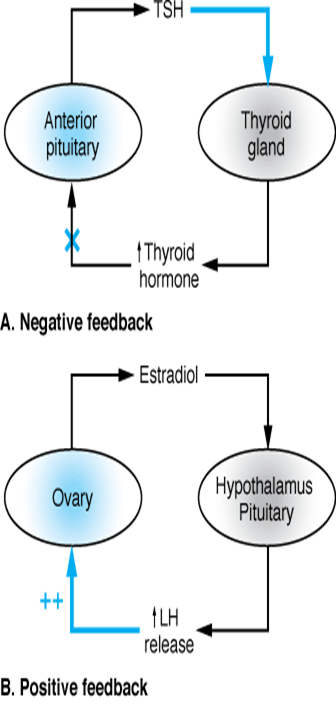
- Tropic hormones (TSH, LH) = regulate the release/synthesis of other hormones
–> can have positive (feed forward) or negative feedback
Nutrient or ion regulation of hormone release
- Ca++ via PTH
–> Parathryoid gland releases PTH which acts on bone to release Ca++ —> acts on parathyroid glands to inhibit PTH release
- Glucose/insulin
FEEDBACK LOOPS
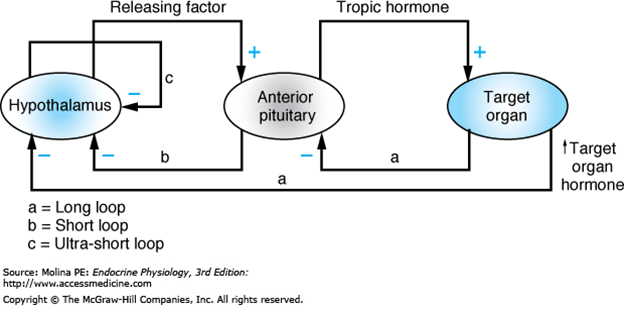
- Ultra-short loop: hypothalamus releasing factor and then responding to that factor (quick pulsatile release)
- Short loop: hypothalamus releasing factor onto the anterior pituitary –> anterior pituitary releases trophic hormone back to hypothalmus to shut it off
- Long loop: hypothalamus releasing factor onto anterior pituitary which releases a trophic factor onto target organ and then back to either the anterior pituitary or the hypothalamus
ENDOCRINE DYSFUNTIOn
- can be do to either too much or too little hromone action
–> abnormal hormone production, change in the receptor numbers, change in the signaling molecule function
- DECREASED RESPONSIVENESS (change in maximal response/effect)
–> change in receptor number, decreased enzyme/down stream target of receptor, presence of non-competitive inhibitor, decreased target cells
- DECREASED SENSITIVITY (no change in maximal response, just takes more hormone)–> shift right
–> due to decreased receptor affinity, increased hormone degradation, increased competitive inhibitor
How to interpret hormone measurements**********
measure trophic hormone and trophic hormone release
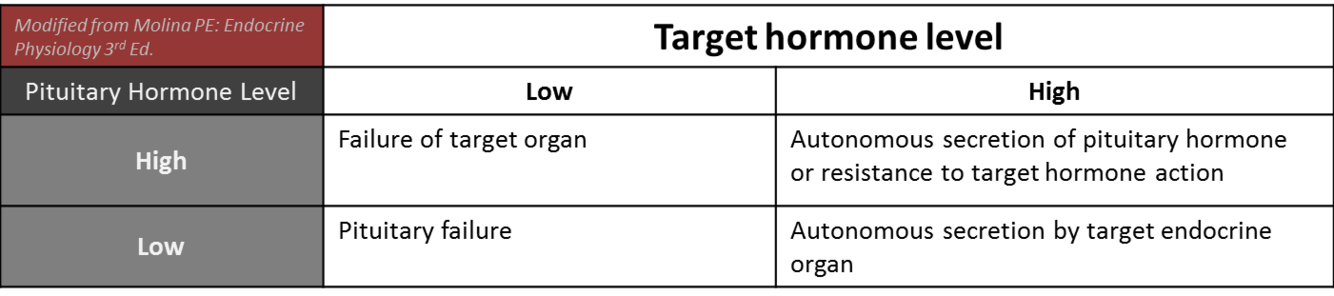
high pituitary hormone
- target hormone level
–> low = fairlue of target oran
–> high = autonomous secretion of pituitary hormone or resistance to target hormone action
low pituitary hormone
- Target hormone level
–> low = pituitary failure
–> high = autonomous secretion by target endocrine organ
what are some other considerations during testing the endocrine system
- evaluate hromeon and regulator factor together
–> glucose and insulin
–> calcium and PTH
- evaluate hromone together with ropic hormone
–> estradiol and LH
- Elevation of pairs indicates resistance
–> glucose and insulin
- Monitor hormone excretion over 24 hours, better than 1 time plasma reading




