Lower Limb Flashcards

(103 cards)

1
Q

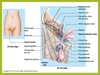
Note the various anatomical landmarks of the pelvis
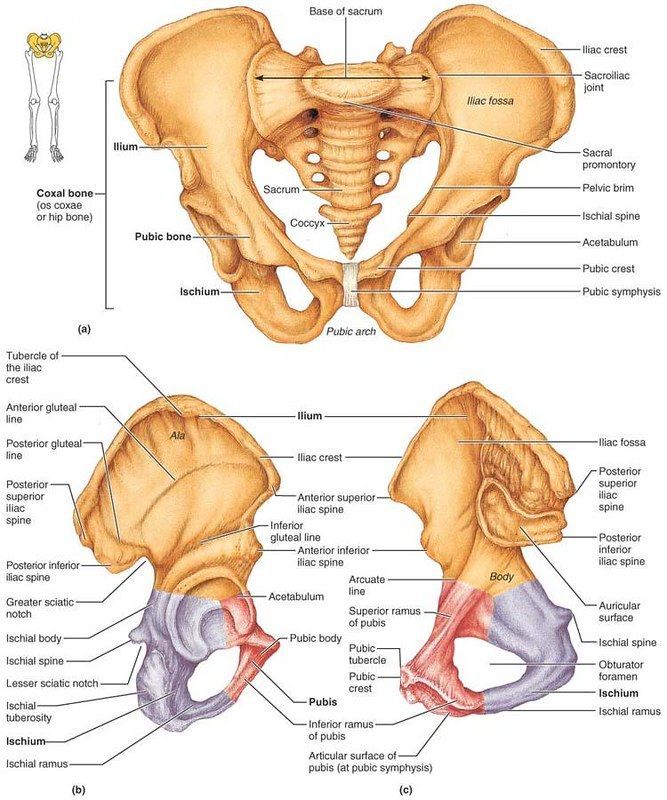
A
2
Q

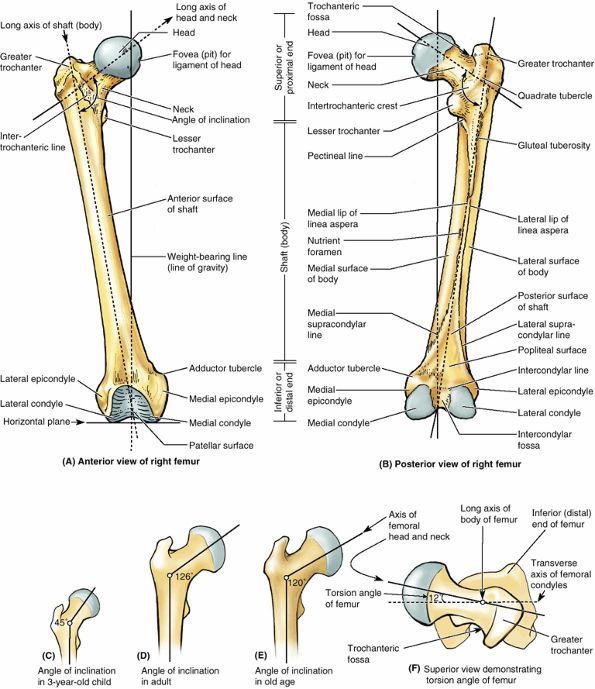
Anatomical landmarks of the femur

A
3
Q

Anatomical landmarks of the tibia + fibula
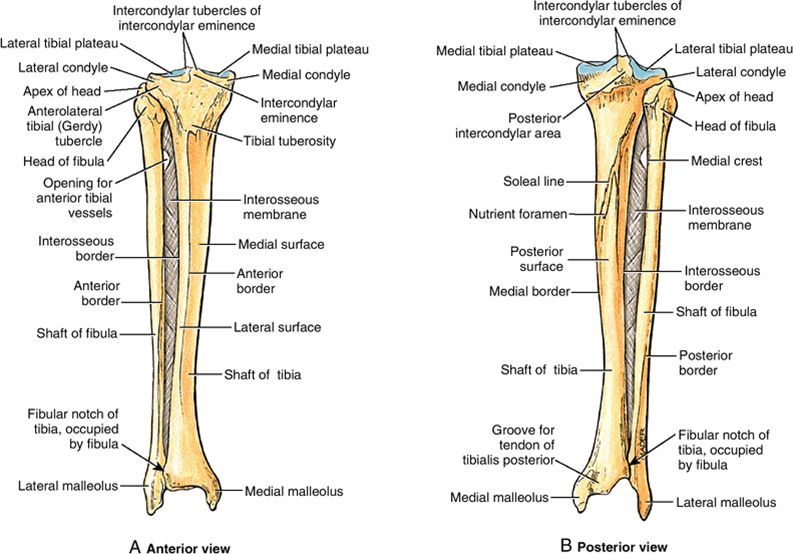
A
4
Q

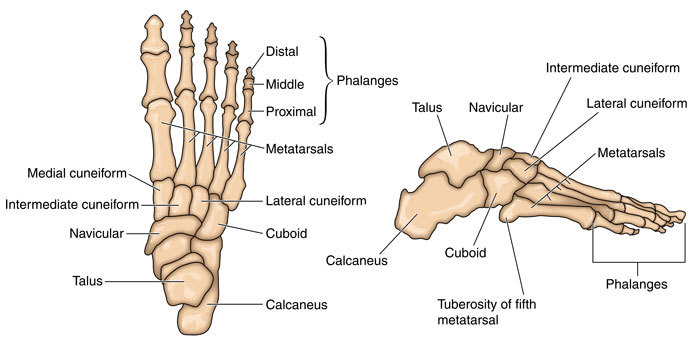
How many tarsal and metatarsal bones are there?

A

7 tarsal bones

5 metatarsal bones

5
Q

What are the names of the tarsal bones

And which one articulates with the long leg bones?

A

Tiger Cub Needs MILC

Talus, calcaneus, navicular, medial cuneiform, intermediate cuneiform, lateral cuneiform, cuboid

The only one that articulates with tibia/fibular = Talus
6
Q

What articulates with the tibia and fibula in the foot?

A

Trochlear of the talus

7
Q

What is the deep fascia of the thigh called?

A

Fascia lata

It contains all the large thigh muscles.

8
Q

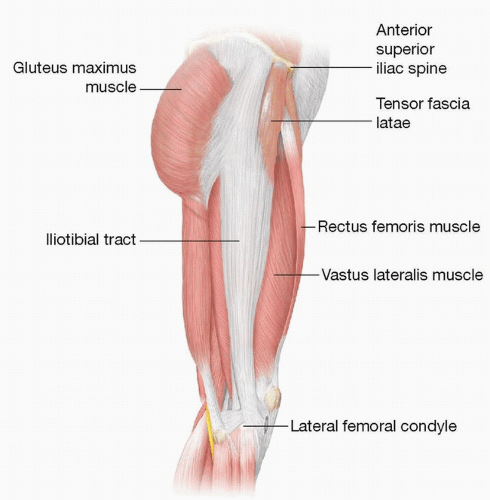
What is the course of the iliotibial tract?

What is it formed off?

A

Extends from the iliac tubercle

To the anterolateral tubercle of the tibia

It is formed from = The joined aponueorses of the gluteus maximus muscle and the aponeurosis of the fascia tensor latae muscles.
9
Q

What are the three compartments in the thigh and what divides them?

A

Anterior, posterior + Medial

Divided by 3 fascial intermuscular septa = That arise from the fascia laata.

10
Q

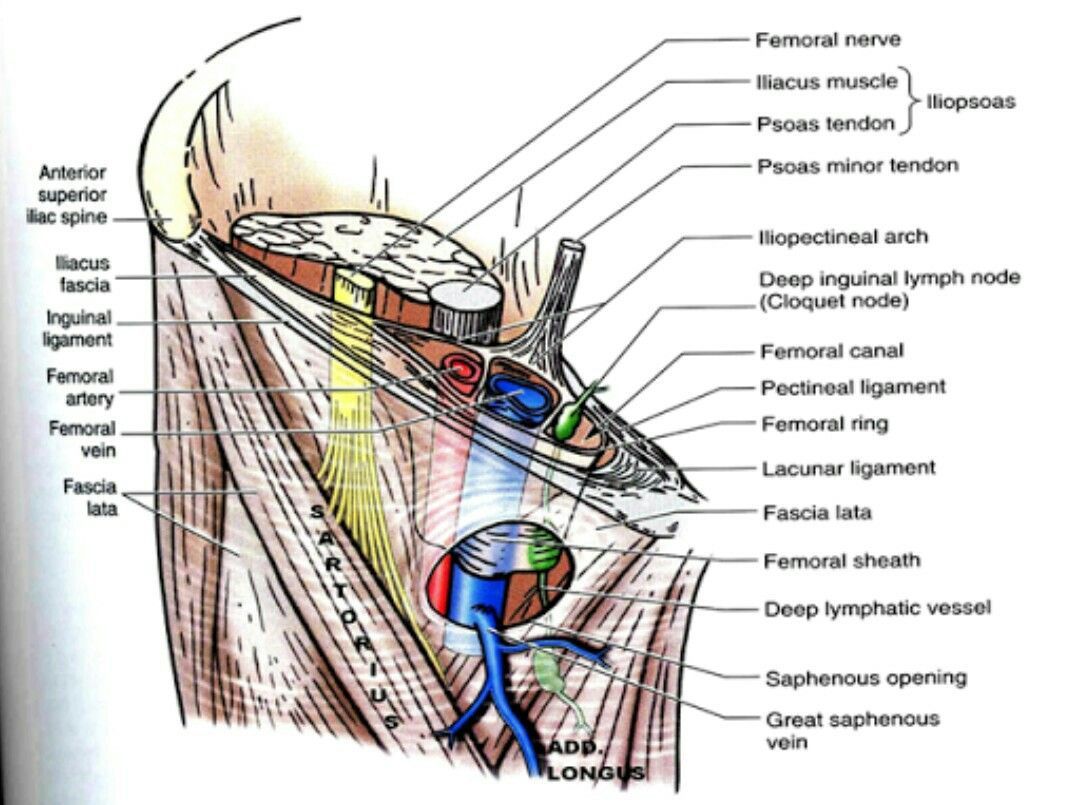
What and where is the saphenous opening?

A

This is a hole in the fascia lata (deep fascia of the thigh)

Location = It is inferior to the medial part of the inguinal ligament.

Or 4cm inferolateral of the pubic tubercle
11
Q

What are the two largest superficial veins of the thigh

A

greater and smallersaphenous

12
Q

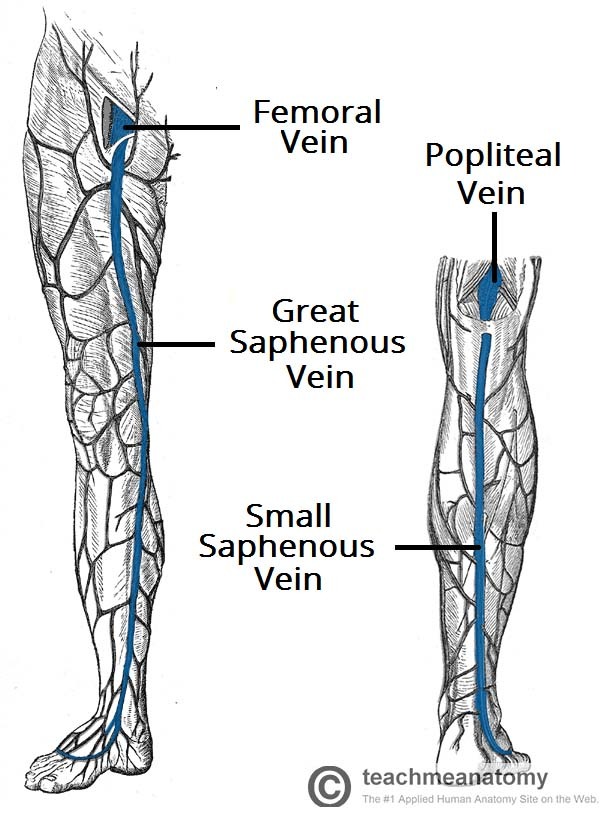
What is the course of the greater saphenous?

A

Starts and ascendings anterior to medial malleolus

Passes posterior to medial femoral condyle

Then anastamoses here with small saphenous vein

Then ascends up medial thigh

Goes deep through fascia lata via saphenous opening

Enters the femoral vein here
13
Q

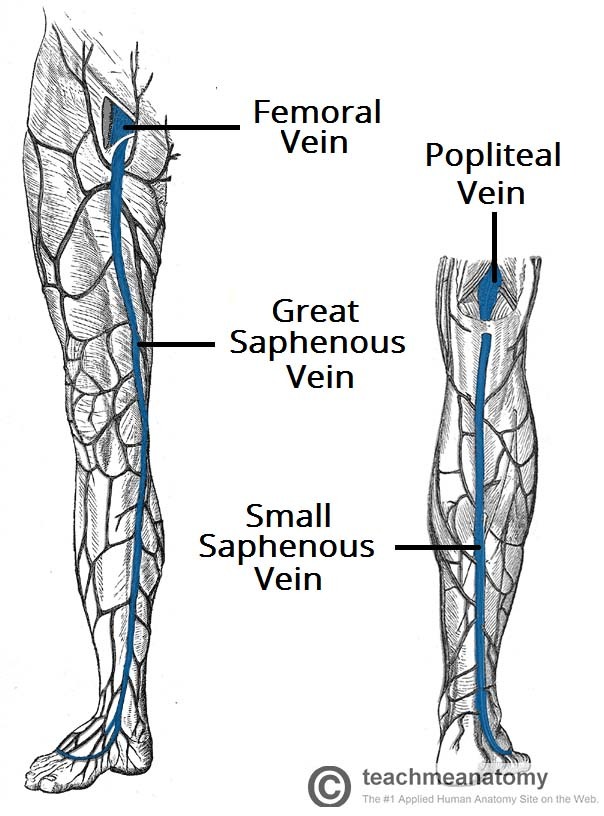
Course of the small saphenous vein

A

Opp to greater saphenous = Arises posterior to lateral malleolus and continuous up

Passess along lateral lower leg

Goes deep and penetrates deep facia

Then passes between heads of gastrocnemius

Then empties into the popliteal vein in the popliteal fossa
14
Q

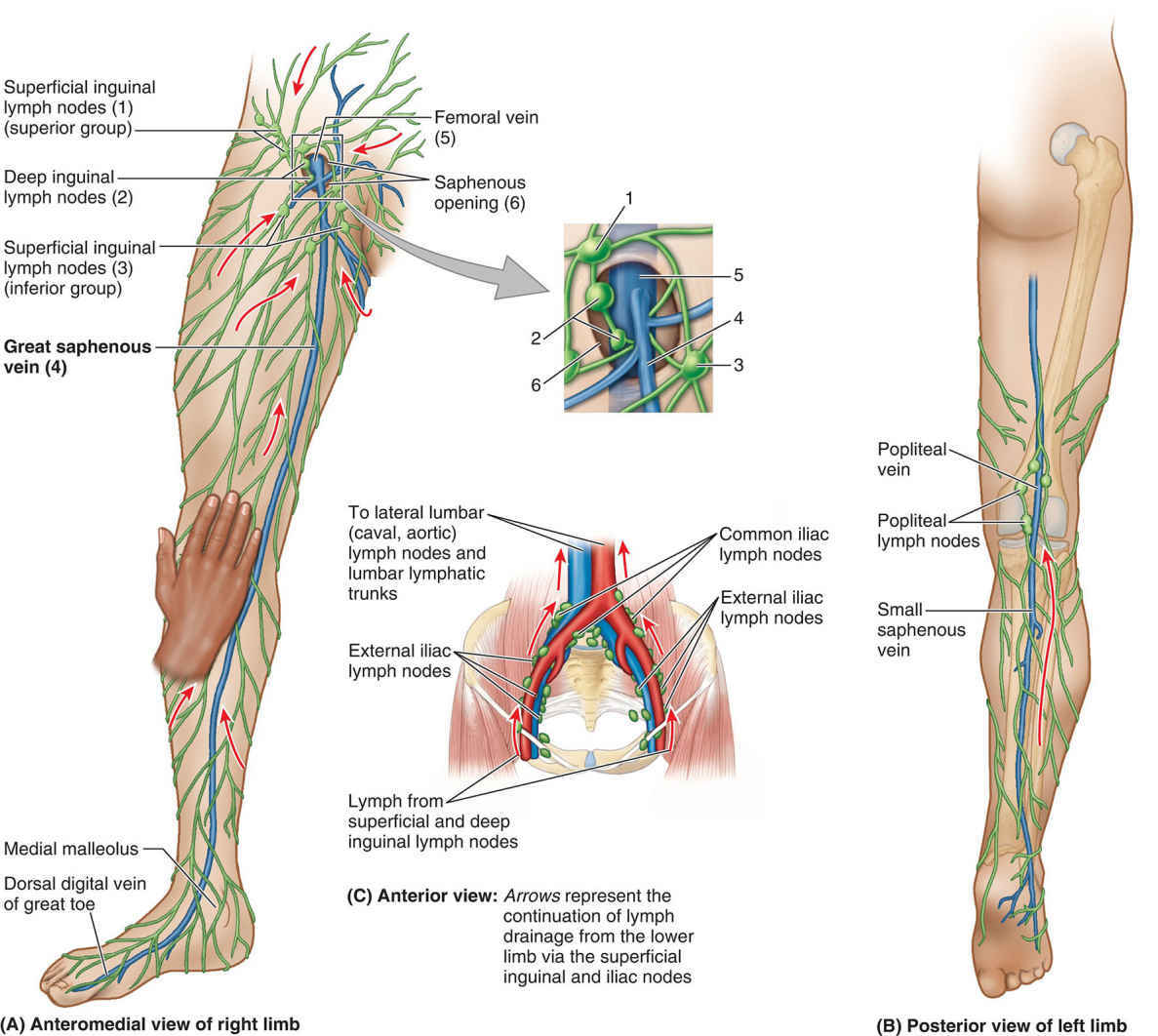
Describe the lymphatic drainage of the leg

A

There are deep and superficial lymph drainage of the leg

Superficial = The superficial lymphatic vessels converge at the saphenous veins = Then passes up to vertical group of superficial inguinal lymph nodes = Passes then to external iliac lymph nodes

Deep = Some of the lymph is also deep and will travel along the femoral vein = And pass to the deep inguinal lymph nodes = Then passes to external and common iliac lymph nodes = Then enters the lumbar lymphatic trunks
15
Q

Dermatome of knee

A

L3

16
Q

Dermatome of heel

A

S1

17
Q

Dermatome of greater toe

A

L4

18
Q

Myotomes of the lower limb all movements

A

Hip flexion = L2 L3

Hip extension = L4 L5

Knee extension = L3 L4

Knee flexion = L5 S1

Dorsiflexion (ankle) = L4 L5

Plantarflexion (ankle) = S1 S2

Inversion = L4 L5

Eversion = L4 S1

19
Q

Compartments of the thigh and their general innvervation

A

Anterior = Fermoral nerve

Posterior = tibial portion of the sciatic nerve

Medial/Adductor = Obstruator nerve

20
Q

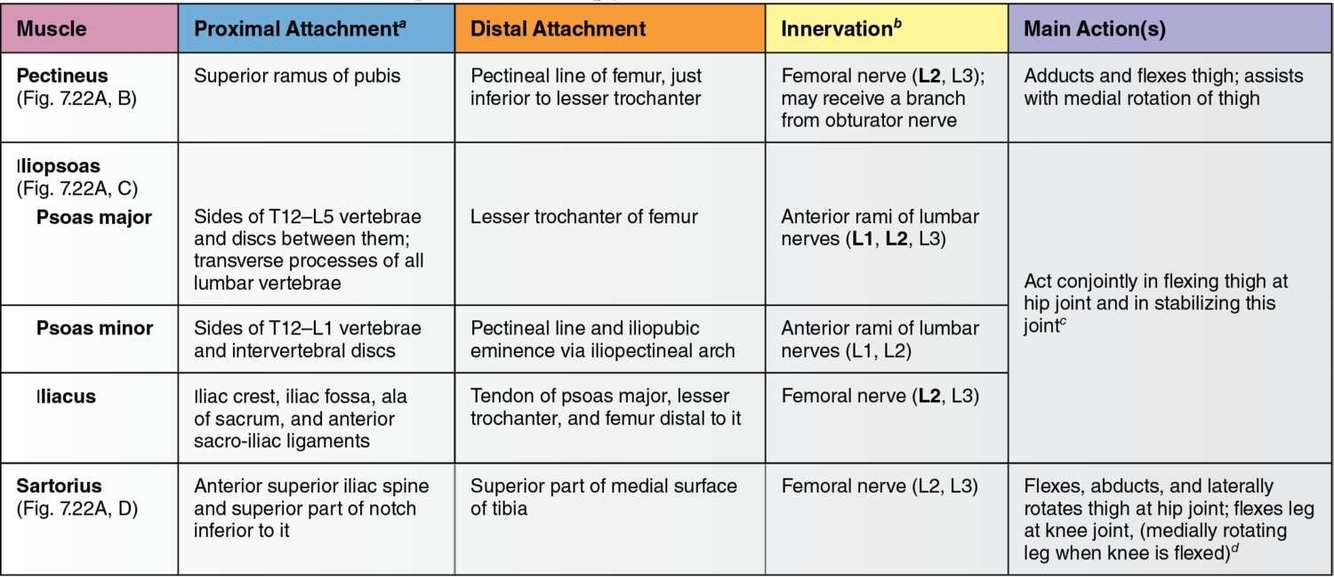
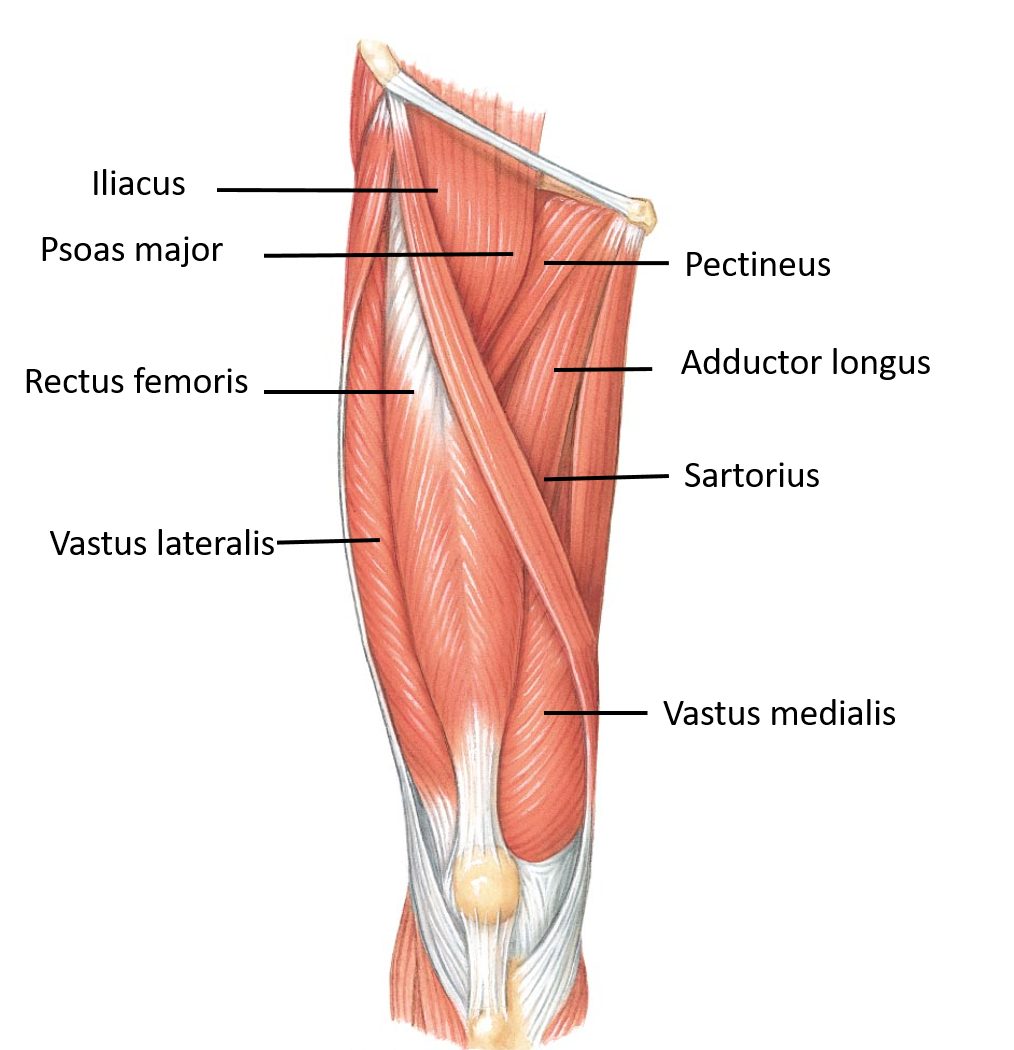
All muscles of the anterior compartment of thigh that are flexors of the hip

A

Pectineus, iliopsoas (psoas major), psoas minor, iliacus, satorius
21
Q

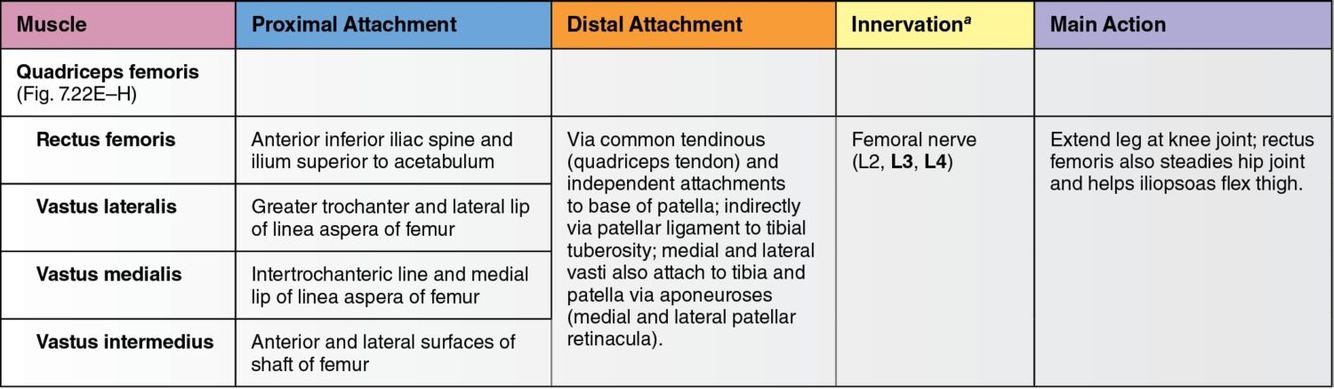
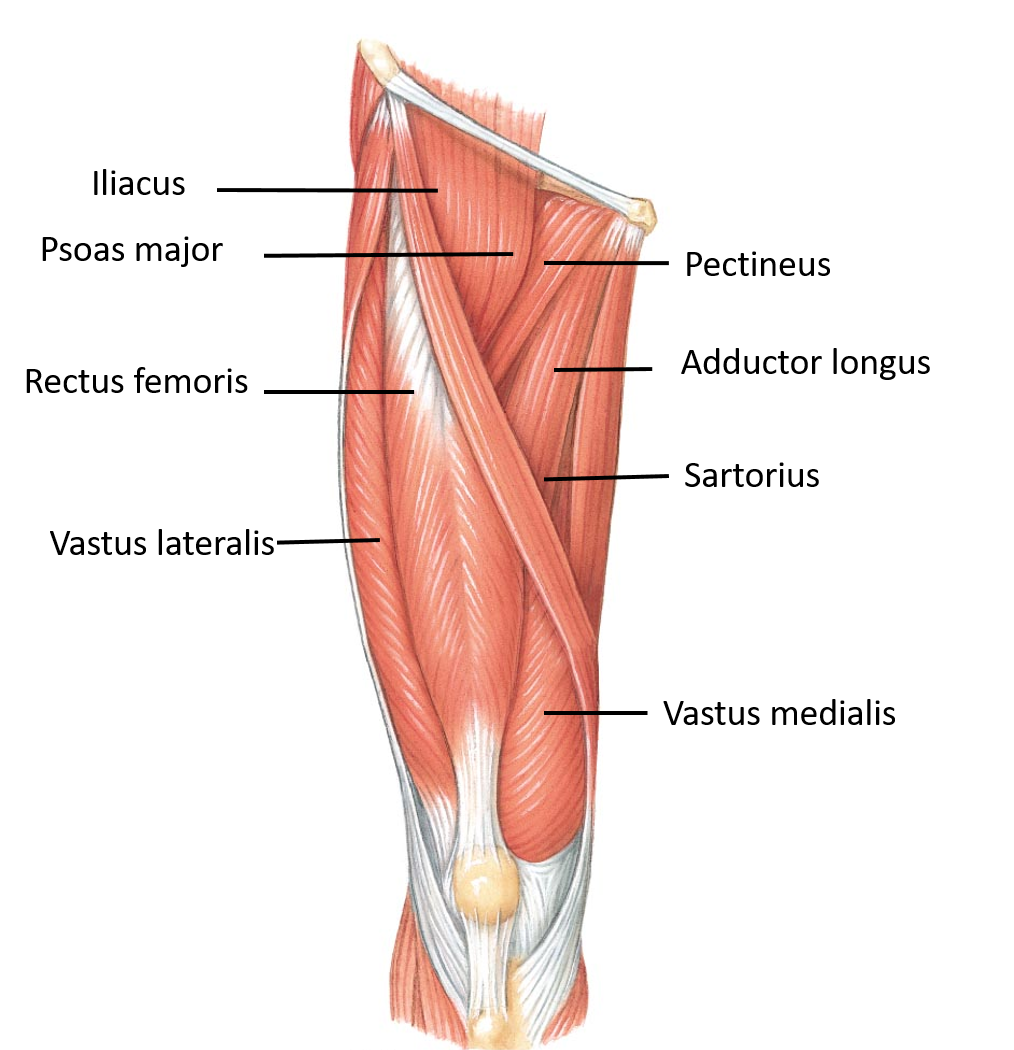
Muscles of the anterior thigh compartment that are knee extensors

A

Quadripceps femoris, rectus, femoris, vastus lateralis, vastus medialis, vastus intermedius
22
Q

Attachments, innervation, and main actions of the anterior thigh muscles that flex the hip joint

A

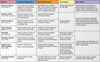
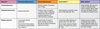
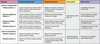
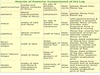
See table

23
Q

Attachment, innervation, and main actions of the anterior thigh muscles that extend the hip

A

See table

24
Q

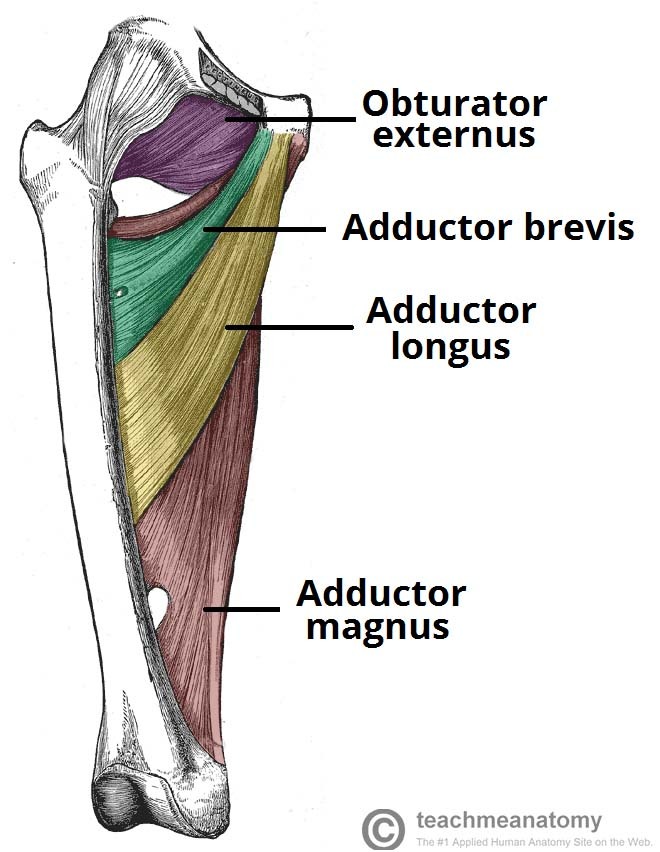
What are the muscles in the medial thigh comaprtment? What is the main functions

A

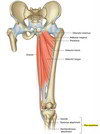
They are generally all adductors of the thigh

Adductor longus, adductor brevis, adductor magnus, gracilis, obstruator externus
25
What is the attachments, innervation, and main actions of the muscles of the medial thigh?
See table
26
What s the pes anserius, and what contributes to it
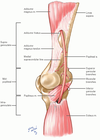
(the Goose's foot) Three muscles have a common tendinous insertion into superior part of medial surface of tibia. These are = Gracilis (medial compartment), sartorius (anterior) and semitendinous (posterior)
27
What is the adductor hiatus, what is the significance
This is between the distal attachments of adductor magnus and thenhamstrings Transmits the femoral artery and vein from the adductor canal in the thigh to the popliateal fossa posterior to the knee
28
Boundaries of the femoral triangle, including floor and roof
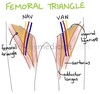
Superior = inguinal ligament Medially = Adductor longus (medial comaprtment) Laterally = Sartorius (anterior compartment) Floor = Iliacus most lateral, then psoas (iliopsoas) and pectineus medially Roof = Fascia lata, cribiform fascia, skin and subcut tissue
29
What are the contents of the femoral triangle from lateral to medial?
NAVEL Femoral nerve Femoral artery Femoral vein Deep inguinal lymph nodes and vessels.
30
What is the femoral ring/canal
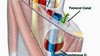
Femoral canal = Is in the medial compartment of the femoral sheat, medial to the femoral nerve Femoral ring = The superior portion of the femoral canal Function = Allows femoral vein to expand and increase venous return from leg, and allows deep inguinal lymph to drain into external iliac chain. Contains = Contains the femoral artery, vein, and lymphatic vessels
31
What are the arteries of the anterior and medial thigh and what do they supply?
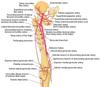
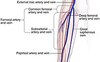
Femoral artery = Continuation of the external iliac. Comes through femoral triangle then through adductor canal. When it crosses transverses aducctor hiatus it becomes the popliteal Profunda femoris = Main artery that supplies the thigh. Comes off femoral artery inferior to inguinal ligament. Gives of the lateral and medial circumflex first, and later 304 perforating arteries that supply thigh Medial circumflex = Most of head and neck of emur Lateral circumflex = Anterior part of gluteal region. Obturator artery = Comes of internal iliac and supples mainly medial compartment
32
What is the course of the femoral vein
Popliteal vein also comes up throught adductor hiatus with popliteal artery and becomes femoral vein. Enters the femoral sheath. In inferior femoral triangle the femoral vein receives = Profunda femoris vein, great saphenous vaeins. Profunda femoris vein = Formed by 3-4 perforating veins joining, then joins the femoral vein in femoral triangle.
33
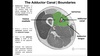
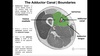
Where is the adductor canal
Extends from the apex of femorla triangle (bottom bit) to the adductor hiatus
34
What are the boudnaries of the adductor canal?
Anteriorly and laterally = By vastus medialis Posterior = By adductor magnus and longus Medially = Sartorius It goes from apex of femoral triangle to adductor hiatus in adductor magnum
35
Contents of the adductor canal?
Femoral artery, femoral vein, saphenous nerve It does not contain the femoral nerve = But it does contain its branches = Specifically the saphenous branch of the femoral nerve + nerve to vastus medialis
36
What is a saphenous varix?
Localised dilaion of the terminal part of the greater saphenou vein Can cause oedema in the femoral triangle and is a differential in femoral hernias and psoas abscess. Consider it when varicose veins are present in the legs
37
Where do femoral hernias occur
Remember femoral ring is top part of femoral canal A small loop of small intestine can go through femoral ring down into femoral canal.
38
What are the attachments, innervation, and actions of muscles of the gluteal region
See table
39
Describe the locations of the gluteal muscles
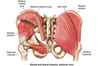
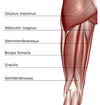
See diagram
40
What is the attachment, innervation and main action of the muscles of the posterior thigh?
See table
41
Describe location of the posterior thigh muscles
See diagram
42
Superior and inferior gluteal nerves supply?
Superior = Supplies gluteus medius + minimus Inferior = Supplies gluteus maximus.
43
Describe Trendelenburg sign
When standing on the affected side = The hip on the opp side will fall. This is because the hip abductors = Gluteus medius + minimus on the side you are standing up are not working.
44
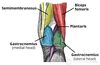
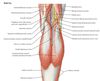
Boundaries of the popliteal fossa
Superolaaterally = Biceps femoris Superomedially = Semimembranous Inferiolaterally + Inferomedially = Lateral and medial heads of gastrocnemius Posteriorly = Skin and popliteal fascia.
45
Contents of the popliteal fossa
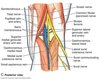
Termination of the small saphenous vein Popliteal arteries and veins Tibial and common fibular nerves Posterior cutaneous nerve of thigh Popliteal lymph nodes and lympahtic vessels. -FROM MEDIAL TO LATERAL: Popliteal artery, vein, tibial nerve, common peroneal nerve
46
Describe the main nerves in the popliteal fossa including their names, course and where they divide
The sciatic nerve ends at the superior angle of the popliteal fossa. Then divides here into tibial and common fibular/peroneal nerves Tibial nerve = Medial and larger branch. It goes from superior to inferior angle of the popliteal fossa and is most superficial structure there. - In the fossa the tibial nerve gives off branches to soleus, gastrocnemius, plantaris and popliteus muscles - It also gives off medial sural cutaneous nerve that joints the sural communicating branch of the common fibular to form the sural nerve Common fibular nerve = Lateral and smaller nerve of the two. - Gives off the sural communicating nerve that joins with medial sural cutaneous from tibial = To form the sural nerve - Common fibular leaves the fossa by pssing superficial to the lateral head of gastrocnemius. - It then winds around head of fibula and divides into the terminal branches
47
What are the spinal levels of the tibia and common fibular nerve
Tibial nerve = L4-S3 Common fibular nerve = L4-S2
48
What does the sural nerve supply?
Remember formed from nerves that branch off both the tibial and common fibular nerve Tibial = Medial sural cutaneous nerve Common fibular = Sural communicating branch Sural = Supplies the lateral side fo the leg and ankle
49
Describe course of popliteal artery and vein
Popliteal artery = Travels inferolaterally through fossa and ends at the inferior border of fossa where it divides into anterior and posterior tibial arteries -5 fnicular branches come off popliteal to supply knee joint that form a geniculiar anastamosis Popliteal vein = Travels down and continuous as the posterior tibial vein
50
What are the structures that help to support the tendons of the muscles in the anterior compartment as they cross the ankle joint?
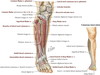
Anterior compartment muscles = Extensors of the foot There are 2 retinaculums that support to hold the tendons in place as they come down. Superior extensor retinaculum = Passes from fibula to tibia, just proximal to the malleoli Inferior extensor retinaculum = Y shaped band of fascia. Laterally it attaches to the calcaneum. And has 2 connections on medial side
51
What are the 4 muscles of the anterior compartment, their attachments, innervation and main actions
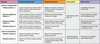
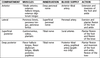
See table
52
What are the 2 muscles of the lateral compartment, their attachments, innervation and main actions
See table
53
What is the overall motor action of the lateral compartment muscles?
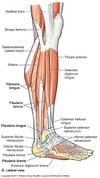
Fibularis longus + Fibularis brevis Action = Foot eversion, but also weak plantarflexion since the tendons of both these muscles pass posterior to lateral malleolus and attach onto the dorsal surface of the foot.
54
Describe how the common fibular divides the nerves that are produced, their course and their actions
Common fibular wraps around fibular head and divides into deep and superficial fibular Deep fibular = Travels with the anterior tibial and supplies the anterior compartment of leg. - It then passes to supply intrinsic muscles of the foot = Extensors digitorum and hallucis brevis - Also small area of skin on the foot. Superficial fibular = Passes into lateral compartment to supply these. -Also supplies skin on lateral part of the posterior aspect of the leg via the lateral sural cutaenous nerve
55
What is the blood supply to the lateral compartment?
Perforating branches of the anterior tibial artery
56
How can the posterior compartment be further divided and what are the borders?
A superficial and deep posterior compartment These are divided by the transverse intermuscular septum
57
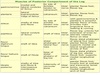
Describe the 3 muscles in the posterior superficial compartment, attachment, innervation and main actions
See table Top 3 are superficial
58
Describe the 4 muscles in the posterior Deep compartment, attachment, innervation and main actions
Bottom 3 are the deep ones on table In addition to table there is popliteus muscle that helps to weakly flex knee by unlocking it by rotating femur 5 degrees.
59
Blood and arterial supply to all lower leg comaprtments
See table
60
Most common place for common peroneal nerve damange and the effect
Where it wraps around the fibular head Causes footdrop (ANTERIOR COMPARTMENT+lateral compartment) Causes = Waddling, swing out or high stepping gaits
61
Deep fibular nerve entrapment
Compression of nerve with tight fitting ski boots (ski boot syndrome) Causes oedema in anterior compartment Causes pain in foot dorsum and radiate to webspace between 1st and 2nd toes
62
How can the foot be divided into zones
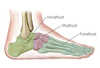
Hindfoot = Talus + Calcaneus Midfoot = Navicular, cuboid, cueiformis Forefoot = metatarsals adn phalanges
63
What are the important deep fascia parts of the sole of the foot
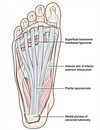
There is the plantar aponeurosis that runs from calcaneus posteriorly - then divides into 5 bands that become the fibrous diital sheaths that contain the flexor tendons for the toes Superficial transverse metatarsal ligament = This runs transversely just inferior to heads of metatarsals.
64
What are the three ligaments of the hip and where they run
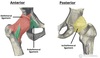
1) Y shaped iliofmeoral ligament = AIIS to intertrochanteric line on femur 2) Pubofemoral ligament = Pubis to fibrous layer of joint capsule of hip 3) Ischiofemoral ligament = Ischial part of acetabular rim to femoral neck. (seen on posterior views) REMEMBER ONE FROM EACH PELVIC BONE
65
What does the PCL help to do?
Posterior cruciate ligament = helps stabalise femur = Eg when walkin down stairs/hill Means that it allows the femur to slide foward on the tibia when walking down stairs.
66
What are the ligaments of the ankle joint?
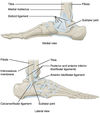
Lateral ligament of the ankle = Compound structure made up 3 there seperate ligaments 1) Anterior talofibular ligament 2) Posterior talofibular ligament 3) Calcaneofibular ligament There is also medial ligament of the ankle (Deltoid ligament)
67
What are the major ligaments of the foot? There are 3
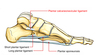
Plantar calcaneonavicular ligament (Spring ligament) = Calcaneus to navicular Long plantar ligament = Calcaneus to cuboid Plantar calcaneocuboid ligament (short plantar) = Calcneus to cuboid
68
Unhappy triad
Lateral blow to knee will damage: MCL+Medial meniscus + ACL
69
What is tarsal tunnel syndrome?
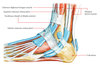
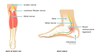
Tibial nerve travels and then leaves the posterior compartment of the leg by passing deep to the flexor retinaculum between medial malleolus and calcaneous This can be compressed here which causes heel pain
70
Name the lateral hip rotators
P GO GO Q piriformis Gemellus superior Obturator internus Gemellus inferior Obturator externus Quadratus femoris
71
Describe course of posterior tibial artery in the leg
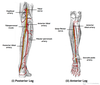
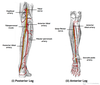
Runs past popliteus, then deep to gastrocnemius + Soleus Then on top of Flexor digitorumlongus + tibialis posterior Then distally udner the skin and through the flexor retinaculum which runs from calcaneus to medial malleolus (in the tarsal tunnel) Here it runs parallel to calcaneal tendon IT ALSO = Travels with tibial nerve
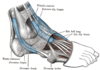
72
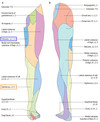
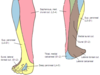
Describe the different nerves sensory supply to foot + leg
73
74
What lies just medial to the dorsalis pedis vessel
The extensor hallucis longus tendon
75
What is accessory spleen and where can it be found
10% of population have this = 1cm accessory spleen Common locations = hilum of spleen, tail of pancreas, along splenic vessels, gastrosplenic ligament, splenorenal ligament, stomach/intestins, greater omentum, the gonads Usually not found = Ureter
76
Is the posterior part of the patella intra or extraynsovial
Intrasynovial. Knee joint is also largest synovial joint in body
77
What is adductor canal compression syndrome
Causes pain on walking and an important differential for PVD Caused by compression of femoral artery by musculotendinous band of the adductor magnus msucle In this case popliteal pulse dissapears when flexing the knee but reappears when extending it Whereas in popliteal entrapment syndrome = Pulse always not present
78
What lies posterior to the femoral nerve?
Remember this is a lateral structure in femoral triangle Most lateral muscle = Iliacus, then psoas, then pectineus
79
What structure is most commonly damaged in Trendelenburg procedure?
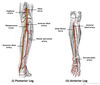
Trendelenburg procedure = juxtafemoral flush ligation of the great saphenous vein to the femoral vein Most often damaged = Deep external pudendal artery as this runs under the long saphenous vein This artery comes off the femoral artery
80
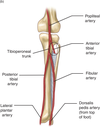
Course of the popliteal artery
Remember femoral becomes popliteal when it passess through adductor hiatus Poplitela gives off genicular branches for the knee joint Passess down through popliteal fossa At inferior border of popliteus muscle = It terminates and divides into anterior tibial + tibioperoneal trunk The tibioperoneal trunk = Then divides further into posterior tibial + Fibular arteries
81
Course of anterior tibial artery
Remember this comes off popliteal artery at the inferior border of popliteus. This will then pass anteriorly between tibia + fibula through gap in interosseous membrane Then runs inferiorly down the entire length of leg Then enters foot to become dorsalis pedis
82
Describe course of posterior tibial artery
Remember popliteal divides into anterior tibial + thyroperoneal trunk This trunk then further divides into posterior tibial + Fibular artery The posterior tibial continues in the posterior compartment and runs along the deep posterior muscle = Along surface of tibialis posterior. Then enters sole of the foot via the tarsal tunnel together with the tibial nerve Palpable behind medial malleolus
83
Muscles of superficial and deep posterior comaprtment of lower leg
Superficial compartment = Gastrocnemius, soleus, plantaris Deep compartment = Tibialis posterior, flexor digitorum longus, flexor hallucis longus, popliteus
84
Describe which sensory cutaneous nerve supplies what in the leg
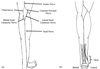
As a general rule Dorsum + just above ankle = Superficial peroneal Dorsal between big toe and 2nd toe = Deep peroneal Medial lower leg = Spahenous Lower lateral leg = Sural Upper lateral leg = Lateral cutaneous nerve of leg Thigh from medial to lateral: Obtruator, medial/intermediate/lateral cutaneous nerve of the thigh
85
Nerve at risk in short saphenous harvesting surgery
Sural nerve Short saphenous runs in posterior leg with the sural nerve
86
What gives off the superior and inferior gluteal arteries
Both come off the internal iliac!
87
Most superficial and deep structure in the popliteal fossa
Deepest = Popliteal artery Superficial = tibial nerve (so this is encountered first in popliteal surgery)
88
Structures passing posterior to medial malleolus from anterior to posterior
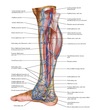
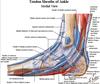
anterior to posterior: Tibialis posterior, flexor digitorum longus, posterior tibial vein, posterior tibial artery, nerve, flexor hallucis longus.
89
What are Sharpey's fibres
Periosteum attaches to bone via these strong collagenous fibres Also helps provide attachment for tendons and muscles
90
What passes under super extensor retinaculum of the foot
All 4 tendons of anterior compartment muscles = Anterior tibialis, extensor digitorum, extensor hallucis, peroneus/fibularis terterius Also = Anterior tibial vessels, deep peroneal nerve
91
Lateral approach in hip surgery, what vessel can be damaged
Transverse branch of lateral circumflex artery
92
What runs with long saphenous below the knee, and damage to this causes what
The Saphenous Remember this supplies medial lower leg and the area above ankle sensation
93
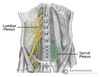
Where is lumbosacral pelxus and its relation
Remember there is the lumbosacral trunk that passes anterior to ala of sacrum Under the common iliac vessels And then anterior to the piriformis muscle
94
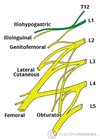
What are the main nerves coming off the lumbosacral plexus
From top to bottom Iliohypogastric Ilioinguinal Genitofemoral Lateral cutaneous Femoral Obturator
95
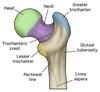
What is the linea aspera and what attaches to it
This is a line running down posterior of femur Attachments = Vastus lateralis, and medialis, adductor longus, adductor brevis and only the short head of biceps femoris
96
What innervates the long and short head of the biceps femoris
LONG HEAD = As normal by the tibial/sciatic nerve Short head = Actually by the common fibular nerve
97
Which tendon can contribute to pes planus
This is flat foot Tibialis posterior is supposed to support medial arch Remember runs immediately posterior to medial malleolus and can contirbute to pes planus
98
patella tendon runs from?
Patella APEX(bottom bit) to tibial tuberosity The quadriceps tendon is the proximal bit (BASE) that inserts into superior patella
99
What is chagas disease, what is causative organism
Chagas disease = Trypanosoma cruza Causing achalasia by destroying ganglionic cells in myenteric plexus Also associated cardiomyopathy
100
In anaphylaxis with mast cell degranulation, which products are pre-formed and which ones are newly formed
Pre formed = Tryptase, histamine, heparin, eosinophilic chemotactic factor of anaphylaxis Newly formed = Thromboxane
101
102
Difference in female and male pelvis
Pelvic inlet: Wide in females and heart shaped in males Pubic arch: Wider in females over 80degrees Coccyx: Shorder, wider and flatter in women. Weight: Heavier in men
103
Where does tibialis posterior insert
Navicular tuberosity In its length it supports the medial arch This is why it is implicated in pes planus