Describe the purpose of a functional specification.
The purpose of a functional specification is to:
- Specify what the automation will achieve.
- It will form the basis of the contract between the automation vendor and the customer, and will form the basis for the acceptance trials.
- It will minimise specification creep.
- Provide a base from which requested changes during the project can be identified and appropriately costed.
- It forms the main means of communication between the customer and the vendor to minimise the chances of disappointment and / or nasty surprises
What is to be included in the functional specification?
The main areas to be included in the functional specification:
- What the system has to deliver (not on how this should be achieved).
- Form, quality and method of delivery of incoming materials.
- Form and method of delivery of finished products.
The functional specification will require further iteration with material suppliers and customers. The following additional areas should be covered:
- The context within which the automation will operate, e.g. skill levels of operators, reliability of interfacing equipment outside the control of the vendor.
- Cycle Time.
- Some measure of availability, usually expressed as output over a specified period.
- Form and extent of manual intervention.
- Scheduled periods of operation and maintenance.
- Levels of defects, and what to do when defects are detected.
- Error detection and recovery, recoverable and non-recoverable errors. Form of error logging.
All the statements in the functional spec should be testable and so vague wording should be avoided. For example, “The system should operate reliably” is not acceptable, some measures of reliability should be provided.
Describe the purpose of a functional specification and list the types of information that should be contained within this documentation.
Document specifying
- the functionality of an automation project
- and agreeing the participation of different parties involved (End-Users and Systems Integrators).
Technical document that:
- Defines the functional scope of the project.
- Provides common understanding between parties.
- Should be unambiguous and testable.
- Forms the basis of contractual agreements
- Referred to as the bible of the project by
- helping to eliminate specification creep
- and project disagreements.
Types of information found in a functional specification:
- Functionality
- Error handling procedures
- Recovery processes
- Processes requiring manual intervention (Operation Assistance)
- Production rate
- Required uptime
- Number of operators
- Frequency of incoming and outgoing components
- Delivery format of incoming / outgoing components
- Quality of components
- Services required to run the solution (e.g. 120 PSI compressed Air, 240VAC 10Amps)
- Maintenance schedule
Outline the reasons for the introduction of structured testing and describe an approach for testing an automation solution.
- Solution testing is an important activity
- Full functionality should be tested.
- Tests should be performed early
- To provide time to remedy any issues that arise
Automation solutions made by
- integrating multiple units of automation together to provide an integrated solution (system).
- Testing process broken into two phases:
- unit testing
- system testing.
- As individual modules are tested and integrated with each other, system tests can be carried out.
- System tests evolve as the scale of the system is increased.
- Sequenceof integrating modules together and undertaking system testsis critical.
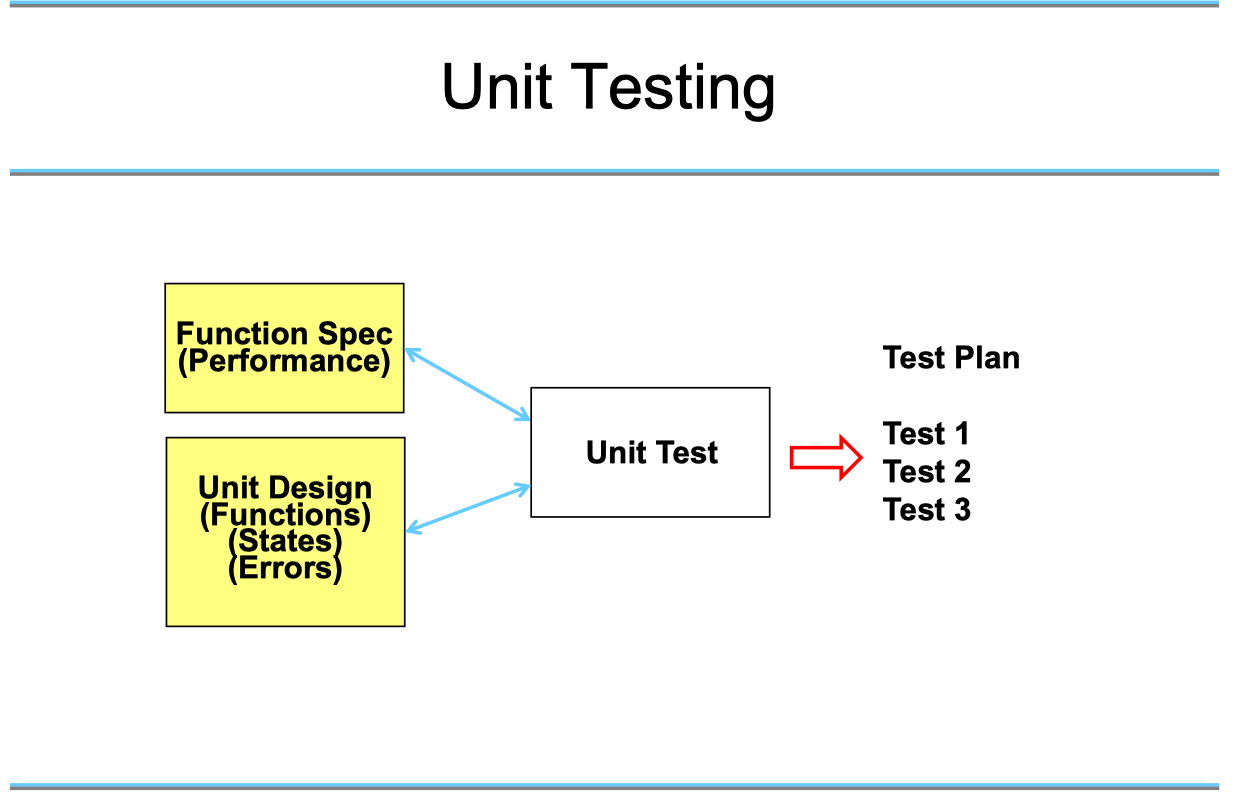
- Functional specification used to develop a plan for unit and system testing.
Unit tests should include:
- Unit Functionality / Performance
- Operational Status (process requiring human intervention)
- Error Conditions
- Interfaces of both Hardware / Software
System tests should include:
- Integrated Functionality / Performance
- Error Handling / Recovery Strategies
- Interfaces of both Hardware / Software
Describe what is meant by unit tests?
What additional testing needs to be done before the system is ready for site testing and why?
Unit Tests
- Unit tests are carried out on each component (Unit) of a production system.
- Typical components of a production system would be for example a Robot, Part Feeder or Conveyor Docking Station.
- Each component would be tested in isolation to ensure it works correctly and meets performance requirements specified within the functional specification.
Typical Unit tests would include:
- Test that hardware functionality meets performance specifications
- Operational status of hardware is reflected within the unit control system.
- Error conditions are detected and captured correctly.
- Unit control systems interfaces work correctly allowing systems integration to take place.
System tests
- System tests are carried out on groups of production components once individual unit tests have been completed.
- A number of components are integrated together in these tests.
- The number of components is gradually increased as success criteria are met.
- Typically these tests examine the way production components work with each other both at a hardware and systems level.
Typical System tests would include:
- Test hardware interfaces between production components.
- Ensure correct software hand-shaking between component control system and overall production system.
- Ensure that error recovery strategies for recoverable and non-recoverable errors work correctly.
These tests will go onto include specific production scenarios and provide the ground work for the Factory Acceptance Tests (FAT) and Site Acceptance Tests (SAT)
Explain the rational approach for an automation project including integration
Rational approach
Define the challenge – create a specification
- To arrive takes time (supplier, client and third party’s) effort, money, patience
- Single biggest success/failure factor
- Should cover all functionality, is unambiguous, promotes common understanding
Identify risks
- Manage risk by prototyping, consulting and work on risk areas early
- Preparation, build (mechanical, electronic, software) and project (human, interface, supplier) errors
- Failure mode and effects analysis
Generate alternative solutions, evaluate and select
- Postpone the selection, evaluation and gather proposals from a wide variety of sources
- Evaluation criteria: technical, practical, timing, commercial, legal, organisational, environmental
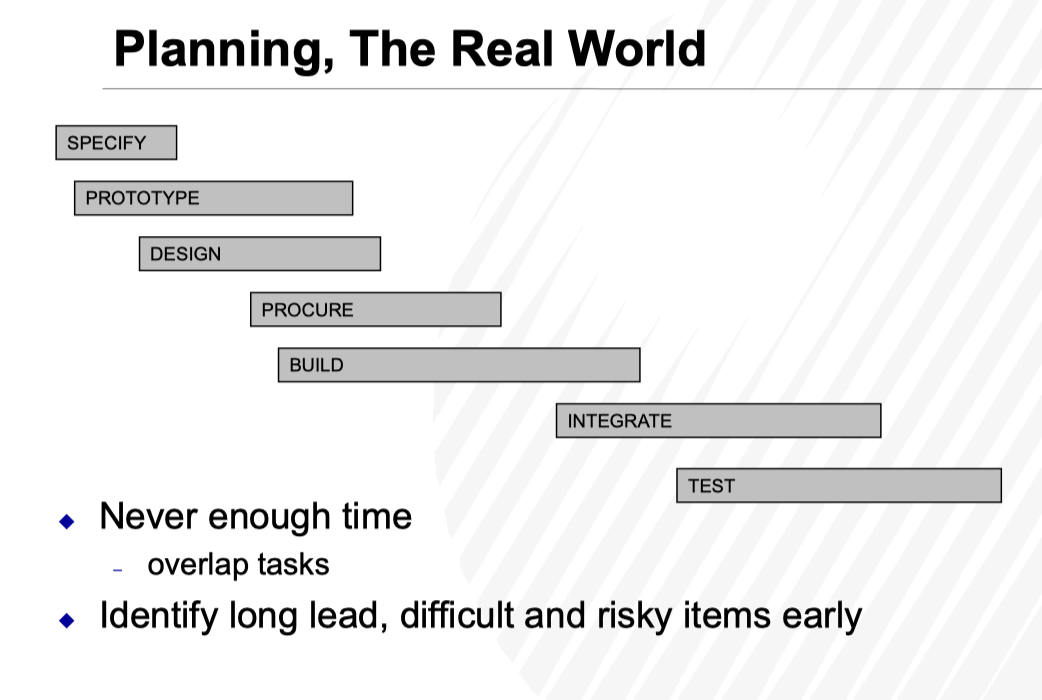
Plan
- Specify, design, procure, build, integrate, test
- Break jobs into small tasks, visible milestones, design reviews, iterative development
- Actively look for problems, risks that you understand can be managed
Implement, commission and test
- Integration problems: hardware, software, electrical, interfacing problems (mechanical fit, sensor abilities, robot reach)
- Incremental innovation is better
- Incremental delivery
- Test elements one at a time, step through cycle
What is a PLC?
What is the scan cycle?
A class of industrially hardened devices that provides hardware interface for input sensors and output actuators, PLCs can be programmed to control the outputs based on input conditions and/or algorithms contained in the memory of the PLC
consists of:
- A CPU (central processing unit )
- Memory for software and data (built in or removable)
- Input/output system to allow physical connection to field devices (e.g., switches, sensors, etc.), both digital and analogue
Scan cycle:
- Program execution: made up of tasks written using different languages
- I/O refresh: copies ‘outside/real world’ inputs & outputs to/from PLC working image.
- Housekeeping: make sure I/O connected is same as that configured for application, memory checksums/battery checks, etc.
- Communication: transfer data to/from peripheral devices (e.g. Programming devices, HMI, supervisory)
What is a fixture? What is the functions of a fixture?
A fixture is a mechanical device that can be used for locating a part repeatedly in a known position and clamping it securely, so that work can be performed on it.
Functions of a fixture:
- Location
- Positioning and orienting a workpiece for an operation
- Repeatability
- Ease of use
- Allow access for operations
- Clamping
- Holding a workpiece securely during an operation
- Adequate clamping force
- Reliable clamping force
- No part distortion
- Workpiece security
- Correct clearance
Other fixture design criteria:
- Poka Yoke
- Quick Change: SMED
- Flexible
What is an end effector? What are typical end effector tasks?
End effectors:
- An end effector is a device at the end of a robot arm that is used to perform some task. (Gripper, Welding head)
- The robot is used to orientate and move the end effector into the required position.
- Typically, the operation of the end effector is controlled by the robot controller.
Typical tasks end effectors perform:
- Gripper, Drill, De-burring, Sanding, Nut spinner, Laser welder, Sucker gripper, De-burring
- Maintaining part location and accuracy
- During the assembly operation it’s critical to consider the total accuracy and repeatability parameters of the production environment.
- Accuracy and repeatability
What are the benefits of modular cell control?
What are issues to consider in cell control?
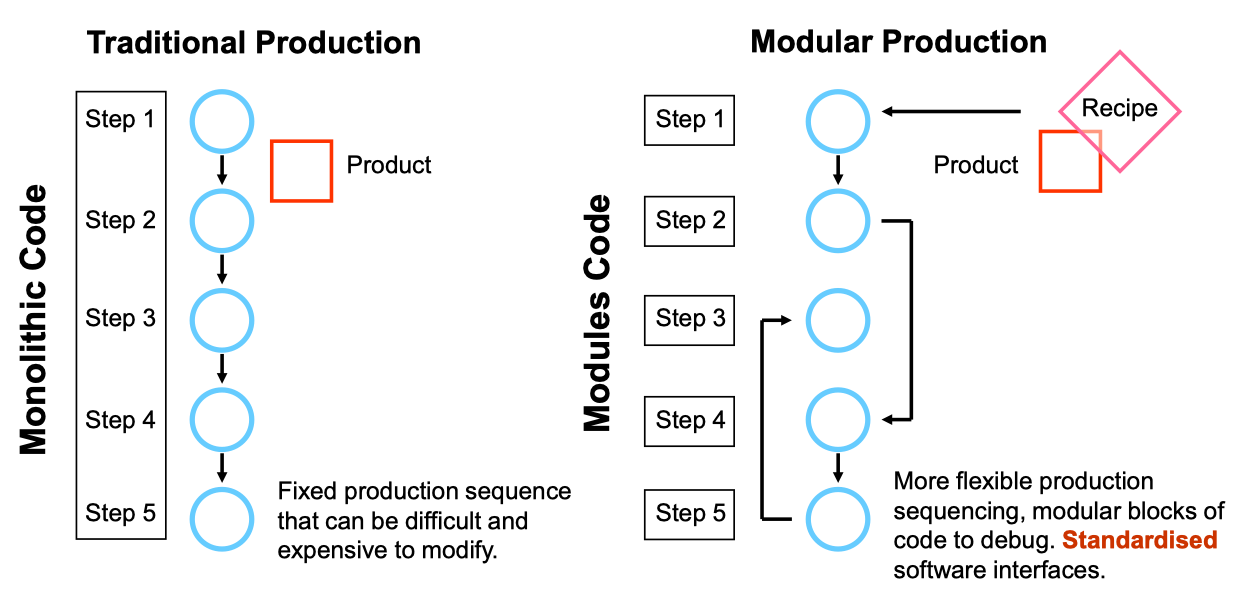
Modular design of production control code:
- Reconfigurable production
- Manageable module development
- Ease of testing and debugging
- Customisation capability
Issues to consider:
- Requirement to link product to customised recipe
- Capability of tracking the product through the production process
- Track the status of the product as it moves through production
- One way is to use RFID
What are the key project milestones that should be considered in the development, integration and delivery of a typical automation project? In each case, note which project organisation is responsible for each milestone and note any interdependencies.
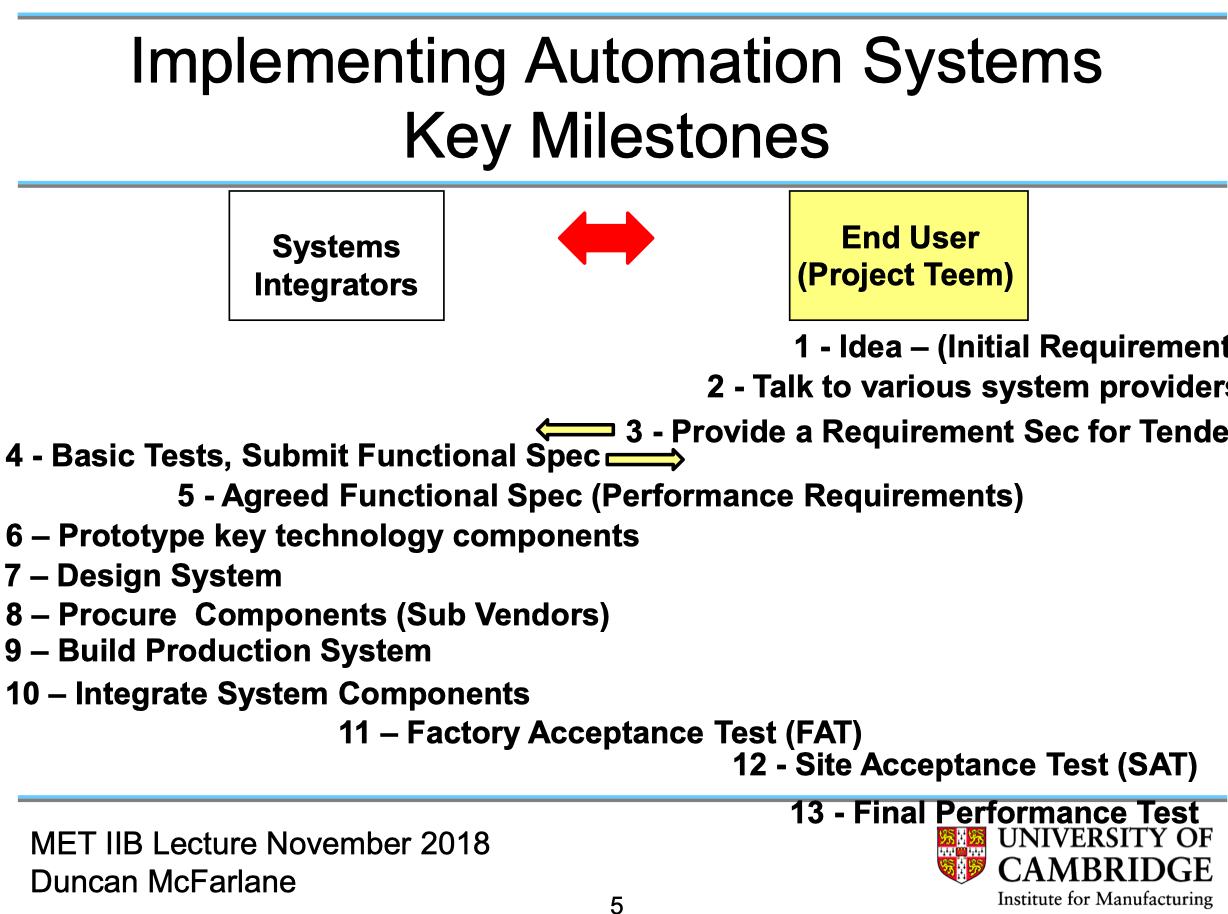
Project milestones that should be considered in the development, integration and delivery of a typical automation project:
1 - Idea (Initial Requirement) [End Customer]
2 - Talk to various system providers [End Customer]
3 - Provide a Requirement Specification for Tender [End Customer]
4 - Basic Tests, Submit Functional Specification [Systems Integrator]
5 - Agreed Functional Specification (Performance Requirements) [All Parties] 6 - Prototype key technology components [Systems Integrator]
7 - Design System [Systems Integrator]
8 - Procure Components [Sub Vendors]
9 - Build Production System [Systems Integrator]
10 - Integrate System Components [Systems Integrator]
11 - Factory Acceptance Test (FAT) [All Parties]
12 - Site Acceptance Test (SAT) [All Parties]
13 - Final Performance Test [All Parties]
Who is important in testing a new automated production system?
What are the key milestones
System integrators:
- Equipment vendors
- Software vendors
- Sub system vendors
End user:
- Operators maintenance
- Management team
- Facilities
What does unit testing comprise of?
When should unit and system testing be carried out?
Unit testing:
- Throughout production component development
- Test functionality
- Operational status
- Error conditions
- High level interface
System testing:
- When modules of production components are ready
- Hardware interfaces
- Software interface (hand shaking)
- Error/recovery strategies
What are the different types of switches and their applications?
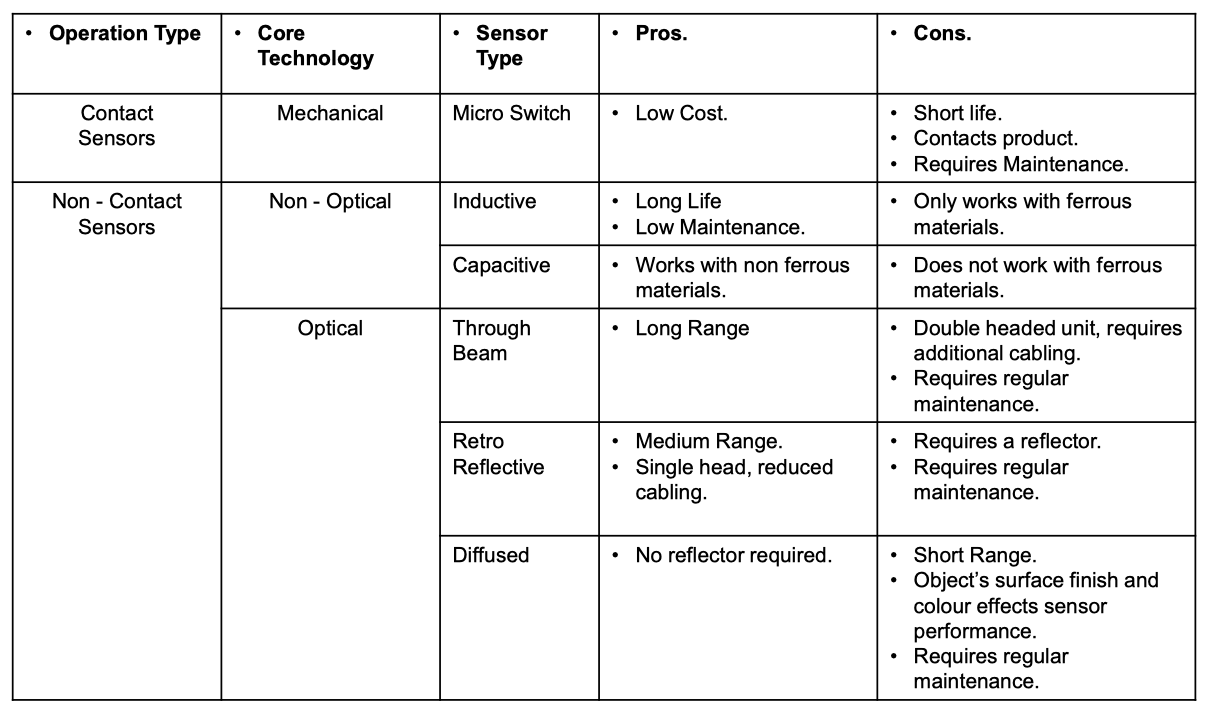
Precision position switch
- A range of high precision measuring and control switches.
Inductive proximity switch
- The inductive proximity switch consists of a coil wound around a ferrite core at the sensing head
- High freq. is applied to coil to generate an oscillating magnetic field
- When metallic object travels towards field eddy currents are generated reducing oscillation freq.
Applications:
- Missing washer can be detected
- Check metal is right thickness
- Check screws have been correctly tightened
- Metal components counted as they fall from a bowl feeder
- Can detect machine table at its limit
Capacitive proximity switch
- Current sourcing proximity switch
- Capacitive switch is mounted below a plastic area above which product passes. Sensor is tuned to detect the presence of the target object.
Application:
- Sense liquid in plastic tank
Optical proximity switch
An optical proximity switch which senses return light from target surface
Optical through beam sensor:
- Emitter and receiver
- Detecting milk in cardboard cartons
- Sense label presence
Optical retro-reflective:
- Range of retro reflective sensor can be adjusted, allowing thresh holds to be set.
- With no object all light is reflected 100%
- With object near the reflector nearly all light is reflected
- Check the presence of a label
Optical retro reflective (polarised)
- Shiny metallic objects, cuts out ambient reflected light
Pressure sensor:
Sensing element is silicon diaphragm, integral to the IC chip.
What is IoT?
What is industrial internet of things?
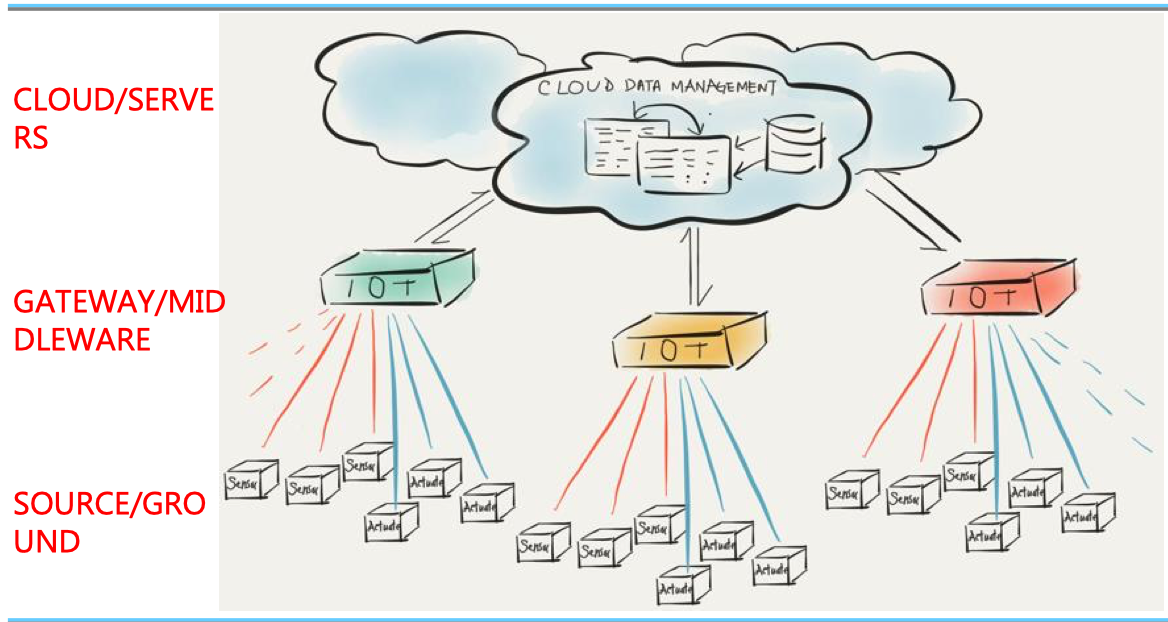
Internet of things is the network of physical devices, vehicles, home appliances, and other items embedded with electronics, software, sensors, actuators and network connectivity which enable these objects to connect and exchange data.
What is industrial internet of things?
The application of IoT to create value for industrial processes, supply chains, products and services?
When could industrial IoT be useful?
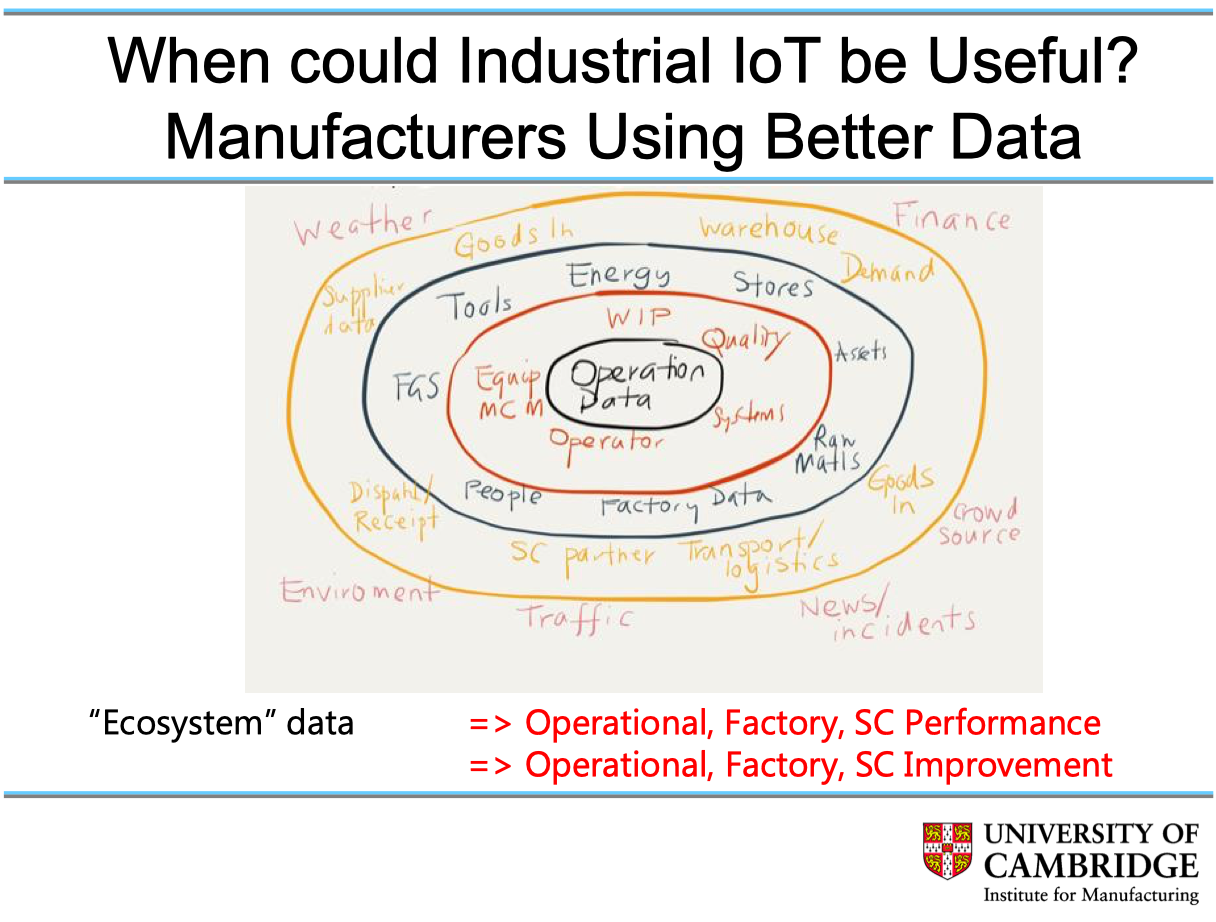
- Integrating data from suppliers, logistics, providers, customers
- Introducing new technology, peripherals, tools, equipment
- Distributed production requiring addition of new data sources, locations, owners
- Sensors on board raw materials, parts, products, orders passing through organisation
Security, privacy/data IP, benefits are challenges
Compare CNC and AM
CNC
- Repeatable
- Precise
- Good surface finish
- High productivity
- Waste material
- Limited work piece figure
AM
- Less material wastage
- Geometrical freedom
- Material options
- Metallurgical bond
- Long cycle time
- Poor surface finish
What is automation?
- “the use or introduction of automatic equipment in a manufacturing or other process or facility” Oxford dictionary
- The creation and application of technology to monitor and control the production and delivery of products and services. Automatic federation
The replacement of man by machinery:
- Physical actions
- Data gathering
- Decision making
Mode of operation where a machine or piece of equipment is capable of working without human intervention.
What are the benefits and challenges of automation?
Benefits:
- Improved working environment
- Increased production rate
- Improved product quality
- Reduce scrap and rework costs
- Improve factory floor space utilisation
- Reduce manual paper-based tracking / scheduling processes
Challenges:
- Complexity of tasks to be automated out
- Production rates to be achieved
- Exception handling
- Skills required to run production facility
- Payback on automated solution
- Catering for product change and variation
What are the different types of automation?
Automated solutions can be considered to be:
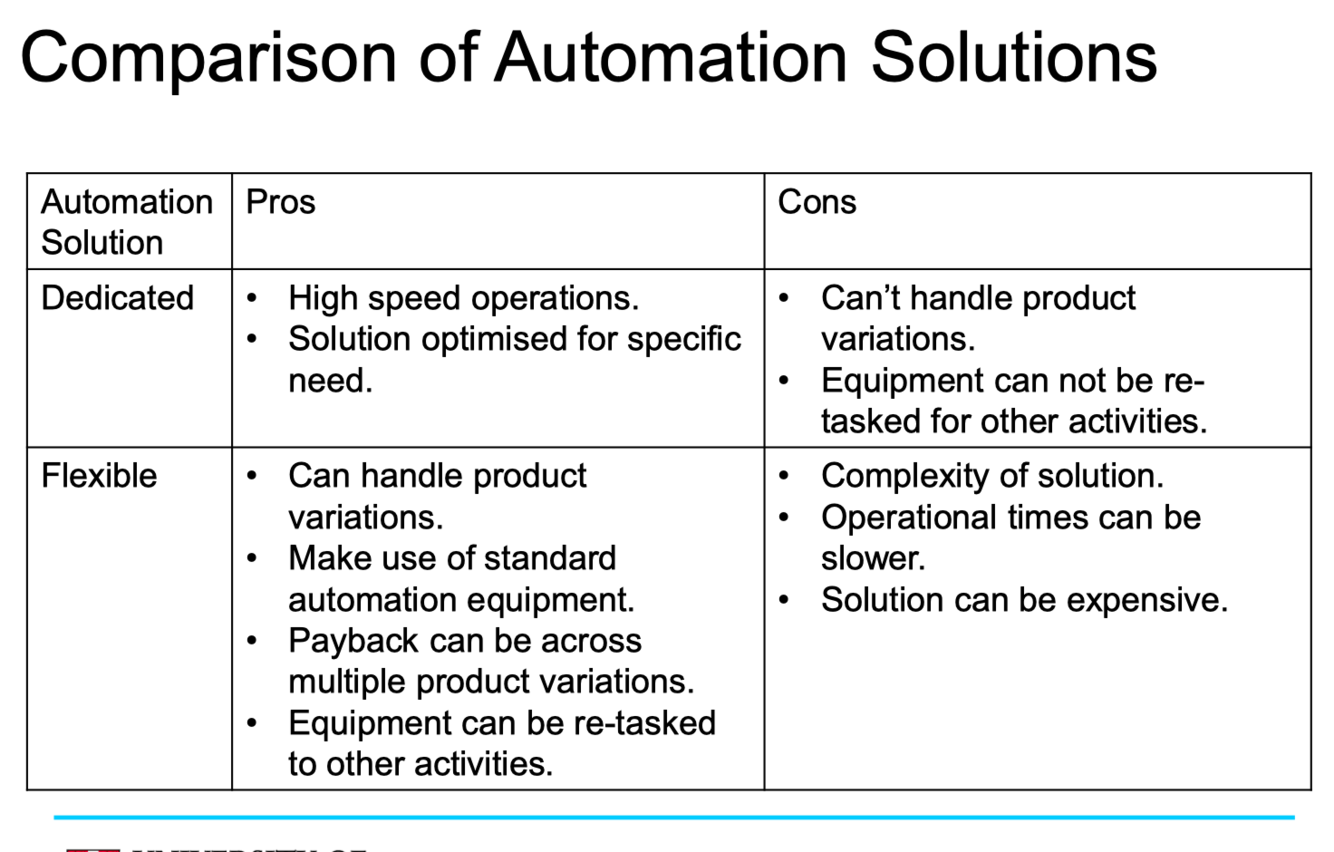
Dedicated automation: designed to carry out one specific task
- High speed operations, solution optimised for specific need
- Can’t handle product variations, equipment cannot be re tasked for other activities
Flexible automation: designed to carry a variety of tasks
- Can handle product variations, make use of standard equipment, payback across multiple product variations, equipment can be re-tasked to other activities
- Complexity of solution, operational times can be slower, solution can be expensive
Why are robots used in flexible automation solutions?
- A robot can provide a flexible piece of automation hardware
- Robots of varying capabilities can be purchased and quickly configured to an application’s needs
- Operational tasks can vary depending on production requirements
- Operational tasks can be updated as future production requirements are identified
- Robots can be easily integrated into factory control systems
- Robots can be re-tasked to different automation solutions over time
Define a robot?
Definition of a robot
“a re-programmable device designed to both manipulate and transport parts, tools or specialised manufacturing implements through variable programmed motions for the performance of specific manufacturing tasks.”
Applications:
- Arc welding
- Cut, grind, debur, polish
- Palletising, packaging
- Spot welding
- Handling
- Loading
- Handling, deburring
- Unloading
- Painting
- Assembly
What are the different types of robots? What are their features and applications
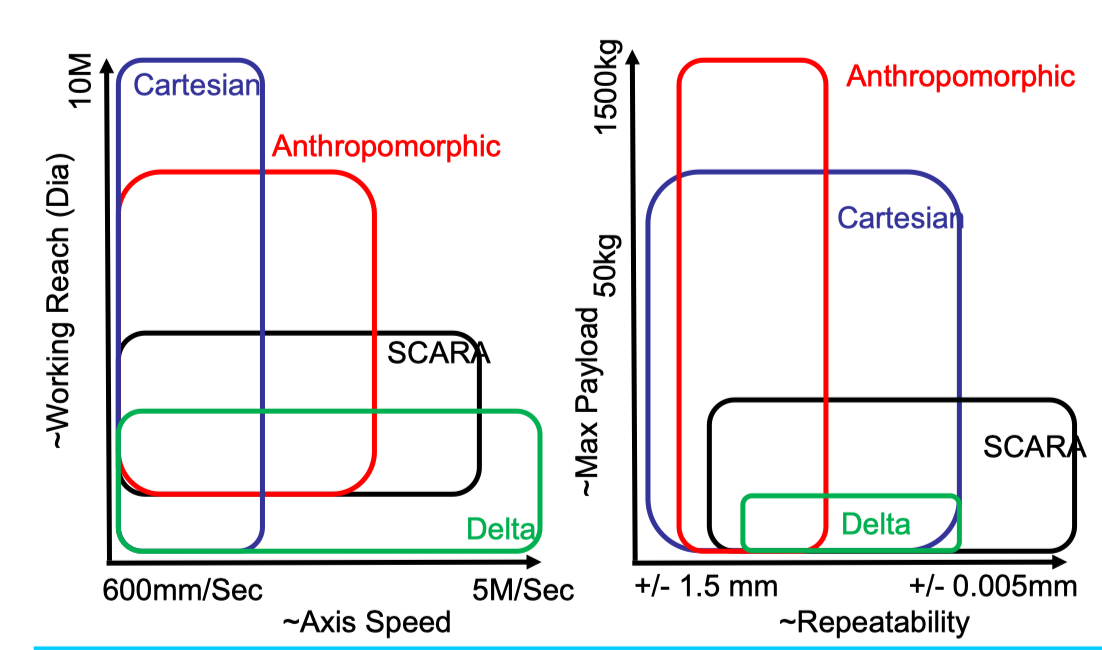
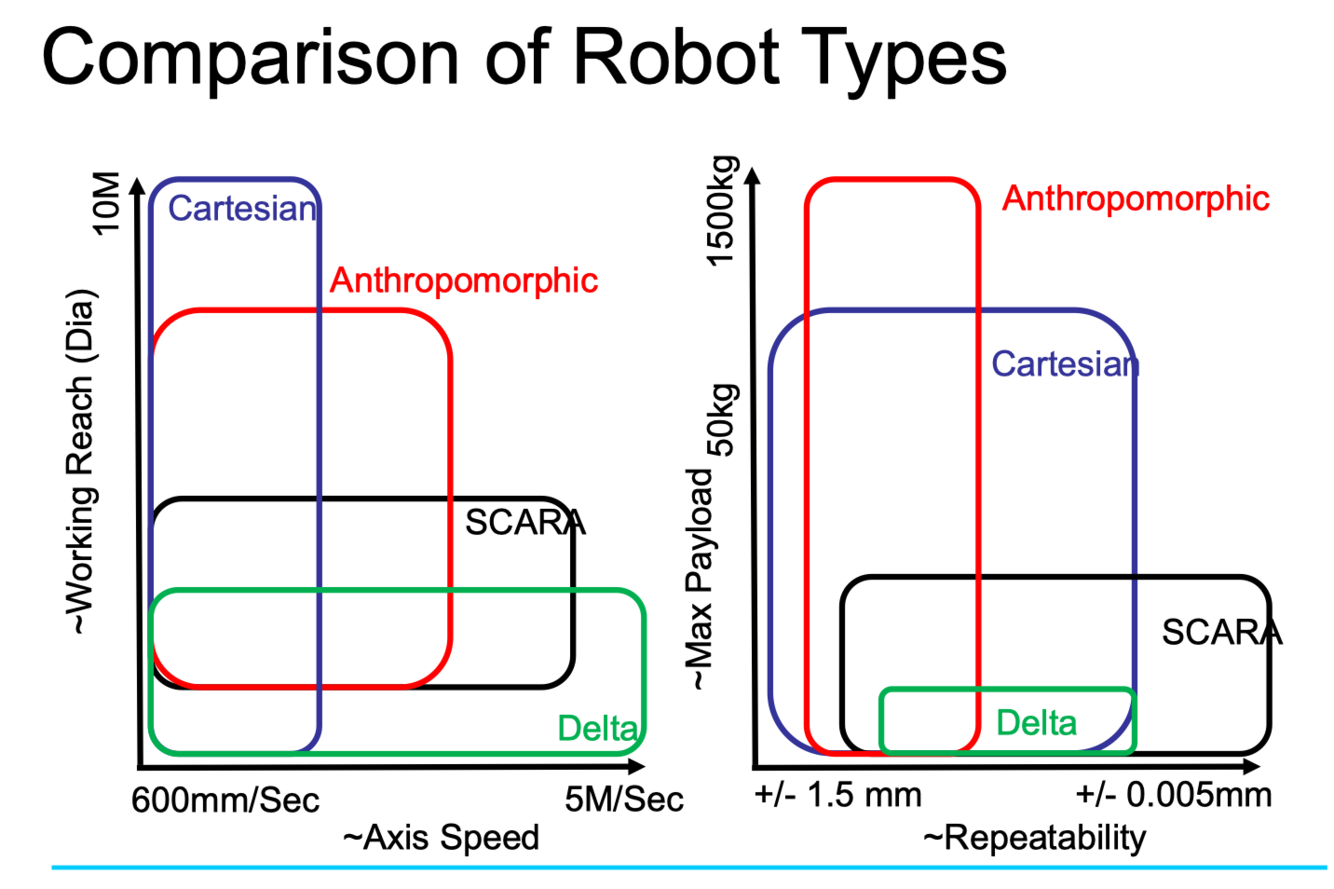
Anthropomorphic robot
Features:
- Typically, six axis configurations
- Flexible, can reach points in multiple configuration
Applications:
- Used for welding, painting, machine loading, assembly, etc
Selective compliance assembly robot arm (SCARA)
Features
- Typically, four axis configurations
- Two link, cylindrical robot
- Flexible, can reach points in multiple configurations
Applications
- Used for high speed assembly, kitting, packaging, and other material handling applications
Delta robot
Features
- Typically four, five or six axis configuration
- Parallel robot (multiple actuators working together in parallel)
- High speed operation
- Constrained work space
Applications:
- Used for material handling of light weight products for packaging and assembly
Cartesian robot
Features
- Typically four, five or six axis configuration
- Linear or gantry robot (multiple axis at right angles to each other working in straight lines)
- Robot control is simplified due to the use of linear rather than rotary axis
Applications
- Used for CNC machining, machine loading, packaging and assembly.
What are the pros and cons of the SCARA robot?
SCARA
PROS
- Ideal robot type for inserting screws into holes. Stiff in the Z Axis but compliant in X,Y.
- Due to its stiffness in the Z axis it can apply significant loads in the Z axis. This is essential when inserting self-tapping screws.
- Best repeatability of the different robot types on the market, making it ideal for the placement of small screws in an electronic assembly.
- Some of the fastest robots on the market, allowing it to easily service operations from the two lines and a screw feeder.
CONS
- Limited working volume, but easy to visualise for a 2D space
- Working volume is cylindrical in nature, complex to utilise.
- Payloads can be limited if full operating speeds are required.