General characteristics of smooth muscle
- Not striated
- Innervated by autonomic nervous system (involuntary)
- Relatively slow contracting
- Located in walls of tubular organs
- Capable of regeneration
- Smallest fiber diameter of muscle
- One nuclei, centrally located
Identify
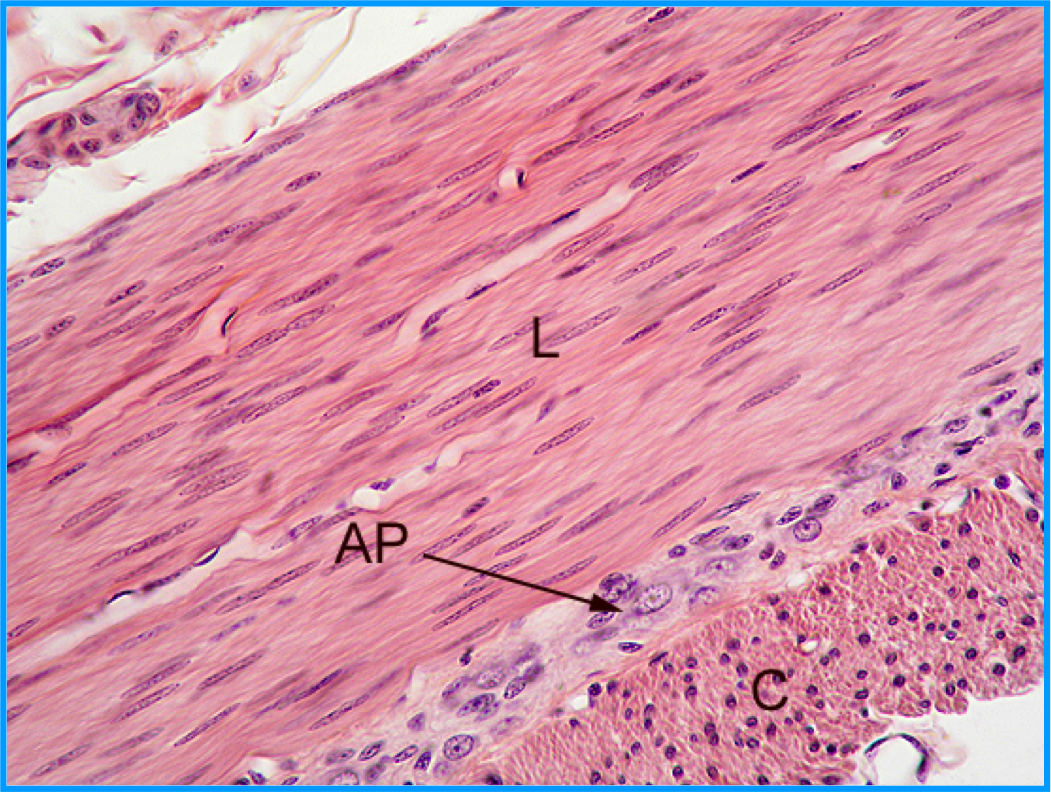
Smooth muscle
AP: Auerbach’s Plexus L: Longitudinal C: Cross section
Cell boundaries are hard to distinguish in H&E
Single, spindle-shaped, euchromatic nucleus in middle of cell
Cytoplasm: homogenous, eosinophilic
Surrounded by cell membrane
Arranged in bundles/sheets
General characteristics of skeletal muscle
- Usually associated with skeleton
- Innervated by cerebrospinal nerves (voluntary mvmt)
- Rapidly contracting
- Has cross striations
- Capable of regeneration after injury
- Largest fiber diameter of muscle types
- Multinucleated, peripherally located
CT coverings of muscle
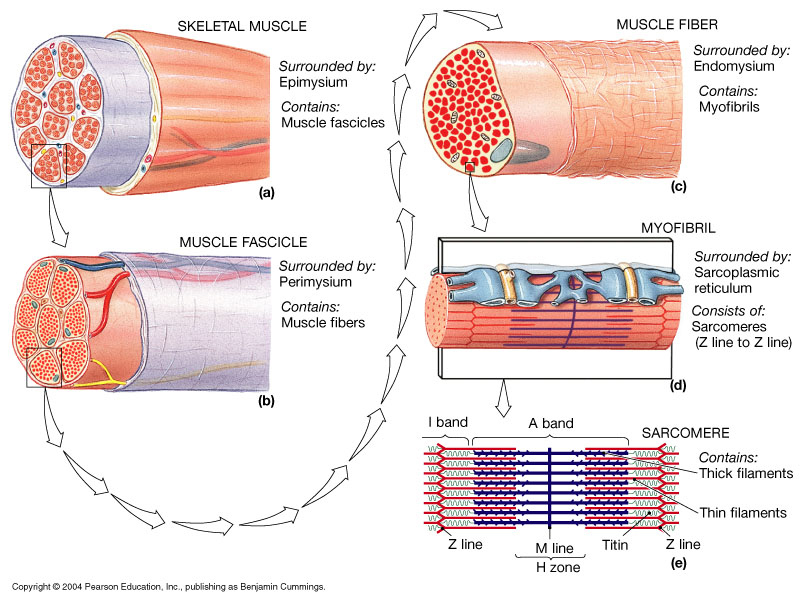
Epimysium (dense irregular CT): surrounds entire muscle
Perimysium (loose CT): divides muscles into fascicles
Endomysium (reticular fibers): surrounds individual muscle fibers
Integrates action of contractile units
Supports blood vessels and nerves
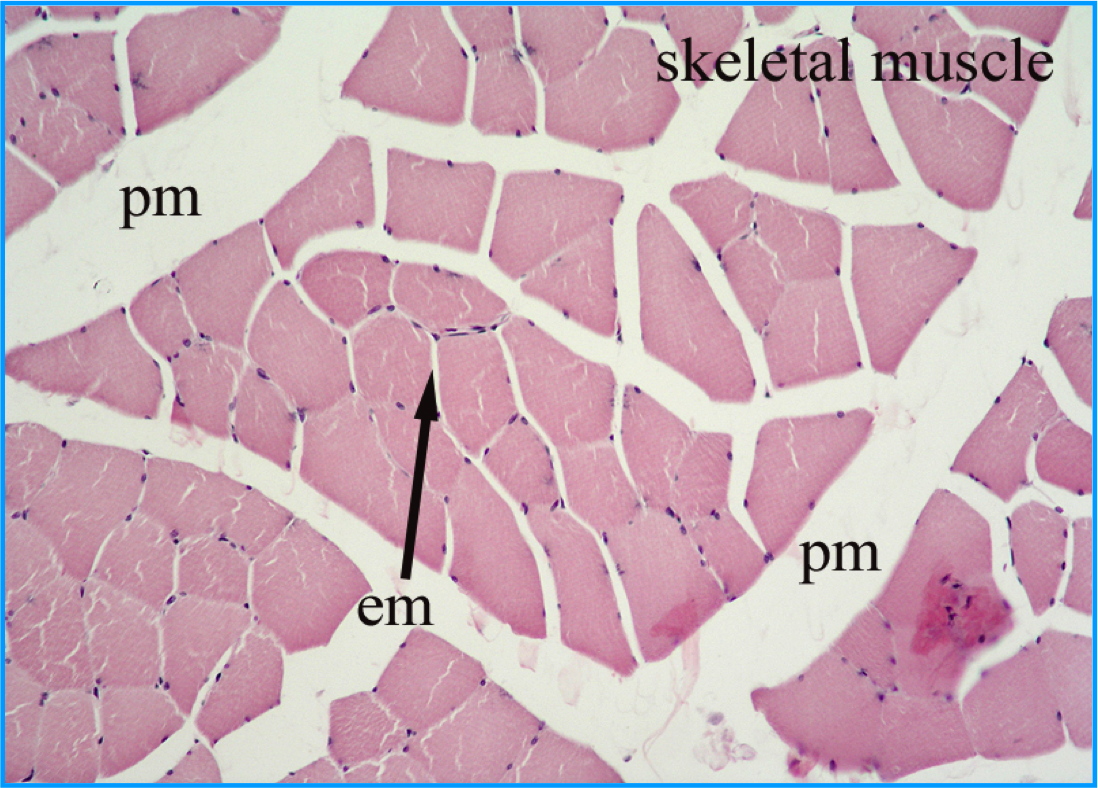
Identify
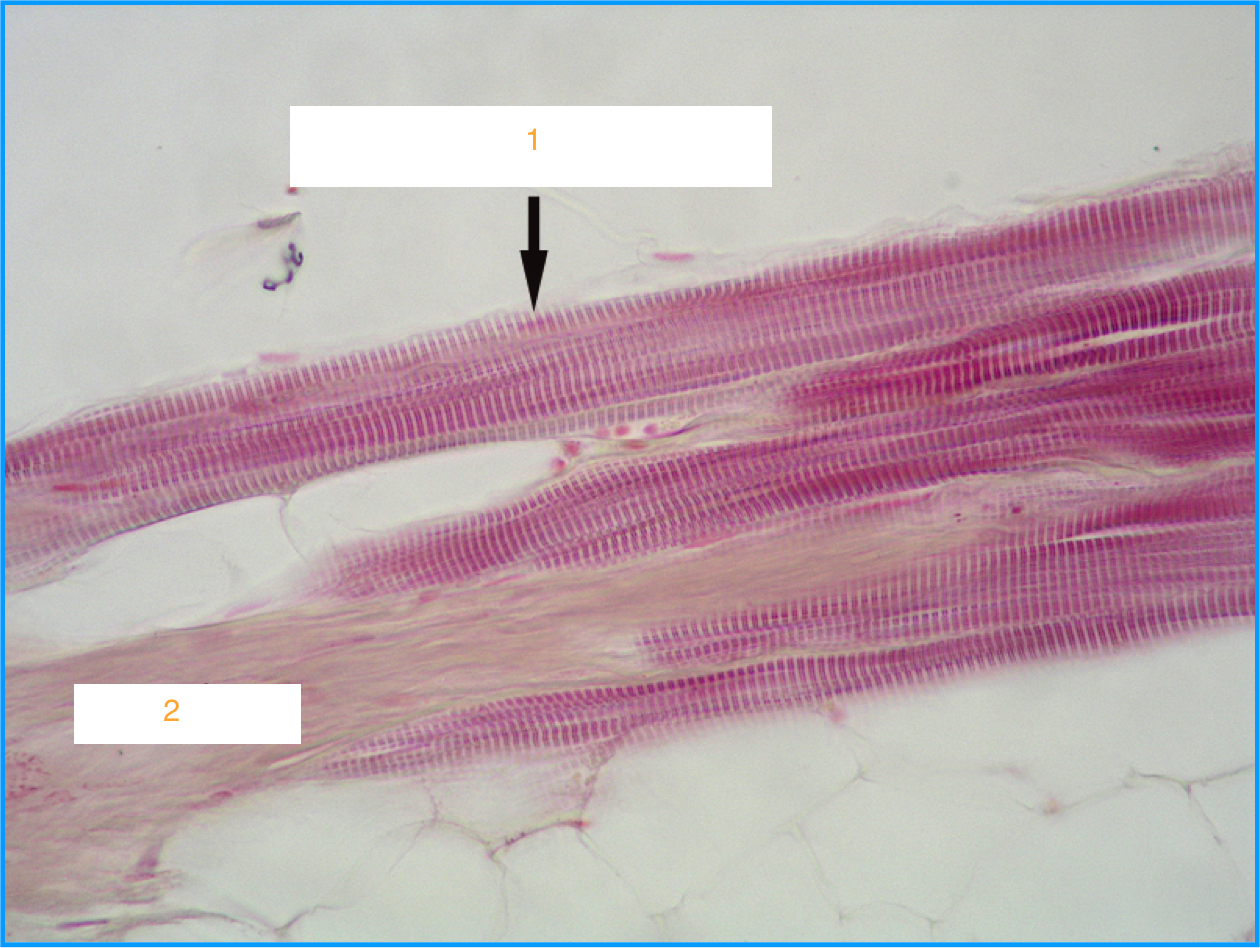
- Skeletal muscle
- Tendon
Sarcomeres –> Myofibrils –> Muscle cells (fibers) –> fascicles
Muscles have many muscle fascicles, which have many muscle fibers (cells), which are composed of myofibrils
Red muscle fibers
Type I, Type S (slow twitch)
- Small diameter
- Numerous mitochondria
- High myoglobin content
- Derive energy from oxidative phosphorylation
- Fatigue resistant: adapted for slow contractions over a prolonged period of time
White muscle fibers
Type IIB, Type FF (fast, fatigue)
- Large diameter
- Fewer mitochondria
- Low myoglobin content (oxygen carrier in muscle)
- Readily fatigued
- Derive energy from anaerobic glycolysis
- Adapted for rapid contraction
Intermediate muscle fibers
Type IIA, Type FR (fast, fatigue-resistant)
- Intermediate diameter
- Intermediate mitochondria
- Intermediate blood supply
Most of the body’s muscles are composed of these fibers
Time frame of skeletal muscle regeneration
- Satellite cells are activated within 2 hours of injury
- They begin to proliferate within 2-3 days
- Cellular architecture is restored in about 2 weeks
Other cells involved in regeneration: muscle derived stem cells, bone marrow stem cells with myogenic potential, blood vessel-assoicated progenitors
Activation: 2h
Proliferation: 2d
Restoration: 2w
General characteristics of cardiac muscle
- Has cross striations
- Innervatesd by autonomic nervous system
- Rapidly contracting
- Makes up wall of the heart
- May be capable of regeneration??
- Intermediate fiber diameter (in between smooth and skeletal)
- Branching of fibers
- One nuclei, centrally placed
Satellite cell characteristics
- Mononucleted without prominent nucleoli
- Spindle shaped
- Clumped chromatin
- Little cytoplasm with few organelles
- No myofilaments
Lie between basal lamina and sarcolemma of skeletal muscle
Present in low frequency in adult muscle
Population not static: Increase in number during injury or after exercise, decrease with age
Identify the type of muscle
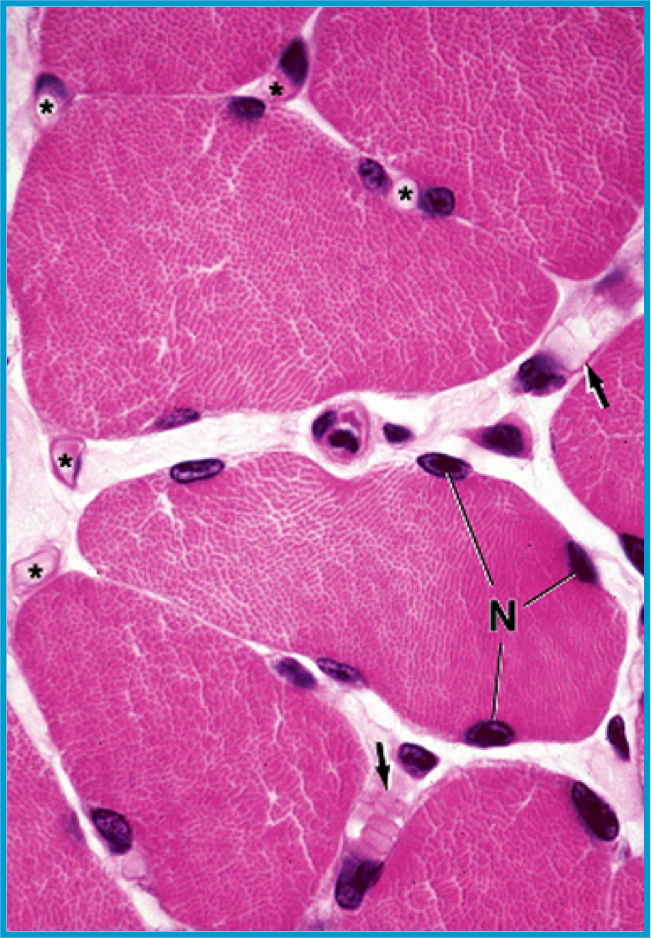
Skeletal muscle
- Long cylindrical cells that lie close together in bundles
- Each cell is enclosed by a sarcolemma
- Each cell contains numerous nuclei, located on periphery of cell
- Cells are cross striated
Myofibrils are subunits of skeletal muscle cells
Banding pattern in myofibrils
A bands (dark): thick filaments
I bands (light): thin filaments
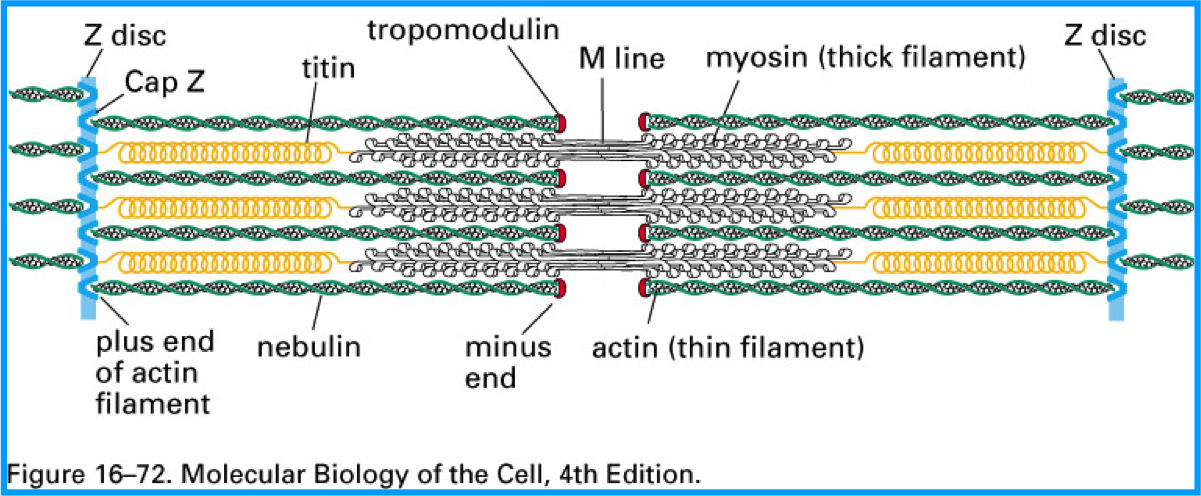
Z line (disc): cross linking of thin myofilaments. Sarcomere is Z line to Z line
H zone: portion of A band where thin and thick do not overlap
M line: runs through center of sarcomere (center of H band). Titin extends from M line to Z disc, provides elasticity
Organization of muscle
Muscles (epimysium) –> muscle fascicles (perimysium) –> muscle fibers (cells) (endomysium) –> myofibrils (sarcoplasmic reticulum) –> sarcomeres
Titin
Giant muscle protein
Acts as a passive elastic elements in the I band
Extends from M line to Z lines
Maintains the organization of the myofilaments in the sarcomere
Differences between cardiac and skeletal muscle
Cardiac muscle has:
- Branching morphology
- Single nucleus per fiber
- Centrally placed nucleus
- Intermediate in size (b/n skeletal and smooth)
- Less distinct cross striations
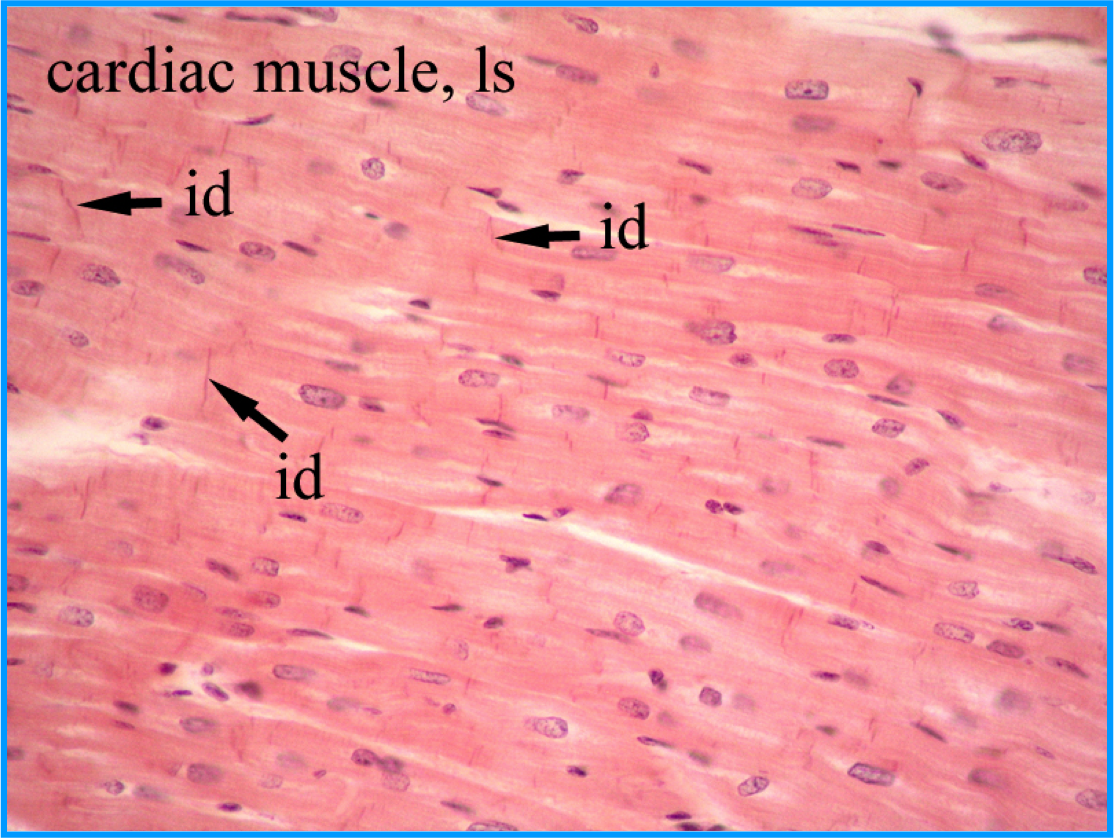
- Presence of intercalated discs
Intercalated discs
Connect individual heart muscle cells (cardiomyocytes), support synchronized contractions. (mechanical attachment, electrical transmission)
Occur at Z lines, can be viewed on longitudinal sections
Presence of gap and adhering junctions
(Potential) Regenerative capacity of cardiac muscle
- Cardiac muscle stem cells
- Bone marrow stem cells
- Umbilical cord, embryonic, and IPS cells
Identify
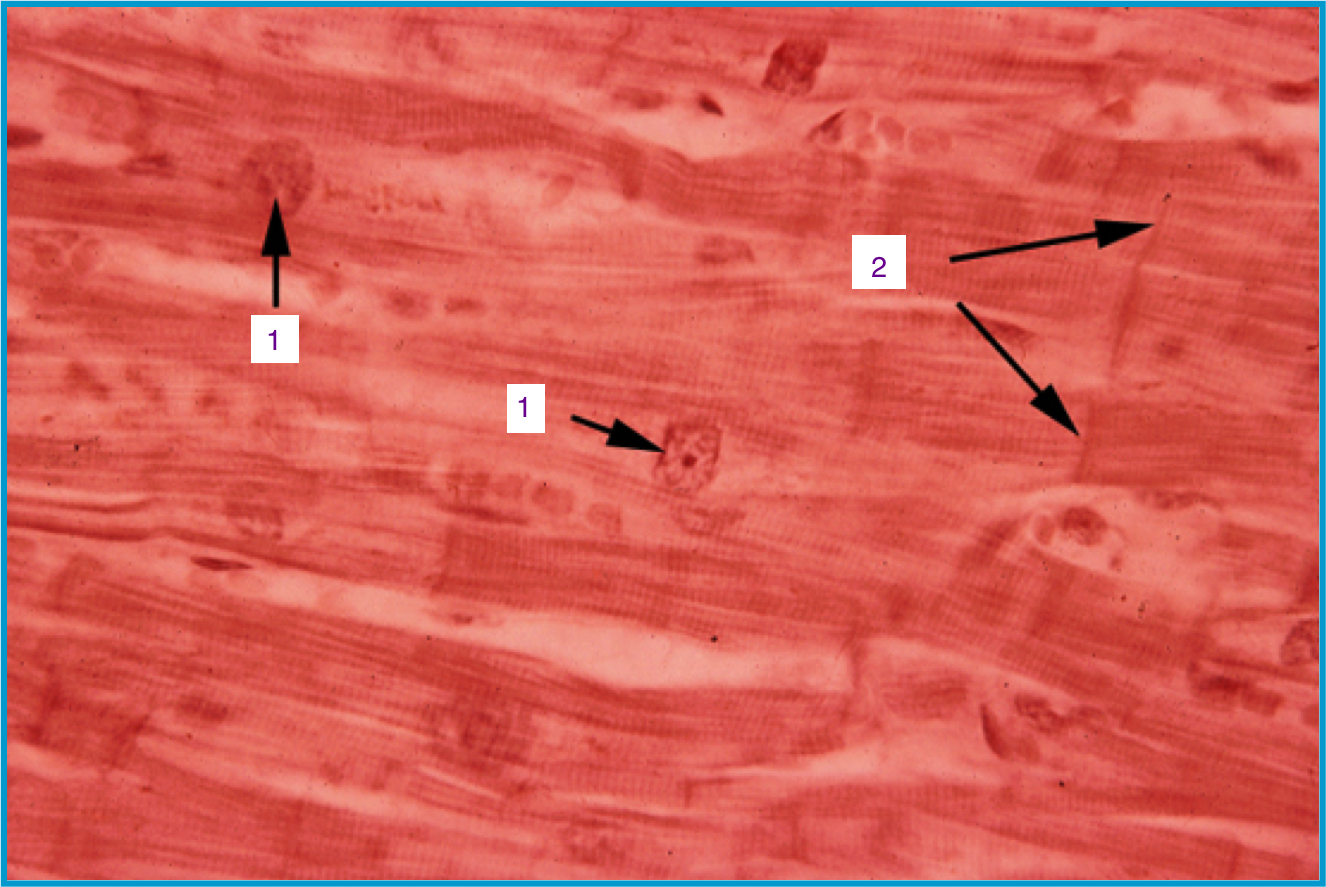
Cardiac muscle in longitudinal section
- Nucleus: spindle shaped, central, diffuse chromatin
- Intercalated discs
Cross striations not as distinct as in skeletal muscle
Atrial Natriuetic Factor (ANF)
Hormone, powerful vasodilator
Produced in atria
Granules in cardiac muscle cells that are released in repsonse to muscle wall stretch
Important for homestasis:
- Control of water and electrolyte balance
- Control of blood pressure
Identify
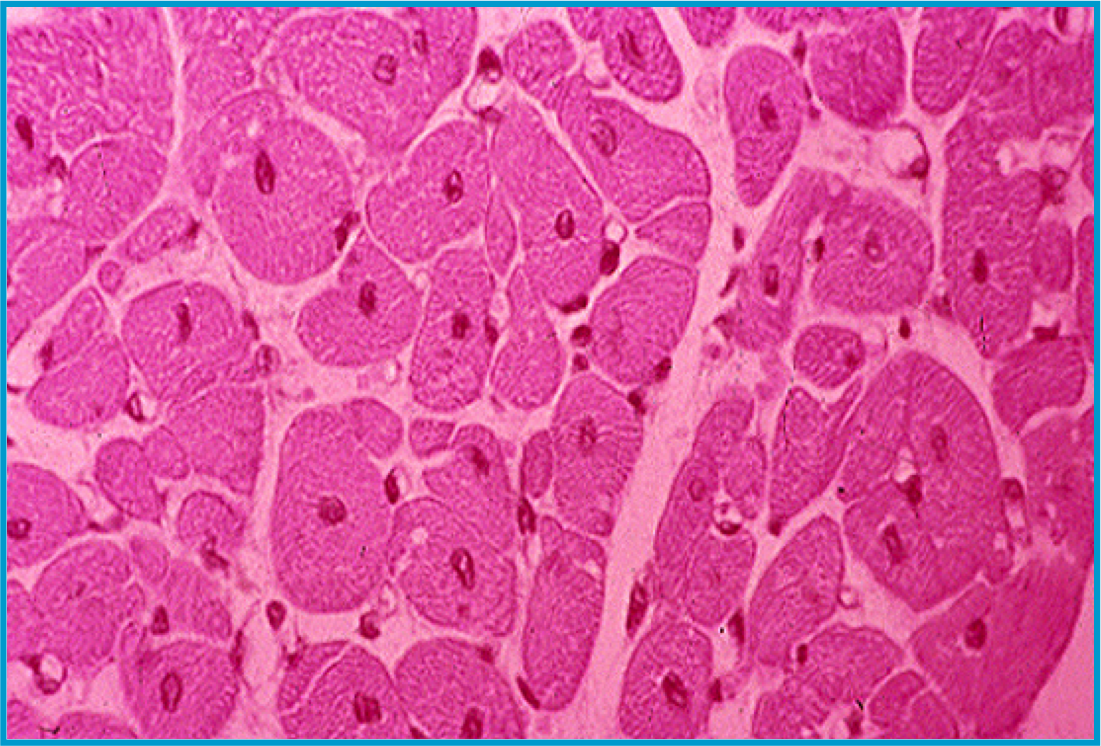
Cardiac muscle in cross section
Notice centrally located nuclei
Visible intercellular boundaries
Similarities between cardiac and Purkinje muscle fibers
- Centrally placed nuclei
- Branching and anastomosing fibers (connected)
- Presence of cross striations
Differences between cardiac and Purkinje muscle fibers
- Purkinje fibers are larger
- Myofibrils are displaed toward periphery of myofibers
- Purkinje cells are righer in glycogen
- Intercalated discs are seldom observed in Purkinje fibers
- Purkinje fibers have variable and unusual shapes
Identify
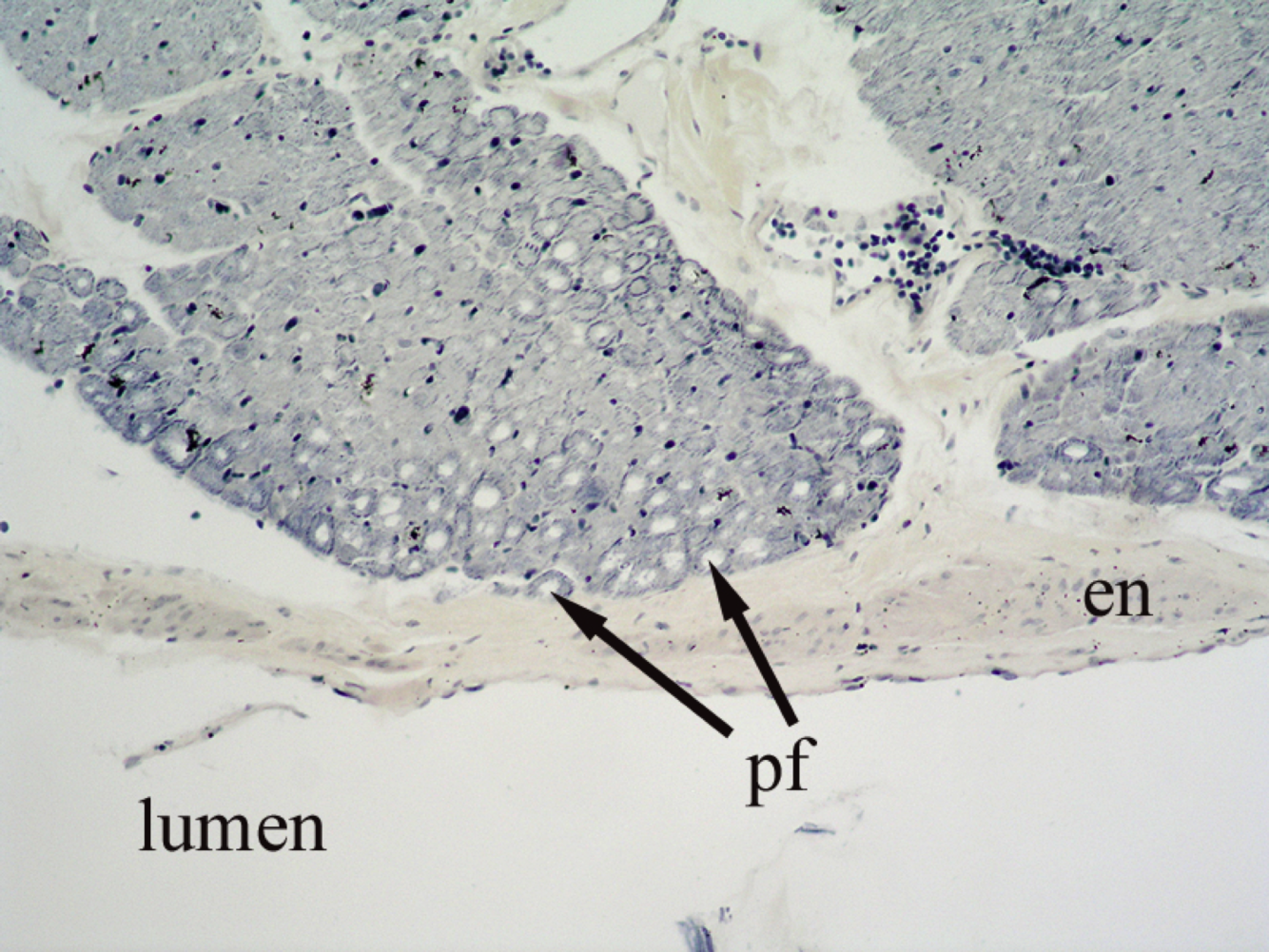
Purkinje fibers (right ventricle) with endocardium and lumen
Modified for conduction - distribute electrical stimulus to myocardium
Found in interventricular septum of heart





